- English
- ePUB (mobile friendly)
- Available on iOS & Android
eBook - ePub
About this book
Insects are the most abundant and diverse organisms that inhabit our planet and are found in all the world's forest ecosystems. Many feed and/or breed on parts of trees. Some perform important functions, such as pollination or break-down of dead vegetation. Others weaken, deform or kill trees, and compete with humans for the many goods and services that trees and forests provide. Forest Entomology: A Global Perspective examines forest insects in a global context and reviews their dynamics, interactions with humans and methods for monitoring and management of species that damage forests. Also provided are 235 profiles of forest insects, worldwide. A series of tables provides summaries of the distribution and hosts of many more species. Included are those that damage forests, others that are simply curiosities and some that are beneficial. This book is designed as a reference for students, practicing foresters and forest health specialists, especially for those who work internationally or are concerned with species that have the potential to expand their ranges via international trade, travel or environmental changes.
Information
Chapter 1
The World's Forests and their Dynamics
Introduction
Forests cover 3.952 billion ha or 30.3% of the Earth's surface. Other wooded lands cover another 1.3 billion ha.1 They provide habitat for many living organisms. Moreover, they provide a wealth of goods and services for humans. Forests are a source of both wood and non-wood products, including lumber, pulpwood, fuel wood, resin and food items such as nuts, fruits, mushrooms, edible plants and game. In addition, they provide protective cover for watersheds, range for domestic animals and are an important source of recreation and spiritual refreshment. A more recently appreciated value of forests is their ability to remove excess carbon from the Earth's atmosphere, much of which is produced by humans through burning of fossil fuels or clearing of forests, and store it in woody biomass. The world's forests presently store an estimated 240 gigatonnes (Gt) of carbon in woody biomass and a total of 683 Gt of carbon in forest ecosystems as a whole (FAO 2005, 2009a).
The world's forests have been subject to human pressure since the beginning of civilization. Large areas have been deforested to make room for agriculture, communities, industrial sites, roads and highways. Additional areas have been degraded as trees of the most desirable species and quality were harvested, forests were overgrazed by domestic livestock or burned for land clearing or to drive game. Presently, the rate of forest loss due to land use change is estimated at 13 million ha/year, resulting in a net reduction of forest area of about 7.3 million ha/year. Only 36% of the world's forests are regarded as “primary forests.” These are defined as forests of native species in which there is no clearly visible indication of human activity and ecological processes are not significantly disturbed (FAO 2005, 2009a).
Forests have the capacity to regenerate and produce goods and services for humans on a continuing basis, provided they are managed in a sustainable manner. The concept of sustainability evolved as a result of the United Nations Brundtland Commission (United Nations 1987), which defined sustainable development as “development that meets the needs of the present without compromising the ability of future generations to meet their own needs.” Sustainable development focuses attention on finding strategies to promote economic and social development in ways that avoid environmental degradation, overexploitation or pollution. Forests managed under the concept of sustainable development, therefore, should provide needed goods and services for present as well as future generations.
The world's forests are dynamic. They are in a continuous state of flux and, in addition to human activities, are subject to disturbance by wind, water, fire, insects and disease. This chapter provides an overview of the world's forests and the factors that characterize their dynamics.
Forest Ecosystems
The world's forests are highly varied and complex and many classification systems have been used to categorize them. A system proposed by Olson et al. (2001) subdivides the Earth's vegetation into eight biogeographic regions (Fig. 1.1) and 14 biomes. The biomes are further subdivided into 867 ecoregions. Eight of the 14 biomes proposed by Olson et al. (2001) are forest biomes and include:
- Tropical and subtropical forests:
- tropical and subtropical moist broadleaf forests;
- tropical and subtropical dry broadleaf forests;
- tropical and subtropical coniferous forests;
- mangroves.
- Temperate forests:
- temperate broadleaf and mixed forests;
- temperate conifer forests;
- Mediterranean forests, woodlands and scrub.
- Boreal forests/taiga.
Figure 1.1 Biogeographic regions of the world (redrawn from Olson et al.2001).
Tropical and Subtropical Forests
The portion of the Earth that lies roughly between 23.5° north and south latitude, or between the Tropics of Cancer and Capricorn, is regarded as the tropics. The tropics are characterized by having consistently warm temperatures and are frost free. Annual and monthly mean temperatures are above 18–20°C and there is a difference of no more than 5°C between the warmest and coolest month of the year. These temperatures allow for biological activity to take place throughout the year, except in areas with seasonal droughts.
The subtropics, on the other hand, are two bands around the earth adjacent to the tropics, from about 10° north and south latitude to 23.5° north and south latitude. While the climate is generally warm, subtropical regions are subject to occasional frosts and plant communities are more tolerant of cold temperatures than those found in the tropics.
Species composition in tropical forests varies according to moisture, soil types and geological history. The richest species diversity is in Latin America, followed by Southeast Asia and Africa (Fig. 1.2). There is little similarity in species between these regions, although they do share some common plant families and genera. The tropical forests of Southeast Asia are dominated by members of the plant family Dipterocarpaceae. These are broadleaf trees that include many valuable timber species (Nair 2007).
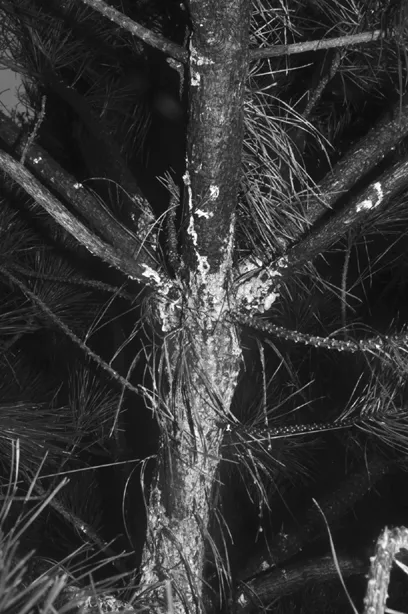
Figure 1.2 Moist tropical forests are richest in species diversity (Parque Nacional Foz do Iguaçu, Brazil).

Tropical and Subtropical Moist Broadleaf Forests
Most tropical and subtropical moist broadleaf forests have no discernable dry season. They are composed of broadleaf evergreen trees and are rich in terms of both plant and animal diversity. The largest area of moist tropical forest occurs in South America, in the Amazon Basin. Other areas of moist tropical forest occur in portions of Africa and Southeast Asia. Tropical and subtropical moist broadleaf forests are characterized by having dense, luxuriant, multistoried plant growth. Woody lianas or vines are common. Monocots, such as bamboos or canes, are also common in some areas. Tree branches often provide habitat for luxuriant growth of ferns, orchids, bromeliads, mosses and lichens. Many of the world's moist tropical forests occur at elevations of <1000 m in elevation.
Moist tropical forests also occur in mountainous regions, especially in portions of Central and South America, at elevations ranging from 1000 to 3000 m. These forests are sometimes referred to as “cloud” forests because they receive much of their moisture from clouds that envelop the summits of mountain peaks for much of the year.
Moist deciduous tropical forests occur in areas of distinct, alternating wet and dry seasons and are known as “seasonal or monsoonal tropics.” These are occupied by broadleaf trees that lose their foliage and become dormant during dry seasons and are lush and green during rainy seasons. They are found in portions of Asia from Sri Lanka east to southern China, across portions of western and eastern Africa, northern Australia, Brazil, Mexico and Central America.
Tropical and Subtropical Dry Broadleaf Forests
Dry tropical and subtropical forests are characterized by a strong seasonality of rainfall distribution and have several months of severe, even absolute, drought (Mooney et al. 1995). Portions of eastern Africa, for example, have two alternating wet and dry seasons. The long dry season occurs from about December to March and is followed by a long wet season from late March through August. A short dry period occurs from September to October, followed by a short rainy season in November and December. During the dry periods there is little or no precipitation. The Caatinga, a region of dry broadleaf forests in northeastern Brazil, has an average of 300–1000 mm of precipitation/year, which is concentrated over a 3–5 month period. Droughts are common and severe droughts of 3–4 years' duration can occur at intervals of every three or four decades. These forests are characterized by low deciduous trees, often armed with thorns. They transition into open woodlands and savannas in areas where soils are less fertile or where moisture regimes are too dry to support forest cover (Fig. 1.3).
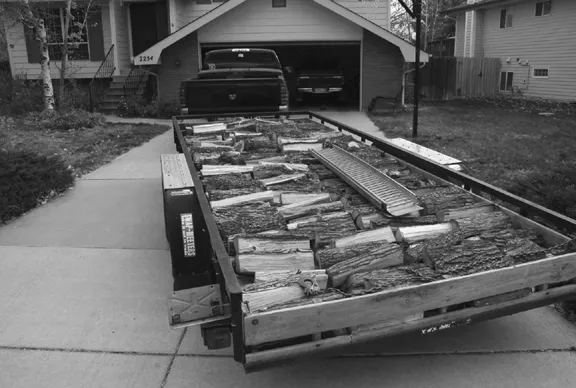
Figure 1.3 Dry tropical woodland, dominated by species of Acacia (Amboseli National Park, Kenya).
Tropical and Subtropical Conifer Forests
Conifer forests are found in tropical and subtropical regions of Mexico, Central America, east Africa and southeastern Asia. In Mexico, Central America and southeastern Asia, these forests are dominated by pines. The pine flora of Mexico and Central America is the most diverse in the world and consists of about 72 species and subspecies (Perry 1991). In Central America, pine forests extend south into northern Nicaragua (Fig. 1.4). Pine forests of southeastern Asia are less diverse but cover significant areas of Cambodia, southern China, Myanmar, Thailand and Vietnam. One species, Pinus merkusii, is found just south of the equator on the Indonesian island of Sumatra (Critchfield & Little 1966). In portions of Ethiopia, Kenya and Saudi Arabia, high-elevation forests are dominated by the east African pencil cedar, Juniperus procera, which is the only juniper that extends its range south of the equator (FAO 1986).
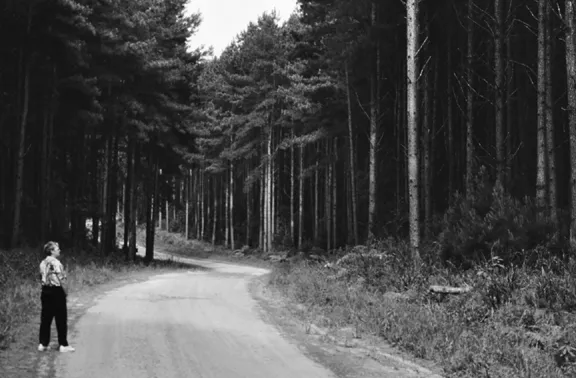
Figure 1.4 A tropical conifer forest dominated by Pinus oocarpa (northern Nicaragua).
Mangroves
Mangroves occur in silt-rich, saline, brackish water habitats, generally along large river deltas, estuaries and coastal areas. They are characterized by having relatively low tree diversity, with a low broken canopy. Mangrove species are broadleaf evergreen trees and shrubs adapted to salty and swampy habitats by having breathing roots, or pneumatophores, which are exposed to the air and absorb oxygen (Fig. 1.5). They are important ecosystems because they provide spawning grounds and nurseries for many marine and freshwater species. They also help prevent and reduce coastal erosion and storm damage. Mangroves are threatened because of their proximity to the ocean and are often targets for development. Moreover, local people make heavy use of mangrove trees as an easy source of wood. These forests occupy roughly 15.2 million ha and about 47% of the world's mangrove forests are found in Australia, Brazil, Indonesia, Mexico and Nigeria. The world's largest mangrove forest is the Sundarbans, which occurs along the coastal regions of Bangladesh and India. The Sundarbans supports the world's largest remaining population of Bengal tigers.
Figure 1.5 A blue heron rests on pneumatophores of red mangrove, Rhyzophora mangle (Bonaire, Netherlands Antilles).
Temperate Forests
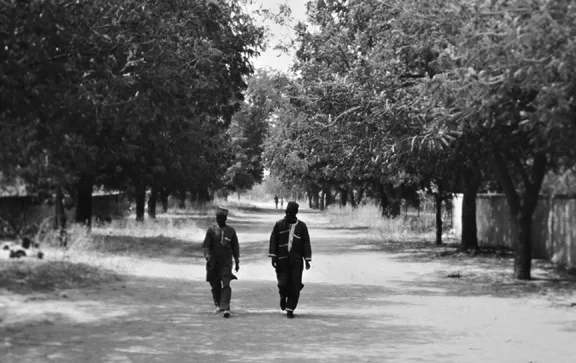
Temperate forests have well-defined warm and cold seasons. They are found north and south of the tropical/subtropical forests or at high elevations in tropical/subtropical latitudes where temperatures are cooler. The cold or winter season usually has sufficiently low temperatures to force plants into dormancy. Growing seasons vary from 140 to 200 days and from 4 to 6 frost-free months. These forests may be composed of conifers and both broadleaf evergreen and deciduous trees.
Temperate Broadleaf and Mixed Forests
Temperate broadleaf and mixed broadleaf–conifer forests are the dominant forest biome over most of Europe, portions of Asia and eastern North America. They are restricted to the northern hemisphere, except for a small area at the southern tip of South America (Argentina and Chile), and occur where average temperatures are below 0°C for the coldest month of the year and above 10°C for the warmest month (Dansereau 1957).
Most of the broadleaf species in these forests are deciduous and are characterized by leaf fall in autumn, which is an adaptation to a cold season when liquid water is either restricted or unavailable ...
Table of contents
- Cover
- Dedication
- Title Page
- Copyright
- Acknowledgements
- The Author
- Preface
- Chapter 1: The World's Forests and Their Dynamics
- Chapter 2: Forest insect Dynamics
- Chapter 3: Forest insect and Human Interactions
- Chapter 4: Monitoring Forest Insects, their Damage and Damage Potential
- Chapter 5: Forest Insect Management
- Chapter 6: Forest Insect Orders and Families
- Chapter 7: Foliage Feeding Insects – Lepidoptera
- Chapter 8: Other Foliage Feeding Insects
- Chapter 9: Bark and Ambrosia Beetles
- Chapter 10: Large Cambium and Wood Boring Insects
- Chapter 11: Sucking Insects
- Chapter 12: Gall Insects
- Chapter 13: Tip, Shoot and Regeneration Insects
- Chapter 14: Insects Of Tree Reproductive Structures
- Chapter 15: Insects of Wood in Use
- References
- Color Plates
- Subject and Taxonomic Index
- Host index
Trusted by 375,005 students
Access to over 1.5 million titles for a fair monthly price.
Study more efficiently using our study tools.
Frequently asked questions
Yes, you can cancel anytime from the Subscription tab in your account settings on the Perlego website. Your subscription will stay active until the end of your current billing period. Learn how to cancel your subscription
No, books cannot be downloaded as external files, such as PDFs, for use outside of Perlego. However, you can download books within the Perlego app for offline reading on mobile or tablet. Learn how to download books offline
Perlego offers two plans: Essential and Complete
- Essential is ideal for learners and professionals who enjoy exploring a wide range of subjects. Access the Essential Library with 800,000+ trusted titles and best-sellers across business, personal growth, and the humanities. Includes unlimited reading time and Standard Read Aloud voice.
- Complete: Perfect for advanced learners and researchers needing full, unrestricted access. Unlock 1.5M+ books across hundreds of subjects, including academic and specialized titles. The Complete Plan also includes advanced features like Premium Read Aloud and Research Assistant.
We are an online textbook subscription service, where you can get access to an entire online library for less than the price of a single book per month. With over 1.5 million books across 990+ topics, we’ve got you covered! Learn about our mission
Look out for the read-aloud symbol on your next book to see if you can listen to it. The read-aloud tool reads text aloud for you, highlighting the text as it is being read. You can pause it, speed it up and slow it down. Learn more about Read Aloud
Yes! You can use the Perlego app on both iOS and Android devices to read anytime, anywhere — even offline. Perfect for commutes or when you’re on the go.
Please note we cannot support devices running on iOS 13 and Android 7 or earlier. Learn more about using the app
Please note we cannot support devices running on iOS 13 and Android 7 or earlier. Learn more about using the app
Yes, you can access Forest Entomology by William Ciesla in PDF and/or ePUB format, as well as other popular books in Biological Sciences & Entomology. We have over 1.5 million books available in our catalogue for you to explore.