The TV Brand Builders is the definitive account of how the biggest television networks, channels and programmes are created as brands, with rare privileged access to the marketing strategies and creative thinking behind culturally defining TV promos, digital and social media campaigns and design identities.
Written by two leading practitioners responsible for work as famous as the BBC One hippos, the creation of a TV channel called Dave and the re-launch of Doctor Who, and featuring interviews with 50 leading industry experts from 8 countries, from HBO to ESPN, from DreamWorks to CANAL+, The TV Brand Builders combines practical advice and strategic insight with exclusive stories from the ratings front line. Online resources include a bonus chapter on TV channel design in a multi-screen world, plus a 'Student and Instructor's Manual' with chapter summaries.
eBook - ePub
The TV Brand Builders
How to Win Audiences and Influence Viewers
- English
- ePUB (mobile friendly)
- Available on iOS & Android
eBook - ePub
About this book
Information
The TV Brand Builders
Part one
The context
The TV Brand Builders
Chapter one
Marketing in the world of television
We’re creative. We’re gonna sit at our desks typing while the walls fall down around us. Because we’re the least important, most important thing there is.
DON DRAPER, MAD MEN1
THE INVISIBLE PYRAMID
Marketing came late to the TV party. Take the BBC, for example. As we described in our Introduction, it was not until 1993 that the organization contemplated hiring a marketing director. Prior to that, there had been no one with a marketing title employed. There were people performing promotional functions, certainly, but rather more of the ‘informing people what was on’ variety than ‘persuading them to watch’. The people responsible for making promotional trailers were the same people driving the transmission desks on alternate weeks, keeping the channels on air.
Indeed, the first meetings in the UK of the industry body PromaxBDA (the ‘global community of professionals passionately engaged in the marketing and promotion of television and video content’2) in the late 1980s and early 1990s were gatherings of a disparate assortment of designers and presentation operators from the ITV regional companies, the BBC nations and a nascent Channel 4. Not a marketer in sight. In the United States, by contrast, the trade association was, from the start, a highly professional outfit, representing networks, cable channels and affiliate broadcasters. In all parts of the world, though, for decades marketing sat several layers below the top table in TV organizations. Referring back to the BBC’s 1993 Up The Junction report that we mentioned in the Introduction, it concluded somewhat hopefully:
We believe the case for a marketing director of BBC Television is self-evident. However… it is vital that the power vested in such an individual is sufficient to enable him [sic] both to formulate and implement marketing policy, and that the work of his [sic] department will both influence and impact the work of other departments within BBC Television.3
(As an aside, the male bias in this statement is awkwardly outdated in light of the large number of talented and high-achieving female marketers now occupying senior positions in television, some of whom we have interviewed for our research.)
The BBC working party’s recognition that marketing without influence would not lead to an improvement in the use of the airtime between programmes was no doubt based on an astute acknowledgement of the power structure of the organization. In our BBC days we were once in the room when the conclusions of a report commissioned by the then director-general were presented, with the aim of fostering better cross-functional working relationships. Titled ‘BBC Unwritten Rules’, the study was based on internal interviews by an expert in corporate culture. It revealed that, in contrast with the ‘official’ hierarchical organization structure (within which the director of marketing, communications and audiences sat on the BBC’s executive board), the true pecking order was based on a pyramid topped by a creative elite (the star on-air talent: entertainment presenters, chat show hosts, news anchors and comedy acts, for example). Star talent was followed by senior managers, then those who actually made the programmes. Marketing was ranked firmly below the programme makers in a group labelled ‘programme support’, along with technical, studio and post-production people. In the eyes of the programme makers, this was the ‘back office’. So, exaggerating only slightly for effect, the influence of a marketing head of one of the world’s largest and most respected broadcasting organizations was relegated below that of a junior programme researcher.
ITV’s Rufus Radcliffe helps to explain why this situation existed:
Marketing did not used to play an important role in TV companies… In years gone by you could rely on viewers turning up night after night as regular as clockwork. All that has now changed. TV companies need to be brand-centric and audience obsessed.4
A similar picture could be seen in the United States, with the dominance of the traditional TV networks not being challenged until the rapid growth of cable and the launch of the Fox network in the 1980s, resulting in the relative lack of importance of marketing compared with other industries. As the writers of the helpful handbook Branding TV, Walter McDowell and Alan Batten, confirm:
The late arrival of brand management to American television was due primarily to a lack of competition. For over three decades, the competitive arena for commercial television was restricted to three major players: ABC, CBS and NBC… With a captive national audience… viewer choices were restricted to a handful of media brands.5
It is little wonder, then, that marketing professionals used to a place at the centre of a brand’s universe can find their entry into broadcasting a jolt. Liz Dolan, now chief marketing officer of Fox International Channels, was formerly a senior marketer at Nike working alongside founder Phil Knight:
My first observation coming into the television business was that I couldn’t believe how separate product and marketing were. It still doesn’t make any sense. At Nike, as the head of marketing I was in charge of how all the products and the marketing came together to be one brand. I remember Phil Knight said to me, ‘We are a marketing company and our number one marketing tool is our products.’ That’s true in television too, but people don’t operate their companies like that. Programme making is elevated… and then they dump it onto marketing.6
MARKETERS AS CONTENT MAKERS
It is no surprise, then, that TV people beyond marketing and in-house creative services departments tend not to see promotional output as ‘content’ in its own right. In fact, the BBC Presentation Department we mentioned in our Introduction once made programmes… real, actual programmes. It had been responsible for announcers who, until the 1960s, were seen by viewers on screen. Two small studios were built at BBC Television Centre for this purpose. Once in-vision announcements were discontinued, a new subdivision was created – Presentation (Programmes) – to produce original content for the BBC from those studios. Productions included the rock music show The Old Grey Whistle Test and a movie review show called, initially, Film 73, which was presented for over 25 years by Barry Norman and has lived on, fronted by Jonathan Ross and, today, Claudia Winkleman.
Although that practice was discontinued, running a team responsible for creating and producing around 95 per cent of the BBC’s on-air promotional trailers we once calculated that, if we were a BBC programme-making department, we would be the third biggest measured by hours of output per year – behind news and sport but well ahead of other genres including drama and comedy. In the words of Jane Lingham, the BBC’s brand director:
People forget that marketing is content. In the broadcast industry, marketing can sometimes be dismissed as the ‘colouring in’ department… particularly amongst people who spend their day making long-form programmes. They often don’t think of marketing as content in the same way as what they produce – but whilst obviously different, marketing is content, and actually if you add up all the airtime that we (in marketing) need to fill on a daily basis it amounts to an awful lot.7
TV marketing people are generally under no illusions about the purpose of the content they create. It is there to serve a need, to support other content. It is a symbiotic relationship. Our job is, to coin a phrase, to win audiences and influence viewers. But just occasionally an audience member is moved to write an unsolicited message of appreciation of our work, like this tweet from the opinionated TV critic and columnist Caitlin Moran:
Who does all the trailers for EastEnders? They’re amazing. Can they do ALL of EastEnders, please?8
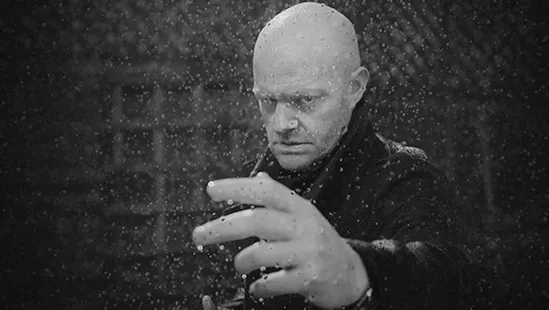
The campaign that moved Caitlin Moran to take to Twitter: EastEnders ‘There’s A Killer Amongst Them’ Source: Reproduced by permission of BBC
KEEPING A DISTANCE
Given the traditional disregard for the craft of TV promotional content amongst ‘proper’ programme makers – themselves highly creative people – it is inevitable that when the first part of a project they have been working on for years is going to be reduced by a trailer maker into a 30-second snippet they will have a strong view on what it should contain.
(Incidentally the title for this job varies across countries and companies, with versions inclu...
Table of contents
- Cover
- Praise for The TV Brand Builders
- Title Page
- Contents
- Acknowledgements
- Dedication
- Introduction
- PART ONE: THE CONTEXT
- PART TWO: BUILDING TV CHANNEL BRANDS
- PART THREE: BUILDING AND PROMOTING TV PROGRAMME BRANDS
- PART FOUR: BUILDING BRANDS IN THE AGE OF ONLINE TV
- About the authors
- Index
- Copyright
Trusted by 375,005 students
Access to over 1.5 million titles for a fair monthly price.
Study more efficiently using our study tools.
Frequently asked questions
Yes, you can cancel anytime from the Subscription tab in your account settings on the Perlego website. Your subscription will stay active until the end of your current billing period. Learn how to cancel your subscription
No, books cannot be downloaded as external files, such as PDFs, for use outside of Perlego. However, you can download books within the Perlego app for offline reading on mobile or tablet. Learn how to download books offline
Perlego offers two plans: Essential and Complete
- Essential is ideal for learners and professionals who enjoy exploring a wide range of subjects. Access the Essential Library with 800,000+ trusted titles and best-sellers across business, personal growth, and the humanities. Includes unlimited reading time and Standard Read Aloud voice.
- Complete: Perfect for advanced learners and researchers needing full, unrestricted access. Unlock 1.5M+ books across hundreds of subjects, including academic and specialized titles. The Complete Plan also includes advanced features like Premium Read Aloud and Research Assistant.
We are an online textbook subscription service, where you can get access to an entire online library for less than the price of a single book per month. With over 1.5 million books across 990+ topics, we’ve got you covered! Learn about our mission
Look out for the read-aloud symbol on your next book to see if you can listen to it. The read-aloud tool reads text aloud for you, highlighting the text as it is being read. You can pause it, speed it up and slow it down. Learn more about Read Aloud
Yes! You can use the Perlego app on both iOS and Android devices to read anytime, anywhere — even offline. Perfect for commutes or when you’re on the go.
Please note we cannot support devices running on iOS 13 and Android 7 or earlier. Learn more about using the app
Please note we cannot support devices running on iOS 13 and Android 7 or earlier. Learn more about using the app
Yes, you can access The TV Brand Builders by Andy Bryant,Charlie Mawer in PDF and/or ePUB format, as well as other popular books in Business & Business Development. We have over 1.5 million books available in our catalogue for you to explore.