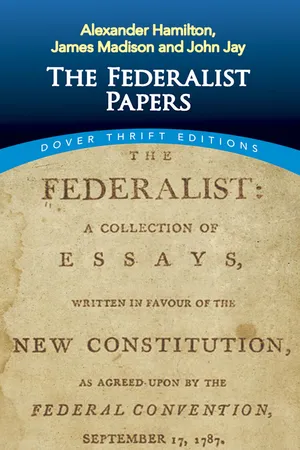
An excellent reference for anyone who wants a better understanding of the Constitution, this compilation of eighty-five articles explains and defends the ideals behind the highest form of law in the United States. The essays were written and published anonymously in New York newspapers during the years 1787 and 1788 by three of the Constitution's framers and ratifiers: Alexander Hamilton, General George Washington's Chief of Staff and first Secretary of the Treasury; John Jay, the first Chief Justice of the United States; and James Madison, father of the Constitution, author of the Bill of Rights, and fourth President of the United States.
Thomas Jefferson hailed The Federalist Papers as the best commentary ever written about the principles of government. Milestones in political science and enduring classics of political philosophy, these articles are essential reading for students, lawyers, politicians, and those with an interest in the foundation of U.S. government and law.
- 448 pages
- English
- ePUB (mobile friendly)
- Available on iOS & Android
eBook - ePub
The Federalist Papers
About this book
Information
Table of contents
- Cover
- Title Page
- Copyright Page
- Publisher’s Note
- Contents
- Preface
- No. 1: General Introduction
- No. 2: Concerning Dangers from Foreign Force and Influence
- No. 3: The Same Subject Continued
- No. 4: The Same Subject Continued
- No. 5: The Same Subject Continued
- No. 6: Concerning Dangers from Dissensions Between the States
- No. 7: The Same Subject Continued
- No. 8: The Consequences of Hostilities Between the States
- No. 9: The Union as a Safeguard Against Domestic Faction and Insurrection
- No. 10: The Same Subject Continued
- No. 11: The Utility of the Union in Respect to Commercial Relations and a Navy
- No. 12: The Utility of the Union in Respect to Revenue
- No. 13: Advantage of the Union in Respect to Economy in Government
- No. 14: Objections to the Proposed Constitution from Extent of Territory Answered
- No. 15: The Insufficiency of the Present Confederation to Preserve the Union
- No. 16: The Same Subject Continued
- No. 17: The Same Subject Continued
- No. 18: The Same Subject Continued
- No. 19: The Same Subject Continued
- No. 20: The Same Subject Continued
- No. 21: Other Defects of the Present Confederation
- No. 22: The Same Subject Continued
- No. 23: The Necessity of a Government as Energetic as the One Proposed to the Preservation of the Union
- No. 24: The Powers Necessary to the Common Defense Further Considered
- No. 25: The Same Subject Continued
- No. 26: The Idea of Restraining the Legislative Authority in Regard to the Common Defense Considered
- No. 27: The Same Subject Continued
- No. 28: The Same Subject Continued
- No. 29: Concerning the Militia
- No. 30: Concerning the General Power of Taxation
- No. 31: The Same Subject Continued
- No. 32: The Same Subject Continued
- No. 33: The Same Subject Continued
- No. 34: The Same Subject Continued
- No. 35: The Same Subject Continued
- No. 36: The Same Subject Continued
- No. 37: Concerning the Difficulties of the Convention in Devising a Proper Form of Government
- No. 38: The Same Subject Continued, and the Incoherence of the Objections to the New Plan Exposed
- No. 39: The Conformity of the Plan to Republican Principles
- No. 40: The Powers of the Convention to Form a Mixed Government Examined and Sustained
- No. 41: General View of the Powers Conferred by the Constitution
- No. 42: The Powers Conferred by the Constitution Further Considered
- No. 43: The Same Subject Continued
- No. 44: Restrictions on the Authority of the Several States
- No. 45: The Alleged Danger from the Powers of the Union to the State Governments Considered
- No. 46: The Influence of the State and Federal Governments Compared
- No. 47: The Particular Structure of the New Government and the Distribution of Power Among Its Different Parts
- No. 48: These Departments Should Not Be So Far Separated as to Have No Constitutional Control over Each Other
- No. 49: Method of Guarding Against the Encroachments of Any One Department of Government by Appealing to the People Through a Convention
- No. 50: Periodical Appeals to the People Considered
- No. 51: The Structure of the Government Must Furnish the Proper Checks and Balances Between the Different Departments
- No. 52: The House of Representatives
- No. 53: The Same Subject Continued
- No. 54: The Apportionment of Members Among the States
- No. 55: The Total Number of the House of Representatives
- No. 56: The Same Subject Continued
- No. 57: The Alleged Tendency of the New Plan to Elevate the Few at the Expense of the Many Considered in Connection with Representation
- No. 58: Objection That the Number of Members Will Not Be Augmented as the Progress of Population Demands, Considered
- No. 59: Concerning the Power of Congress to Regulate the Election of Members
- No. 60: The Same Subject Continued
- No. 61: The Same Subject Continued
- No. 62: The Senate
- No. 63: The Senate Continued
- No. 64: The Powers of the Senate
- No. 65: The Powers of the Senate Continued
- No. 66: Objections to the Power of the Senate to Sit as a Court for Impeachments Further Considered
- No. 67: The Executive Department
- No. 68: The Mode of Electing the President
- No. 69: The Real Character of the Executive
- No. 70: The Executive Department Further Considered
- No. 71: The Duration in Office of the Executive
- No. 72: The Same Subject Continued, and Re-eligibility of the Executive Considered
- No. 73: The Provision for the Support of the Executive, and the Veto Power
- No. 74: The Command of the Military and Naval Forces, and the Pardoning Power of the Executive
- No. 75: The Treaty-Making Power of the Executive
- No. 76: The Appointing Power of the Executive
- No. 77: The Appointing Power Continued and Other Powers of the Executive Considered
- No. 78: The Judiciary Department
- No. 79: The Judiciary Continued
- No. 80: The Powers of the Judiciary
- No. 81: The Judiciary Continued, and the Distribution of the Judiciary Authority
- No. 82: The Judiciary Continued
- No. 83: The Judiciary Continued in Relation to Trial by Jury
- No. 84: Certain General and Miscellaneous Objections to the Constitution Considered and Answered
- No. 85: Concluding Remarks
Trusted by 375,005 students
Access to over 1.5 million titles for a fair monthly price.
Study more efficiently using our study tools.
Frequently asked questions
Yes, you can cancel anytime from the Subscription tab in your account settings on the Perlego website. Your subscription will stay active until the end of your current billing period. Learn how to cancel your subscription
No, books cannot be downloaded as external files, such as PDFs, for use outside of Perlego. However, you can download books within the Perlego app for offline reading on mobile or tablet. Learn how to download books offline
Perlego offers two plans: Essential and Complete
- Essential is ideal for learners and professionals who enjoy exploring a wide range of subjects. Access the Essential Library with 800,000+ trusted titles and best-sellers across business, personal growth, and the humanities. Includes unlimited reading time and Standard Read Aloud voice.
- Complete: Perfect for advanced learners and researchers needing full, unrestricted access. Unlock 1.5M+ books across hundreds of subjects, including academic and specialized titles. The Complete Plan also includes advanced features like Premium Read Aloud and Research Assistant.
We are an online textbook subscription service, where you can get access to an entire online library for less than the price of a single book per month. With over 1.5 million books across 990+ topics, we’ve got you covered! Learn about our mission
Look out for the read-aloud symbol on your next book to see if you can listen to it. The read-aloud tool reads text aloud for you, highlighting the text as it is being read. You can pause it, speed it up and slow it down. Learn more about Read Aloud
Yes! You can use the Perlego app on both iOS and Android devices to read anytime, anywhere — even offline. Perfect for commutes or when you’re on the go.
Please note we cannot support devices running on iOS 13 and Android 7 or earlier. Learn more about using the app
Please note we cannot support devices running on iOS 13 and Android 7 or earlier. Learn more about using the app
Yes, you can access The Federalist Papers by Alexander Hamilton,James Madison,John Jay, James Madison, John Jay in PDF and/or ePUB format, as well as other popular books in Politics & International Relations & Early American History. We have over 1.5 million books available in our catalogue for you to explore.