More Than Money Jamey Stegmaier knows crowdfunding. He's a veteran of seven successful Kickstarter campaigns (and counting) that have raised over $3.2 million, and he's the proprietor of the widely read Kickstarter Lessons blog. In this book he offers a comprehensive guide to crowdfunding, demonstrating that it can be a powerful way for entrepreneurs to grow their businesses by building community and putting their customers first.This book includes over forty stories of inspiring successes and sobering disasters. Stegmaier uses these examples to demonstrate how to (and how not to) prepare for a campaign, grow a fan base, structure a pitch, find new backers, and execute many other crucially important "nuts and bolts" elements of a successful crowdfunding project.But Stegmaier emphasizes that the benefits of crowdfunding are much more about the "crowd" than the "funding." He shows that if you treat your backers as people, not pocketbooks—communicate regularly and transparently with them, ask their opinions, attend to their needs—they'll become advocates as well as funders, exponentially increasing your project's chances of succeeding.
eBook - ePub
A Crowdfunder's Strategy Guide
Build a Better Business by Building Community
- 216 pages
- English
- ePUB (mobile friendly)
- Available on iOS & Android
eBook - ePub
About this book
Information
CHAPTER 1
You Don’t Need to Launch Today
The second-most successful Kickstarter project of all time originally launched six months too soon and failed. But when the Coolest cooler relaunched half a year later, it raised $13,285,226 from 62,642 backers.
One of the biggest mistakes people make when launching a crowdfunding project is to launch too soon. While the Coolest cooler is an outlier, given its epic level of success, it serves as a great example of how not launching today can make a huge impact on your dream project.
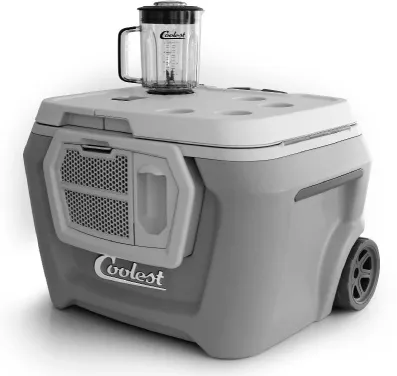
FIGURE 1. The Coolest cooler, the product behind one of the most successful crowdfunding campaigns ever held. Reproduced courtesy of Ryan Grepper.
Ryan Grepper is an inventor in Portland, Oregon, who came up with the idea of the Coolest (fig. 1). With his innovative design, which features a built-in blender, a Bluetooth speaker, an LED light under the lid, a phone recharger, and more, he targeted Kickstarter as a way of gauging demand for the product. Ryan calls Kickstarter the “Skymall of the future,” where people go to find and influence tomorrow’s products today.
Ryan Grepper launched the original Coolest cooler Kickstarter campaign on November 26, 2013. With a goal of $125,000, the project raised a fair amount (just over $102,000)—enough to indicate market demand—but ultimately it didn’t fund.
When I spoke with Ryan in October 2014, he was candid about the experience. He confirmed that seasonality had a huge affect on the popularity of the summer campaign for the Coolest cooler. His original strategy was to schedule the crowdfunding campaign so that the product could be manufactured and delivered in time for the relevant season, but he realized that people aren’t really thinking about keeping things cool when they’re shoveling snow off their driveways.
After the unsuccessful campaign, Ryan got to work. He improved the design of the cooler and refined the project page, all while continuing to engage the original backers. Before relaunching the campaign in the summer, he used a service called PressFriendly to connect with bloggers and journalists who had written about innovative summertime products in the past. He identified a few key media targets and, as a nod to the cooler’s built-in blender, sent each of them a package containing margarita mix, a small bottle of Jose Cuervo, and a bag of water, with a note saying, “If you had a Coolest cooler, you’d be drinking a margarita right now.”
After the unsuccessful funding of the first campaign, Ryan was nervous leading up to the relaunch. His concerns were quickly assuaged, though, as all of his hard work the previous seven months translated into more than $300K on the first day, in early July 2014. In the peak of summer, keeping things cool was a top priority for anyone living in the northern hemisphere. The project rocketed past the million-dollar mark on day 2 and past $2 million on day 3.
Ryan had planned to send personal thank-you messages to each backer, but he soon realized that wasn’t feasible. In fact, despite his careful planning, he was deep over his head in replying to the flood of comments and messages he was receiving.
So he took action. It was summer break for college students, so he hired some neighborhood kids to form a customer-service team. He also tapped some international connections to provide 24/7 support to backers while the lights were out in Portland. Working off an FAQ and a shared Gmail account, Ryan and his team worked through the backlog of thousands of messages in a matter of days.
With thousands of backers joining the project every day, gathering feedback and involving backers in product development—standard methods for building community on Kickstarter—were quite a challenge. The top request that Ryan and his team received was to add a solar panel to the top of the cooler, but Ryan determined that doing so wasn’t feasible. Instead, his team tried to concentrate all of this creative energy into backer polls, like the one team members ran in the middle of the campaign for new cooler colors. Ryan made sure to let backers know through project updates and videos that he was listening to their input, and several suggestions made during the campaign (hinge strength, handle configuration, phone dock design, etc.) would impact the final model.
The campaign showed no sign of slowing down. It eventually eclipsed the previous top-funding project, the Pebble smartwatch, and the campaign ended with more than $13 million. Pretty impressive for a project that didn’t reach its $125,000 funding goal just six months earlier.
When You Control Time, There Is No Such Thing As “Last Minute”
Launching too soon is one of the most common mistakes made by crowdfunders—and perhaps the easiest to avoid. Creators contact me regularly asking for the same advice: “I’m launching my crowdfunding project today, and I just found your blog—do you have any last-minute feedback?”
Yes, I have some last-minute feedback: Don’t launch today if you’re doing anything “last minute.” Simply shift your artificially determined launch date to another day. Easy. Done.
Ninety-nine percent of the time when I get a message like that, I know something is wrong without even looking at the project page. Because if you have the mindset that you’re somehow on a deadline for launching your project, you’re setting yourself up for failure from the start. Not necessarily catastrophic failure, but you’re not doing everything you can to make your project a success.
A growing wealth of resources is out there for the steps you can take to increase the chances that your crowdfunding project will be successful. It’s important that you discover them months before you launch your campaign. So if today is the day you’ve discovered a key resource, add two to three months to today, and you’ll have your new launch day.
Not convinced? Here’s a list of some of the things you need to do before you launch your project. If you have not done these things, do not launch your project today.
The Definitive Prelaunch Checklist

• Start a blog focusing on creating content that is interesting and useful to other people and write one to three entries per week for three months.
• Hunt down and subscribe to at least twenty blogs related to your project. Read them every day. Comment on at least one a day. Do not think of this as networking. Think of it as reading about a subject you love and interacting with people who share your passion.
• Read every Kickstarter Lesson on my blog, listen to a number of Richard Bliss’s Funding the Dream podcast episodes, and read James Mathe’s blog about Kickstarter.1
• Back ten to twenty crowdfunding projects and read every update in real time, taking note of when you reach the point at which you have the intense desire to unsubscribe. According to statistics pulled from John Coveyou’s extensive Kickstarter data mining,2 your chance of successfully funding your first project if you’ve backed only one project is 23 percent. If you’ve backed between eleven and twenty-five projects, your chance nearly doubles, to 55 percent. This isn’t a token correlation—it’s an indication that creators who take the time to back other projects and learn from them day by day are significantly better prepared.
• Add value to something that’s important to a stranger every day, for at least two months. Share a crowdfunding project you love. Be active and positive on a message board or comment section. Send a message to a project creator and tell her what you love about what she’s doing. Proofread and offer feedback on another crowdfunder’s preview page. Contribute to a conversation on the Kickstarter Best Practices Facebook group. Play-test someone else’s game. Do all these things without asking for anything in return or even mentioning that you are working on your own project.
• Create a spreadsheet of at least ten successful crowdfunding projects that are similar to your project to compare them with one another.
• Create an extensive budget for your project, factoring in a number of different outcomes and what they mean for production and shipping. This step is where you need to figure out how you’re going to ship your product around the world in a way that is efficient and cost-effective for you and your backers. Don’t wait to do this after your project has funded or launched.
• Pay a professional artist and designer to create some really attractive, eye-catching art to show off on your project page. Find an artist you love and pay him. Don’t go cheap on art. Make sure that art is actually good by seeking feedback from people who don’t care at all about your feelings (i.e., not friends or family).
• Send out samples of your product to several high-impact bloggers, podcasters, or YouTube channels. For game creators, this means sending full game prototypes. Don’t send the samples out of the blue—send them only to people you’ve been a fan of for a while and have interacted with in some context.
• Share your project preview page with at least twenty people, asking for their feedback. Ask three specific questions and two open-ended questions. If there are consistencies in the answers you get, pay really close attention and do something about it even if you disagree.
• Send out personalized press releases to fifteen to twenty blogs and relevant news outlets at least one week before your project launches.
• Clear your schedule for launch day so that you can spend all day sending personal invitations to share your dream with your friends and family and respond to individual backers as they pledge.
If you have not done these things, you are significantly decreasing the chance that you’ll reach your funding goal. Period. All of the reasons you have for launching today are nowhere near as important to the success of your project as tackling all the steps on this list.
Let’s look at some of the reasons people give for sticking with a self-created deadline even when it no longer makes sense:
“I already told everyone it’s going to launch today.”
The idea behind announcing an upcoming launch day is good—you build anticipation for your project, you release it to the world as announced, and then you hope to have a successful launch day. In essence, that’s a good thing.
But the trouble is that you can sometimes forget that you’re the one who creates those deadlines in the first place. No one is holding you to them, yet I get that sense from a number of project creators. They’ve been giving people a certain date for a while, and if they miss that artificial deadline, they feel like it ruins everything.
Let me assure you: nothing bad will happen if you don’t launch on the day you said you would.
Plus, crowdfunding sites now allow people to press a button on your preview page and get a notification when you launch your project. So if you’ve shared your preview page with your friends and fans, they’re going to get an e-mail when you’re ready to launch.
“I have to launch today or I’ll run into a bad time of the month or the year for a crowdfunding project.”
Perhaps you’ve read somewhere that projects make more money or get more backers if they’re launched at a certain time of the year—that you should avoid launching in certain months or times of the month. Well, I’m here to tell you that if you have a great project and you’ve put in the legwork, timing hardly matters at all (with the exception of seasonality, as you saw with the Coolest). There’s no magical formula for the month or time of month, so stop focusing on that and focus on making an awesome project.
“I have to launch today because I need the money ASAP.”
Your livelihood should not depend on a single crowdfunding campaign. You’re raising money to create something, not to fund your personal expenses. Most people will have tough financial times at some point in their lives. Those times suck, but they’re neither the time nor the reason to launch a crowdfunding project. Figure out your personal finances and keep them separate from your project when it’s ready to launch on its own merit.
“My project isn’t 100 percent ready, but I’ll fix it during the campaign.”
It’s a good thing if your product isn’t 100 percent complete. Leave some wiggle room for feedback from backers and improvement. But the project should be 100 percent complete when you launch. Sure, it will evolve over time, but the first few days of a project are important. Don’t waste them on a subpar project page.
“I have to launch today or my production schedule is ruined.”
I saved this one for last because I did this. I wanted to get Euphoria to backers before Christmas, so I had to finish the project on June 12 and send it to my manufacturer by June 22. It was such a tight schedule, and we barely managed to make it for 95 percent of backers.
But here’s the deal: No matter how well you’ve planned your project, you simply do not know what awaits you in production and shipping. There are so many variables. If you really want to target certain dates—say, a release at a big convention...
Table of contents
- Cover
- Title Page
- Copyright Page
- Dedication
- Contents
- Preface
- Introduction
- Chapter 1 You Don’t Need to Launch Today
- Chapter 2 The Crowd Is the New Gatekeeper
- Chapter 3 Crowdfunding Is the Rock Concert for Entrepreneurs
- Chapter 4 I Made These Mistakes So You Don’t Have To
- Chapter 5 Make It about Them
- Chapter 6 Backers Are Individuals, Not Numbers
- Chapter 7 How to Make Friends and Lose Money
- Chapter 8 Go Small to Win Big
- Chapter 9 Build a Better Community
- Chapter 10 Don’t Quit Your Day Job . . . Until You Quit Your Day Job
- Chapter 11You Are Your Own Gatekeeper
- Resources 125 Crowdfunding Lessons in 125 Sentences
- The One-Week Checklist
- Recommended Reading
- Projects Mentioned in this Book
- Notes
- Index
- About the Author
Trusted by 375,005 students
Access to over 1.5 million titles for a fair monthly price.
Study more efficiently using our study tools.
Frequently asked questions
Yes, you can cancel anytime from the Subscription tab in your account settings on the Perlego website. Your subscription will stay active until the end of your current billing period. Learn how to cancel your subscription
No, books cannot be downloaded as external files, such as PDFs, for use outside of Perlego. However, you can download books within the Perlego app for offline reading on mobile or tablet. Learn how to download books offline
Perlego offers two plans: Essential and Complete
- Essential is ideal for learners and professionals who enjoy exploring a wide range of subjects. Access the Essential Library with 800,000+ trusted titles and best-sellers across business, personal growth, and the humanities. Includes unlimited reading time and Standard Read Aloud voice.
- Complete: Perfect for advanced learners and researchers needing full, unrestricted access. Unlock 1.5M+ books across hundreds of subjects, including academic and specialized titles. The Complete Plan also includes advanced features like Premium Read Aloud and Research Assistant.
We are an online textbook subscription service, where you can get access to an entire online library for less than the price of a single book per month. With over 1.5 million books across 990+ topics, we’ve got you covered! Learn about our mission
Look out for the read-aloud symbol on your next book to see if you can listen to it. The read-aloud tool reads text aloud for you, highlighting the text as it is being read. You can pause it, speed it up and slow it down. Learn more about Read Aloud
Yes! You can use the Perlego app on both iOS and Android devices to read anytime, anywhere — even offline. Perfect for commutes or when you’re on the go.
Please note we cannot support devices running on iOS 13 and Android 7 or earlier. Learn more about using the app
Please note we cannot support devices running on iOS 13 and Android 7 or earlier. Learn more about using the app
Yes, you can access A Crowdfunder's Strategy Guide by Jamey Stegmaier in PDF and/or ePUB format, as well as other popular books in Business & Customer Relations. We have over 1.5 million books available in our catalogue for you to explore.