How can people best develop their leadership skills to match their personality, to amplify their strengths, and to compensate for their weaknesses? This is the first book to answer this question with the latest version of the DiSC model of human behavior, which is one of the most widely used, most scientifically based, and most effective approaches to assessing and improving leadership styles and skills.
eBook - ePub
The 8 Dimensions of Leadership
DiSC® Strategies for Becoming a Better Leader
- 234 pages
- English
- ePUB (mobile friendly)
- Available on iOS & Android
eBook - ePub
The 8 Dimensions of Leadership
DiSC® Strategies for Becoming a Better Leader
About this book
Information
Part 1
The 8 Dimensions of Leadership Model
The 8 Dimensions of Leadership is meant to provide a highly personalized leadership development experience. Part 1 helps you get the most out of the book by providing important background information on DiSC®, describing the 8 Dimensions of Leadership, and explaining the value of this multidimensional model. In essence, you’ll get a big-picture sense of how this model can help you bypass some of the trial and error often involved in leadership growth. Once you understand the central themes of the book, you’ll discover your primary leadership dimension through an online assessment or an alternative method in Chapter 2. Most leaders enjoy learning about the characteristics associated with their primary leadership dimensions, and we hope that this process will whet your appetite for deeper insights into your behavior.
While we have a central argument to share with you—that all leaders need to be able to stretch beyond their primary leadership dimensions—the experience will be unique to you. We provide specific steps to help you put this model into action, but your experience will also be shaped by your leadership style, your current role, the culture of your organization, and your personal goals.
Chapter 1
The 8 Dimensions of Leadership
As we pulled together material for this book, we had the pleasure of speaking with leaders in all phases in their careers—from those just getting their feet wet to those who are approaching retirement. Across the board, everyone had learned some important lessons along the way. Many laughed openly about the naïveté that they brought to their first leadership roles, or the fact that they just didn’t “get it” at first. Some were so driven that they didn’t pay much attention to the needs of the people around them. Others lacked confidence and struggled to make unpopular decisions. One referred to herself as nothing short of a “hard-ass” in her early days as a leader.
Learning to Lead
The fact of the matter is, we all approach leadership from a unique starting point—a combination of our own psychological make-up, intelligence, training, and experience. Life has taught each of us what it means to be a leader, and we probably caught our first glimpses of it as children. As we watched teachers, coaches, parents, and scout leaders, we started to form our own concepts of “leader,” and with every new experience, that concept became more complex. Not only did we note examples of outstanding leadership, but we also thought to ourselves, “I’m not going to do that when I’m in charge.”
So, well before any of us took on our first leadership roles, we started to imagine what it means to be a leader. And yet, as evidenced by the conversations we had with seasoned leaders, few of us are actually prepared to lead. In many ways, leadership is a learn-by-doing art form, and that’s one of the reasons there are so many books out there suggesting the latest and greatest way to lead. And people eat this stuff up, right?
With all of this information out there, why do so many leaders feel ill-prepared? One leader gave us his take on the institutional systems that typically funnel promising people into leadership roles. “When I started at [a large corporation] back in 1981, I was rewarded for being the smartest assistant product manager,” he said. Not only was he smart, but he did what management wanted to see. “Beating my peers,” he said, “being the first one to answer. Being smarter than them in seeing trends. Pointing things out that other people didn’t see. And I got rewarded for that type of get-it-done behavior.”
Seems pretty straightforward, right? If you perform your job well and show some hustle, eventually, you’ll move up the ranks. “So you do this for a number of years,” he added, “and then all of a sudden, someone says, ‘Great, we’re going to reward you. You’re now the head of the operation. And you’ve got 50 people working for you.’” This is where things got a little more complicated for our leader.
You see, he kept on doing exactly what he’d been doing—exactly what he’d been rewarded for. “And guess what?” he asked, “You don’t get rewarded now—now all of a sudden, people hate you. They’re like, ‘No—I do it. You need to motivate and inspire me to do it.’ And nobody taught me how to do that.” Now, our leader had done all of the traditional things that people do to prepare for leadership. He’d been to business school, for example, but still, he was caught off guard by the unique demands placed upon him as a leader. And, in the day-to-day chaos of it all, there was probably little time for conscious reflection on the art of leadership.
What Does Leadership Require?
To be a leader is to make tough decisions—often being forced to choose between competing demands—but what makes it a truly messy endeavor is the fact that people are involved. People, in all of their complex glory, make leadership the art that it is. Leaders often need to orchestrate people around complex goals, deal with people who choose to resist, and try to gain alignment from people with a variety of interests.
As you strive to grow as a leader, you’ll need to focus your leadership energy in new directions, and this will sometimes be a stretch for you. While you may land your first leadership role because of your outgoing nature and positive attitude, you may need to develop your analytical side to be more successful in your next role. The more responsibility you gain, the more you will probably be challenged to increase your competencies. Not only will you need to be good with numbers, for example, but you’ll need to be seen as someone who can rally the troops when energy is lagging.
The world may not need another book on leadership, but we think you need this book. Why? Because despite all of the courses, books, models, and practical experiences most leaders encounter in their careers, they are often missing something important: a broad perspective on the range of behaviors that is required to be a truly effective leader. Our research consistently finds eight dimensions of leadership behavior that organize the large collection of priorities, actions, and attitudes that people demonstrate as they provide effective leadership. While it is currently fashionable to promote a “strengths-based” approach to leadership in which a leader only focuses on competencies that align with natural talents, we find that leaders who try to “outsource” those dimensions that they find less natural ultimately fail.
Multiple Dimensions Matter
It’s easy to say, “I don’t do the numbers thing.” Or, “I leave the inspirational stuff to my sales guys.” But the truth is, a one-dimensional leader, no matter how good he or she is at that one thing, can’t provide the kind of leadership that leads to innovation, social change, or business transformation. The one-dimensional leader sticks with what he or she knows and avoids using those dimensions that feel less comfortable. This kind of leader lays out a plan to help the team reach its vision, but all too often, reality doesn’t cooperate. Without the diverse skills needed to deal with complex challenges, the one-dimensional leader often chooses an inadequate response. Perhaps it’s a response with which he or she is comfortable, but it’s not appropriate for the situation. The multidimensional leader—say, one who understands the 8 Dimensions of Leadership Model—knows that great leadership requires a wide range of competencies and relationship skills. No person manifests all of these dimensions all of the time; however, every effective leader will need to be able to use each dimension at various points in his or her career.
The 8 Dimensions of Leadership Model is based on the DiSC® model, a systematic way to understand the psychological forces that drive each of us beneath the surface. Our organization has been studying the DiSC model for the past 35 years to understand how people perform and interact in the world of work. Five years ago, we decided to dedicate our resources to understanding how DiSC can help people become better leaders. Through a combination of empirical and theoretical research, we have developed the 8 Dimensions of Leadership. The key leadership dimensions we will be sharing with you in the rest of the book are: Pioneering, Energizing, Affirming, Inclusive, Humble, Deliberate, Resolute, and Commanding.
As you can see in Figure 1.1, “The 8 Dimensions of Leadership Model,” the eight dimensions form a circle. This isn’t coincidental. Research shows that when the data points describing the meaning of these concepts are compared mathematically, they form a circular relationship. In other words, the dimensions are nonhierarchical and nonsequential. A leader has a natural home on the circle, but he or she can move to an adjacent or opposite style depending on the situation or role. Such flexibility is easier for some leaders than for others.
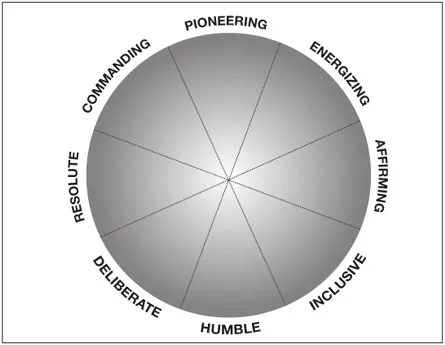
Figure 1.1. The 8 Dimensions of Leadership Model
We offer the model as a way to expand your perspective about what constitutes effective leadership. Some of the leadership dimensions described here will seem very familiar to you, while others may seem counterintuitive. Everyone has a psychological comfort zone within the model toward which they gravitate. Think of this particular dimension as your “default setting.” Unless we understand the nature of these psychological influences on our work as leaders, we remain captive to our own beliefs, attitudes, and priorities, which can all too often blind us to the reality of a situation and the needs of our organizations. Mastering the 8 Dimensions of Leadership Model will help you reduce how often you jump to conclusions, make poor judgment calls, and project your own motivations onto others. This model will help you see that there are very legitimate alternatives to your default setting as a leader. Our goal is not only to expand your perspective, but also to help you shape your leadership style to match your current situation.
The 8 Dimensions Development Process
We hope that you’re excited about the opportunity before you—the chance to expand your leadership framework. We’ll help you do this by walking you through a four-step process:
A. Discover your primary leadership dimension
B. Learn about the psychological drivers, motivations, and “blind spots” typical of leaders with your style
C. Reflect on what really matters most in your leadership development right now
D. Once you identify the dimension(s) in which you’d like to grow, learn leadership lessons to help you get there
First, we’ll help you discover your default setting on the leadership model. You have two different options to help you identify your primary leadership dimension: We provide a self-assessment method in Chapter 2, or we offer a free online assessment at www.8DimensionsOfLeadership.com. If you received an e-mail with a personalized access code from a consultant, you will use this to complete the assessment. Otherwise, you may simply visit the URL printed here.
Once you know your primary leadership dimension, you will find the relevant chapter in Part 2 that will take you on a deep dive into the psychological underpinnings of your style. In order to learn how to shift your leadership style to meet changing demands, you’ll need to understand your psychological drivers, motivations, and “blind spots.” We are often aware of the benefits that a personality trait provides to us, but less frequently do we recognize the limitations that very same trait might produce. The chapters in Part 2 provide you with a more balanced view of what makes you tick as a leader.
Once you’ve gained a deeper understanding of the psychology behind both your strengths and challenges, you’ll move to Part 3 of the book, which provides some concrete leadership lessons to he...
Table of contents
- Cover
- Title Page
- Copyright Page
- Dedication
- Contents
- Preface
- Part I: The 8 Dimensions of Leadership Model
- Part II: A Deeper Dive into Your Primary Dimension
- Part III: Lessons from the 8 Dimensions
- Appendix: DiSC® Background, Theory, and Research
- References
- Index
- About Inscape Publishing
- About the Authors
Trusted by 375,005 students
Access to over 1.5 million titles for a fair monthly price.
Study more efficiently using our study tools.
Frequently asked questions
Yes, you can cancel anytime from the Subscription tab in your account settings on the Perlego website. Your subscription will stay active until the end of your current billing period. Learn how to cancel your subscription
No, books cannot be downloaded as external files, such as PDFs, for use outside of Perlego. However, you can download books within the Perlego app for offline reading on mobile or tablet. Learn how to download books offline
Perlego offers two plans: Essential and Complete
- Essential is ideal for learners and professionals who enjoy exploring a wide range of subjects. Access the Essential Library with 800,000+ trusted titles and best-sellers across business, personal growth, and the humanities. Includes unlimited reading time and Standard Read Aloud voice.
- Complete: Perfect for advanced learners and researchers needing full, unrestricted access. Unlock 1.5M+ books across hundreds of subjects, including academic and specialized titles. The Complete Plan also includes advanced features like Premium Read Aloud and Research Assistant.
We are an online textbook subscription service, where you can get access to an entire online library for less than the price of a single book per month. With over 1.5 million books across 990+ topics, we’ve got you covered! Learn about our mission
Look out for the read-aloud symbol on your next book to see if you can listen to it. The read-aloud tool reads text aloud for you, highlighting the text as it is being read. You can pause it, speed it up and slow it down. Learn more about Read Aloud
Yes! You can use the Perlego app on both iOS and Android devices to read anytime, anywhere — even offline. Perfect for commutes or when you’re on the go.
Please note we cannot support devices running on iOS 13 and Android 7 or earlier. Learn more about using the app
Please note we cannot support devices running on iOS 13 and Android 7 or earlier. Learn more about using the app
Yes, you can access The 8 Dimensions of Leadership by Mark Scullard,Emma Wilhelm,Jeffrey Sugerman in PDF and/or ePUB format, as well as other popular books in Business & Leadership. We have over 1.5 million books available in our catalogue for you to explore.