This book advances an enactivist theory of aesthetics through the study of inscrutable artworks that challenge us to think because we do not know what to think about them. John M. Carvalho presents detailed analyses a four artworks that share this unique characteristic: Francis Bacon's Study After Velázquez's Portrait of Pope Innocent X (1953), the photographs of Duane Michals, based on a retrospective of his work, Storyteller, at the Carnegie Museum of Art (2014), Étant donnés (1968) by Marcel Duchamp, and Jean-Luc Godard's 1963 film Le Mépris (released in the United States as Contempt). Carvalho argues against the application of theory to derive appreciation or meaning from these artistic works. Rather, each study enacts an embodied cognitive engagement with the specific artworks intended to demonstrate the value of thinking about artworks that might be extended to our engagement with the world in general. This thinking happens, as these studies show, when we trust our embodied skills and their guide to what artworks and the world around us afford for the activation and refinement of those skills. Thinking with Images will be of interest to scholars working in the philosophy of art and philosophical aesthetics, as well as art historians concerned with the meaning and value of contemporary art.
- 160 pages
- English
- ePUB (mobile friendly)
- Available on iOS & Android
eBook - ePub
About this book
Information
1 Aesthetics without Theory
It’s been a long time since Morris Weitz declared, “Aesthetic theory—all of it—is wrong” and argued that a theory of art, while “of the greatest importance for our understanding of the arts,” is “not just factually difficult” but “logically impossible.”1 In a more recent publication, Dominic Lopes urges us to “pass the buck” on a theory of art, leaving the worthwhile labor of fashioning a theory of art in general to others while we take on the more satisfying and promising work of providing theories of the individual arts.2 These theories of the individual arts, which he distinguishes from a theory of the arts, would “ground empirical art studies and practices of criticism” and, at the same time, offer a compelling account of the “hard cases” that so bedevil art theory.3 Lopes wants to turn our attention to the appreciative kinds, practices and media, including the conceptual and symbolic resources and techniques that lead us to grasp and appreciate the art in a putative work of art. His buck passing theory of art takes the hard cases as posing puzzles requiring philosophical responses and gives us a theoretical tool for dealing with them.4 I am encouraged by Lopes’ argument and aim to take it one step further. I want to argue, in general and in a treatment of a number of different “hard cases,” that we fashion theories not of the individual arts but of individual works of art. Put more plainly, I want to argue for taking each work of art in its specificity, not as an example of this art or that nor as characteristic of one or another stylistic or historical period, regional type, culture, genre and so on. I want to treat each artwork or group of related artworks on its own terms. I call this approach “thinking with images” and distinguish it from interpretation because I am less concerned with determining what the artwork in question means finally and more interested in the way an artwork makes me think. An artwork makes me think when I don’t know what to think. It makes me think because, in a way, the artwork itself is thinking. I’ll say how it thinks in a moment. In the balance of what follows immediately, I clarify what it means to think with images. In the chapters that follow, I put this thinking to work.
What I am proposing is, in fact, not new but anachronistic. It draws on practices in French aesthetics dating to the 17th and 18th centuries before the introduction of the German Kunstwissenschaft, or “science of art,” led by Kant’s reflections on the beautiful and the autonomous judgment of taste.5 In those aesthetic practices, it was always a question, first, of what artistic problems artists confronted in the making of their work. At that time, philosophical theory always took a back seat to artistic practices. Aesthetic questions were treated a posteriori, only after examining the works of art themselves, often in the presence of those works, so that the works imposed themselves on these aestheticians rather than the aestheticians imposing their definitions and theories on the works a priori, in advance. In such encounters with works of art, Jacqueline Lichtenstein writes, French critics were forced to truly and seriously think “where it hurt, that is to say, where one did not expect it, under the violence of a blow, the shock of an event, a surprise encounter.”6 Lichtenstein calls this “artistic thinking,” la pensée artistique.7 I call it thinking with images.
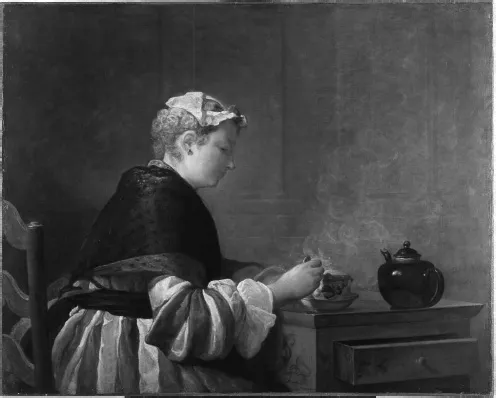
Figure 1.1 Jean-Baptiste-Siméon Chardin, A Lady Taking Tea (1735). © The Hunterian, University of Glasgow 2018
This is why, inspired by Lopes, I want to pass the buck not just on a theory of art but on theories of the individual arts, which are no doubt valuable for just the reasons Lopes gives, to return to thinking with the individual works of art. I do not suppose that we can return to some original, unsullied encounter with these individual artworks. The works themselves, as well as the creation and appreciation of them, are all richly contextual (and I remark on that context next). They are also materially rich. In the case of the painting, photography, installation and cinema considered here, there will be considerations of the qualities of the materials, the manner of their application, point of view, cropping and framing, development, lighting and shadow, conditions of exhibition and so on. We begin, therefore, by giving attention to the material conditions in which we find the artwork, commenting, as much as possible, on works we have seen firsthand, using reproductions and critical analyzes to bolster and broaden what we have experienced ourselves, drawing the theory out of the works a posteriori and refraining from imposing a theory on them before the fact.
In this way, I propose to exemplify an approach to thinking with and not just about artworks, for engaging those works in a meaningful dialog about what a particular artwork allows or dares us to think. These engagements begin with an acknowledgment of the challenges presented by works of art for someone who is only an amateur photographer and who has no credible experience in the art studio or the cinematic arts. Philosophy and theory have taught us very little (if anything at all) about the object in front of us. We have a lot to learn about the problems confronted by this or that art practice, the practical solutions artists have devised for addressing those problems and the history of the success and failure of these solutions, as well as what artists themselves take to be the epitome of those successes and failures. When the work of art in question is “difficult,” the way a child can be difficult (unruly, inappropriate, out of control), the challenges multiply, but so do the opportunities for truly and seriously thinking in Lichtenstein’s sense. Artworks were chosen for this study because of the opportunities for thinking they afforded me and that I hope to share with you.
What does it mean, in this regard, to say, as we did earlier, that the artwork itself is thinking? It does not mean that certain material objects, by virtue of being art, are sentient and capable of drawing inferences from what they perceive. It means, rather, that artworks, any object really, but artworks especially, engage us. They engage us by being the site for the emergence of a sense that can be enacted or achieved by skilled and suitably attentive observers from the affordances arrayed in them. An artwork collects in one place elements that, by their array, make present or afford, for those who have acquired and refined skills for picking them up, an impression, a meaning, a point, not yet the meaning but a directedness, a hint that emerges from our skilled engagement with that artwork and motivates continued skilled engagement.8 The elements present in an artwork, their array and the senses they afford can be relatively straightforward and transparent—Raphael’s Portrait of Pope Julius II (1511–1512) (Figure 1.2), perhaps—or rather complex and opaque—for example, to stick with painting, Jackson Pollock’s Full Fathom Five (1947). The artwork is thinking when it moves us to think.9
In any case, what is present in a work of art, what we can pick up from the affordances that turn up in the materials and the associations of those materials used to create the work—the colors, the textures, the dimensions, the supports, the alignments, arrangements, focus, dissolves and so on—will be straightforward or complex, transparent or opaque relative to the skills of the one for whom these affordances turn up. The individual ordinarily skilled at viewing paintings will likely see the Raphael as a pleasing picture of a 16th-century pontiff while the seasoned Renaissance art scholar will notice the stark deviation in this image from the, then, standard models for representing popes. The Pollock will likely appear opaque to all but those with a specific set of skills acquired and refined by their experiences with abstract expressionist painting in New York after the Second World War: to these specialists, Full Fathom Five will present an early example of what will become Pollock’s oeuvre.
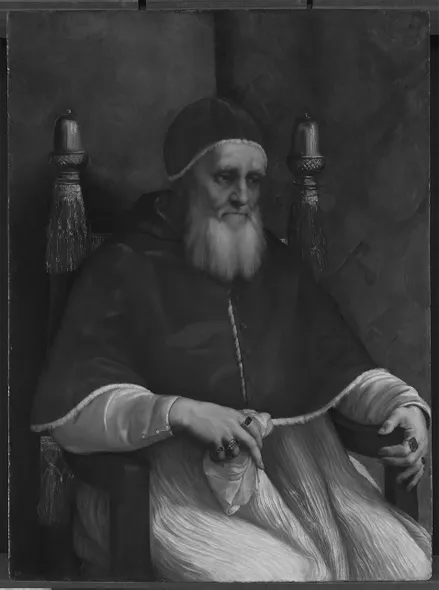
Figure 1.2 Raphael, Portrait of Pope Julius II (1511–1512). © The National Gallery, London
Images, on this view, are never thinking on their own. The artist was thinking when she set these elements down and in motion in a single work, and we are thinking, when the work is successful, in our appreciation of what emerges from the way these elements are arrayed in it. The artist may have a premonition of the sense these elements are to make in relation to one another in this work, but this sense may change in the course of creating the work due to the availability of materials, the ways the materials arrayed in it come to affect one another, an unanticipated influence by another work of art, by events in the life of the artist, changes in the work space, in short, for any number of reasons. The painter who steps back from her canvas and decides it is done, sees a sense emergent on that canvas that approximates the sense she wants to give her work. A sense emerges there, however, only because it is afforded to the artist and her particularly embodied skills as a painter. A sense emerges on the canvas, board, paper, glass, film or stucco wall in the oil, acrylic, watercolors, enamel, encaustic, lead foil or crayon applied with a brush, a roller, a marker, adhesive or a knife in the long (or short) course of its being made, on its own or in concert with the creation of other works including the works of other artists. A sense emerges for the viewer, as well, only if it is afforded to him by his particularly embodied and refined skills as a viewer, of works of art in general and of this particular work of art.
Alva Noë would call the achievement of this work of art or of our appreciation of that work “fragile.”10 Writing about perception in general, he holds that “perceptual presence is always a work in progress.” It “does not come for free; we achieve it.”11 What he means is that perceptual experience, as we have been suggesting about our experience of a work of art, is a skillful grappling with what affords itself or turns up in the environment. Noë says we are distinguished by our repertoire of available ways of achieving the world’s presence. In the same way, I want to suggest that our own approach to a work of art is distinguished by the repertoire of skills we have acquired and refined for achieving the presence of the art in a work of art. I want to suggest, comparable to the way Noë would have us acquire and refine a repertoire of ways of making the world present to us by grappling with and engaging the world, accepting the inevitability of mistakes and slippages, the need for adjustments and the successes to be won from active adjustments and redoubled effort. We can achieve the presence of the art in a work of art by grappling with the work of art in front of us.
In the same way that we don’t require a theory to grapple with the world and achieve a more or less fragile presence of that world, we can acquire and refine a repertoire of skills by engaging the affordances that turn up in a work of art without needing a theory to achieve the presence of that work of art. The studies conducted in this work are my own interventions, my own fragile achievements made possible by my own repertoire of particularly embodied skills, acquired and refined by my own experiences appreciating and thinking with these works of art. Although these skills and the repertoire they form are mine, these studies are not utterly idiosyncratic since the skills were acquired and refined in the company of and by associations with others who have acquired and refined similar skills and since the works of art whose presence I attempt to achieve are also shared with others who have appreciated them and achieved a presence with those works that they have shared with others.
Images think, and we think with images, when an artist establishes a site where she collects and sets in motion elements that enact a presence that viewers engage in the affordances that turn up in their skillful encounter with that work of art in its specificity as this work and no other. Of course, those affordances do not turn up for us in isolation. An important part of the skills acquired by artists and audiences includes an awareness of how one or another element or array of elements borrows from other works of art. Those skills will also include an understanding of the context for these elements coming together in this work and appearing as they do here differently or comparatively to how they appear elsewhere. This context is defined as much by what is said about works of art as by the material practices and institutions governing the creation and appreciation of works of art. The thinking we do with works of art, then, results from our skillful engagement with what is materially and discursively afforded by those works of art. In this study, I focus on works of visual art: paintings, photographs, installations and fi...
Table of contents
- Cover
- Title
- Copyright
- Dedication
- Contents
- List of Illustrations
- Acknowledgements
- Introduction: Thinking with Images
- 1 Aesthetics without Theory
- 2 The Baroque and Bacon’s Popes
- 3 Chance Meeting with Duane Michals
- 4 Étant donnés | Marcel Duchamp
- 5 Le Mépris or Contempt, a Film by Jean-Luc Godard
- Conclusion
- Bibliography
- Index
Trusted by 375,005 students
Access to over 1.5 million titles for a fair monthly price.
Study more efficiently using our study tools.
Frequently asked questions
Yes, you can cancel anytime from the Subscription tab in your account settings on the Perlego website. Your subscription will stay active until the end of your current billing period. Learn how to cancel your subscription
No, books cannot be downloaded as external files, such as PDFs, for use outside of Perlego. However, you can download books within the Perlego app for offline reading on mobile or tablet. Learn how to download books offline
We are an online textbook subscription service, where you can get access to an entire online library for less than the price of a single book per month. With over 1.5 million books across 990+ topics, we’ve got you covered! Learn about our mission
Look out for the read-aloud symbol on your next book to see if you can listen to it. The read-aloud tool reads text aloud for you, highlighting the text as it is being read. You can pause it, speed it up and slow it down. Learn more about Read Aloud
Yes! You can use the Perlego app on both iOS and Android devices to read anytime, anywhere — even offline. Perfect for commutes or when you’re on the go.
Please note we cannot support devices running on iOS 13 and Android 7 or earlier. Learn more about using the app
Please note we cannot support devices running on iOS 13 and Android 7 or earlier. Learn more about using the app
Yes, you can access Thinking with Images by John M. Carvalho in PDF and/or ePUB format, as well as other popular books in Art & Art Theory & Criticism. We have over 1.5 million books available in our catalogue for you to explore.