eBook - PDF
Applied Computational Aerodynamics
A Modern Engineering Approach
- 894 pages
- English
- PDF
- Available on iOS & Android
eBook - PDF
Applied Computational Aerodynamics
A Modern Engineering Approach
About this book
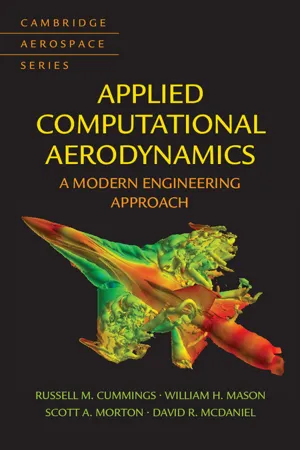
This computational aerodynamics textbook is written at the undergraduate level, based on years of teaching focused on developing the engineering skills required to become an intelligent user of aerodynamic codes. This is done by taking advantage of CA codes that are now available and doing projects to learn the basic numerical and aerodynamic concepts required. This book includes a number of unique features to make studying computational aerodynamics more enjoyable. These include: • The computer programs used in the book's projects are all open source and accessible to students and practicing engineers alike on the book's website, www.cambridge.org/aerodynamics. The site includes access to images, movies, programs, and more • The computational aerodynamics concepts are given relevance by CA Concept Boxes integrated into the chapters to provide realistic asides to the concepts • Readers can see fluids in motion with the Flow Visualization Boxes carefully integrated into the text.
Information
1
1
Introduction
to
Computational
Aerodynamics
Codes
do
not
produce
results,
people
produce
results
using
codes.
—Dave
Whitfield,
a
longtime
CFD
code
developer
and
user
1
LEARNING
OBJECTIVE
QUESTIONS
After
reading
this
chapter,
you
should
know
the
answers
to
the
following
questions:
What
is
computational
aerodynamics?
J
What
is
computational
fluid
dynamics?
J
What
are
the
major
goals
of
computational
aerodynamic
simulation
efforts?
J
What
does
it
mean
to
be
an
intelligent
user
of
computational
aerodynamics?
J
How
have
computational
aerodynamic
simulation
capabilities
changed
during
the
past
J
fifty
years?
Why?
Can
you
list
five
ways
that
computational
aerodynamics
could
be
used
on
the
design
of
J
a
new
airplane?
Why
is
computational
aerodynamics
needed?
Why
not
just
determine
aerodynamic
char-
J
acteristics
with
flight
testing
or
wind
tunnel
testing?
What
is
the
difference
between
a
real
flow
and
a
model
of
a
real
flow?
J
What
are
the
four
steps
of
the
computational
fluid
dynamics
process?
J
What
is
one
of
the
largest
sources
of
error
in
computational
aerodynamics?
J
CFD
simulation
of
a
modern
commercial
transport
(courtesy
of
Airbus;
a
full
color
version
of
this
image
is
available
in
the
color
insert
pages
of
this
text).
Table of contents
- Cover
- Half-title
- Series information
- Title page
- Copyright information
- Table of contents
- Preface
- Acknowledgments
- List of abbreviations
- Nomenclature
- 1 Introduction to Computational Aerodynamics
- 2 Computers, Codes, and Engineering
- 3 Getting Ready for Computational Aerodynamics
- 4 Getting Ready for Computational Aerodynamics: Aerodynamic Concepts
- 5 Classical Linear Theory Computational Aerodynamics
- 6 Introduction to Computational Fluid Dynamics
- 7 Geometry and Grids: Key Considerations in Computational Aerodynamics
- 8 Viscosity and Turbulence Modeling
- 9 Flow Visualization: The Art of Computational Aerodynamics
- 10 Applications of Computational Aerodynamics
- Appendix A Geometry for Aerodynamicists
- Appendix B Sources of Experimental Data for Code Validation
- Appendix C Potential Flow Review
- Appendix D Computational Aerodynamics Programs
- Appendix E Structured Grid Transformations
- Appendix F Commonly Used Turbulence Models
- Glossary
- Index
- Plates
Trusted by 375,005 students
Access to over 1.5 million titles for a fair monthly price.
Study more efficiently using our study tools.
Frequently asked questions
Yes, you can cancel anytime from the Subscription tab in your account settings on the Perlego website. Your subscription will stay active until the end of your current billing period. Learn how to cancel your subscription
No, books cannot be downloaded as external files, such as PDFs, for use outside of Perlego. However, you can download books within the Perlego app for offline reading on mobile or tablet. Learn how to download books offline
Perlego offers two plans: Essential and Complete
- Essential is ideal for learners and professionals who enjoy exploring a wide range of subjects. Access the Essential Library with 800,000+ trusted titles and best-sellers across business, personal growth, and the humanities. Includes unlimited reading time and Standard Read Aloud voice.
- Complete: Perfect for advanced learners and researchers needing full, unrestricted access. Unlock 1.5M+ books across hundreds of subjects, including academic and specialized titles. The Complete Plan also includes advanced features like Premium Read Aloud and Research Assistant.
We are an online textbook subscription service, where you can get access to an entire online library for less than the price of a single book per month. With over 1.5 million books across 990+ topics, we’ve got you covered! Learn about our mission
Look out for the read-aloud symbol on your next book to see if you can listen to it. The read-aloud tool reads text aloud for you, highlighting the text as it is being read. You can pause it, speed it up and slow it down. Learn more about Read Aloud
Yes! You can use the Perlego app on both iOS and Android devices to read anytime, anywhere — even offline. Perfect for commutes or when you’re on the go.
Please note we cannot support devices running on iOS 13 and Android 7 or earlier. Learn more about using the app
Please note we cannot support devices running on iOS 13 and Android 7 or earlier. Learn more about using the app
Yes, you can access Applied Computational Aerodynamics by Russell M. Cummings,William H. Mason,Scott A. Morton,David R. McDaniel in PDF and/or ePUB format, as well as other popular books in Technology & Engineering & Engineering General. We have over 1.5 million books available in our catalogue for you to explore.