- English
- ePUB (mobile friendly)
- Available on iOS & Android
eBook - ePub
About this book
This introduction to fashion is aimed at students of fashion design across the world. By following the design process, from historical and commercial industry context to final collection presentation, the book provides a clear guide for students as they discover what designing for fashion entails. Along the way they will explore a wide variety of hands-on, creative methodologies of design ideation, development, and presentation. Supported by inspirational visual content—fashion photography, fashion illustration, sketchbook artwork, technical drawings, and infographics—and case studies, the book offers a unique overview of the fashion industry.
Information
Topic
DesignSubtopic
Fashion Design1. The history and business of fashion
Learning objectives
• Appreciate the various ways in which fashion can be understood: as a cultural product, a designed object, and as an industry
• Learn the key terminology pertaining to the study of fashion
• Understand the main historical developments that have affected the evolution of fashion
• Gain familiarity with key fashion designers from the 1800s to today
• Comprehend the structure of the fashion marketplace
• Be aware of the current issues impacting the fashion industry and its design practices
Understanding Fashion
Fashion is a hybrid discipline. It sits at the intersection of art, craft, and industry as both a creative practice and big business. To gain success and relevance, a designer’s work must combine artistry with function, and be commercially viable. Before delving into the research, creative development, and presentation undertaken by designers and merchandisers in this industry, let’s look at what fashion actually is.
Fashion is a cultural product
Just as music and art express esthetic preferences, fashion conveys the chosen dress codes of a particular group. Taste represents the embodiment of cultural preferences, often referred to as the culture’s Zeitgeist. As culture changes, so does taste, and fashion follows along.
Fashion, by its very definition, is temporary. Most theorists agree that fashion does not simply refer to the clothing we wear; it also expresses a cultural language. Fashion is intrinsically bound by culture, as people who share cultural identity most likely share similar taste. For instance, young people in metropolitan cities such as Seoul and New York often share more similar style preferences with each other than with their local rural counterparts. These boundaries, which used to be very strict, are constantly being redrawn by social media and other forms of digital communication.
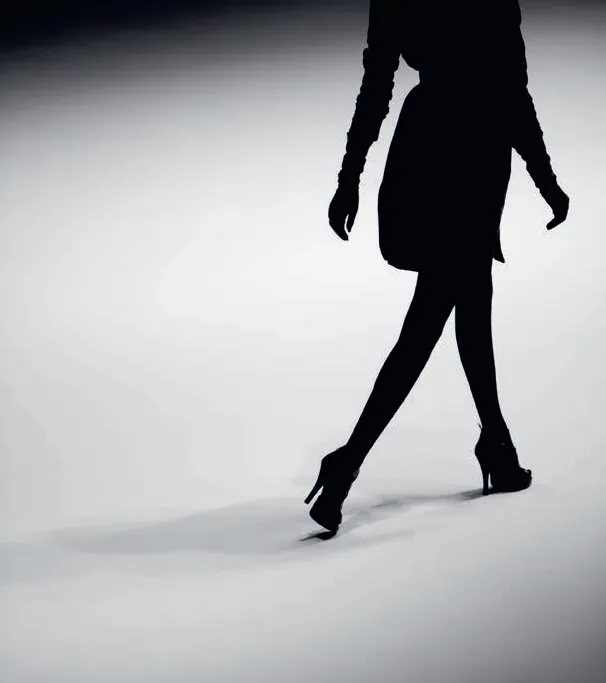
Catwalk shows are just one of the many facets of the fashion industry.
Fashion terminology definitions
Dress: The collective term describing all items and practices used by a population to protect and adorn the human body. As such, jewelry, clothing, makeup, footwear, and many more are all “items of dress.”
Clothing/Apparel: Items of dress serving the primary purpose of covering the body, achieving both functional protection from the elements and moral propriety.
Costume: A style of dress that communicates belonging to a specific cultural group, social class, or national identity. Costume may also refer to a historical style, such as the Spanish farthingale, popular in the 16th century, and to national dress styles, such as Bavarian lederhosen: both are forms of costume while not qualifying as contemporary fashion. Costume tends not to change over time.
Fashion: A style that, at its peak, gains temporary popularity and widespread use, only to be replaced by a different style shortly afterward. This may refer to modes of dress, music, food, or any other consumer product. The word “fashion” is commonly used as synonym for the most popular style of dress.
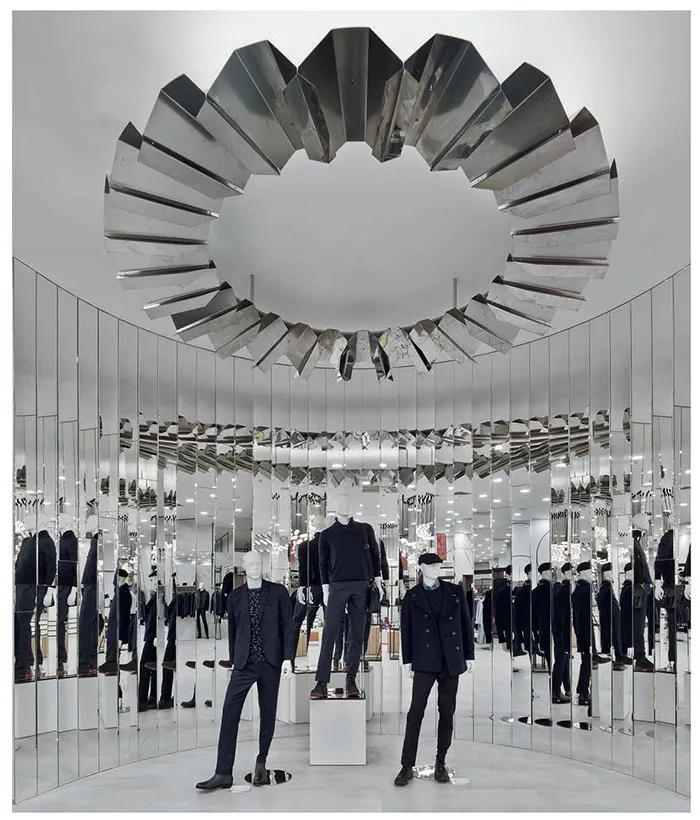
Designer fashion showcased in a Moscow boutique.
Fashion is a designed object
Fashion is actively generated by designers. To enter this industry is to take on the challenge of pushing its esthetic language further through creative exploration and artistic process. As is evident from the definitions presented above, many of these concepts overlap, and there are several gray areas between each of these terms. However, it is important to pay close attention to the intended function of each form of dress in order to better hone the purpose of one’s design practice and artistic choices. A large part of successfully designing fashion rests in the designer’s ability to critically evaluate how their creative production connects with its cultural and esthetic context. In this context a fashion designer’s job is not only to design clothing or apparel, but to create constantly new styles that gain widespread acceptance and popularity. Failing to understand clearly how one’s work relates to the taste preferences of an ever-changing society is very risky, and may cause designers to spend vast amounts of time, energy, and financial resources in the development of irrelevant and unsuccessful products. After all, fashion remains an economic pursuit. Only design innovations that present meaningful solutions to the needs, both functional and esthetic, of a real audience become financial successes.
Fashion is an industry
In addition to being a social phenomenon and the product of the creative talents of designers, fashion is a thriving industry. It is a powerful contributor to the global economy, operating through a worldwide supply chain that employs tens of millions of people, from cotton pickers in Uzbekistan to yarn spinners in Peru and retailers in Japan. Joining this discipline as a designer, merchandiser, or product developer requires a thorough understanding of both the phenomenal potential of the existing system, as well as its deep structural failings, some of which will be addressed in more detail later in this chapter (see page 26). While methods of communication have been revolutionized by the introduction of the Internet in the 1990s, the way we make garments has not changed substantially since the Industrial Revolution in the late 18th century. Designers and all other creative thinkers wanting to make a meaningful contribution to the fashion industry, and to see it thrive in the future, must therefore apply their creativity and artistry not just to develop beautiful products, but also to provide innovative, real, and sustainable solutions to how fashion is designed, made, distributed, and sold.
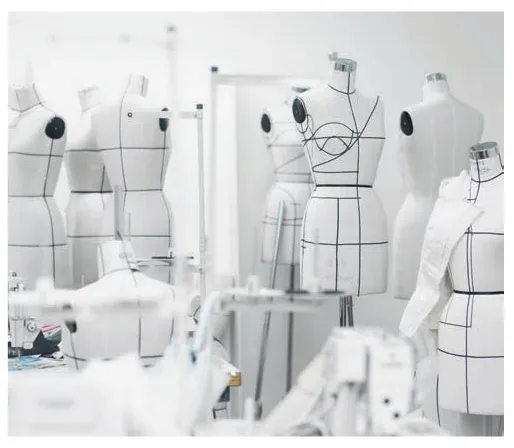
A designer studio in Seoul where new apparel is developed.
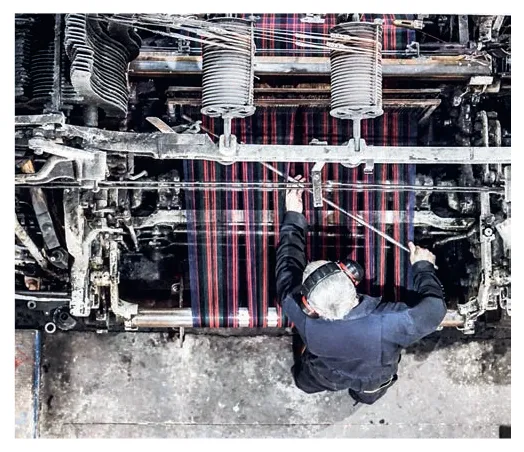
One of the many steps in the fashion industry, a textile production facility.
Fashion History Overview
A designer’s ability to make informed creative decisions is strengthened by an awareness of the historical context of fashion. For this reason, it is essential to gain a basic understanding of the history behind the fashion industry and the stylistic choices we see around us today. The overview below presents a brief outline of key themes, but for a more thorough appreciation of the historical context of fashion, consult the material listed in Useful Resources (see page 214).
While the industry has globalized in terms of production and manufacturing, the esthetics developed in Europe, North America, and Japan still direct the visual language of global fashion. For this reason the following synopsis focuses predominantly on these regions.
One concept commonly associated with fashion is that of luxury. While “fashion” indicates a temporary style preference, “luxury” is focused on value. Well before the recognizable appearance of fashion in Europe, cultures around the world had developed a clear understanding of luxury. Products and materials were classified according to their rarity and difficulty of access. The scarcer the resource, the more expensive it became, and the more luxurious it was perceived to be. Silk traded from China, rare dyes, gold, and precious stones were prevalent throughout the ancient world as obvious symbols of status. In many ways the symbolic codes of luxury have not evolved substantially since then.
The beginning of European fashion
The majority of fashion historians agree that the cultural phenomenon of fashion can be visib...
Table of contents
- Cover
- Copyright
- Title Page
- Contents
- Introduction
- 1 The history and business of fashion
- 2 Brands, consumers, and trends
- 3 Inspiration and research
- 4 Textile development
- 5 Design development
- 6 Presenting a collection
- 7 Portfolios and résumés
- Glossary
- Fashion Materials and Their Common Uses
- Croquis and Flat Templates
- Useful Resources
- Index
- Picture credits
- Acknowledgments
Trusted by 375,005 students
Access to over 1.5 million titles for a fair monthly price.
Study more efficiently using our study tools.
Frequently asked questions
Yes, you can cancel anytime from the Subscription tab in your account settings on the Perlego website. Your subscription will stay active until the end of your current billing period. Learn how to cancel your subscription
No, books cannot be downloaded as external files, such as PDFs, for use outside of Perlego. However, you can download books within the Perlego app for offline reading on mobile or tablet. Learn how to download books offline
We are an online textbook subscription service, where you can get access to an entire online library for less than the price of a single book per month. With over 1.5 million books across 990+ topics, we’ve got you covered! Learn about our mission
Look out for the read-aloud symbol on your next book to see if you can listen to it. The read-aloud tool reads text aloud for you, highlighting the text as it is being read. You can pause it, speed it up and slow it down. Learn more about Read Aloud
Yes! You can use the Perlego app on both iOS and Android devices to read anytime, anywhere — even offline. Perfect for commutes or when you’re on the go.
Please note we cannot support devices running on iOS 13 and Android 7 or earlier. Learn more about using the app
Please note we cannot support devices running on iOS 13 and Android 7 or earlier. Learn more about using the app
Yes, you can access Fashion Design by Denis Antoine in PDF and/or ePUB format, as well as other popular books in Design & Fashion Design. We have over 1.5 million books available in our catalogue for you to explore.