A magisterial study of celebrated photographer Walker Evans
Walker Evans (1903–75) was a great American artist photographing people and places in the United States in unforgettable ways. He is known for his work for the Farm Security Administration, addressing the Great Depression, but what he actually saw was the diversity of people and the damage of the long Civil War. In Walker Evans, renowned art historian Svetlana Alpers explores how Evans made his distinctive photographs. Delving into a lavish selection of Evans's work, Alpers uncovers rich parallels between his creative approach and those of numerous literary and cultural figures, locating Evans within the wide context of a truly international circle.
Alpers demonstrates that Evans's practice relied on his camera choices and willingness to edit multiple versions of a shot, as well as his keen eye and his distant straight-on view of visual objects. Illustrating the vital role of Evans's dual love of text and images, Alpers places his writings in conversation with his photographs. She brings his techniques into dialogue with the work of a global cast of important artists—from Flaubert and Baudelaire to Elizabeth Bishop and William Faulkner—underscoring how Evans's travels abroad in such places as France and Cuba, along with his expansive literary and artistic tastes, informed his quintessentially American photographic style.
A magisterial account of a great twentieth-century artist, Walker Evans urges us to look anew at the act of seeing the world—to reconsider how Evans saw his subjects, how he saw his photographs, and how we can see his images as if for the first time.
- 416 pages
- English
- ePUB (mobile friendly)
- Available on iOS & Android
eBook - ePub
About this book
Information
Publisher
Princeton University PressYear
2020Print ISBN
9780691222615
9780691195872
eBook ISBN
9780691210896
Topic
ArteSubtopic
Storia dell'arte contemporanea1
EVANS’S FRANCE: REAL AND VIRTUAL
11–12 Novembre 1926
J’ai lu votre travail avec délices. Vous avez les idées et du tempérament. Mais votre français a besoin de devenir moins heurté, moins télégraphique, moins obscure et . . . plus correct
Courage
Mme Berthier
It seems right to begin an account of Walker Evans’s France with comments his teacher wrote on a paper he submitted in the fall of 1926. I quote it in French and shall not translate. He would have frowned at the need to translate. Délices . . . idées . . . tempérament . . . heurté . . . Courage. One hopes that Evans was pleased. So, welcome to Evans’s year in France (April 1926–May 1927), where his aim was to be in the place-tobe at the time and to disguise himself as French—in life, in dress, and in writing. Evans’s interest in writing makes his words worth attending to—almost right up there with his pictures.
But first, a brief backtrack to consider Walker Evans’s life before he got to Paris in 1926. Walker Evans III was born on November 3, 1903 in St. Louis, Missouri. His father was an advertising executive, his mother a homemaker, as it was then called. An older sister, Jane, had been born in February 1902. In 1905, his father transferred to Chicago, and the family settled into Kenilworth, a new, model village just south of the city. The idyll ended in 1914 when his father moved job to Toledo, where Evans was sent to a public high school. Looking back from the later years of Evans’s singular commitment to making photographs, his youth strikes one as singularly disrupted. In 1918, his father moved out to live with a married woman he had fallen in love with. In 1919, his mother moved to New York City, taking the children with her. Walker Evans was sent to Loomis, a private boys’ school in Connecticut. That did not work out. In January 1921, he was sent to Mercersberg Academy, in Pennsylvania. Again, no success. In fall 1921, he was enrolled for his final high-school year at Phillips Andover Academy in Massachusetts. A number of lifelong friends date back to that good year. Turned away from Yale (where he mistakenly thought he was admitted), he enrolled in Williams College. Evans spent the 1922–23 year reading in the college library. After one year, he dropped out and went to live in New York, heading to the New York Public Library, where he eventually worked in the Map Room. His father was finally persuaded that financing a year in Paris would be a substitute for college that was not to be. On April 6, 1926, he sailed for Cherbourg on the RMS Orduna.
Evans’s particular writings in Paris and on his return to New York—translations from the French, stories written in French and in English—have been frequently discussed. As have his travels—arriving April 26, 1926, then in Marseille in July, Paris by August, September in Normandy, January 1927 in Juan les Pins, April by boat to Italy for a month (Naples, Rome, Florence), and by boat back to New York, arriving May 16, 1927. Photographs show him travelling with friends. He made snapshots—of himself, of a few places, of his friends. The striking one of Georgette Maury, taken near Grasse towards the end of his time there in April 1927, is a premature case of something that caught his attentive eye and was taken in to make a distinctive image [Plate 2]. It is a suggestion, as I have written, of things to come. Along with other French photographs, he held on to that one right through his life, and it ended up with everything else he held on to in his archive at the Met. In view of the lasting importance for him of France, it is telling that on at least one occasion he remarked incorrectly to an interviewer that he had stayed there for two years.
Years later, when asked why he went to Paris, the brief answer was that he just sensed that “that was the incandescent center, the place to be. It isn’t now. It was then. Figure out what was going on, who was alive. Proust was just dead. Gide was alive . . . I was intensely a Frenchman by that time and determined not to speak English. I dressed like a Frenchman even.” This remark, together with the papers he wrote in French, clearly shows he knew the language before he arrived in Paris. He is on record as having taken a French class (graded C) at Andover, and he seems to have been doing translations from the French when he was working at the New York Public Library in 1924–25.
His Frenchness was partly assumed to enable him to avoid the American set in Paris:
I felt very much outside of all of that because I was a nobody. And I wasn’t doing anything. I was absorbing it all. The thing that kept me from knowing Americans was that I was anti-American. I was not fleeing them, but I disdained the moneyed, leisured, frivolous superficial American who didn’t—well like Scott Fitzgerald, I wouldn’t have paid any attention to him at all however famous and successful a writer he was because he wouldn’t speak French and had materialistic values. Also they were older, too, I mean Hemingway was five years older. That’s a lot at that age.
In fact, Hemingway, born in 1899, was only four year older. But the big divide between Hemingway and Evans was World War I: like many other American writers-to-be, Hemingway had served in the ambulance services during the war. It is striking that Evans never mentions the war. (Indeed, I believe he also never mentions World War II.) One must keep in mind that he was too young to have had experienced it in the way other Americans in France had. He was born too late to be one of what came to be called “the lost generation.”
There is a curious mixture of passivity (he was a nobody, doing nothing while absorbing it all) and aggression in the way he speaks about his time in France years later. As often with Evans, the anger was directed not only against America but against his parents: “I took advantage of my parents’ distraction, whatever they were going through, and I got that paid for as part of my education.” He does not mention—as he, in fact, never did then or later—that his mother (and possibly his sister) had accompanied him to Paris, until he sent her back home (just when and what the circumstances were remains unknown). Nor did he ever open up on the subject of what he refers to as his parents’ distraction. His parents were estranged, and they lived separately from 1918. Evans kept things to himself.
Different things come out in different late interviews. He admits that he was “very poor and quite unhappy and lonely.” Incandescent it may have been, but “No, it wasn’t what most people think Paris in the golden age was. Not for me.” A convenient form in which to get a look at that golden age is through the photographs taken by Berenice Abbott (1898–1991), an American photographer living in Paris when Evans was there and whom he met later, back in New York. In the 1920s, one by one, many people of the Paris bohemian world came to her rooms in the 6ème (6th arrondissement) to be photographed. Her first show in 1926 included portraits of James Joyce, Jean Cocteau, Sylvia Beach, Djuna Barnes, Marie Laurencin, and André Gide (fig. 2), among others. (The world of people in Paris that Evans did not meet was extraordinary.) The only photographs we have of Eugène Atget, perhaps the single most important photographic precedent for Evans, were made by Abbott in Paris in 1927, literally on the eve of his death (fig. 3). Abbott used a view camera, worked in natural light, made several shots, then picked one and trimmed it down. The images are direct, unfussy, and elegant—an elegance partly enabled by the sense of dress and bearing of those people in that Paris at that time. The economic depression that hit just after her return to New York in 1929 was disabling for her work but eventually enabling for Evans.
It is telling that it was only a few years later, in 1931, back in New York, when he was introduced—most likely through Lincoln Kirstein—to Muriel Draper, that Evans found his place in a bohemian salon. He did not photograph his fellow guests but chose instead to capture the leavings when a party was over. Nora Sayre, a clever, much younger friend of his, wrote that “although he was Francophile . . . he has never wanted to be an expatriate.”
What is striking, when one looks through his written papers from his French stay, is that his ideas and his temperament (to quote Mme Berthier) were already so French. How quickly he learned and took on a style. The style lasted. Writing years later about her life with Evans, his Swiss-born, second wife remarked that, at dinner with friends, “Walker led our merry performance in his impeccable Parisian accent.” But what is most important is that Flaubert, Baudelaire, and Atget (whose photographs he got to know through Berenice Abbott when they were both back in New York ) were basic, so Evans claimed, to the making and the style of his photographs: “I think mine was the first generation that went to Europe and instead of studying European art and coming back and imitating it, went to Europe and got a European technique and applied it to America. Got a perspective and a technique. And that’s why I am talking about Baudelaire and Flaubert.” Evans specifies a perspective and a technique that he learned in France for use on America. But there is something else:
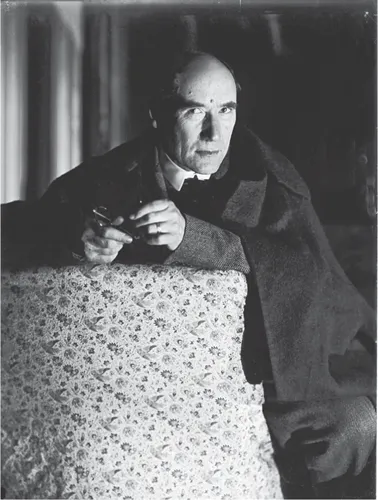
Fig. 2 Berenice Abbott, Portrait of André Gide, 1920s
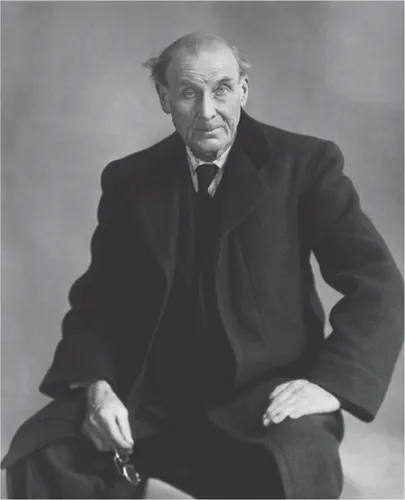
Fig. 3 Berenice Abbott, Eugène Atget, 1927
I wasn’t very conscious of it then, but I know now that Flaubert’s aesthetic is absolutely mine. Flaubert’s method I think I incorporated almost unconsciously, but anyhow used in two ways: his realism and naturalism both, and his objectivity of treatment; the non-appearance of the author, the non-subjectivity. That is literally applicable to the way I want to use a camera and I do. But spiritually, however, it is Baudelaire who is the influence on me.
Both quotations are taken from his conversation with Leslie Katz in 1971, first published on the occasion of the Evans exhibition at MoMA in the same year, curated by John Szarkowski. Only the second made it into print.
The pages that follow may puzzle those readers who want to look at photographs. Why interrupt doing that with Flaubert and Baudelaire? But the writer Evans wanted to be at the start did not go away and disappear. His remarks that he was drawn to Flaubert for his way of writing and that spiritually, for him, the influence was Baudelaire are not self-evident. They deserve to be taken as puzzling. What do they mean? Or, more precisely, what do they mean for Evans’s work? Other photographers, Atget for example, read widely. But there is no precedent for the nature of Evans’s link with literature. He referred to Flaubert and Baudelaire only late in life. Perhaps, as some have suggested, it was done with the aim of burnishing or shaping his reputation. But the remarks are forceful. And the point now is to consider how the comparison with Flaubert can shape our looking and understanding. It turns out that particular aspects of Flaubert’s writing and of Baudelaire’s spirit serve to call attention to complexities in Evans that have been overlooked.
Let us begin with Flaubert.
EVANS AND FLAUBERT
There is evidence that Evans owned Madame Bovary as well as five volumes of Flaubert’s letters in French, published in 1910 (the date suggests a youthful purchase) and Francis Steegmuller’s edition of the Selected Letters of 1953. Friends say he was reading Flaubert’s travels in Egypt just prior to his death. Widely read in Flaubert, perhaps not, but looking at his photographs with Flaubert’s texts in view suggests ways to see Evans. The relationship is reciprocal: looking at Evans suggests ways to read Flaubert.
The non-appearance in or absence from his work, to which Evans refers, has been observed from the time Flaubert was writing. He himself repeatedly commented on it as being basic to his style of writing. For example, “L’auteur dans son oeuvre, doit être comme Dieu dans l’univers, présent partout, et visible nulle part.” In the marvelous “studio” letters Flaubert wrote to his lover Louise Colet during the years he was writing Madame Bovary, he returns again and again, each time with a different turn of phrase, to the absence of the author:
Je veux qu’il n’y ait pas dans mon livre un seul mouvement, ni une seule réflexion de l’auteur.
Celà est long, trois ans passés sur la même idée, à écrire du même style (de ce style-là surtout, où ma personnalité est aussi absente que celle de l’empereur de Chine).
It is not the author’s similarity to God, but rather his absence from the text that was Evans’s way of describing Flaubert’s method. In the interviews of his last years, Evans returns to the same point. Two days before his death, in his last lecture given at Radcliffe, April 8, 1975, he is recorded as having said bluntly, “I believe in staying out, the way Flaubert does in his writing.” Naturalism and realism have to do with subject matter. Simply put, Evans, like Flaubert, looked at the world around him. But “objectivity of treatment” was for Flaubert a matter of style. And that is where the interest in the relationship lies. The report on the lecture in the Harvard Crimson of May 1, 1975 was smartly titled “The Flaubert of Photographers.”
It seems obvious, even without putting much thought to it, that a photograph bears a resemblance to the writings of an author whose texts were written in order to absent the author. Unlike a text, a photograph lacks a writer’s voice, and, unlike a painting, it lacks the marks of a maker’s hand. The absence of photographer as maker is a characteristic proof of Evans’s work: the straight-on shot and lack of depth; the respect for the surface of the world and of the print; the human detachment—visually, emotionally, politically—from what is captured in the image. Many photographers in many different ways have challenged photographic impersonality. Some photographers want to be present in their work. They want to express their feelings about the world they see or, simply, express their feelings. Robe...
Table of contents
- Cover Page
- Plates
- Title Page
- Copyright Page
- Contents
- Preface
- Introduction: Evans’s Eye
- 1. Evans’s France: Real and Virtual
- 2. The Possibility of the Medium
- 3. Cuban Days
- 4. Evans’s America: Life and Art
- 5. Subway Portraits
- 6. Time Out for Fortune
- 7. Turning In
- Afterword
- Notes
- List of Illustrations
- Index
- Acknowledgments
Trusted by 375,005 students
Access to over 1.5 million titles for a fair monthly price.
Study more efficiently using our study tools.
Frequently asked questions
Yes, you can cancel anytime from the Subscription tab in your account settings on the Perlego website. Your subscription will stay active until the end of your current billing period. Learn how to cancel your subscription
No, books cannot be downloaded as external files, such as PDFs, for use outside of Perlego. However, you can download books within the Perlego app for offline reading on mobile or tablet. Learn how to download books offline
Perlego offers two plans: Essential and Complete
- Essential is ideal for learners and professionals who enjoy exploring a wide range of subjects. Access the Essential Library with 800,000+ trusted titles and best-sellers across business, personal growth, and the humanities. Includes unlimited reading time and Standard Read Aloud voice.
- Complete: Perfect for advanced learners and researchers needing full, unrestricted access. Unlock 1.5M+ books across hundreds of subjects, including academic and specialized titles. The Complete Plan also includes advanced features like Premium Read Aloud and Research Assistant.
We are an online textbook subscription service, where you can get access to an entire online library for less than the price of a single book per month. With over 1.5 million books across 990+ topics, we’ve got you covered! Learn about our mission
Look out for the read-aloud symbol on your next book to see if you can listen to it. The read-aloud tool reads text aloud for you, highlighting the text as it is being read. You can pause it, speed it up and slow it down. Learn more about Read Aloud
Yes! You can use the Perlego app on both iOS and Android devices to read anytime, anywhere — even offline. Perfect for commutes or when you’re on the go.
Please note we cannot support devices running on iOS 13 and Android 7 or earlier. Learn more about using the app
Please note we cannot support devices running on iOS 13 and Android 7 or earlier. Learn more about using the app
Yes, you can access Walker Evans by Svetlana Alpers in PDF and/or ePUB format, as well as other popular books in Arte & Storia dell'arte contemporanea. We have over 1.5 million books available in our catalogue for you to explore.