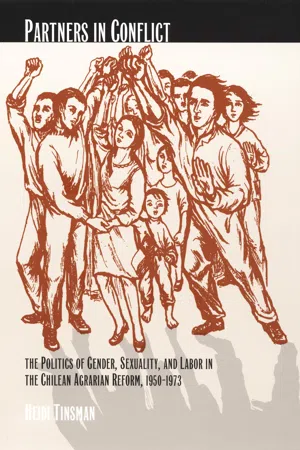
Partners in Conflict examines the importance of sexuality and gender to rural labor and agrarian politics during the last days of Chile's latifundia system of traditional landed estates and throughout the governments of Eduardo Frei and Salvador Allende. Heidi Tinsman analyzes differences between men's and women's participation in Chile's Agrarian Reform movement and considers how conflicts over gender and sexuality shape the contours of working-class struggles and national politics.
Tinsman restores women to a scholarly narrative that has been almost exclusively about men, recounting the centrality of women's labor to the pre-Agrarian Reform world of the hacienda during the 1950s and recovering women's critical roles in union struggles and land occupations during the Agrarian Reform itself. Providing a theoretical framework for understanding why the Agrarian Reform ultimately empowered men more than women, Tinsman argues that women were marginalized not because the Agrarian Reform ignored women but because, under both the Frei and Allende governments, it promoted the male-headed household as the cornerstone of a new society. Although this emphasis on gender cooperation stressed that men should have more respect for their wives and funneled unprecedented amounts of resources into women's hands, the reform defined men as its protagonists and affirmed their authority over women.
This is the first monographic social history of Chile's Agrarian Reform in either English or Spanish, and the first historical work to make sexuality and gender central to the analysis of the reforms.
Tinsman restores women to a scholarly narrative that has been almost exclusively about men, recounting the centrality of women's labor to the pre-Agrarian Reform world of the hacienda during the 1950s and recovering women's critical roles in union struggles and land occupations during the Agrarian Reform itself. Providing a theoretical framework for understanding why the Agrarian Reform ultimately empowered men more than women, Tinsman argues that women were marginalized not because the Agrarian Reform ignored women but because, under both the Frei and Allende governments, it promoted the male-headed household as the cornerstone of a new society. Although this emphasis on gender cooperation stressed that men should have more respect for their wives and funneled unprecedented amounts of resources into women's hands, the reform defined men as its protagonists and affirmed their authority over women.
This is the first monographic social history of Chile's Agrarian Reform in either English or Spanish, and the first historical work to make sexuality and gender central to the analysis of the reforms.