eBook - ePub
Marketing the Sports Organisation
Building Networks and Relationships
- 320 pages
- English
- ePUB (mobile friendly)
- Available on iOS & Android
eBook - ePub
About this book
Marketing and the world of sport overlap in two main ways: in the marketing of sports related products and services, and in the use of sports events to market a broader range of products and services. Marketing the Sports Organisation introduces the most effective marketing methods and tools available to sports organizations, and offers practical,
Trusted by 375,005 students
Access to over 1.5 million titles for a fair monthly price.
Study more efficiently using our study tools.
Chapter 1
Relationship marketing for sports organisations
Theoretical foundations and challenges
Following the 1996 Atlanta Olympic Games, the Belgian Olympic and Inter-federal Committee (COIB) created the Olympic Health Foundation (OHF). The OHF’s objective is to ‘make an objective, positive and relevant contribution to the development of a healthy lifestyle amongst the largest sections of the population, focusing on young people aged six to eighteen’. In order to spread its message, the foundation works closely with a number of key partners, such as parents, teachers, doctors, dieticians, nutritionists and public bodies. Initiatives introduced by the foundation include:
- The ‘Sport à l’école’ (Sport at school) scheme, which provides financial support for sport in primary and secondary schools through the sale of promotional objects.
- The ‘Fou de Santé’ (Mad about health) project, which is aimed at 8–12 year old primary school students, their teachers and their families. It provides 4,000 classes with educational materials about physical activity and healthy eating habits, together with free healthy breakfasts or snacks.
- The ‘Olympicnic’, which is a fun day for children and families that promotes Olympic values, in particular physical activity and healthy eating habits.
- ‘Olympisme et Jeunesse’ (‘Olympic spirit and youth’), which is a project week for schools that teaches young people about the Olympic Movement. It is held every Olympic year.
- The OHF science prize, which recognises master’s and bachelor’s degree projects that investigate the relationship between regular physical activity and health.
Aimed at all Belgian children and their families, the OHF’s programme is a social marketing operation that produces both functional benefits (by highlighting the links between physical activity, good eating habits and health) and socio-emotional benefits. Its success has been reinforced by the involvement of high profile partners, such as Nestlé Céréales (health orientation), Coca Cola Belgique-Luxembourg, Winterthur Assurances, Delhaize Le Lion, Belgacom, Union Nationale des Mutualités Libres, VRT, RTBF, VUM-Groep, Roularta-Group, Le Soir and Kinepolis, all of which have signed the charter and become OHF partners. Thus, the OHF has adopted a relationship-marketing approach to the implementation of its programme and strategy, which involves a large number of partners and is network-oriented.
The first part of this chapter presents the underlying principles of relationship marketing, together with the relevant tenets of stakeholder management, which are rooted in systems theory. The marketing actions of a national sports organisation (Swiss Olympic) are then analysed in order to highlight the benefits that sports organisations can gain by adopting a relationship-marketing approach. The chapter concludes with a general analysis of the challenges sports organisations must overcome when implementing relationship-marketing strategies.
Theoretical foundations
Originally developed in the commercial world, relationship-marketing and stakeholder management strategies are increasingly being adopted by sports organisations to implement their actions through networks. The principles underlying relationship marketing and stakeholder management are recognisably systemic, however, these approaches were initially based on practical experience rather than theory. Nevertheless, by defining the concepts underlying relationship marketing and stakeholder management, it has been possible to open up new managerial perspectives. These theoretical concepts are presented below.
Relationship marketing
Relationship marketing is generally associated with Customer Relationship Management; however, it covers a range of actions based on different theoretical foundations.
Origins of relationship marketing
Researchers (e.g. Berry and Parasuraman, 1993; Christopher et al. 1991; Sheth and Parvatiyar, 2000) agree that a new marketing approach has recently emerged. It is based on the notion ‘that it is not exchanges per se that are the core of marketing, but that exchanges take place in ongoing relationships between parties in the marketplace – and now also in the virtual marketplace facilitated by the internet’ (Grönroos, 2000: 22). Relationships between parties or stakeholders are the core phenomenon; therefore, managing the relationships between the organisations, customers, suppliers and other partners that form a network is a key aspect of marketing.
Arndt (1979) and Flipo (1999) have shown that many markets have a relational structure based on commitments between highly motivated parties with complementary long-term outlooks. According to Bruhn (2003), relationship marketing has various origins. Bagozzi (1975) was the first person to define marketing as a renewed process of exchanges between a buyer and a seller. The evolution of commercial relationships can be divided into a number of phases. Berry (1983) has identified these phases for the service sector, which is the sector that has seen the most significant contributions in this field (Gummerson, 1987; Grönroos, 1990, 1994).
According to Möller and Halinen (2000), relationship marketing finds its roots in four strands:
- Business marketing, in terms of the interactions between parties and the network approach
- Distribution channels in marketing
- Services marketing
- Direct and database marketing.
The relational approach suits the environment and goals of sports organisations (i.e. clubs, national and international federations, etc.) better than a transactional approach, as the systems in which sports organisations operate consist of multiple networks made up of numerous stakeholders (Figure 1.1). Their goals may be economic (e.g. to generate revenues), social (e.g. to generate positive interactions between individuals or groups) or environmental (e.g. to minimise the environmental impact of sports events). The core of the system is the sport itself, surrounded by various bodies involved in the furtherance and development of that sport. Sport can be divided into two main service areas: sporting practice (including training and competition), and sporting events.
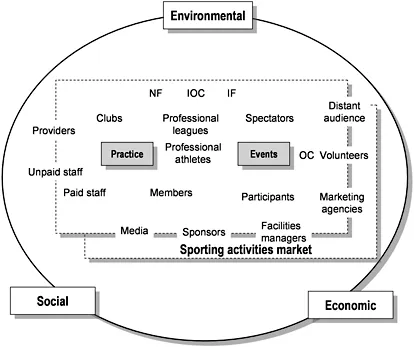
Figure 1.1 The sporting activities market and its environment.
The sporting activities market is open and in constant interaction and interrelation with its environment, which is composed of specific stakeholders with similar economic, social or environmental goals (Figure 1.2).
As the issues facing sports organisations are often very complex, it can be difficult for an organisation working in isolation to achieve its goals. Therefore, sports organisations need to join forces with other parties in order to optimise their impact on their environment. They must determine which parties have matching or complementary goals (not necessarily the same goals) and identify ways in which they can work together (Figure 1.3).
Definition of relationship marketing
Relationship marketing has been defined in a variety of ways by different authors. Most of the approaches limit themselves to the supplier–customer dyad, although some consider multiple stakeholders. Christopher et al. (1991); Kotler (1992); Morgan and Hunt (1994) and Gummerson (1999) have gone beyond simple supplier – customer interactions to consider marketing relationships as being embedded in a network of multi-relationships. We will follow Gummerson’s (2006: 3) definition of relationship marketing as ‘marketing based on interaction within networks of relationships’. As these relationships occur within groups of stakeholders, relationship marketing aims to ‘identify and establish, maintain and enhance and, where necessary, terminate relationships with customers and other stakeholders, at a profit, so that the objectives of all the parties involved are met; and this is done by mutual exchange and fulfilment of promises’ (Grönroos, 1994: 9). It is important to remember that marketing also concerns not-for-profit (or non-consumer) relationships, which constitute a large proportion of the relationships developed by sports organisations, as these organisations often adopt social marketing programmes and work with volunteers.
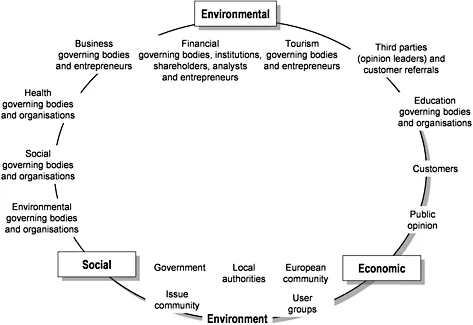
Figure 1.2 External stakeholders in the sporting activities market.
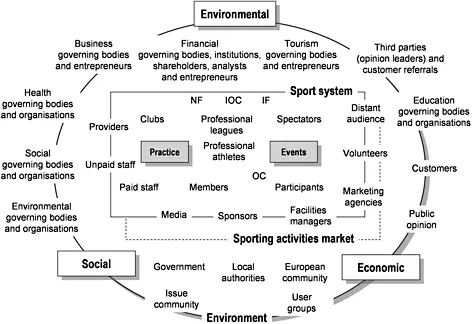
Figure 1.3 The sports activities system.
What is a relationship?
The concept of a relationship, which lies at the heart of relationship marketing, is quite large and requires definition. According to Hinde (1979), a relationship is a series of interactions between two parties with each interaction contributing to the evolution of the relationship. Grönroos (2000: 33) considers that ‘a relationship has developed when a customer perceives that a mutual way of thinking exists between customer and supplier or service provider’. This touches upon the concept of empathy, which is an important dimension in the perceived quality of a service. Hinde (1995) has identified four conditions that can be used to describe relationships in inter-personal terms:
- A relationship involves reciprocal exchanges between entities that are both active and interdependent (interaction). Hence, this concerns all the stakeholders that interact within sports systems.
- A relationship has an end goal, and this end goal gives purpose to the people and the organisations involved. In a marketing context, this purpose is essentially related to the objectives and culture of each stakeholder.
- Relationships can represent varied realities because they concern different dimensions and they take different forms, thereby procuring a variety of benefits for the participants. These benefits can be functional, affective, emotional, psychological, social, hedonistic or aesthetic and sports organisations must deliver benefits in both functional and experiential ways.
- A relationship is a process-based phenomenon that evolves through series of interactions and in response to fluctuations in the environment (temporality). Hence, a competitive situation can produce a cooperative relationship. For example, Brussels wanted to set up a body to promote and manage the activities of the Roi Baudouin Stadium in order to maximise use of the stadium for non-sporting activities and to ensure Brussels City Council’s offer matched the demand from private firms. Therefore, the council decided to confide these promotional and managerial tasks to a specially created body, called ‘Prosport’, who work closely with the council’s sports department (which owns and runs the stadium), events organisers, sports associations and economic partners. Upstream, Prosport uses this network to obtain finance (e.g. via partnerships with private companies), to organise non-sporting events (e.g. concerts, conferences, exhibitions, seminars, etc.), and to develop the concept of stadium visits. Downstream, it uses the network to support local sports policies (e.g. aiding initiatives by Brussels’ sports clubs, etc.) and to advertise Brussels’ image via the major sports events that are held within the city (www.prosportevent.be/prosport.html).
Each relationship has a content that procures benefits for the parties involved. Long-term development contributes to the formation of links of different types:
- Commercial links are based on the notion of exchange and the construction of relationships that provide economic benefits (e.g. the relationship between a professional sports club and its sponsors). This relationship may or may not be formalised by a contract.
- Functional links are related to the use of a product or service.
- Social links can be analysed within the framework of Durkheim’s sociology, defined as ‘the link that connects the individual to social groups (e.g. family ties, community ties) or to society in general, and that allows the individual to be social, to integrate into society and to extract elements of his/her identity’ (Lewi, 2005: 152). This social link is one of the cornerstones of the sports system that helps integrate people into society (e.g. social function). The link can also be tribal or community-based, as in the case of professional football team supporters’ clubs or certain groups of motorcyclists.
- Emotional links produce emotions that hopefully will be positive. This is a fundamental element for sports organisations.
- Semantic links give purpose to the product or the service and to its use and consumption.
Hence, a relationship has an end goal, a form (i.e. formal or informal), a content (i.e. functional and experiential benefits), a frequency and an intensity. Peppers and Rogers (2004...
Table of contents
- Cover Page
- Title Page
- Copyright Page
- List of figures
- List of tables
- Foreword
- Preface
- Acknowledgements
- Abbreviations
- Introduction
- 1 Relationship marketing for sports organisations: theoretical foundations and challenges
- 2 Strategic analysis for relationship marketing
- 3 Issues in implementing a relationship-marketing strategy
- 4 British Judo case study: relationship-marketing principles in a national governing body of sport
- 5 Conclusion
- Notes
- References
Frequently asked questions
Yes, you can cancel anytime from the Subscription tab in your account settings on the Perlego website. Your subscription will stay active until the end of your current billing period. Learn how to cancel your subscription
No, books cannot be downloaded as external files, such as PDFs, for use outside of Perlego. However, you can download books within the Perlego app for offline reading on mobile or tablet. Learn how to download books offline
Perlego offers two plans: Essential and Complete
- Essential is ideal for learners and professionals who enjoy exploring a wide range of subjects. Access the Essential Library with 800,000+ trusted titles and best-sellers across business, personal growth, and the humanities. Includes unlimited reading time and Standard Read Aloud voice.
- Complete: Perfect for advanced learners and researchers needing full, unrestricted access. Unlock 1.5M+ books across hundreds of subjects, including academic and specialized titles. The Complete Plan also includes advanced features like Premium Read Aloud and Research Assistant.
We are an online textbook subscription service, where you can get access to an entire online library for less than the price of a single book per month. With over 1.5 million books across 990+ topics, we’ve got you covered! Learn about our mission
Look out for the read-aloud symbol on your next book to see if you can listen to it. The read-aloud tool reads text aloud for you, highlighting the text as it is being read. You can pause it, speed it up and slow it down. Learn more about Read Aloud
Yes! You can use the Perlego app on both iOS and Android devices to read anytime, anywhere — even offline. Perfect for commutes or when you’re on the go.
Please note we cannot support devices running on iOS 13 and Android 7 or earlier. Learn more about using the app
Please note we cannot support devices running on iOS 13 and Android 7 or earlier. Learn more about using the app
Yes, you can access Marketing the Sports Organisation by Alain Ferrand,Scott McCarthy in PDF and/or ePUB format, as well as other popular books in Business & Marketing. We have over 1.5 million books available in our catalogue for you to explore.