In the first thirty years of trade registration, between 1876 and 1906, over 250,000 marks were registered in Britain. In this book, David Newton, formerly Head of Patents Information at the British Library, has selected 220 of the most interesting and curious of those early brands. Shell originated with one Marcus Samuel selling antiques and curios, including sea shells, in Smithfield in 1833; it was only when his son visited the Caspian Sea and saw an opportunity to export oil from Russia that trade in the better known product began. An advertising campaign for Listerine mouthwash, originally a disinfectant for surgical procedures, coined the phrase 'always a bridesmaid, never a bride'. From Carlsberg beer to Triumph cars, from Lea and Perrin sauces to Beecham's pills, we learn the history of these brands, the companies which registered them, and how the brands have developed over the years.
eBook - ePub
Trademarked: A History of Well-known Brands
From Aertex to Wright's Coal Tar
- 362 pages
- English
- ePUB (mobile friendly)
- Available on iOS & Android
eBook - ePub
About this book
Information
Topic
Negocios y empresaSubtopic
Historia empresarial1
TRANSPORT
From Bikes to Cars and Other
Things Vehicular
The introduction of the steam train in the nineteenth century brought mass public transportation and by 1900 a billion passenger journeys were made each year. It was the development of the bicycle in the second half of the nineteenth century, though, that brought the first mass-produced transport for which trademark protection was used. The bicycle became commonplace, especially after the introduction of the Rover safety bicycle which had pedals driving a chain to turn the rear wheel.
Companies like Humber, Rover, Singer and Triumph started out as manufacturers of bicycles and tricycles and then, as the internal combustion engine was developed early in the twentieth century, moved into motorcycle and car production. Other companies, like Austin, came directly into motor manufacture early in the twentieth century. Car manufacturers registered trademarks for their brand names and later for the names of individual models. Car and bike trademarks were often in the form of badges.
On the back of the use of the internal combustion engine in road transport came the growth of the use of petrol and the rise of the oil companies. Firms like Shell and Standard Oil (abbreviated to SO and later called Esso) started out selling oil for lighting and heating and only in the twentieth century sold it for transport use. Other manufacturers developed components needed for the motor car, like Joseph Lucas’s lamps and Herbert Frood’s brake blocks, which he called ‘Ferodo’ as an anagram of his surname (trademark number 286,194 of 1906).
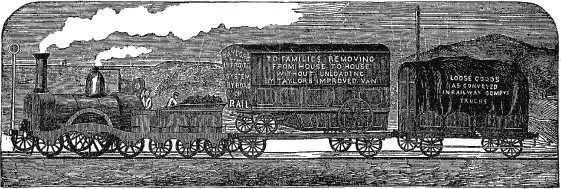
Despite Walter Taylor’s attractive trademark (number 4,034) his firm did not survive.
In the railway business few companies bothered to take out trademarks, although the Cammell company, which manufactured steel products, took out early trademarks for their steel rails, railway carriages and other items. Other firms, like that of Walter Taylor, who took out a splendidly illustrated trademark for his railway vans and removals in 1876 (number 4,034), have disappeared.
Austin Cars
Herbert Austin, the son of a Yorkshire farmer, was born in 1866 in Buckinghamshire. He went to Australia in 1882 but returned to England in 1893 to run Frederick Wolseley’s sheep-shearing factory. He had already built some experimental cars when in 1901 he became the manager at the Wolseley Tool and Motor Car Company.
In 1905 Austin found a site at Longbridge outside Birmingham and set up his own Austin Motor Company. The following year the firm’s first trademark, showing ‘a winged wheel kicking up dust’, was registered (number 286,069) and production was just 120 cars. Twenty years later 14,000 cars were being produced each year and in 1931 a ‘flying A’ replaced the first mark. The year 1932 saw the introduction of the best-selling ‘Austin Ten’.
In 1952, eleven years after Herbert Austin’s death, the Austin Motor Company merged with the Nuffield Group, which had earlier swallowed up the Wolseley company, and the British Motor Corporation was born. Another merger in 1968 formed British Leyland but by 1975 it had run into difficulties and was nationalised. In 1986 it became Rover Group and soon the Austin brand was dropped. Manufacture of cars at the Longbridge plant ended in 2005.
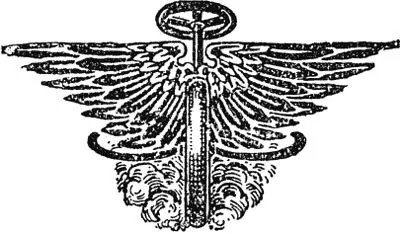
The Austin Motor Company’s ‘Winged Wheel’ trademark (number 286,069).
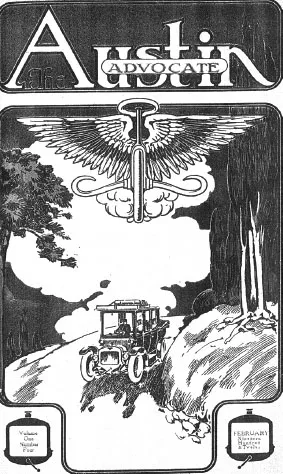
Cover of the Austin Advocate magazine of 1912 showing the ‘Winged Wheel’ trademark.
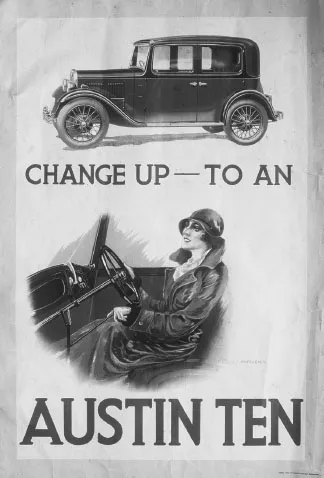
A poster for the successful Austin Ten, which was introduced in 1932, does not display either the ‘Winged Wheel’ or ‘Flying-A’ trademark. (The Robert Opie Collection)
Bell Punch Ticketing
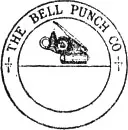
The Bell Punch trademark (number 40,471) illustrates the product in miniature.
The Bell Punch Company was established in 1878 to acquire the patent rights of an American registering ticket-punch that was used in conjunction with a series of pre-printed tickets to check the receipt of money. In 1884 John Melton Black joined the board as managing director and soon afterwards began to develop a small rotary ticket-printing machine. In the same year the firm registered a trademark (number 40,471) and a site was acquired in Tabernacle Street in the City of London, where a factory was built. The trademark shows a ticket punch similar in design to those illustrated in some of Black’s many patents.
In 1891 the London General Omnibus Co. started to use the Bell Punch ticketing system and it was soon extended over all routes. The company had transferred to Uxbridge by 1922 to expand production and during the 1920s and 1930s it started to produced taxi-meters and ticketing systems for cinemas and horse-race betting.
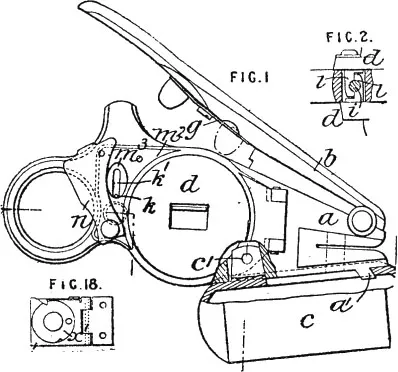
Patent for a ticket punch invented by John Melton Black, managing director of Bell Punch (GB 15,574 of 1893).
Later Sumlock Anita Electronics Ltd was set up as an offshoot of Bell Punch to produce ‘comptometers’ and it made the world’s first electronic desktop calculator, the ‘Anita’, in 1961. The Sumlock business was bought by the American firm Rockwell in 1973 but in 1986 its Portsmouth factory closed while the remainder of Bell Punch eventually became part of the German Höft & Wessel Group.
Cammell Railway Engineering
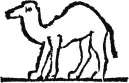
Charles Cammell’s trademark number 10,807 uses a visual pun.
Charles Cammell was born in Hull, Yorkshire, in 1810, the son of a wealthy ship-owner. His first employment was as an apprentice ironmonger but he later set up the iron and steel business Johnson Cammell & Co. in Sheffield with Henry and Thomas Johnson. By 1854 the company had offices in London and America and in 1870 it opened a factory at Dronfield to the south of Sheffield, first making railway wheels and then steel rails.
In 1877, as Charles Cammell & Co., the firm applied for trademarks depicting a camel (numbers 10,807–10) for which it claimed use since 1855. The camel logo continued in use until 1972, when it was replaced by a CL monogram design. The goods covered by the trademark show the wide range of products manufactured, including iron and steel, boilers, weighing machines, machine tools, files, tools, cannon, railway carriages, railway trucks and other carriages. In 1882 the Dronfield factory was closed and a new one opened in Workington on the Cumbrian coast.
Cammell & Co. merged with the Laird shipbuilding firm in 1903 to form Cammell Laird. The Laird shipbuilding business had been started in 1824 by William Laird, a Scot, who moved to the River Mersey and set up a boiler-making works which later expanded into iron shipbuilding. Later still the railway business became Metro-Cammell, based in Birmingham, and in the 1990s this merged with GEC Traction to form GEC-Alstom, now part of the engineering company Alstom. The shipbuilding business on Merseyside went into public ownership in the 1970s, was de-nationalised in 1983 and recently closed altogether.
Commer Vehicles

Commercial Cars’ ‘single wheel’ trademark, number 278,012.
Commer began in 1905 as Commercial Cars Ltd and in December of that year the firm applied for its first trademark (number 278,012), in the form of a letter C made from a wheel, from its headquarters in Gracechurch Street, London. Soon it set up a factory in Luton, Bedfordshire, where it remained for almost fifty years, mainly producing trucks.
Military vehicles were built during the First World War but when peace came the firm declined and in 1926 was taken over by Humber, which was amalgamated the following year into the Rootes Group. Production of vans and trucks continued at Luton but after the Second World War a move was made to nearby Dunstable.
The American company Chrysler took a 30 per cent holding in Rootes in 1964 and bought the rest in 1967. The Commer name was dropped in 1976 and in 1979 Chrysler UK was sold to the Peugeot-Citroën group. The ...
Table of contents
- Cover
- Half Title
- Title
- Copyright
- Contents
- Acknowledgements
- Introduction
- 1. Transport: From Bikes to Cars and Other Things Vehicular
- 2. Clothing, Footwear and Textiles: Outer- and Under-wear, Fibres and Fabrics
- 3. Drinks: Whisky, Wine and Water; Lager, Liqueurs and Lemonade
- 4. Food: From Sugar and Confectionery to Mustard and Vinegar
- 5. Household Goods: From Candles to Electric Lamps, Crockery to Silver Plate
- 6. Agricultural, Horticultural and Industrial Merchandise
- 7. Medicines and Toiletries: Pills, Potions and Perfumes
- 8. Pastimes: Games, Music, Stationery and Tobacco
- Bibliography
Trusted by 375,005 students
Access to over 1.5 million titles for a fair monthly price.
Study more efficiently using our study tools.
Frequently asked questions
Yes, you can cancel anytime from the Subscription tab in your account settings on the Perlego website. Your subscription will stay active until the end of your current billing period. Learn how to cancel your subscription
No, books cannot be downloaded as external files, such as PDFs, for use outside of Perlego. However, you can download books within the Perlego app for offline reading on mobile or tablet. Learn how to download books offline
Perlego offers two plans: Essential and Complete
- Essential is ideal for learners and professionals who enjoy exploring a wide range of subjects. Access the Essential Library with 800,000+ trusted titles and best-sellers across business, personal growth, and the humanities. Includes unlimited reading time and Standard Read Aloud voice.
- Complete: Perfect for advanced learners and researchers needing full, unrestricted access. Unlock 1.5M+ books across hundreds of subjects, including academic and specialized titles. The Complete Plan also includes advanced features like Premium Read Aloud and Research Assistant.
We are an online textbook subscription service, where you can get access to an entire online library for less than the price of a single book per month. With over 1.5 million books across 990+ topics, we’ve got you covered! Learn about our mission
Look out for the read-aloud symbol on your next book to see if you can listen to it. The read-aloud tool reads text aloud for you, highlighting the text as it is being read. You can pause it, speed it up and slow it down. Learn more about Read Aloud
Yes! You can use the Perlego app on both iOS and Android devices to read anytime, anywhere — even offline. Perfect for commutes or when you’re on the go.
Please note we cannot support devices running on iOS 13 and Android 7 or earlier. Learn more about using the app
Please note we cannot support devices running on iOS 13 and Android 7 or earlier. Learn more about using the app
Yes, you can access Trademarked: A History of Well-known Brands by David Newton in PDF and/or ePUB format, as well as other popular books in Negocios y empresa & Historia empresarial. We have over 1.5 million books available in our catalogue for you to explore.