Throughout the Western world, governments and financial elites responded to the financial crisis of 2008 by trying to restore the conditions of business as usual, but the economic, social and human damage inflicted by the crisis has given rise to a reconsideration of the inevitability of unfettered capitalism as a fact of life. A number of economic practices and organizations emerged in Europe and the United States that embodied alternative values: the value of life over the value of money; the effectiveness of cooperation over cut-throat competition; the social responsibility of corporations and responsible regulation by governments over the short-term speculative strategies that brought the economy to the brink of catastrophe.
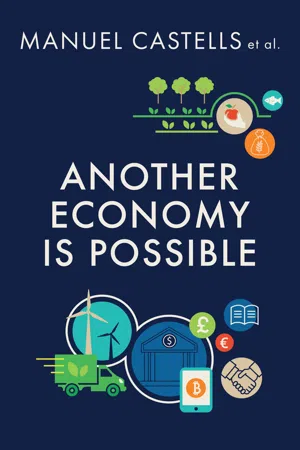
This book examines the blossoming of innovative new experiments in organizing work and life that emerged in the wake of the financial crisis: cooperatives, barter networks, ethical banking, community currencies, shared time banks, solidarity networks, sharing of goods, non-monetary transactions, etc., experiments that paved the way for the emergence of a sharing economy in all domains of activity oriented toward the satisfaction of human needs. Other innovations included the creation of cryptographic virtual currencies, epitomized by bitcoin, which blended a libertarian, entrepreneurial spirit with information technology to provide an alternative to standard forms of currency. On the basis of a cross-cultural analysis of alternative economic practices, this book develops an important theoretical argument: that the economy, as a human practice, is shaped by culture, and that the diversity of cultures, as revealed in a time of crisis, implies the possibility of different economies depending on the values and power relations that define economic institutions.
This book will be of great interest to students and scholars in sociology, economics and the social sciences generally, and to anyone who wishes to understand how our societies and economies are changing today.
- English
- ePUB (mobile friendly)
- Available on iOS & Android
eBook - ePub
About this book
Information
Chapter 1
Economy Is Culture
Sarah Banet-Weiser and Manuel Castells
What is value?
Like all human activities, what we call “the economy” is made up of human practices framed by institutions, both embedded in specific cultures, as argued by Douglass North, Elinor Ostrom, and Viviane Zelizer, among others (North 1981; Ostrom 2005; Castells et al. 2012; Zelizer 2013).
Economic practices refer to practices of production, consumption and exchange. But of what? In principle of “goods and services.” But the implicit materiality of this formulation is misleading, unless we extend the meaning of goods and services to everything. Because production, consumption, and exchange of knowledge is central to any economic system, as it is the production and consumption of culture itself. Moreover, contemporary economies are based on the production and exchange of financial value, an immaterial but also essential product and factor of production. Therefore, it appears that the object of economic practices is the generation and appropriation of value, whatever the material support of value is in every specific practice. This leads to the fundamental question: What is value?
A classical distinction in economic philosophy differentiates use value from exchange value. Indeed the first pages of Marx’s Capital: Critique of Political Economy open with this distinction and with a thorough elaboration on their relationship.1 The use value of anything is what is useful to satisfy human needs and desires, and it is realized by its use and its consumption. Exchange value, in Marx’s formulation, appears as the quantitative measure according to which use values of different kinds are exchanged. This relationship of exchange is constantly modified depending on time and place. However, Marx’s conceptualization refers specifically to the capitalist mode of production in which the wealth of society depends on “the immense accumulation of commodities.” Both use value and exchange value exist as commodities, and because commodities are different in quality, in order to be exchanged they need an exchange value measure that transforms different use values into a common measure of value. Therefore, the difference and interaction between use value and exchange value is internal to the logic of the capitalist mode of production and not, as is often thought, as an opposition between what humans want and like, and the capitalist process of commodification measured ultimately by money as a quantitative representation of exchange value.
What humans want and like, in Marx’s own words, has use value only if it is a “useful thing.” If it is not useful, the labor embodied in the “thing” has been wasted, and accordingly does not create value. Who, then, determines that something is useful? From the capitalist point of view there is no doubt: to increase the exchange value of the product, as determined by the mechanism of exchange value quantification, it is the marketplace, organized around the interaction of supply and demand as a means of allocation of scarce resources to satisfy ever expanding needs and desires. Thus, ultimately exchange value determines the actual value of use value. Yet, this is a logic internal to the process of capital accumulation in a society in which the entire social organization, including culture and institutions, is organized around the logic of capital. However, this logic is not an immanent feature of human nature (as the implicit essentialism of neoliberal ideology would have it; Harvey 2005), but the result of a particular social structure: capitalism in its different forms and stages of historical existence.
Therefore, economic value is exchange value, and exchange value is measured monetarily by the market. And the dominance of exchange value as the overarching value of everything is in fact an institutional feature, derived from the dominance of the institutions of capitalism over other institutional-cultural formations that are subordinated to the power of capitalism (Sennett 2006). Thus, in broader social terms, value, in a given social/institutional context, is what the dominant institutions and norms decide is valuable. Since the current global economy is capitalist, capital accumulation is the supreme value, in economic terms, and should translate in the capacity to buy everything with money, the material expression of exchange value in a fully commodified society.
However, economic organization is not tantamount to social organization, not even under capitalism. We live in a global network society structured around networks that follow different logics (Castells 2000, 2004, 2009). Each one of these global/local networks has its own principle of valuation. Thus if we consider that the power of the state, supported by its technological and organizational military capacity, is the supreme value that organizes societies, then value is what accrues this power in its various manifestations, as was the case with the Soviet Union and is still the case, largely, in China. If we say that in the last resort power resides in human minds, as humans are able to reverse the logic of institutions by their conscious actions, then major ideational systems are the holders of symbolic power, as is the case with religious institutions or mass media systems, and value will be measured by the extent and depth of adherence to God’s Law (in its diversity), or by the extent and depth of influence of media systems to construct representations of the human mind in specific contexts.
Then, the most important issue is the relative hierarchy of these global networks among themselves in each context (Castells 2009, 2011). Of course, all of these networks interact, each one with its principle of valuation, but is there a dominant network? A meta-network that organizes the functioning of the others as specific manifestations of the value-making principle of that network? Would this be the alpha network of capital accumulation that is referred to by all other networks? In a strict sense yes, but this would only be the case if we all lived in a capitalist society and not just a capitalist economy. Empirical observation shows that this is not the case. The principles of state power preempt economic considerations in the case of military conflict or potential threats: national security is priceless. The value in this case is security or victory. Economic benefits come second, although we know of many cases in which wars and conflicts are used as additional means of capital accumulation, though not for capital in general, but for the corporate allies of the state. It is what the media call crony capitalism and what these authors call the political pillage of resources using the power of the state, not the market logic. Moreover, the last century saw the formation of communist states and statist societies in much of the world. The fundamental value for these regimes was the accumulation of state power, not capital. Capital accumulation was a means to provide the resources for the enforcement of state power, domestically and internationally. This is not only the past (although it supports our analysis of value making beyond the logic of capital even if this was in the recent past) but also partially the present in the case of some societies, particularly China, the second-largest economy on the planet.
The Chinese state largely controls, owns, and ultimately dominates the Chinese economy. While economic growth and capital accumulation is a major goal, and thus a key value for Chinese society as a whole, what is valuable for the institutions that shape and control the life of Chinese is the power of the Communist Party. In China, unlike in the US, what is good for Huawei is not necessarily good for the country. Rather, what is good for the Communist State is good for Huawei (among other things because it is the property of the state). China operates simultaneously in different value systems: capital accumulation in the global economy; state power accumulation in the institutions and organizations of China (including economic organizations); and symbolic power, through cultural legitimation, in the controlled media system and consumerism as a guiding norm for the politically decisive urban middle class (Hsing 2014).
As for religion, it is the most significant source of violent conflict in today’s world. Imposing one’s religion, in multiple sectarian versions, is the most important value for the multiple theocracies and would-be theocracies around the world. God’s glory and service to God are the most important overarching values for billions of humans on the planet. Capital accumulation is only a means to broaden and deepen the kingdom of God. State power must be in the service of God. Otherwise it is a heretic institution that pretends to be superior to the law of God. This is the case in Islamic theocracies, but has been historically the case in Western countries as well: the Spanish conquest of America aimed primarily to convert the lost souls of the natives. The fundamental goal of the Reformation Church of England with the King/Queen as the nominal head of the Church was a merger of powers ultimately decided in favor of the state. In societies dominated by religious values, both by coercion and persuasion, value is defined by the conformity of behavior to God’s Law.
Thus, since value making depends on the hierarchy of power between the networks that organize human life, including strictly speaking economic activities, values and value making are largely an expression of power relationships.
Largely but not exclusively, that is. Since power, in every network or dimension of society, is contradicted by counterpower, the principles of value making projected by the counterpower networks will interact with those imposed/proposed by the institutions, and may result in different values as guiding principles of human behavior, including economic activities (Castells 2015). If we consider the economy as a set of practices organized around processes of production, consumption and exchange to generate value according to certain criteria of what is valuable, then the market and other forms of economic institutions will not be the exclusive domain of capital accumulation but the expression of different goals and projects coming from humans operating as economic subjects on their own, even disregarding the values proposed by the institutions of society. These counter-projects could come either from collective expressions of alternative forms of values or from autonomous individuals organizing their lives, and therefore their economic practices, around their own values, thus creating their own value-making procedures. We will illustrate our argument by considering two processes of value making that do not adjust to the norms of capital and yet have immense impact in the informational network economy in which we live: the open source economy and the rise of feminist economics.
However, before engaging in the analysis of alternative projects of value making, we will show how capitalist values are embedded in the social practices of the most fundamental capitalist institution in our economy: financial markets. We contend that financial practices are also culturally constructed, as the structures of capitalism evolve and change over time. Capitalism in the twenty-first century is characterized by the domination of capitalism by global financial capitalism, enacted by financial elites whose role and cultural underpinnings have been transformed in the network society under the impulse of neoliberal ideologies and politics (Harvey 2005; Crouch 2011; Engelen et al. 2011; Mason, 2015).
The culture of financial capitalists and financial institutions
Values do not exist in a social vacuum. They are enacted by individuals and embedded in institutions. Global informational financial capitalism as a specific form of capitalism has been shaped by a specific culture (Hutton and Giddens 2000). This culture is supported by financial practices because it fits the interests of the actors, the financial elites. Indeed, contemporary financial culture may be damaging for the interest of “the system” as a whole, because it threatens its stability. Yet, contemporary financial elites could not care less about the broader picture, as their behavior is guided by personal gain with a quarterly horizon for their lucrative bonuses (Nolan 2009; Engelen et al. 2011; Murray and Scott 2012). This is exactly the specific culture we refer to, and this is the culture whose content and formation we analyze in this section of the chapter.
The culture of the contemporary financial elites is formed by the articulation of different cultural layers that in their historical weaving induce a specific financial culture:
The first layer is, historically, the Protestant Ethic, following the classic analysis by Max Weber. It can be defined as the search for salvation through accumulation of wealth by reinvesting profits to increase profits: earned value is used to expand the production of value. In terms of the culture of the actors, it is characterized as a deferred gratification pattern. Their primary goal is not to consume the yield of their labor but to obtain their reward in the afterlife and in family reproduction of wealth, transforming profits into assets that will accrue their value faster than earnings because they start from a higher level of accumulation (Piketty 2013). For these elites, there is little hedonistic consumption; their lives tend to be relatively austere (at least in historical comparison with our time)....
Table of contents
- Cover
- Title Page
- Copyright
- About the Authors
- Acknowledgments
- Introduction: Manuel Castells
- Chapter 1 Economy Is Culture: Sarah Banet-Weiser and Manuel Castells
- Chapter 2 Economics Without Growth: Giorgos Kallis
- Chapter 3 Analysis of Worldwide Community Economies for Sustainable Local Development: Sviatlana Hlebik
- Chapter 4 Blockchain Dreams: Imagining Techno-Economic Alternatives After Bitcoin: Lana Swartz
- Chapter 5 Consumer Financial Services in the US: Why Banks May Not Be the Answer: Lisa J. Servon
- Chapter 6 Commoning Against the Crisis: Angelos Varvarousis and Giorgos Kallis
- Chapter 7 Alternative Economic Practices in Barcelona: Surviving the Crisis, Reinventing Life: Manuel Castells and Sviatlana Hlebik
- Chapter 8 Imagining and Making Alternative Futures: Slow Cities as Sites for Anticipation and Trust Sarah Pink and Kirsten Seale
- Conclusion: Manuel Castells
- Index
- End User License Agreement
Trusted by 375,005 students
Access to over 1.5 million titles for a fair monthly price.
Study more efficiently using our study tools.
Frequently asked questions
Yes, you can cancel anytime from the Subscription tab in your account settings on the Perlego website. Your subscription will stay active until the end of your current billing period. Learn how to cancel your subscription
No, books cannot be downloaded as external files, such as PDFs, for use outside of Perlego. However, you can download books within the Perlego app for offline reading on mobile or tablet. Learn how to download books offline
Perlego offers two plans: Essential and Complete
- Essential is ideal for learners and professionals who enjoy exploring a wide range of subjects. Access the Essential Library with 800,000+ trusted titles and best-sellers across business, personal growth, and the humanities. Includes unlimited reading time and Standard Read Aloud voice.
- Complete: Perfect for advanced learners and researchers needing full, unrestricted access. Unlock 1.5M+ books across hundreds of subjects, including academic and specialized titles. The Complete Plan also includes advanced features like Premium Read Aloud and Research Assistant.
We are an online textbook subscription service, where you can get access to an entire online library for less than the price of a single book per month. With over 1.5 million books across 990+ topics, we’ve got you covered! Learn about our mission
Look out for the read-aloud symbol on your next book to see if you can listen to it. The read-aloud tool reads text aloud for you, highlighting the text as it is being read. You can pause it, speed it up and slow it down. Learn more about Read Aloud
Yes! You can use the Perlego app on both iOS and Android devices to read anytime, anywhere — even offline. Perfect for commutes or when you’re on the go.
Please note we cannot support devices running on iOS 13 and Android 7 or earlier. Learn more about using the app
Please note we cannot support devices running on iOS 13 and Android 7 or earlier. Learn more about using the app
Yes, you can access Another Economy is Possible by Manuel Castells in PDF and/or ePUB format, as well as other popular books in Social Sciences & Sociology. We have over 1.5 million books available in our catalogue for you to explore.