![]()
Chapter 1
Landscapes Lost and Found
This Common Heritage
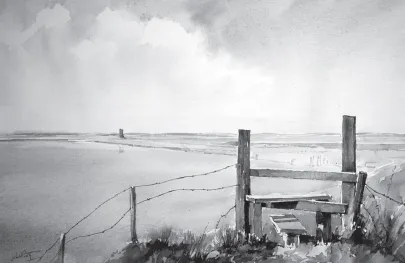
In a bend of the river stands an ancient, open meadow. These 30 hectares of the Fen, as it is known hereabouts, are a relic. For 600 years, the flint church tower has gazed through village trees upon an ever-changing agricultural landscape. This common, though, has survived intact. It is parcelled into 180 ‘fennages’, or rights to graze cattle, and so is in common ownership. When the harsh easterly winds drive down from Scandinavia, the grass crunches underfoot, and the pasture hollows are thick with ice. On a summer's day, you walk the same route past carpets of yellow buttercups, or divert past an enclosed hay meadow dotted with purple bee orchids. In autumn, after a few days of rain, the river floods and spills upon the pastures, lighting the landscape with the colour of the sky. In the long evenings, bats flit through clouds of insects, and owls hoot in search of scurrying prey. Splashes from the river remind us of the mysterious lives of otters. This Fen is different from the surrounding farmland, and it has been this way for centuries.
Other things are important about this common meadow. It links local people with nature, and as it is used and valued as a common, so it connects rights owners and users with one another. In recent years, though, both of these types of connection have been widely neglected and consequently eroded – to our loss, and to the loss of nature at large. As food has become a commodity, most of us no longer feel a link to the place of production and its associated culture. Yet agricultural and food systems, with their associated nature and landscapes, are a common heritage and thus, also, a form of common property. They are shaped by us all, and so in some way are part of us all, too. Landscapes across the world have been created through our interactions with nature. They have emerged through history, and have become deeply embedded in our cultures and consciousness. From the rural idylls of England to the diverse satochi of Japan, from the terraced rice fields and tree-vegetable gardens of Asia to the savannahs of Africa and forests of the Amazon, they have given collective meaning to whole societies, imparting a sense of permanence and stability. They are places that local people know, where they feel comfortable, where they belong.
When we feel that we have ownership in something, even if technically and legally we do not, or that our livelihood depends upon it, then we care. If we care, we watch, we appreciate, we are vigilant against threats. But when we know less, or have forgotten, we do not care. Then it is easier for the powerful to appropriate these common goods and so destroy them in pursuit of their own economic gain. For more than 100 centuries, cultivators have tamed the wilderness – controlling and managing nature, mostly with a sensitive touch. But all has changed in the last half per cent of that time. The rapid modernization of landscapes in both developing and industrialized countries has broken many of our natural links with land and food, and so undermined a sense of ownership, an inclination to care, and a desire to take action for the collective good.
Sometimes the disconnection is intentional. The state has special terms for people who use resources without permission and for land not conforming to the dominant model. They are wild settlers, poachers or squatters, they are traditional or backward, and their lands are wastelands. Landscapes are cleaned up of their complexity, and of their natural and social diversity. Hedgerows and ponds are removed, but so are troublesome tribes and the poorest groups. In these landscapes, both real and metaphorical commons exist. Most of the 700,000 villages of India have, or had, commons – officially designated by name, but vital sources of food, fuel, fodder and medicines for many local people. In northern Europe, open-field or common farming sustained communities for millennia; in southern Europe, huge tracts of uplands are still commonly grazed. In England and Wales, there are still more than 8000 commons, covering 0.5 million hectares, each embodying permanence in the landscape and continuity over generations. Most are archaic reminders of another age in an increasingly industrialized landscape.
Recent thinking and policy has separated food and farming from nature, and then accelerated the disconnectedness. At the same time as real commons have been appropriated, by enclosures or prairie expansion, the metaphorical food commons have also been stolen away. Food now largely comes from dysfunctional production systems that harm environments, economies and societies; and yet we seem not to know, or even to care overmuch. The environmental and health costs of losing touch are enormous. The consequences of food systems producing anonymous and homogeneous food are obesity and diet-related diseases for about one tenth of the world's people, and persistent poverty and hunger for another seventh.
So, does sustainability thinking and practice have anything to offer? Can it help to reverse the loss of trust so commonly felt about food systems, and prevent the disappearance of landscapes of importance and beauty? Can it help to put nature and culture back into farming? Can it help to produce safe and abundant food? These are some of the questions addressed in this book, which I believe concern agriculture's most significant revolution. Several themes will reoccur. One is that accumulated and traditional knowledge of landscapes and nature is intimate, insightful and grounded in specific circumstances. Communities sharing such knowledge and working together are likely to engage in sustainable practices that build local renewable assets. Yet, industrialized agriculture, also called modernist in this book because it is single coded, inflexible and monocultural, has destroyed much place-located knowledge. In treating food simply as a commodity, it threatens to extinguish associated communities and cultures altogether by conceiving of nature as existing separately from humans. Natural landscapes and sustainable food production systems will only be recreated if we can create new knowledge and understanding, and develop better connections between people and nature.
The World Food Problem
But why should this idea of putting nature and culture back into agriculture matter? Surely we already know how to increase food production? In developing countries, there have been startling increases in food production since the beginning of the 1960s, a short way into the most recent agricultural revolution in industrialized countries, and just prior to the Green Revolution in developing countries. Since then, total world food production grew by 145 per cent. In Africa, it is up by 140 per cent, in Latin America by almost 200 per cent, and in Asia by a remarkable 280 per cent. The greatest increases have been in China – an extraordinary fivefold increase, mostly occurring in the 1980s and 1990s. In the industrialized regions, production started from a higher base. Yet in the US, it still doubled over 40 years, and in western Europe grew by 68 per cent.1
Over the same period, world population has grown from 3 to 6 billion.2 Again, per capita agricultural production has outpaced population growth. For each person today, there is an extra 25 per cent of food compared with people in 1961. These aggregate figures, though, hide important differences between regions. In Asia and Latin America, per capita food production has stayed ahead, increasing by 76 and 28 per cent respectively. Africa, however, has fared badly, with food production per person 10 per cent less today than in 1961. China, again, performs best, with a trebling of food production per person over the same period. Industrialized countries as a whole show similar patterns: roughly a 40 per cent increase in food production per person.
Yet, these advances in aggregate productivity have only brought limited reductions in incidence of hunger. At the turn of the 21st century, there were nearly 800 million people who were hungry and who lacked adequate access to food, an astonishing 18 per cent of all people in developing countries. One third are in East and South-East Asia, another third in South Asia, a quarter in sub-Saharan Africa, and one twentieth each in Latin America and the Caribbean, and in North Africa and the Near East. Nonetheless, there has been progress to celebrate. Incidences of undernourishment stood at 960 million in 1970, comprising one third of people in developing countries at the time. Since then, average per capita consumption of food has increased by 17 per cent to 2760 kilocalories per day – good as an average, but still hiding a great many people surviving on less (33 countries, mostly in sub-Saharan Africa, still have per capita food consumption under 2200 kilocaleries per day). The challenge remains huge.3
There is also significant food poverty in industrialized countries. In the US, the largest producer and exporter of food in the world, 11 million people are food insecure and hungry, and a further 23 million are hovering close to the edge of hunger – their food supply is uncertain but they are not permanently hungry. Of these, 4 million children are hungry, and another 10 million are hungry for at least one month each year. A further sign that something is wrong is that one in seven people in industrialized countries is now clinically obese, and that five of the ten leading causes of death are diet related – coronary heart disease, some cancers, stroke, diabetes mellitus, and arteriosclerosis. Alarmingly, the obese are increasingly outnumbering the thin in some developing countries, particularly in Brazil, Chile, Colombia, Costa Rica, Cuba, Mexico, Peru and Tunisia.4
So, despite great progress, things will probably get worse for many people before they get better. As total population continues to increase, until at least the latter part of the 21st century, so the absolute demand for food will also increase. Increasing incomes will mean that people will have more purchasing power, and this will increase demand for food. But as our diets change, so demand for the types of food will also shift radically. In particular, increasing urbanization means people are more likely to adopt new diets, particularly consuming more meat and fewer traditional cereals and other foods – what Barry Popkin calls the nutrition transition.5
One of the most important changes in the world food system will come from an increase in the consumption of livestock products. Meat demand is expected to double by 2020, and this will change farming systems.6 Livestock are important in mixed production systems, using foods and by-products that would not have been consumed by humans. But, increasingly, farmers are finding it easier to raise animals intensively and feed them with cheap cereals. Yet, this is very inefficient: it takes 7 kilogrammes of cereal to produce 1 kilogramme of feedlot beef, 4 kilogrammes to produce one of pork, and 2 kilogrammes to produce one of poultry. This is clearly inefficient, particularly as alternative and effective grass-feeding rearing regimes do exist.7
These dietary changes will help to drive a total and per capita increase in demand for cereals. The bad news is that food-consumption disparities between people in industrialized and developing countries are expected to persist. Currently, annual food demand in industrialized countries is 550 kilogrammes of cereal and 78 kilogrammes of meat per person. By contrast, in developing countries, it is only 260 kilogrammes of cereal and 30 kilogrammes of meat per person. These gaps in consumption ought to be deeply worrying to us all.
Commons and Connections
For most of our history, the daily lives of humans have been played out close to the land. Since our divergence from apes, humans have been hunter-gatherers for 350,000 generations, then mostly agriculturalists for 600, industrialized in some parts of the world for 8 to 10, and lately dependent on industrialized agriculture for just 2 generations.8 We still have close connections to nature. Yet, many of us in industrialized countries do not have the time to realize it. In developing countries, many are still closely connected, yet are tragically locked into poverty and hunger. A connectedness to place is no kind of desirable life if it brings only a single meal a day, or children unable to attend school for lack of food and books, or options for wage earning that are degrading and soul destroying.
For as long as people have managed natural resources, we have engaged in forms of collective action. Farming households have collaborated on water management, labour sharing and marketing; pastoralists have co-managed grasslands; fishing families and their communities have jointly managed aquatic resources. Such collaboration has been institutionalized in many local associations, through clan or kin groups, water users’ groups, grazing management societies, women's self-help groups, youth clubs, farmer experimentation groups, church groups, tree associations, and labour-exchange societies.
Through such groups, constructive resource management rules and norms have been embedded in many cultures – from collective water management in Egypt, Mesopotamia and Indonesia to herders of the Andes and dryland Africa; from water harvesting in Roman North Africa and south-west North America to shifting agriculture systems of the forests of Asia and Africa; and from common fields of Europe to the iriaichi in Japan. It has been rare, prior to the last decade or so, for the importance of these local institutions to be recognized in agricultural and rural development. In both developing and industrialized countries, policy and practice have tended to be preoccupied with changing the behaviour of individuals rather than of groups or communities – or, indeed, with changing property regimes – because traditional commons management is seen as destructive. At the same time, modern agriculture has had an increasingly destructive effect on both the environment and rural communities.9
A search through the writings of farmers and commentators, from ancient to contemporary times, soon reveals a very strong sense of connectedness between people and the land. The Roman writer Marcus Cato, on the opening page of his book Di Agri Cultura, written 2200 years ago, celebrated the high regard in which farmers were held:
…when our ancestors … would praise a worthy man their praise took this form: ‘good husbandman’, ‘good farmer’; one so praised was thought to have received the greatest commendation.
He also said: ‘a good piece of land will please you more at each visit’. It is revealing that Roman agricultural writers such as Cato, Varro and Columella spoke of agriculture as two things: agri and cultura (the fields and the culture). It is only very recently that we have filleted out the culture and replaced it with commodity.10
It is in China, though, that there is the greatest and most continuous record of agriculture's fundamental ties to communities and culture. Li Wenhua dates the earliest records of integrated crop, tree, livestock and fish farming to the Shang-West Zhou Dynasties of 1600–800 BC. Later, Mensius said in 400 BC:
If a family owns a certain piece of land with mulberry trees around it, a house for breeding silkworms, domesticated animals raised in its yard for meat, and crop fields cultivated and managed properly for cereals, it will be prosperous and will not suffer starvation.
In one of the earliest recognitions of the need for the sustainable use of natural resources, he also said:
If the forests are timely felled, then an abundant supply of timber and firewood is ensured; if the fishing net with relatively big holes is timely cast into the pond, then there will be no shortage of fish and turtle for use.
Still later, other treatises such as the collectively written Li Shi Chun Qiu (239 BC) and the Qi Min Yao Shu by Jia Sixia (AD 600) celebrated the fundamental value of agriculture to communities and economies, and documented the best approaches for sustaining food production without damage to the environment. These included rotation methods and green manures for soil fertility, the r...