Tinker. R.A.V. Ollman. Hustler-Falwell. Reno-ACLU. Nebraska Press Association. These names are synonymous with contemporary First Amendment litigation. To explore these landmark cases more deeply, author Joseph Russomanno interviewed the people at the core of these and other influential First Amendment cases, and he presents their stories here in a personal, in-depth oral history of First Amendment law. Previously unavailable in other literature, these stories go beyond the "what" of the cases and answer the "why" and "how" of ten major cases from the latter part of the 20th century. Through their own words and photographs, plaintiffs, defendants, and their attorneys describe what it was like to be involved in the development of these historic First Amendment cases.
The issues addressed in these landmark cases cover crucial aspects of the First Amendment: freedom of expression, hate speech, libel, privacy, intentional infliction of emotional distress, promises of confidentiality to news sources, free press-fair trial, commercial speech, broadcast and cable television regulation, and new media. These narratives recount the events that initiated the court cases and follow the lead players through the various stages of the U.S. legal system. Excerpts of the court decisions are included at the conclusion of each chapter, and sidebars explain key terms, issues, and names that come up in the process. The cases highlighted here were often difficult and controversial--cases which, on their surface, raise questions about both the participants and their lawyers. A cross burner and a pornographer ask to be protected by the First Amendment; a measure intended to protect children from exposure to lewd content on the Internet is questioned. Through the words of the participants in these cases, the meaning, depth, and reach of the First Amendment becomes clear and demonstrates how the law functions to protect the rights of all individuals.
This unique chronicle will appeal to those studying First Amendment law, including mass communication, law, journalism, and political science scholars, and to lawyers, journalists, and political scientists with an interest in this area. The volume is also intended to serve as a supplemental text in a mass communication law course or as a text in advanced First Amendment theory course and political science courses exploring the law, decisions, and processes of the U. S. Supreme Court.
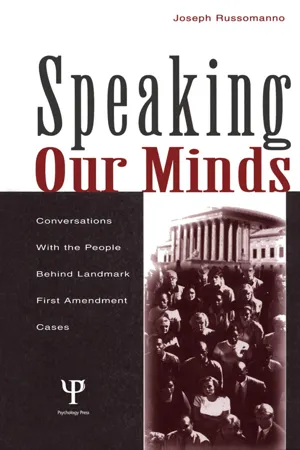
eBook - ePub
Speaking Our Minds
Conversations With the People Behind Landmark First Amendment Cases
- 504 pages
- English
- ePUB (mobile friendly)
- Available on iOS & Android
eBook - ePub
Speaking Our Minds
Conversations With the People Behind Landmark First Amendment Cases
About this book
1
Tinker, et al. v. Des Moines Independent Community School District
“Here’s this stupid little thing of just wearing an armband and all of a sudden I’m in front of the United States Supreme Court. Wow! Who thought we’d get here? Who thought a little case from Des Moines over a little piece of cloth would end up here?”
—Christopher Eckhardt, co-appellant in Tinker, et al. υ. Des Moines Independent School District
In mid-December of 1965, students across the country were eagerly looking forward to the upcoming holidays and their school vacations. In Des Moines, Iowa, several students were also anticipating another upcoming activity. On December 16, 1965, Mary Beth Tinker, a 13-year old student at Harding Junior High School and Christopher Eckhardt, a 15-year old sophomore at Roosevelt High, were among those who wore black armbands in support of a Christmas truce in the Vietnam War. They were sent home and ultimately suspended from school. The next day, Mary Beth’s 15-year old brother, John, wore a black armband to North High School. He, too, was suspended.
Thus began an ordeal that would lead to the U.S. Supreme Court and a landmark decision in freedom of expression. The students contended that wearing the armbands was a right protected by the First Amendment in spite of the fact that doing so violated a school policy that had been adopted only a few days prior to the protest. That policy stipulated that any student wearing an armband to school would be asked to remove it, and if the request was refused, the student would be suspended until he or she returned without the armband.
By any measure, Tinker υ. Des Moines Independent Community School District is a landmark case. The Student Press Law Center describes it as being “undoubtedly the most important student First Amendment case in the nation’s history.” In The Struggle for Student Rights, a detailed examination of the Tinker case, John Johnson writes that the decision provided an important step forward in student rights and became one of the landmarks in the American history of freedom of expression. The case established a foundation from which many subsequent cases were decided.
In the CJ.S. Supreme Court opinion written by Justice Abe Fortas, it was held that the armband wearing was entirely distinct from actually or potentially disruptive conduct. Accordingly, it was characterized as being closely akin to “pure speech,” which is entitled to protection under the First Amendment. The ruling also advanced rights in school settings. As Justice Fortas wrote, students and teachers do not “shed their constitutional rights to freedom of speech or expression at the schoolhouse gate.” As the Supreme Court’s case summary states, it appeared that the school authorities’ attempt to prevent protests by enacting a policy designed to prevent them was based on an urgent wish to avoid any controversy that might result from the expression symbolized by the armbands. The particular symbol of black armbands was singled out for prohibition.
In addition, the case unfolded as antiwar sentiment was growing across the country. The ruling reinforced the notion that peaceable expression of minority viewpoints was, at minimum, to be tolerated. Reading Justice Black’s dissenting Supreme Court opinion in that light is particularly instructive (see Court opinion excerpts at chapter’s conclusion).
That this case originated in a community not known as a hotbed of civil unrest—and with youngsters known as anything but troublemakers—not only adds to its appeal, but is significant. In order for critical constitutional tests to arise, it is sometimes necessary for the laws or regulations that are passed in a conservative environment to be challenged by individuals—some of them courageous, all of them steadfast and ardent in their convictions.
Now, more than 30 years after the Supreme Court’s ruling in their case, Mary Beth is a nurse practitioner in St. Louis; John is self-employed and living in Fayette, Missouri; and Chris is living in Florida where he has undertaken a variety of activities. Their attorney, Dan Johnston, is still practicing law, but now in New York City.
Precursor to Protest
The armband protest was by no means the first time that either the Tinkers or Chris Eckhardt had engaged in social activism. Each of their families was involved in a number of issues, including a 1965 demonstration in Washington against the Vietnam War. In addition to the peace movement, the families were also vocal in their support of civil rights. To some extent, their involvement in these causes stemmed from their religious beliefs. John and Mary Beth’s father was a Methodist preacher. That, however, did not prevent them from being the subjects of ridicule and threats in their community.
MARY BETH TINKER: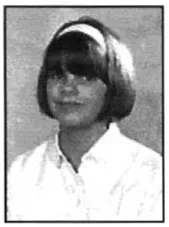 | One Christmas Eve someone called and threatened to blow up our house that night. One day I was getting ready for school and a woman called and asked for me and I got on the phone and she said, “I’m going to kill you. “Someone threw red paint at our house. Just stupid stuff like that. The community was generally not supportive of us, but again, that wasn’t that new of an experience. My family had been on the outside of other things. I got yelled at for being a nigger-lover around the neighborhood. We weren’t always the most popular for our views. There was sort of this feeling that we were just kind of nuts. Because there was a lot of feeling that [the protesting] was unpatriotic at that time. |
| DAN JOHNSTON: | Their families were really subject to a lot of ridicule in the community, and even some sort of threatening conduct. If I remember right there was some graffiti on the house. Mrs. Tinker was a teacher at a college—a little liberal arts college—on the east side of Des Moines. And I think she was the subject of quite a lot of sarcastic criticism in the school there. They called her Tinker Bell—that was the pejorative name they called her. |
Do you think perhaps in some way then, as this situation unfolded and as the case unfolded, that maybe that experience actually benefited you in some ways?
| MARY BETH TINKER: | Sure. I think all of that went together to set the stage. It strengthened me and I also had a feeling that even though we were unpopular with some people that there was a core of supporters, and that is what makes such a big difference. I think with a lot of kids—because I’ve been involved with kids over the years who have been in difficult situations in their own families and they have to stand up—and if they have even one person who is supportive, it can make a huge difference as opposed to being out there completely on your own. I think that’s where it really takes courage. People have called this a courageous thing to do, but compared to some other situations that kids find themselves in, I don’t think it rates real, real, high in that way compared to some of the things l‘ve read about over the years. |
Is there an argument that it was in part at least because you were children or adolescents that this happened—that children in that kind of position have an even greater sense of courage than do adults, maybe in part because they have less to lose?
| MARY BETH TINKER: | Yeah, I think children do have sort of a natural sense of fairness sometimes. That was certainly in play with me, I know, because I just had such a gut reaction to what I’d see on TV in reaction to the Vietnam War and the graphic scenes. It was really the first war that was televised. As kids we’d come home and watch this stuff on TV. Kids do have a hard time understanding things like fleeing families—fleeing from little huts, and napalm—children being napalmed. It’s pretty hard to make that congruous with what we are doing in our lives. That may be true. Kids do some wild things sometimes. |
| CHRIS ECKHARDT: | I would go to a Biblical quote that a child shall lead us. I would agree with your assumptions that children have the ability to have more courage if they have good self-esteem, have good role models, have encouragement from adults. Kids, because of their fewer responsibilities, have the ability—the opportunity—to be more courageous if they so desire. |
A lot of people I’m sure who hear about this case assume that the three of you, as children—mature children, no question but children nonetheless—were acting only in response to their parents’ wishes and desires and how they wanted you to act. How do you respond to that?
| CHRIS ECKHARDT: | How do I respond to those people? They’re trying to cop-out and say that young people aren’t intelligent enough to have opinions. |
| JOHN TINKER: | That’s a hard issue to tackle. It’s obviously true that we were influenced by our parents’ opinions. We had access to information and opinions that most of the rest of the kids didn’t have. So we were definitely influenced, but I think our opinions were sincerely held and that we did believe them ourselves and that we were impelled by our own beliefs. |
| DAN JOHNSTON: | There really wasn’t any evidence that the impetus of it came from the parents that I recall. Now, it may have, I don’t know. But I deal with what the record is, and there wasn’t any evidence of that in the record. My sense is that probably the mothers were more militant than the fathers were. And if it came from anywhere, it came from the mothers. |
JOHN TINKER: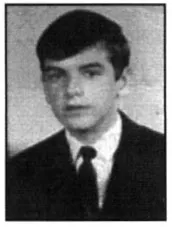 | We were kids, you know. So we agreed as a group of kids to do that. But it was our own decision. Our parents didn’t say, “You should wear armbands today.” In fact, my father was very hesitant to approve of wearing the armbands after the principals had prohibited them. It was really his thoughts—you know, he discussed it with us—and he kind of convinced me to hold off a day and to try to negotiate with them first. That’s, personally, why I didn’t wear it the first day. 1 was prepared to and ready to walk out the door and he was raising these questions. And so I decided that I’ll wait. There’s no rush on this. Our parents were not really encouraging us to do it or putting us up to do it. They supported us when we did it, though. |
The Armband Protest
In mid-December of 1965, word was circulating in largely conservative Des Moines that a student protest against the Vietnam War was being planned. Reactions to these reports varied, from threats made by some students in an effort to discourage participation to school district principals making a rule prohibiting any protest.
While each of the plaintiffs-to-be shared a sense of pressure and tension when they wore their armbands, each had different experiences. Chris was confronted by the football team captain who wanted to rip the armband from his sleeve. Chris explained that he was on his way to the principal’s office to turn himself in. Once there, he was detained and, in his view, threatened. Maiy Beth’s experience was less stressful, though she admits being nervous. John wore his armband the day after the others did largely because of the cautionary words from his father. The toughest part of it, he says, “was the realization that I was going to stick out and that people would be criticizing me.” Once at school that day, he removed his jacket revealing the armband, and he was sent to the school office where he talked with the principal. Like his compatriots, he was suspended from school.
Is there an argument that while the basis—the essence—of your protest may have been okay, that it nevertheless clearly violated a rule that the school board had laid down?
| JOHN TINKER: | The other side of that is that if the rule that the school board laid down violates the Constitution, then their rule is not the controlling rule. |
| CHRIS ECKHARDT: | The principals of the secondary schools of Des Moines did make that rule, and then the school board backed them up a couple of weeks after they made the rule. So, yeah, the schools definitely made a rule and, yeah, I definitely broke that rule, and I definitely did it with intent. That’s what civil disobedience is about. |
| MARY BETH TINKER: | Well, I think through history we’ve learned that sometimes you have to violate rules and challenge things. You can’t always just accept the status quo. Sometimes you just have to break the rule. Sometimes it’s important. The problem is in figuring out which is which. |
What about the notion that the setting of the protest was key? In other words, is it really proper to use a public school as a forum in which to make this sort of protest?
| CHRIS ECKHARDT: | I think in a democracy it’s the best place to make it. If we want to teach democracy and the true principles of our Constitution that we must respect the minority, what better place to do it than in the schools of America? |
| MARY BETH TINKER: | The public schools are where we hopefully are creating citizens in a democracy who are familiar with the concepts of democracy and free speech is one of the major foundations in our democracy. So I can’t think of a better place, really, to learn those kinds of lessons and to have that kind of discourse. |
| JOHN TINKER: | The wearing of the armbands was really designed to be nondisruptive. We wanted to let people know that we thought differently about the war. Our opinion was different, and we thought it was important that we not just acquiesce to the standard opinion on that. So we chose a method. The armband was not disruptive. I think that it’s entirely appropriate in a democracy that students learn early to express their opinions and to go against the flow a little bit—to express their opinions even if they differ from the majority opinion. My opinion is that it’s a positive thing to ha... |
Table of contents
- Cover
- Half Title
- Title
- Copyright
- Dedication
- Contents
- Foreword
- Preface
- Introduction
- 1 Tinker, et al. v. Des Moines Independent Community School District
- 2 R.A.V. v. City of St. Paul, Minnesota
- 3 Ollman v. Evans and Novak
- 4 J. H. Desnick, M.D. Eye Services, Ltd., et al. v. American Broadcasting Companies, Inc., Jon Entine, and Sam Donaldson
- 5 Hustler Magazine and Larry C. Flynt v. Jerry Falwell
- 6 Cohen v. Cowles Media Company
- 7 Nebraska Press Association, et al. v. Stuart, Judge, et al.
- 8 44 Liquormart, Inc. and Peoples Super Liquor Stores, Inc. v. Rhode Island and Rhode Island Liquor Stores Association
- 9 Turner Broadcasting System, Inc., et al. v. Federal Communications Commission, et al.
- 10 Reno v. American Civil Liberties Union, et al.
- Afterword
Trusted by 375,005 students
Access to over 1.5 million titles for a fair monthly price.
Study more efficiently using our study tools.
Frequently asked questions
Yes, you can cancel anytime from the Subscription tab in your account settings on the Perlego website. Your subscription will stay active until the end of your current billing period. Learn how to cancel your subscription
No, books cannot be downloaded as external files, such as PDFs, for use outside of Perlego. However, you can download books within the Perlego app for offline reading on mobile or tablet. Learn how to download books offline
Perlego offers two plans: Essential and Complete
- Essential is ideal for learners and professionals who enjoy exploring a wide range of subjects. Access the Essential Library with 800,000+ trusted titles and best-sellers across business, personal growth, and the humanities. Includes unlimited reading time and Standard Read Aloud voice.
- Complete: Perfect for advanced learners and researchers needing full, unrestricted access. Unlock 1.5M+ books across hundreds of subjects, including academic and specialized titles. The Complete Plan also includes advanced features like Premium Read Aloud and Research Assistant.
We are an online textbook subscription service, where you can get access to an entire online library for less than the price of a single book per month. With over 1.5 million books across 990+ topics, we’ve got you covered! Learn about our mission
Look out for the read-aloud symbol on your next book to see if you can listen to it. The read-aloud tool reads text aloud for you, highlighting the text as it is being read. You can pause it, speed it up and slow it down. Learn more about Read Aloud
Yes! You can use the Perlego app on both iOS and Android devices to read anytime, anywhere — even offline. Perfect for commutes or when you’re on the go.
Please note we cannot support devices running on iOS 13 and Android 7 or earlier. Learn more about using the app
Please note we cannot support devices running on iOS 13 and Android 7 or earlier. Learn more about using the app
Yes, you can access Speaking Our Minds by Joseph Russomanno in PDF and/or ePUB format, as well as other popular books in Law & Communication Studies. We have over 1.5 million books available in our catalogue for you to explore.