- 700 pages
- English
- ePUB (mobile friendly)
- Available on iOS & Android
eBook - ePub
About this book
This book covers the Middle East from a topical or systematic perspective focusing on the states of the Gulf and southern Arabian Peninsula. It includes the dramatic developments in the Arab world across North Africa and in the heart of the Middle East since late 2010 termed as the "Arab Spring.".
PART ONE
PHYSICAL AND CULTURAL GEOGRAPHY
1
Tricontinental Junction
An Introduction
KEY POINTS: Middle East has always been of great significance if only because of location in the hub of the World Island—Eurasia and Africa. Trade and travel routes have crossed region since earliest human migrations. Cradle of civilization, especially in Fertile Crescent. Rich history, ancient and mediaeval. Birthplace of three great monotheistic religions. Many ethnolinguistic-religious groups, with Arabs dominant in center and Turks and Persians across North. Home of Islam, which still dominates religion and culture. Holds half of world’s petroleum reserves, hence of crucial world significance. Some debate over what constitutes Middle East, but this volume uses traditional grouping. Focus of political and ideological ferment, especially in Arab Spring in 2011–2013, as well as of intractable Arab-Israel conflict. Region in headlines but background poorly understood.
Middle East Preview
Located at the tricontinental hub of Europe, Asia, and Africa, the Middle East is unique both historically and geopolitically. It is the cradle of civilization, birthplace of the three great monotheistic religions, crossroads of movement and trade, base of extensive empires, resource area for half of the world’s petroleum, home to more than 350 million people in sixteen countries, source and concentration of political and ideological ferment, and locus of intractable and explosive conflicts since World War II. Major developments in the region resonate worldwide, as did the disturbances associated with the 2011–2012 “Arab Spring,” and no country can disregard them.
War and Conflict. The Middle East has featured prominently in the news almost daily through more than six decades of warfare: six major Arab-Israeli wars plus several more limited conflicts; the almost uninterrupted cycle of violence involving Arabs and Israelis; the First and Second Intifadahs of the Palestinians; internecine fighting in Lebanon in 1958 (ended by landing of US forces) and from 1975 to 1991 (involving US forces on two occasions); Turkey’s invasion and partial occupation of Cyprus beginning in 1974; Iraq’s war with Iran in the 1980s, its invasion of and consequent expulsion from Kuwait in 1990–1991, the international sanctions imposed on it afterward, and its occupation by the US-led coalition from 2003 onward; US operations in Afghanistan after September 11, 2001; military operations involving Kurds in the four countries of the region in which they historically dwell; civil wars and insurgencies in Yemen in the 1960s, 1986, 1994, and again in the new century; the sanctions on and explicit threat of military action against an allegedly nuclear-arming Iran; and civil war in Syria beginning in 2011, spilling over into Lebanon.
Beyond open fighting, there has been an ongoing Arab-Israeli “Peace Process” dating to Henry Kissinger’s “Shuttle Diplomacy” in the mid-1970s, hostage taking in Lebanon in the 1970s and 1980s, the overthrow of the shah and the American Embassy hostage crisis in Tehran in 1979–1980, terrorist attacks in most of the countries in the region, Cold War crises ranging from Iran and Turkey in the 1940s to peripheral Afghanistan in the 1980s, varying levels of civil disturbance and strife associated with the Arab Spring since 2011, and dozens of other headline-worthy events.
More News, Less Understanding? During the past two decades, reporting on the Middle East has become more extensive, and in many cases more nuanced. But the media are limited in their ability to offer in-depth, objective analyses of the region’s complex underlying patterns of regions, peoples, cultures, politics, and aspirations. More significantly, for various domestic reasons—political, religious, economic, historical, and others—the media frequently fail to balance their coverage with viewpoints across the multiplicity of countries, ethnic and religious groups, economic factors, and regional sources of information. As a result, many Americans have perceived the Muslim Middle East, and particularly the Arab Middle East, in negative terms since the late 1940s, reinforcing prejudices and stereotypes that have roots going as far back as the Crusades. Especially after the attacks of September 11, 2001, (“9/11”) on the New York World Trade Center and the Pentagon, American antagonisms increased almost exponentially, with little or no distinction made between the violent objectives of extremist groups such as al-Qaida, on the one hand, and the goals of the many peaceful cultural and political elements in the region, on the other. Although it is still too early for a full appraisal of the thinking and planning behind the US policies that led to the unexpected reactions of the various elements of Iraqi society after the 2003 invasion, it is obvious that future policy making must be grounded in a much better understanding and recognition of the region’s ethnic, cultural, religious, and geopolitical complexity. These, in turn, are all grounded in the fundamental geographic and economic factors that are analyzed in this study.
Why This Book? For much of the world, including both industrialized and developing countries, the unfolding of economic and political events is closely tied to the resources found in the Middle East and to the factors that affect the availability and movement of those resources. These factors derive from the histories, traditions, aspirations, value systems, problems of development and change, regional and international linkages, and agendas of the peoples and states of the region. The collapse of the Soviet Union, the consequent realignment of transnational relationships in Eurasia, the events following 9/11, the escalating global demand for hydrocarbon fuels and by-products—all these have led to the Middle East’s becoming the geopolitical focus not just of the West but of the rest of the world as well.
In view of the foregoing, it is the aim of this book to examine the natural and cultural patterns of the Middle East and their influence on political and economic developments; to analyze and interpret the more significant national, regional, and global relations; and thus to afford a greater knowledge of and deeper insights into this crucial region. Why All These Numbers, and More? A note to the reader: this book contains a considerable amount of detailed information—numbers, dates, names of ancient cities, empires, battles, and long-dead leaders—and the book’s associated website has even more. The authors have included this material not to burden the reader with immense amounts of trivia, but in order to try to paint a broad picture of this complex region and its even more complex history and development.
The reader needs always to keep in mind that detailed statistics can be useful tools, but that retention of them is not an end in itself. In other words, the authors warn the reader, “Do not lose the forest for the trees (or, perhaps more appropriately, the underbrush).”
World-Island
Because of its tricontinental location (Map 1.1) and its central position in the “World-Island” (see Chap. 8), the region has historically been a global crossroads, as reflected in the title of the late Professor George B. Cressey’s 1960 study of Middle East geography. Despite the multifaceted character that has evolved from its crossroads role, the region is often perceived in highly particularistic terms—of petroleum or terrorism or Islamic resurgence or Israeli security or regime change or other single issues— thus obscuring its breadth and complexity. Short-term, simplistic perceptions are also misleading; for example, they imply that the Middle East has become important only recently or that it is typified by the oil crisis of 1973, or the Iranian Revolution of 1979, or the situation in Iraq after 1991 or 2003, or the turmoil accompanying the Arab Spring, or rich oil shaykhs in desert principalities, or fanatical suicide bombers. In fact, the region blends a diverse geography, rich historical traditions, and complex cultural, national, and religious groupings to produce dynamic patterns that evolve and change over time. The text and illustrations in this book depict some of these complexities and contrasts (Figs. 1.1 and 1.2). Lands and Seas. One significance of the location of the Middle East derives from its irregular shape. Seas penetrate deeply into the land and alternate with peninsulas and land bridges around the Syrian-Mesopotamian core. The Red, Mediterranean, Black, and Caspian Seas, plus the Persian/Arabian Gulf, have facilitated maritime movements of the peoples of the area for more than five thousand years, provided access to the region, and, conversely, served as natural insulation between regional cultural groups.
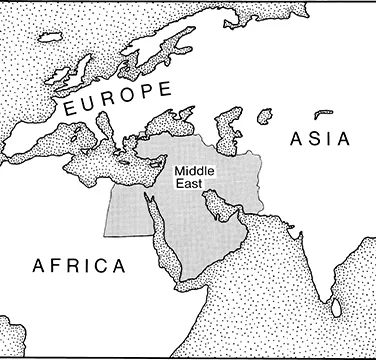
Map 1.1 The Middle East as tricontinental hub, centrally located at the heart of the World-Island.
Cradle of Civilization
Evidence of the earliest known humans has been found in eastern Africa, and the migration of their descendants to the rest of the world clearly traversed the Middle East. Thus, this region has had human inhabitants for scores of millennia, and it seems to have produced the earliest integrated civilizations, agricultural villages and developed towns, and religious-political systems. Although very old human skeletons and tools have been found in other areas, it is the Middle East that is commonly known as the “cradle of civilization.” As will be discussed in Chapter 3, these civilizations evolved in the Fertile Crescent, an arc of fertile land that extends along the Levant and around the Syrian Desert to the Gulf and particularly through the Mesopotamian Basin, the depression occupied by the Tigris and Euphrates Rivers (see Map 3.1). From this geographical core, the ideas, techniques, and implements of the Fertile Crescent diffused to other similar environments—westward to the Nile Valley in Egypt, eastward to the Indus Valley in present-day Pakistan, and beyond, mixing with advanced civilizations in those areas.
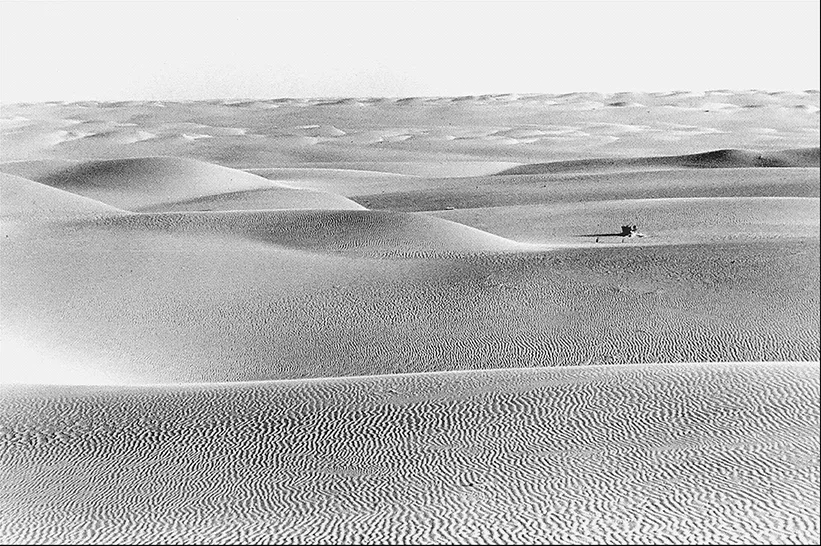
Figure 1.1 Barren, wind-rippled dunes in Saudi Arabia’s Rub al-Khali (Empty Quarter).
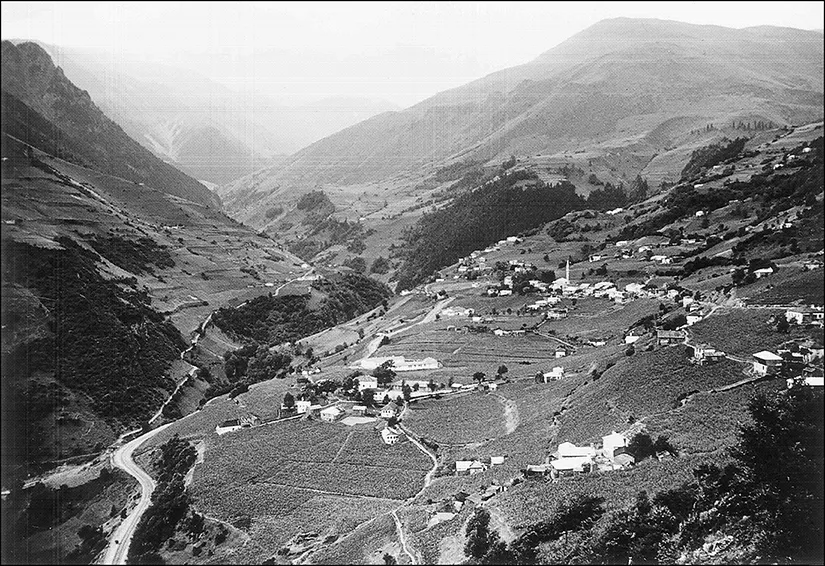
Figure 1.2 Village surrounded by green fields of corn (maize) and well-forested slopes in Turkey’s Pontic Mountains, an area of moderately heavy precipitation just south of the Black Sea.
Writing, Science, Mathematics. More than five thousand years ago, the seminal culture hearth of Mesopotamia produced what is generally held to be the earliest known writing,1 along with high levels of science and mathematics. The Middle East thus became a matrix for later Western and Oriental civilizations. The cultural complex that spread outward from the Mesopotamian core also gave rise to successive confrontations among expanding ancient empires. The high level of civilization achieved by successive empires suggests a capacity for adaptation that is still evident in the region. Several power foci, which will be discussed in Chapter 3, emerged through the centuries and have persisted for more than forty-five hundred years to the present.
Religious Societies
In addition to clashes among successive empires, the Middle East gave rise to the three major monotheistic religions: Judaism, Christianity, and Islam. Each is rooted in earlier religions, yet each is distinctive and each became global in extent. Their respective origins within the region provide one measure of the cultural richness and unique significance of the Middle East.
Just as Christianity gave rise to a general civilization referred to as Christendom, so Islam engendered the Islamic civilization. The cradle of both the religion of Islam and the corollary culture of Islam, the Middle East remains the heartland of the Islamic culture realm. The original core area of this culture— Mecca and Medina in western Saudi Arabia— is the goal of the annual Muslim hajj, or pilgrimage, and is a religious focus for most Muslims, who pray daily facing Mecca.
Islamic civilization is the most pervasive unifying factor in the Middle East, and the correlation between religion and culture, on the one hand, and geographical area and environment, on the other, is a major element in any study of the region. This civilization of the Middle East region served two influential roles during medieval times. During the so-called Dark Ages in Europe, while the Byzantine Empire engaged in political and theological disputes, the Islamic Middle East was translating and interpreting classical writings—literary, philosophical, and scientific—thus preserving the classical heritage, much of which might otherwise have been lost. Also, contemporaneously, the Middle East served as a remarkable commercial crossroads, maintaining contacts with potent East Asian civilizations, partly through Muslim missionaries, and later linking those civilizations with a revived Mediterranean area and Renaissance Europe.
Twenty-First-Century Importance
Aside from the region’s historical importance, five contemporary facets dominate global perceptions of the Middle East: unequaled petroleum resources, the ongoing Arab-Israeli conflict and related cycles of violence and war, terrorism, rivalries among leaders and states, and extremism among zealous Muslims, Jews, and Christians. This study will treat each of these five, but introductory mentions of oil and the cycles of warfare are appropriate at this point.
Most of th...
Table of contents
- Cover
- Half Title
- Title Page
- Copyright Page
- Dedication
- Table of Contents
- List of Maps, Illustrations, and Tables
- Preface and Acknowledgments to the Sixth Edition
- A Note on Transliteration
- Part One Physical and Cultural Geography
- Part Two Regional Geography
- Glossary
- Geological Time Chart
- Partial Bibliography
- Index
Trusted by 375,005 students
Access to over 1.5 million titles for a fair monthly price.
Study more efficiently using our study tools.
Frequently asked questions
Yes, you can cancel anytime from the Subscription tab in your account settings on the Perlego website. Your subscription will stay active until the end of your current billing period. Learn how to cancel your subscription
No, books cannot be downloaded as external files, such as PDFs, for use outside of Perlego. However, you can download books within the Perlego app for offline reading on mobile or tablet. Learn how to download books offline
Perlego offers two plans: Essential and Complete
- Essential is ideal for learners and professionals who enjoy exploring a wide range of subjects. Access the Essential Library with 800,000+ trusted titles and best-sellers across business, personal growth, and the humanities. Includes unlimited reading time and Standard Read Aloud voice.
- Complete: Perfect for advanced learners and researchers needing full, unrestricted access. Unlock 1.5M+ books across hundreds of subjects, including academic and specialized titles. The Complete Plan also includes advanced features like Premium Read Aloud and Research Assistant.
We are an online textbook subscription service, where you can get access to an entire online library for less than the price of a single book per month. With over 1.5 million books across 990+ topics, we’ve got you covered! Learn about our mission
Look out for the read-aloud symbol on your next book to see if you can listen to it. The read-aloud tool reads text aloud for you, highlighting the text as it is being read. You can pause it, speed it up and slow it down. Learn more about Read Aloud
Yes! You can use the Perlego app on both iOS and Android devices to read anytime, anywhere — even offline. Perfect for commutes or when you’re on the go.
Please note we cannot support devices running on iOS 13 and Android 7 or earlier. Learn more about using the app
Please note we cannot support devices running on iOS 13 and Android 7 or earlier. Learn more about using the app
Yes, you can access Middle East Patterns by Colbert C. Held,John Thomas Cummings in PDF and/or ePUB format, as well as other popular books in History & Middle Eastern History. We have over 1.5 million books available in our catalogue for you to explore.