Portable Video: ENG and EFP, Fifth Edition" focuses on the techniques and technology of single camera electronic news gathering and electronic field production. Covering everything from basic creative and technical editing techniques to budgets and copyright issues, it is accessible to the home videomaker or amateur and to the professional seeking information on the newest advances in technique and equipment. It includes special focus on TV news production and field production and is suitable for complete beginners.
Welcome to the world of portable video! So you have access to a camera, a tripod, some lights, a microphone or two, and some editing software on a computer. What do you do? Where do you start? What do you need to know? This book is designed to give you the basics of portable video production. We hope this text will guide you as you create more professional-looking video stories for news, entertainment, and nonbroadcast uses.
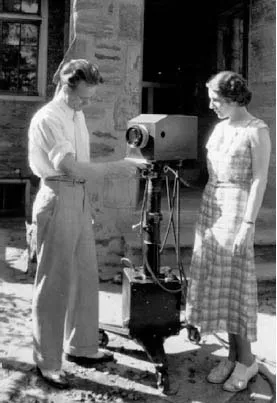
Experiments using electricity to transmit video began back in 1884. In 1926, English experimenter John Logie Baird developed a system for transmitting live video images using a mechanical system. The mechanical system was primitive by today’s standards, and other methods were explored to achieve a better picture. Beginning in the 1920s, other experimenters attempted to use an electronic system for television. Philo T. Farnsworth and Vladimir Zworykin both developed systems that eventually were combined to create the working television system that debuted at the 1939 World’s Fair in New York.
ENG AND EFP: THE WORLD OF PROFESSIONAL VIDEO
Portable video systems have been around for a long time. In 1965, Sony released a video system called the Porta-pak that recorded black-and-white images on a reel-to-reel videotape recorder. The quality was poor and the video was almost impossible to edit. Some educational, government, medical, and experimental users (video artists) found the Porta-pak helpful in capturing images quickly where film would be too expensive. Mostly, however, professional filmmakers and others who needed to capture moving images relied upon film and thought of portable video as a toy with limited appeal. During the 1960s and early 1970s the idea of shooting field video with a portable camera was not feasible, even after color cameras were introduced. The equipment was just too big and cumbersome, and the video was lacking in quality compared to film.
The appearance of the U-Matic videocassette by Sony in 1971, coupled with the introduction of higher-resolution color cameras, rapidly gave portable video a new appeal. This self-threading cassette system, in a machine small enough to be carried around and operated by battery, replaced the Porta-pak’s reel-to-reel system and greatly improved the quality of the recording. The camera was in two pieces—the camera head and the camera control unit (CCU)—both of which could be powered by a battery. Two people could easily walk around with the gear and record video. With the equipment mounted on a small cart, one person could operate the system.
FIGURE 1.1 Philo T. Farnsworth and his model Mabel with a 1935 portable video camera.
FIGURE 1.2 This early ENG camera, the Thompson MicroCAM, required two people to operate it in the field. (Courtesy of Larry Greene, KCBS-TV)
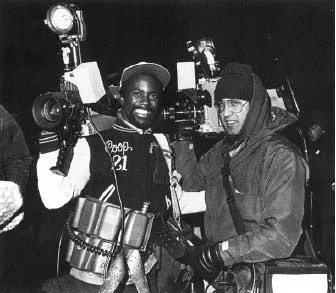
FIGURE 1.3 News photographers in 1980. Each full set of gear weighed about 80 pounds. (Photo by Joe Vitti)
The TV networks, knowing the power of video cameras in news and sports coverage, began to experiment with this new portable technology—even though their use was limited by their size, miles of cables, and often days of setup time. Companies like Sony, Thomson, RCA, and Ikegami worked closely with the networks to deliver a smaller, higher-quality camera that could meet their needs. Their primary focus for use was live TV and, in particular, sports. A smaller battery-powered camera could increase the coverage of a sporting event dramatically.
One of the earliest uses of portable video in network news was President Nixon’s historic visit to China in 1974. CBS decided to use video instead of 16 mm film to cover the event. The electronic news gathering revolution had begun. The 1976 CBS coverage of the presidential campaign put portable video cameras in the mainstream of news coverage. Reporters no longer had to wait for the 16 mm film to be developed to view, edit, then air the story. They could now report live from campaign stops with the use of these new camera units, or shoot tape and have it aired almost immediately. But an even more dramatic industry change was already underway.
Starting with early experiments at stations such as the CBS-owned and -operated (O&O) KCBS in Los Angeles in 1974, video slowly began to create a foothold in daily news coverage. In 1974, KMOX-TV (now KMOV-TV) in St. Louis became the first all-video, or all ENG, newsroom in the country, using the Ikegami HL-35 two-piece camera. This novel approach to covering local events became an important factor in the competitiveness of the station’s news ratings. By the second half of the 1970s, the video revolution began sweeping local television stations across the country. This triggered the beginning of the electronic newsgathering revolution.
Fueled by the realization that there was money in news because news had a big and growing audience, more and more local TV stations started news shows or began aggressively expanding their news operations. At the local level, it no longer mattered whether a network’s programming was the highest rated; what mattered was how big the audience—and therefore the advertising dollars—was for the local news show. The competition became fierce. Station and network management looked for any means to gain a competitive edge in news. The ability to get a breaking story on the air first epitomized the race. Suddenly, the newly downsized video camera and its videotape recorder were just what the doctor (or station owner) ordered.
The newfound portability of both the video camera and the videotape recorder, which was being demonstrated at CBS and local stations like KNXT, KMOX, and WBBM (in Chicago), was now revolutionizing the film-dominated daily television newscasts in two very important ways. First, it was possible for a videocassette of a breaking news story to be delivered to the station and, after just a few minutes of editing, be played on the air. Faster yet, the raw or unedited tape—which didn’t have to be developed—could be put directly on the air, allowing the viewer to see a video presentation only minutes after it was shot. Second, because the camera was now electronic instead of mechanical, its video signal could be broadcast live from the field with little setup or fuss. This process was aided by newly developed microwave technology, which could easily send the video to the station for broadcasting. Live TV news on location was suddenly available to almost any station at a reasonably low price. These technological changes affected not only the look of the industry, but the various ways in which stories were covered.
This new form of acquiring images—and consequently the whole business of television news—became known as electronic news gathering, or ENG. As the news ratings race continued at an ever-increasing pace, the demand for better, lighter, and more reliable camera gear also grew. Companies rushing to supply news departments with the latest advance in equipment began finding new outlets for their products. Mass production, better technology, and competition within their own industry had made video equipment cheaper and therefore more accessible to a wide range of users. Hospitals, government agencies, corporations, educational institutions, and independent production houses began to replace their film cameras with video cameras. Organizations that didn’t have any production capabilities suddenly found that producing their own video projects was cost effective because of the decreasing price of video equipment, the ease of use of the equipment, and its ever-increasing quality. From hospital teaching tapes to TV commercials, any use of a single video camera with a portable videotape recorder that wasn’t for a newscast became known as electronic field production, or EFP. The similarities between ENG and EFP are many. Generally, the equipment and its operation are the same, but the style of shooting and the production goals often separate the two.
By the 1990s, high-quality video camcorders (camera and videotape recorders in one unit) had not only become affordable to the general public but had also become commonplace. This invention created a world where almost no event goes unrecorded. Whenever something important or newsworthy happens anywhere in the world, it is usually captured on video by someone. One of the most famous—or infamous—events was the 1991 police beating of Rodney King in Los Angeles, which was captured by an amateur videographer trying out his new camera from the balcony of his apartment. That home video began a chain of events that led to one of the worst civil disturbances in the history of the United States. It also secured the video camera’s place as a powerful tool for a free society’s ability to communicate. Some might say that single moment was the culmination of the TV revolution: the fullest realization of the power of television and its profound effect on society. Since that historically significant amateur recording happened, many instances of citizens capturing events both newsworthy and not-so newsworthy (most of those on YouTube) have occurred. Cell phones with the ability to capture video have been used in many parts of the world to show the tragic impact of tsunamis, the horrors of war, and civil unrest.
It is with this power in mind that the video professional sets about the job of creating news, entertainment, and commercial products. When used properly and with ethical guidance, video can be a very persuasive and informative method of communication, regardless of the delivery system. Video is no longer only for broadcasting and industrial/educational uses; it can be used by anyone in society. With the broadening opportunities for streaming video on the Internet, podcasting, uploading to YouTube, and video blogging (vlogging), anyone can have his or her own TV “station.” Learning and understanding the tools and techniques of the trade can make a videographer an integral part of any modern communication medium, whether it is a commercial broadcast television local station, network, cable, or satellite; YouTube or any web site on the Internet; or an as-yet unimagined delivery system.
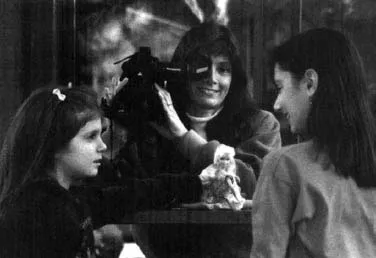
FIGURE 1.4 Shooting home video has been a common activity in millions of homes since the 1980s.
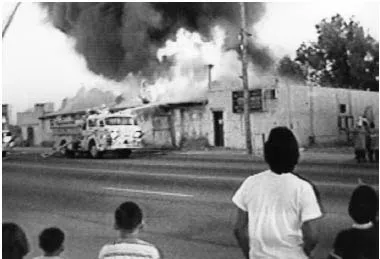
FIGURE 1.5 Home video–captured scenes can sometimes be sold to local TV stations, network news programs, or other TV production companies.
A Brief History
In its purest form, ENG is the art of shooting news—video photojournalism for television or any other medium that can deliver video. It is the descendent of a long tradition of documenting events with moving pictures. As with the still camera, one of the first uses of the motion picture camera was recording historic events. Portable film cameras recorded the trench warfare that consumed the European continent in World War I. Later, a more organized effort by news services and military photographers and film makers would show World War II to movie theater audiences via newsreels shown before the feature film. The advent of television and the growth of television stations in the 1950s caused newsreels to be replaced by broadcast television newscasts, but the style of shooting had changed little from the fields of France in World War I to Edward R. Murrow’s post–World War II reports that were beamed into 1950’s living rooms. The camera operators were a very select group of people who followed a tradition of portable image capturing from generation to generation.
The TV news industry grew rapidly in the 1960s, and the style of shooting began to change. Up until then, the film cameras used were rather large and heavy, so most shooting was done from a tripod in controlled situations. Small handheld cameras had no audio recording capabilities and were used mostly in hard-to-get-to places, such as in airplanes or on battlefields. The lighter sound-on-film cameras of the 1960s, such as the Cinema Products CP-16, allowed camera operators greater freedom of movement without having to leave sound or quality behind. The handheld shot became more important. The cameraperson could now be closer to the action than ever before and also capture audio. The introduction of color-reversal film, which could be developed as fast as black-and-white film, added a new sense of reality to every newscast. But it was video that upended decades of tradition.
In the late 1970s, video cameras were introduced in broadcast stations and networks and film cameras left, as did many of the film camera operators. People who were trained in the art of cinema and experienced in the business of journalism were suddenly replaced by engineers from the studio who knew how the electronics worked in the camera but not much about “shooting” or journalism. News events couldn’t wait for these people to learn the craft, so stations and networks had to accept the new priority: Just get any shot that helps tell the story. The video revolution was painful, not only to the displaced workers and confused managers, but also to the viewing public. Pictures on the evening news went from sharp, clear images in realistic color from film shots, to dull, muddy visions with smears lagging behind moving objects and colors ranging from orange to bright green with video. Sometimes it seemed that the operators were trying to master the technology first and find a good shot—or any shot—second. A lot of the respect for the visual part of TV news was lost when the film/video changeover occurred.
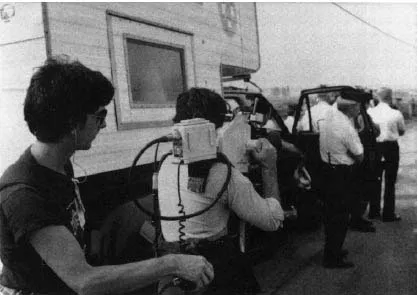
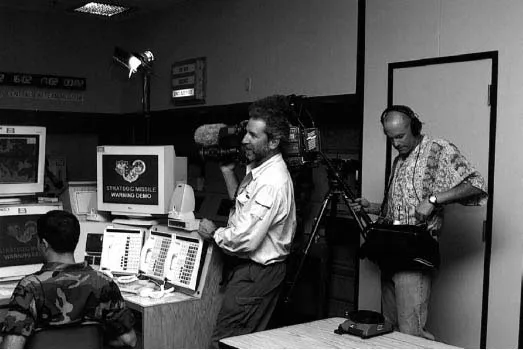
FIGURE 1.6 A two-person ENG crew on location at a military installation. (Courtesy of Hank Bargine)
TV News Videography Today
By the late 1980s, after more than a decade of struggling for acceptance, the news videographer (also known as a TV photojournalist) had come into his and her own. Many people still believe film looks better than video, but the people shooting video eventually reached the same creative level as their counterparts in film. Tune in to any network news magazine show (e.g., 60 Minutes or Dateline NBC), and you will see state-of-the-art creative photography that just happens to be shot on video. There are still plenty of examples of bad videography in local (especially small market) TV news programs. The inclusion of bad video in the newscasts stems more from the changing nature of the news business than anything else. The proliferation of news outlets, the relentless competition, and the almost unrealistic deadline pressures of live TV have allowed quality standards to become a secondary concern at times. Also, TV news shows often have lots of time to fill, but not many visually interesting stories ava...
Table of contents
Cover
Title
Copyright
Contents
Acknowledgments
Part 1: Shooting Video on Location
Part 2: The Process
Part 3: The Tools
Part 4: The Business of Video
Appendix 1: Screenplay Format
Appendix 2: Two-Column, Audiovisual, Split-Page Format
Appendix 3: Storyboards
Bibliography
Glossary
Index
Frequently asked questions
Yes, you can cancel anytime from the Subscription tab in your account settings on the Perlego website. Your subscription will stay active until the end of your current billing period. Learn how to cancel your subscription
No, books cannot be downloaded as external files, such as PDFs, for use outside of Perlego. However, you can download books within the Perlego app for offline reading on mobile or tablet. Learn how to download books offline
Perlego offers two plans: Essential and Complete
Essential is ideal for learners and professionals who enjoy exploring a wide range of subjects. Access the Essential Library with 800,000+ trusted titles and best-sellers across business, personal growth, and the humanities. Includes unlimited reading time and Standard Read Aloud voice.
Complete: Perfect for advanced learners and researchers needing full, unrestricted access. Unlock 1.4M+ books across hundreds of subjects, including academic and specialized titles. The Complete Plan also includes advanced features like Premium Read Aloud and Research Assistant.
Both plans are available with monthly, semester, or annual billing cycles.
We are an online textbook subscription service, where you can get access to an entire online library for less than the price of a single book per month. With over 1 million books across 990+ topics, we’ve got you covered! Learn about our mission
Look out for the read-aloud symbol on your next book to see if you can listen to it. The read-aloud tool reads text aloud for you, highlighting the text as it is being read. You can pause it, speed it up and slow it down. Learn more about Read Aloud
Yes! You can use the Perlego app on both iOS and Android devices to read anytime, anywhere — even offline. Perfect for commutes or when you’re on the go. Please note we cannot support devices running on iOS 13 and Android 7 or earlier. Learn more about using the app
Yes, you can access Portable Video by Norman Medoff,Edward Fink,Edward J. Fink in PDF and/or ePUB format, as well as other popular books in Media & Performing Arts & Film & Video. We have over one million books available in our catalogue for you to explore.