![]()
Chapter 1
Introduction
Laurence Alison
In the 1969 Presidential address to the American Psychological Association, George A. Miller outlined how psychologists were responsible for fostering accounts of human behaviour that did not connect with, nor could be easily understood by, the public. He argued that an exclusive club of self-styled ‘experts’ had emerged in which an ‘elite canon of knowledge’ had been constructed. The canon was to convert this previously soft science into a hard science more in line with physics and chemistry than philosophy and literature. Miller suggested that this exclusivity had led to a general mistrust of the discipline and, subsequently, to psychology falling short of its potential.
Despite tying themselves to experimental laboratory-based research and, firstly, the principles of reductionism (that complexity can be explained by simple fundamentals); secondly, determinism (that events are predictable and can be explained through causal chains); and, thirdly, control and the compartmentalisation of behaviour without reference to context, psychology had repeatedly failed to generate a grand theory of human behaviour. This focus on lab-based research was compounded by psychologists’ concern with describing and analysing behaviour in order to manipulate it. Miller argued that the way forward was for psychology to re-evaluate its role as an agent of social control. Instead of telling people how to lead their lives, psychologists must find a way of allowing non-psychologists to practise psychology so that they could best judge how it could be employed within their own particular domain. The ‘giving away’ of psychology to non-psychologists for the purpose of assisting in solving specific problems has become known as a ‘pragmatic approach’.
In this book we have aligned ourselves with many of the central principles of pragmatism – especially the requirement that research should be guided by the need to address particular problems faced by practitioners. In our case, this involves identifying key issues that are of direct concern to police officers. This book reflects one particular aspect of our recent work – specifically our careful documentation of critical incident debriefs conducted over the last five years. The intention is to retain and preserve the central themes relevant to critical incidents in the words of the individuals involved in those debriefs, simulations and inquiries. In parallel, we draw upon the extant literature on decision-making and leadership that helps inform and contextualise those comments.
Some of the central themes that have emerged from those observations and which are referred to throughout the rest of the book include:
(i) Complexity, ambiguity, sensitivity. Perhaps more than any other field, the investigation and management of critical incidents involves practitioners working in high-stakes environments with complex, ambiguous, sometimes politically sensitive and nearly always multi-agenda, multi-agency information. Although systematic lab-based traditional decision-making paradigms will doubtless prove very fruitful, we should not be under the illusion that effective decision-making is wholly defined by comprehensive search for evidence and logical inferences drawn from that evidence. Rather, it occurs within a highly litigious, complex organisational, cultural context, subject to public reviews, intensive media scrutiny and in high-pressure environments.
(ii) Individual perceptions. The unique background and experiences (professional, personal and trait-based) of the different practitioners who must work with this information appears to shape the way in which complex, competing, contradictory and ambiguous material is interpreted. These various interpretations, which are converted into ‘working/situational models’ or ‘investigative narratives’ influence the particular lines of inquiry that are adopted. We have formed the view that an examination of individual differences may prove very productive. Specifically, intelligence, conscientiousness, tolerance for ambiguity and a variety of emotional/interpersonal measures are likely to prove worthy of research.
(iii) The impact of context. Context exerts a powerful influence on these investigative narratives and thus on styles of leadership and critical decisions. Context needs to be defined and described so that we have a better understanding of its influence.
(iv) Context defined. Context is multilayered and multifaceted. Unlike several other fields of decision-making, policing critical incidents involves many layers of decision makers, at different ranks, across different constabularies, different agencies and all within the very public eye of the community that it serves. In seeking to respond to all these agendas (some of which are competing and/or contradictory) it is extremely difficult to develop criteria for an ‘optimal decision’. It is, therefore, more useful to examine the processes by which any given decision was arrived at rather than the product. There is an urgent need to look beyond public reviews, and not simply at those inquiries that ‘went wrong’. Instead, one needs to examine ‘near misses’ and ‘successes’ since all potentially yield useful information on process as well as product.
(v) Decision inertia. Because of the powerful influence of context and the very serious repercussions of decisions (even those that were taken in good faith, with the best intentions and based on careful examination of the information available at the time) a frequent problem for decision-makers and leaders is failure to make decisions (decision inertia) rather than making the wrong decision (decision error).
(vi) Emotional decision-making. Underpinning many critical incident decisions are emotional responses – both in terms of anticipatory emotions (for example, anticipating regret or blame for a decision and thus seeking to avoid those aversive consequences by avoiding the decision) as well as consequential emotions (for example, the satisfaction and esprit des corps generated by groups pulling together in the face of adversity). Simply regarding decision-making within a rational framework fails to capture the richness and complexity of decisions that affect lives and careers.
(vii) ‘Healthy’ organisations. Leaders and managers within organisations may be able to reduce inertia and error by providing a framework and culture within which creativity, challenge, critical thinking, sensitivity and support are clearly articulated and transparent across all strata of that organisation. Decision-makers who feel hamstrung by having to accept all the responsibility and knowing that they will get no support if the ‘product’ of the decision is wrong (even if the process was right) will be far less inclined to commit to the ‘right process’ and will be disinclined to make any decision at all. Instead, the preference may be to pass the responsibility (or diffuse it) among other individuals or organisations.
(viii) Operational preparedness. Returning to individual perceptions: decisions and strategies for leading (as well as following) are strongly influenced by individuals’ perception of the organisations that they belong to. Often, this perception appears to be influenced by the organisation's response or lack thereof to some basic needs. These include developing mechanisms that ensure officers do not work absurd numbers of hours during an inquiry, that the catering is adequate, that basic resources (methods for communication) work effectively and that senior managers care about their staff. Although some of these may seem banal in the extreme, an inability to provide a hot cup of coffee for an officer called out to a hostage negotiation incident for 19 hours has a profound influence on that officer's perception of the organisation and his/her subsequent feelings about wanting to do his/her best. This organisational attitude to the basics can have profound short- and long-term consequences for running an inquiry as well as for the legacy that the critical incident has on the organisation and the community that it serves.
So, our initial remit in writing this book was to set out a range of issues/questions/ideas connected to leadership and decision-making that had emerged from concepts generated in operational debriefs of major investigations. The idea was to establish whether (and to what extent) the issues that practitioners talked about were consistent with (or different from) the research literature. In establishing this overlap/discrepancy, we intended either to bridge gaps, suggest other avenues of research or synthesise previous models of decision-making/leadership. In a field where barely any literature exists it was important to establish, as a starting point, those issues that practitioners felt were relevant and merited further exploration. Since the initial impetus for this book, Jonathan has conducted debriefs of the Sharm El Sheikh bombings, the Metropolitan Police response to the tsunami, the abduction and murder of Holly Wells and Jessica Chapman, the London bombings, the investigation of the M25 rapist, the Hackney siege, the Buncefield fire, the poisoning of Alexander Litvenenko and the recent murders in Ipswich, as well as 40 other high-profile murders, rapes, hostage negotiations, responses to natural disasters and public order incidents. Much of this book draws upon the observations of practitioners from those debriefs and, as such, is very much in line with the starting-point principles of pragmatism; that is, we endeavoured to begin by ‘listening’ to practitioners’ experiences, successes, problems, goals and aims rather than appearing as some supposedly omniscient, didactic expert of the type criticised by Miller. We will hint at how these debriefs are beginning to generate a more systematic research agenda, with attendant questions around training, selection, stress and stress inoculation and, of course, methods to enhance decision-making and leadership skills.
Just to illustrate further the range and frequency of the types of investigations that the police and related services must deal with, one need look no further than the daily newspaper. For example, at the time of writing, today's top stories in The Independent include letter bombings and the arrest of school caretaker Miles Cooper; the arrest of nine men as part of an alleged plot to kidnap a Muslim soldier, and the speeches of Omar Bakri Mohammed as suspected of inspiring the alleged plot, and the conviction and sentencing of Kimberly Harte, 23, and Samuel Duncan, 27, jailed for a total of 22 years yesterday for systematically torturing their four- year-old-disabled daughter.
In each of these cases there will have been issues connected with family liaison; community pressures; handling the media; appropriately and effectively assigning roles and duties within the team, as well as maintaining morale; careful consideration of policy and the need to establish its ‘fit’ with the individual case; working with other agencies; and, of course, dealing with complex, ambiguous material in which judgements must be made about the sense, relevance and need to act upon (or not) certain aspects of the information. Thus, we begin with a brief overview of those aspects that relate to interpretation of complexity.
Interpretive frameworks
There are differences between individuals in the way they might interpret the same piece of information. Differences also exist between groups of individuals; in other words, the interpretive framework a group adopts will have an influence, and one of the first publications that I undertook, conducted under the supervision of Adrian Furnham (one of the central figures in occupational psychology) was a study in which we compared a group of police officers with a group of offenders. Both groups were acting in a mock role as jurors. Perhaps unsurprisingly we discovered that social role, experience and position all have a powerful impact on the way in which individuals respond to neutral and ambiguous information.
The study focused on the phenomenon of juror bias – the extent to which an individual will interpret neutral or ambiguous statements in favour of either a prosecution or a defence, even though that information is redundant and legally irrelevant (Alison and Furnham 1994). So, irrespective of its legal relevance or the extent to which statements had anything to do with the argument at hand, individuals used redundant information to defend their prior beliefs about the guilt or innocence of the suspect. Additionally, these redundant pieces of information were used by the ‘jurors’ to rationalise the lenience or severity of a particular punishment, as well as to justify their personal view on how an individual had come to commit a given offence. Police officers tend to interpret ambiguous statements as indicative of a suspect's guilt. They are also more inclined to view criminal behaviour as emerging from some genetic or immutable defect that differentiates offenders from the rest of society (a ‘consensus’ view). Finally, they are in favour of more extreme punishment. In contrast, the offender ‘jurors’ tend to rely on redundant information to bolster a belief in a suspect's innocence; they tend to see crime as emerging from social exclusion and oppression and are less in favour of punishment (unless, of course, the individual under consideration is a sex offender – in which case offenders are even more punitive than police officers).
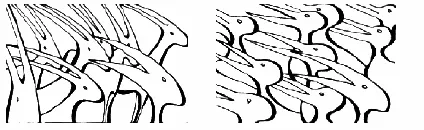
As a phenomenon, differences in interpretive frameworks are not confined to police officers and offenders acting as jurors. Many other studies of social perception have shown that there is an apparent predisposition for individuals to generate an immediate and seemingly involuntary cognitive response in which they try to make sense of information – any information – however complex, redundant, ambiguous or meaningless it is. This has been well documented in studies of visual perception and in much the same way that we all see faces in clouds or dancers in the flames of fires, individuals read patterns, stories and meaning into information – even when that information is random and senseless. Further, the way in which that information is interpreted is shaped by prior experience. So, a police officer may be more likely to see the face of a villain in the patterns of the wallpaper and a nurse may be more likely to see a patient. In studies of visual perception this is known as the priming effect and can be demonstrated by the ‘duck/rabbit’ illusion (see Figure 1.1).
With not too much effort we can ‘leap’ back and forth to see a duck or rabbit in the image. If prior to seeing the image one presents participants with several images of real ducks, one can increase the number of respondents who initially report seeing this image as a duck. However, if one subjects participants to a series of rabbit images prior to viewing the illusion one can increase the number of respondents who initially see the image as a rabbit. Of course, there are many other ambiguous illusions like these – the old/young woman or the face/saxophonist – and immediate prior experience and longer-term influences appear to shape how individuals see the images. Interestingly, as well as one's individual framework and experience, another powerful influence on what one sees is context (see Figure 1.2). So, if the same illusion appears among ‘stimuli’ that look more ‘duck’-like, it will be seen as a duck, and where it appears among ‘rabbit’-like stimuli it will appear as a rabbit.
The central point for our purposes is this: although some research has tried to pigeonhole human behaviour into neat categories, human action is dynamic and strongly affected by its surroundings. Contemporary trait psychology reveals that this is because interactions between individuals and the situations that they find themselves in are important determinants of behaviour. This applies whether someone has merely been primed with pictures of ducks or rabbits in a benign experiment or whether he or she is leading a murder investigation under the media spotlight, keenly aware that a predecessor's efforts culminated in a public inquiry. In other words, context exerts a powerful influence on investigative narratives and on the decisions that are made as a consequence. We reflect on these themes throughout the book. However, a taxonomic classification of critical incident context has yet to be established but, in Chapter 7, consideration is given to the many layers that impact upon individual decisions (including the decision environment, the influence of teams, groups and hierarchies, as well as multi-agency collaboration, and the various forms of decision: their reversibility, the person taking responsibility, their urgency, and how much evidence supports the decision).
Figure 1.1 The ‘duck/rabbit’ illusion
Figure 1.2 The ‘duck/rabbit illusion in context
Context also appears to influence leadership style and follower behaviour. In the behavioural analysis of two teams of four officers making decisions in the investigation of a kidnap and rape simulation discussed in Chapter 6, it is clear that directive and participative leadership styles partly emerge in response to the decision environment, with directive behaviour emerging at information bursts and participative styles during review stages. Further, the simple dichotomy of partici...