In the last decade our mobile phones have been infiltrated by angry birds, our computers by leagues of legends and our social networks by pleas for help down on the farm. As digital games have become networked, mobile and casual they have become a pervasive cultural form. Based on original empirical work, including interviews with workers, virtual ethnographies in online games and analysis of industry related documents, Global Games provides a political, economic and sociological analysis of the growth and restructuring of the digital games industry over the past decade. Situating the games industry as both cultural and creative and examining the relative growth of console, PC, online and mobile, Aphra Kerr analyses the core production logics in the industry, and the expansion of circulation processes as game services have developed. In an industry dominated by North American and Japanese companies, Kerr explores the recent success of companies from China and Europe, and the emergent spatial politics as countries, cities, companies and communities compete to reshape digital games in the networked age.
- 228 pages
- English
- ePUB (mobile friendly)
- Available on iOS & Android
eBook - ePub
About this book
Trusted by 375,005 students
Access to over 1.5 million titles for a fair monthly price.
Study more efficiently using our study tools.
1
INTRODUCTION
When a technical system breaks down, or workers speak out, we see the socio-technical relationships and political economies behind them revealed. In early January 2012 some Foxconn workers in China who worked on assembling Xbox consoles climbed onto the roof of the factory and threatened a mass suicide over employment conditions (Associated Press 2012). The same factory makes devices for Apple. Working practices in some games software companies both in Japan and in North America have been described as ranging from exploitative to tyrannical (Fahey 2015b, Dyer-Witheford and de Peuter 2006, Peticca-Harris, Weststar and McKenna 2015). The hacking of Sony’s PlayStation Network in 2011 and the theft of personal data from 77 million users opened up a discussion about online security in the industry. On Christmas Day in 2014 and 2015 customers of Sony’s PlayStation Network and Microsoft’s Xbox Live in North America and Western Europe could not access their online accounts due to a distributed denial of service attack. These stories are fleeting glimpses into global production networks in the contemporary digital economy, and the vulnerability of both workers and online services in the networked age. The production practices of the largest companies in the games industry remain largely hidden from view, locked into non-disclosure agreements, dispersed geographically and off-shored into remote low tax havens or industrial development zones. Not all game companies operate like this, and I have encountered some very enthusiastic workers, happy with their conditions and their jobs. They were making the games they want to make, or alternatively working on the next blockbuster that they could boast about to their friends. But as I negotiated access for interviews, data and images for this book I was struck by the contrast between our conceptualisation of play as open to all and voluntarily entered into, and the resistance to scrutiny and critique I encountered from parts of the industry and some game players. This book aims to provide a theoretically robust and empirically informed but accessible analysis of the political, economic, social and cultural factors shaping production in the digital games industry and analyse how it is globalising its production operations and localising its content and services to reach the most lucrative markets.
The digital games industry is part of the digital economy but its boundaries are amorphous and poorly understood. A number of different industrial categories and labels are applied to the digital games sector from country to country, signalling both its relative youth and its heterogeneity. We find that the main companies in the games industry often straddle the information and communication technology (ICT) and the media industries. In the UK, Australia and increasingly across Europe, parts of the digital games industry fall within the creative industries, a category which brings together 13 sub-sectors including advertising, architecture, art, antiques, crafts, design, fashion, film and video, computer games, music, performing arts, publishing, software and computer services, TV and radio (Hesmondhalgh 2007a). The European Commission now refers to the sector as the Cultural and Creative Industries (CCIs)1. As a relatively new, commercial, privately funded and largely self-regulated industry (in the US and Europe), digital game companies sit somewhere on a continuum between pure market software companies and non-market artistic practice. For some, the industry is not a cultural industry, while for others it most certainly is. We will return to this debate later in the book, but exploring the tension between the technical and the cultural aspects of digital games is core to understanding them.
While relatively young, the digital games industry has grown over the past four decades into an industry with significant revenues, transnational production networks, regionalised markets and localised content and support strategies. Price Waterhouse Coopers estimated that the industry would grow to US $70 billion globally by 2013 and that its rate of growth was much greater than most established media and communications industries. They estimated that it was worth more than recorded music, but less than filmed entertainment (De Prato et al. 2010:51–52). By 2016 the value of the games industry was approaching $100 billion according to a number of consultancy reports with the Asia-Pacific region accounting for 47 per cent of these revenues (NewZoo 2016a, PwC and Associates 2011, SuperData 2015). These figures exclude hardware sales and second-hand game sales. Console games remain significant in mature markets, but in newer markets mobile gaming on smartphones is demonstrating high levels of growth. Indeed, digital and live performance revenues are starting to overtake physical sales in some markets and for some companies. While it is hard to substantiate data from consultancy reports, they point to an industry which has taken its place alongside other media industries and deserves to be taken seriously as an object of study.
Beyond the revenue figures, the structure of the digital games industry resembles more established media industries. A relatively small number of hardware and digital platform providers are generating significant revenues from controlling access to distribution on physical and digital platforms. Some of these companies are also publishers and developers of games. Companies like Sony, Microsoft and Tencent have interests in other media industries and beyond. A huge number of independent game developers, wholly owned subsidiaries, in-house development teams and amateurs provide the content to fill the voracious appetite of the online networks, consoles and mobile devices. We are seeing an increase in live performance of games through e-sports, and the monetisation of play by players through broadcast channels like Twitch and YouTube Gaming. Further, developments in the games industry are having an impact upon other media industries: from community management systems to graphics technology, from popular avatars to toys, games are permeating wider popular culture in contemporary developed societies where people have the devices and the money to pay for commodified play.
Companies from Western Europe and especially the UK (Jagex, Media Molecule, Criterion, Rockstar North), France (GameLoft, Quantum Dream) and Germany (Wooga, Crytek) have been successful in game development over the past two decades. In the last five years development companies from Poland (CD Projekt RED – see Figure 1.1), Scandinavia (Rovio, King, Supercell, Mojang), Serbia (Nordeus) and Belarus/Cyprus (Wargaming) have become commercially successful also. European companies are less successful in publishing where most of the top 10 companies by revenue are North American and Asian, apart from Ubisoft. In the past five years new platforms like Facebook and new digital retailers like Google and Apple have raised expectations that smaller independent game developers could gain access to markets directly, bypassing some of the traditional barriers to market entry. This has happened to some degree, but these new platform intermediaries are occupying key brokering roles and establishing new technical and business barriers to market. North American and Asian companies also dominate in the digital distribution space. Games are only a small part of their business and technical and business changes by these platform owners do not necessarily benefit game developers. Meanwhile the number of companies and individuals publishing content on these platforms had led to problems of discoverability for game makers and raised the importance of circulation related activities. Thus marketing, community support, localisation and player and gameplay metrics have become important considerations.
Games production and games consumption remain largely a developed world phenomenon, while the production of hardware and peripherals has moved to low cost industrialised zones in Asia, Eastern Europe and South America (Nichols 2013b, Huntemann and Aslinger 2013). In the past decade some elements of high end games production have also been outsourced to low cost locations, especially in Eastern Europe and certain parts of Asia (Vanderhoef and Curtin 2016). By 2016 the top games company globally was Chinese and while the largest single market was still the United States, there had been a significant shift in terms of consumption towards Asia. Within Asia we see a shift in power, or at least an interregional struggle between South Korea, Japan and China (Chung 2010, Hjorth and Chan 2009, Liboriussen and Martin 2016). Thus it would be correct to say that the games industry has internationalised its hardware and content production networks in the last decade, but there are still political, economic, social and cultural barriers to these transnational production processes. The rise of networked and mobile games combined with new platforms and business models have fuelled revenue growth for some new entrants, but other companies have struggled to adapt. New forms of hybridised content are emerging as professional companies attempt to address the demands of new types of players in new markets and compete with content produced by greater numbers of amateur, student and part time developers. It has been a turbulent decade.
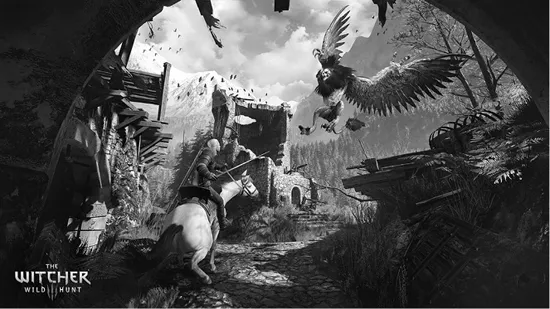
FIGURE 1.1 The Witcher 3: Wild Hunt, © CD Projekt S.A., Warner Bros/Namco Bandai, 2015
1.1 Digital Games as a Cultural Industry
There are a number of social science and humanity based approaches to studying and understanding cultural production, stretching from critical political economy to the sociology of culture. Political economy of the media offers a range of perspectives, as one collection points out (Winseck and Jin 2011). These range from a North American tradition which focuses on ownership and concentration, to the autonomist labour tradition. Sociology of culture also provides a range of useful concepts, but tends to pay less attention to transnational commercial productions and workers (Bourdieu 1990 [1965], 1993). In this book I largely follow the European cultural industries approach, most recently developed by Hesmondhalgh (2013), Bustamante (2004), Miège (2011) and Garnham (2000). This approach pays attention to the structure of the industry and imbalances in power between companies. It is concerned with the organisation of production, the experiences of workers, the texts/content produced and the audiences/players (Miège 1989, Hesmondhalgh and Baker 2011, Kraidy 2005). It also focuses on the role that the state, transnational organisations and public agencies play as mediators, regulators and promoters of cultural production. What unites these authors is that they attempt to situate the cultural industries in the broader context of globalisation and late capitalism.
The cultural industries approach is complemented and sometimes challenged by concepts and findings from cultural studies, especially studies of production cultures in the film, television, music and fashion industries (Caldwell 2008; Banks, Conor and Mayer 2016; McRobbie 2010; Mayer, Banks and Caldwell 2009). To date there have been few studies using this approach in game studies, although there is a growing interest at recent conferences. Finally, I draw upon theories from science and technology studies and social theories of work and organisation. Science and technology studies provide an expansive conceptualisation of technology (understood in its broadest sense to include hardware, knowledge and practice) and of the social factors shaping its production and consumption. Social studies of work help us to contextualise changing labour and work practices in games in relation to wider trends (Huws 2013, Webster and Randle 2016).
The reader might be asking why the cultural industries approach? The concept of the culture industry has a long history in media and communication developing within the work of the Frankfurt School of Social Theory and more particularly in the critical work of Adorno and Horkheimer (1979) in post WWI Europe. They developed the concept to critically engage with the industrialisation of culture and the dangers they saw in mass commercialised cultural products. The concept was pluralised into the cultural industries by later French scholars like B. Miège (1989, 2011), and he moved away from the presumption that commodification was an entirely negative process. The British scholar David Hesmondhalgh built upon this work and used the concept to focus on those institutions that are directly involved in the production, distribution and circulation of symbolic forms. Today the cultural industries include television, radio, books, newspapers, magazines, film, music and digital games. Also generally included are the advertising, marketing and public relations industries. The cultural industries are thus more limited than the current policy definitions of the creative industries, which usually include architecture, software, crafts, museums and heritage. The concept and approach is useful for highlighting the specificities of content creation and for engaging with the tension between culture and commerce that one often encounters in these industries.
Digital game developers and publishers can be usefully conceptualised as content/symbol creators and as part of the cultural industries. The structure of the digital games industry shares many characteristics with other cultural industries. These include: the high risk involved in producing content, the tension between creativity and profit, the high production and low reproduction costs, the semi-public good nature of games and the artificial construction of scarcity in the market (Kerr 2006a, Hesmondhalgh 2013:26–33)2. The industry also adopts similar strategies to other cultural industries in order to reduce risk, including formatting, licensing and sequels. However, there are important and interesting differences. The digital games industry was at the forefront of the cultural industries in the design of games to harness networking and dial-up Internet connections in the 1980s. In the last decade the industry has embraced digital distribution, Internet intermediaries and amateur content creation, and it has been at the forefront of developing new business models to harness these developments effectively.
In recent work Miège (2011) has proposed a broader categorisation than the cultural industries using the cultural, informational and communication (CIC) industries, while Winseck and Jin (2011) have proposed the network media industries (NMI). Both are attempting to capture the importance of communication and especially Internet companies to the workings of the cultural industries in the networked age. They are also resisting the creative industry concept. The creative industry concept emerged from policy makers in the UK and has been widely adopted in Australia, New Zealand and China, but is contested by academics and indeed some policy makers (Flew 2012). Particularly contested is the inclusion of the broad category ‘software, computer games and electronic publishing’. In other words, computer games are part of the most contested category in the creative industries approach – highlighting key cultural/technological tensions once again. This category includes both instrumental software and more aesthetic software production in the one category. It thus creates a category with significant employment and revenue earning potential, and perhaps that is the point. The creative industries approach foregrounds the economic aspects of these industries and especially commodification, individual creativity, intellectual property and profit. By contrast the cultural industries category highlights the cultural and the economic role of these industries while acknowledging the importance of collaboration to cultural production and the variety of commodity forms that exist (from private to quasi-public and public). The cultural industries concept acknowledges that state and non-market cultural productions also exist. Cultural industries also require varying degrees of localisation if they are to succeed transnationally; they are not global per se. My preference for now is to situate the digital game industry within the narrower cultural industries category and to acknowledge the tension between the economic and the cultural aspects of creative production in this industry. However, other terms exist and these will be discussed as appropriate.
The remit of the European Union (EU) expanded into cultural matters in 1992 and the creative industries discourse has influenced policies at the European level, even if this has been mediated by the European focus on culture, diversity and competing national agendas. We see the creative industries discourse emerge quite strongly in a European working paper in 2005 which defines the cultural industries as a subset of the creative industries and regards the creative industries as being more global than the cultural industries (Marcus 2005). Further, it notes that there has been a shift away from a policy model where the subsidised arts are at the core of the cultural industries to a model where commercial and economic activities are at the core, with subsidised arts moving to a peripheral position. The working paper noted that “Creative industries are knowledge and labour intensive and foster innovation: the sector is considered to have a huge potential for generation of employment and export expansion”, although the report noted that this potential was yet to be realised (2005:10). The focus on the production of commercial global cultural products downplays the degree to which local, regional and national financial and other supports are available to support cultural productions and the textual and technical barriers to localisation of cultural products and services. More recent documents and the Creative Europe programme have adopted the Cultural and Creative Industries (CCI) as a concept. While there is certainly a focus on skills, mobility of workers and regulatory frameworks in current programmes, there is also a focus on culture and financial supports for original productions, diversity of content and the movement of content across borders in translation (EC 2010). The European MEDIA programme has one strand, for example, which supports a limited amount of game development. The adoption of the CCI category points to something of a compromise between the cultural industries and the creative industries discourses. It captures the productive tension between commodification of culture and a desire to financially support forms of cultural content that the market will not provide. It also highlights a concern with the level of imported cultural content from outside of Europe. These discourses are an important backdrop to understanding the politics of the digital games industry in the European context.
When we consider the top 25 games companies by revenues we can identify core cultural industries, networked communication companies and broader information and communications technology companies (ICT) who are all involved in content production. Between 2010 and 2016 there were some new players in the top 10, but the companies involved in distribution and cross-sector games production remained strong. For many of the established game companies, physical distribution remains important even as they grow digital distribution. These companies included Microsoft, Sony, Nintendo, Apple, Google and major publishers/developers Electronic Arts, Activision Blizzard and Take-Two Interactive. New entrants tend to focus on digital products only...
Table of contents
- Cover
- Half Title
- Title Page
- Copyright Page
- Table of Contents
- List of Figures
- List of Tables
- Acknowledgements
- 1 Introduction
- 2 Going Global? The Value, Structure and Geography of the Digital Games Industry
- 3 Production: Changing Production Logics, Organisations and Work/ers
- 4 Circulation: Monitoring, Measuring and Adapting to Transnational Markets
- 5 Going Local: Space, Place and Policy for Global Games Production
- 6 Conclusion
- References
- Index
Frequently asked questions
Yes, you can cancel anytime from the Subscription tab in your account settings on the Perlego website. Your subscription will stay active until the end of your current billing period. Learn how to cancel your subscription
No, books cannot be downloaded as external files, such as PDFs, for use outside of Perlego. However, you can download books within the Perlego app for offline reading on mobile or tablet. Learn how to download books offline
Perlego offers two plans: Essential and Complete
- Essential is ideal for learners and professionals who enjoy exploring a wide range of subjects. Access the Essential Library with 800,000+ trusted titles and best-sellers across business, personal growth, and the humanities. Includes unlimited reading time and Standard Read Aloud voice.
- Complete: Perfect for advanced learners and researchers needing full, unrestricted access. Unlock 1.5M+ books across hundreds of subjects, including academic and specialized titles. The Complete Plan also includes advanced features like Premium Read Aloud and Research Assistant.
We are an online textbook subscription service, where you can get access to an entire online library for less than the price of a single book per month. With over 1.5 million books across 990+ topics, we’ve got you covered! Learn about our mission
Look out for the read-aloud symbol on your next book to see if you can listen to it. The read-aloud tool reads text aloud for you, highlighting the text as it is being read. You can pause it, speed it up and slow it down. Learn more about Read Aloud
Yes! You can use the Perlego app on both iOS and Android devices to read anytime, anywhere — even offline. Perfect for commutes or when you’re on the go.
Please note we cannot support devices running on iOS 13 and Android 7 or earlier. Learn more about using the app
Please note we cannot support devices running on iOS 13 and Android 7 or earlier. Learn more about using the app
Yes, you can access Global Games by Aphra Kerr in PDF and/or ePUB format, as well as other popular books in Business & Business General. We have over 1.5 million books available in our catalogue for you to explore.