
- 168 pages
- English
- ePUB (mobile friendly)
- Available on iOS & Android
eBook - ePub
About this book
Jose Limn is universally recognized as one of the most important modern dancers of the 20th century. His technique is still taught at major colleges and dance schools; his dance company continues to revive his works, plus presents new works. His most famous work, The Moor's Pavanne, has been presented around the world by ballet and modern dance companies. This book presents a series of essays about Limn's life and works by noted scholars and dancers who were associated with Limn. It serves as a perfect introduction to his choreography and legacy. The book should appeal to fans of modern dance.
Information
1
ARTISTIC SUCCESSION AND LEADERSHIP IN A MODERN DANCE COMPANY
Carla Maxwell
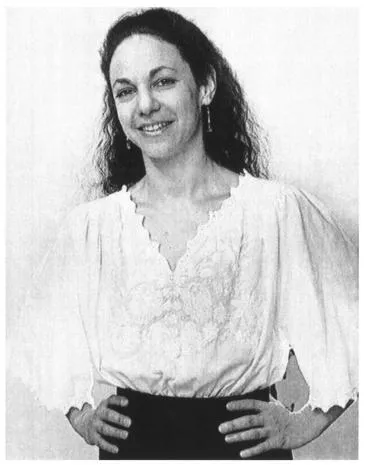
Carla Maxwell. Photo copyright by Beatriz Schiller. José Limón Dance Foundation Archives.
This year, 1997, The Limón Company is celebrating its 50th anniversary. For 25 of those 50 years it has been without its founding director and main creative force, José Limón. Next year our history will begin to record more years without José than there were with him. It is astounding to me to look back and realize these facts. Even as we live through this momentous year we are being propelled into the next millennium and our history seems to take on even greater significance. In this very special year, it is time to look back and reflect on how we managed this past quarter of a century, and where we find ourselves on the threshold of our next half century.
Limón’s personal career as a creative and performing artist, for the most part, follows the prototypes of the early founders of modern dance in this country. But the last 25 years without him don’t fit neatly into any pre-determined formula. They are our own unique history, and tell the story of the emergence of what has become a paradigm in the dance field in terms of artistic succession. Let me give you some background, and describe the circumstances surrounding José’s death.
On December 2, 1972, José Limón passed away after a three year battle with cancer. His wife and artistic help-mate for over thirty years, Pauline Lawrence Limón, also suffering from cancer, died the year before him. José left us as he lived, fighting for the dance and creating. His last two works, Orfeo and Carlota, premiered just two months before his death.
José left an active company of sixteen dancers, who had a full year’s work already scheduled. This included a month-long tour of the Soviet Union, a month’s engagement in Paris, extensive domestic touring and a six-week summer residency. José did not, however, leave anyone to be in charge artistically of this company, nor was any clear provision made in his will for the care or continuance of his dances. He did not have a school of his own, having taught for most of his career in established institutions such as The Juilliard School and the American Dance Festival. At the time of his death, the company did not have a studio of its own. Rehearsal space was rented, or was lent by the institutions where he taught.
When José died, there was no strong organizational structure in place to support the company. His attitude concerning the business part of his art contributed in part to this state of affairs. He had what we would consider today a rather naive way of thinking about money and funding; believing that if he was good enough someone would come forward and give him the necessary funds or lead him to resources. And, indeed, he was honored in his lifetime with awards, grants, extensive tours, and recognition for his creativity, performance abilities and work for the field. But this did not encourage José to pursue benefactors or people with funding strategies. So, at the time of his death there was no structure for succession in place, nor anyone to come forward to offer the necessary financial assistance to carry on.
Until a few years before her death, José’s wife, Pauline Lawrence Limón took care of every aspect of running his company, including designing his costumes and attending to many aspects of the productions. This left José free to concentrate his energies on creating, teaching and performing. But José and Pauline did not feel compelled to keep up with the administrative structures being developed in the rest of the field. So even though it was 1972 when José died, and he had incorporated in order to receive grants and donations, there was no active Board of Directors and no administrative staff except for a booking agent. Neither was there any other structure in place to substitute for this personal way of operating a company.
Understandably, many of the people who were close to José and who might have helped with the continuance of his work, were so distraught by his death that they found it very difficult to be involved with the company at that time. It was only after many years that some of these people were able to give their emotional and artistic support.
The climate in the dance community was such that no one believed that a company, and in particular a modern dance company, could continue after the death of its founder. It was thought that we might finish out the work scheduled and then disband. There were also disputes in the language in José’s will, so what may have seemed obvious in terms of taking care of his artistic legacy, turned into a legal entanglement that remained unresolved for fourteen years. It was not until 1986 that all rights to Limón’s work were finally held indisputably with The Limón Foundation.
This was the environment in which we found ourselves in 1972. No ground work had been laid for this major transition in the life of The Limón Company; not by the dance community, not within the structure and organization of Limón’s foundation, and not by José himself. There were no prototypes to emulate and no belief that we could succeed if we decided to try.
During that first year of work after José’s death, everyone involved with the company realized that we were there for more than José as a person or artist, and that if we disbanded, another lifetime of work by a creative genius would disappear. There had to be a living entity to carry his vision into the future. We also realized that our company embraced much more than just the work of Limón. It also included the work of his teachers and mentors, Doris Humphrey and Charles Weidman, and those that inspired them. What was left to us was much more than a repertory of dances. There was a technique, an aesthetic, a philosophy about dance and theater; in fact, an entire tradition!
Charles Tomlinson, José’s friend and a costume designer who had worked with the company, was the first to have the belief and the foresight that we must go on. It was he who planted the seed in our spirits that it might be possible. Already in the last months that José was alive he found new comprehensive management. When José died he instigated a search for a new artistic director. Daniel Lewis, then a leading soloist with the company and an assistant to José was asked to be Acting Artistic Director during the search. For those first eight months Danny and Chuck worked endlessly to bring some order to the chaos in which we found ourselves.
In July of 1973, Ruth Currier was asked to fill the role of Artistic Director. During her five-year tenure, she established the foundation’s first active Board of Directors, started to untangle the myriad legal problems surrounding the rights to José’s works, and set the groundwork of our artistic platform. She helped us to define, in body and words, our mission as an organization, and to separate vision, aesthetics, points of view and choreography from the personalities who fostered them. In her quiet way she opened the door, and made possible the beginnings of our rebirth.
During these years, other questions were raised. Were the works of Limón worth saving, or were they just vehicles for the charismatic performances of Limón and his contemporaries? Could these dances be brought to life by anyone other than Limón and his peers? (Interestingly, this last question was also being asked of Martha Graham as she passed on her own roles, while she was still alive and active.) It is my guess that, in José’s lifetime his great choreographic talent was eclipsed by the fact that he was such a compelling and phenomenal performer. It has taken these many years to balance the memory of his powerful presence with the realization that he was also one of our great choreographers.
At the same time that people were praising Limón’s accomplishments and saying that no one could ever replace him, they were questioning his viability as an enduring creative artist. In 1977, when Ruth resigned and I was asked to assume artistic responsibility for the company, I was confronted with such remarks as: “Why should the Limón Company exist now that The Moor’s Pavane is in the repertory of some of our major ballet companies?” Or, “Yes, it is the mission of the National Endowment for the Arts to safeguard our national heritage, but right now we don’t have any category that your company could fit into. Perhaps when Mr. Balanchine or Miss Graham die we’ll have to address the issue of artistic succession and a company’s ability to continue without its founder.” (Ironically, as late as 1991, when Graham did pass away, we saw the publication of a major article in The New York Times, which not only questioned how a company could go on without its founding director, but asked, should it?) But most often I would be asked, “What makes you think that The Limón Company can survive? Who, in your situation has ever succeeded before? Why are you even trying?”
It was clear that there would be little help from the dance community. It was up to us to prove that our tradition was worth saving, and show how it could be done. We had to create our own rules. All of this forced us into intense self-examination. What do we represent in the panoply of American dance? What is the essence of what we want to pass on? How might we evolve this aesthetic and bring it into the future? All of the answers came through process, and trial and error problem-solving.
In 1946, when Limón had formed his own company, he had asked Doris Humphrey to be the Artistic Director of the group and share in the training of the dancers and the creation of new work. This was already precedent-breaking for that time, because forming a modem dance company was considered a solo endeavor. One was responsible for everything: all the choreography, the training of the dancers and performing as well. So from the beginning, Limón created the concept of a repertory company, and over the years he presented not only his and Doris“” work, but that of some of his company members as well, including Lucas Hoving, Ruth Currier, Pauline Koner and Louis Falco.
In 1965 José’s broadness and generosity of vision was recognized when he was asked to be the Artistic Director for the short-lived American Dance Theater — the first major attempt at an American modern dance repertory company to house the classics of modern dance and commission new works. But the dance field was not ready for such a phenomenon and the project folded after two seasons. This idea, however, was ever present in our heritage and became the basis of our future endeavors after José’s passing. Today, we have redefined this concept of a modern dance repertory company to be one rooted in a strong tradition, presenting classics from that tradition, and commissioning new works that are compatible with that aesthetic.
As we explored the issues of what we were and how we would continue, we were again challenged in our progress. We seemed to be carrying “the baggage of the survivor”; we were always referred to as the first company that survived the death of its founder, and, therefore, how we had evolved was not addressed. We thought that this attitude had started to change after 15 years, but even as late as 1991, the title of a feature article on the company in Dance Magazine was “Life After Death”. And of course, there has never been any consensus from our critics concerning what our mission is and how we’re pursuing it. While one critic saw our efforts as“ a new, even tenuous, direction that bears little relationship to modern dance’s own perception of itself in the past”, [that we had] “blurred our own profile”, [and had warned that this might lead us to a] “loss of identity”,1 others praised our “artistic integrity”2 [and saw us] “flourishing” in our founder’s absence.3 We have long since stopped trying to please out critics. The artistic choices of each company are its own to make. We were walking the fine line between maintaining the integrity of our roots, and simultaneously allowing for growth and change. The latitude to do this was something initially denied us by the dance community. The personal image of José was always stamped in their minds and it was nearly impossible for critics to allow us breathing room to be who we were.
There is a great irony in our story. José actually addressed the issue of artistic continuance in relationship to Doris Humphrey, and yet he did so little to ensure the continuation of his own work. In 1946 when he was forming his company and inviting her to be his artistic director, he was offering that his company to be the repository for her work and the means for it to continue after her own group folded. Moreover, José spent his entire life fighting for American dance: fighting for both his tradition and the creative spirit. He was compelled to do it, and at the same time he felt privileged to be recognized as an artist. In an article in Dance Observer,January 1947, entitled “Young Dancers Speak Their Views”, José said the following: “The opinion is sometimes expressed that American dance will disappear along with its contemporary personalities when they retire from the stage. I do not believe this. The American dance has already known approximately three generations of artist exponents. Each generation has contributed to its impetus, its power, and its expressiveness. This sort of dance is inevitable. It is actually compelled out of us by our great continent with its crude magnificences. It is not merely a style or idiom. It is a potent idea. And when its contemporary personalities retire the idea will persist.”
This strong belief in the power of dance as a life force is also part of our tradition and an element which has contributed strongly to our continuance. José and his contemporaries were the vessels through which we now can see the birth of an art form and an aesthetic, pure dance: passionate, theatrical, inspired by life’s challenges, utterly human, and shaped by form, physicality and musicality. José once wrote that the art he wanted to create would combine the utmost passion with the strictest discipline. For Limón, dance and dance making was a ritual and a means of communication, and therefore the form is paramount. All elements must be part of the whole. These goals are also part of the tradition that we carry and greatly influence me in choosing choreographers to be included in our repertory.
The idea of artistic succession implies to me an act of going forward, an act of evolution and creativity. It is not a fixed place that keeps repeating itself. It is a bringing of our past into the present, and allowing it to change its shape as it moves forward. José very much supported and believed in this idea. For one thing he did not want his technique codified; he wanted it to grow and develop. There is no rigid, set Limón class and no two teachers will impart the movement principles in the same way. José was always encouraging people to find the dance that was in them; to find their own way and trust the creative process. At the same time he fought vigorously for the tradition handed down to him by Doris Humphrey. He felt that the past should be “revered”, not “embalmed”. In speaking of tradition, he said, “There is a great difference between a pantheon and a mausoleum.”4
In dance, the act of creation is more dependent on personalities than in any other art form. A choreographer might conceptualize his work alone, but to actually create, he needs other people. Perhaps this is why we are so reluctant to let go of the creative life forces who are our choreographers, and find it so difficult to separate them from their work.
When someone dies, first we mourn the loss of that person’s physical presence, and then we start to look at the essence of what that person represented for us. We each have our own process of deciphering what can stay with us, and what is...
Table of contents
- Cover
- Half Title
- Choreography and Dance Studies
- Full Title
- Copyright
- Contents
- Introduction to the Series
- List of Plates
- Introduction
- 1. Artistic Succession and Leadership in a Modern Dance Company
- 2. Dancers Are Musicians Are Dancers
- 3. The Dance Heroes of Jose Limon
- 4. Paulina Regina
- 5. Voices of the Body
- 6. My Dance Family
- 7. Thomas Skelton, Lighting Designer
- 8. Lucas Hoving and Jose Limon: Radical Dancers
- 9. Limon in Mexico; Mexico in Limon
- 10. Mazurkas: Origins, Choreography, Significance
- 11. The 1954 Limon Company Tour to South America: Goodwill Tour or Cold War Cultural Propaganda?
- 12. The Essence of Humanity: Jose Limon After a Half Century
- 13. Remembering Jose Limon
- Appendix I: Jose Limon Chronology
- Appendix II: Chronological List of Works Choreographed by Jose Limon
- Appendix III: Alphabetical List of Works Choreographed by Jose Limon
- Notes on Contributors
- Index
Trusted by 375,005 students
Access to over 1.5 million titles for a fair monthly price.
Study more efficiently using our study tools.
Frequently asked questions
Yes, you can cancel anytime from the Subscription tab in your account settings on the Perlego website. Your subscription will stay active until the end of your current billing period. Learn how to cancel your subscription
No, books cannot be downloaded as external files, such as PDFs, for use outside of Perlego. However, you can download books within the Perlego app for offline reading on mobile or tablet. Learn how to download books offline
Perlego offers two plans: Essential and Complete
- Essential is ideal for learners and professionals who enjoy exploring a wide range of subjects. Access the Essential Library with 800,000+ trusted titles and best-sellers across business, personal growth, and the humanities. Includes unlimited reading time and Standard Read Aloud voice.
- Complete: Perfect for advanced learners and researchers needing full, unrestricted access. Unlock 1.5M+ books across hundreds of subjects, including academic and specialized titles. The Complete Plan also includes advanced features like Premium Read Aloud and Research Assistant.
We are an online textbook subscription service, where you can get access to an entire online library for less than the price of a single book per month. With over 1.5 million books across 990+ topics, we’ve got you covered! Learn about our mission
Look out for the read-aloud symbol on your next book to see if you can listen to it. The read-aloud tool reads text aloud for you, highlighting the text as it is being read. You can pause it, speed it up and slow it down. Learn more about Read Aloud
Yes! You can use the Perlego app on both iOS and Android devices to read anytime, anywhere — even offline. Perfect for commutes or when you’re on the go.
Please note we cannot support devices running on iOS 13 and Android 7 or earlier. Learn more about using the app
Please note we cannot support devices running on iOS 13 and Android 7 or earlier. Learn more about using the app
Yes, you can access Jose Limon by June Dunbar in PDF and/or ePUB format, as well as other popular books in Media & Performing Arts & Dance. We have over 1.5 million books available in our catalogue for you to explore.