In Eisenstein Rediscovered Ian Christie and Richard Taylor present the first true East-West symposium on Eisenstein with an unparalleled diversity of views and methodologies. Two newly discovered texts by Eisenstein are here translated fro the first time, and all the contributors make extensive use of material only recently available - variant scripts, drawings, diaries and other writings - to probe behind the familiar facade. The `new' Eisenstein that emerges is in all respects a more engaging and contemporary figure than is traditionally perceived, his wit, eroticism and exlectic passions defining a distinctively modern sensibility whose rediscovey is long overdue.
- English
- ePUB (mobile friendly)
- Available on iOS & Android
eBook - ePub
Eisenstein Rediscovered
About this book
Information
Part I
Eisenstein studies today: text and context
Chapter 1
Arguments and ancestors
Naum Kleiman
I am quite sure that all Eisenstein enthusiasts could contribute to the subject that I address today. If this introduction is rather pointilliste in character, this is because my basic aim is to provoke thought. There has been a new impetus in Eisenstein studies and this is not only due to the anniversary of his ‘ninetieth birthday’. There have been many changes in our world, many changes in our cinema and in the relationship between cinema and the other mass media as well.
Paradoxically, our image of Eisenstein is also changing all the time. The most positive aspect of this whole process is that he has not yet been canonised. We can still argue about him. Indeed he does not allow himself to be canonised. I would draw your attention to the ending of one of the chapters in his unfinished book of essays, People from One Film, which has as yet been translated into very few other languages.1 Here he describes the group working on Ivan the Terrible and there is a passage about Esfir Tobak, who was helping him with the montage. It is called ‘The Ant and the Grasshopper’. At the very end of this chapter Eisenstein makes a very curious remark. He recalls his theories, the declarations which had resounded over the years, and at the end he says that it never occurred to anyone to check whether the author of these statements actually followed his own theories.
Unfortunately we sometimes try to illustrate his theories too directly with examples from his films, or to understand his films as a direct realisation of his theories. But, as I am now beginning to understand, his practical work is on the one hand richer than his theory, while his theory is on the other hand so much richer than his body of work. They do not merely correspond: indeed sometimes they conflict with one another. Some of the ideas that he expressed as hypotheses are substantiated in his work, while others are not substantiated at all.
We should not lose sight of the fact that he worked over a span of twenty-five years and many changes occurred during that time. There were not only political and social changes in the Soviet Union. The first thing we must do is to dispose of the notion that Eisenstein followed closely these political and social changes or reacted to the pressure they put upon him in his working career. Of course they are of enormous significance: indeed we must make more of an effort to understand the context in which his work unfolded, because we just do not know enough about that period.
At the same time, however, there are many immanent processes, both in his development as an artist and as a theoretician which we must understand. Eisenstein referred again and again to the enormous influence upon him of Professor Sukhotsky, his teacher at the Institute of Civil Engineering in Petrograd. But we know very little about Sukhotsky, although he is one of the most interesting figures in Russian culture at the beginning of the twentieth century.2 Sukhotsky was one of the first to grasp the importance of Eisenstein’s theories and one of the first to understand the new study in physics of the infinitesimal and to explain its poetic significance. Eisenstein recalls that it was Sukhotsky who taught him the theory of the limits to which objects aspire. If we take this on trust from Eisenstein then we can see that many of these theoretical statements represent limits towards which his work aspires. But remember that in his Memoirs he was always referring to King Gillette and this idea that you have to make a half turn of the screwdriver back from the limit towards which you aspire when talking in terms of your own practice. It is this half turn backwards that gives you the whole range of stylistic and even individual variables. We have not studied this relationship between the limit and the concrete variable adequately. Let me give just a few examples.
One of the most frightening things that Eisenstein ever said in his arguments with Dziga Vertov was, ‘It is not a “Cine-Eye” that we need but a “Cine-Fist”’.3This statement has given rise to a mass of speculation. When we were celebrating Eisenstein’s anniversary, the philosopher Yuri Davydov gave a speech that was very critical of Eisenstein, arguing that he had been a kind of Stalinist who had wanted to take this ‘cine-fist’ and crush people’s skulls with it, as distinct from Brecht who, by contrast, had stimulated independent thought. This image of the ‘cine-fist’ comes from Gorky’s Reminiscences of Lenin where he recalls Lenin’s remark that when you listen to Beethoven you feel like stroking people’s heads when what you ought to be doing is thumping them with your fists. However, Eisenstein would say that he wanted to use this fist ‘to plough over the audience’s psyche’.4
Of course you can interpret that as an attempt to intrude violently on people’s thinking but, if you look at it in the context of what he was writing at the time, you will understand what he is really saying. For instance, in his notebooks on Bekhterev, which have unfortunately not yet been published, he remarks that art must change the conditioned reflex that is provoked by the social context and, in particular, the audience must be diverted from reflex reactions of servility and terror.5 The idea that people have not merely an instinct but also a psychological reflex towards fear and servility and that we must free them from both is a very important one, especially in the context of the situation in the Soviet Union at present. If you look at Eisenstein’s work, that is the direction in which it is going, people ridding themselves of their automatic reaction of fear when they are faced with violence and terror.
From The Strike right through to Ivan the Terrible both the subject and the structure of the films can be seen as a kind of inoculation against this reflex reaction of panic and fear. Of course that raises the question of Eisenstein’s so-called sadism: is he really a sadist? Perhaps, on the contrary he is trying to give us a kind of inoculation against sadism. I will come on to Eisenstein’s personality later but it is already clear that the kind of brutality that appears in his work had nothing to do with any kind of sadism per se. That is one example of where we have to re-examine our established views. Let me give you another: Eisenstein’s ideas on acting in cinema.
Eisenstein made many statements criticising the so-called ‘academic’ acting school and it is known how much he built on ‘types’ in cinema, in both his films and his theoretical teachings. In actual fact the entire Proletkult collective acted in The Strike. In The Battleship Potemkin a few Proletkult actors were joined by more from the Odessa actors’ union. Almost all the characters in the Odessa Steps sequence are actors. In October many of the actors came from the Leningrad union. Even the procession with the cross in The General Line was made with actors from October because both films were made at the same time. There are far more actual actors than ‘types’. So we have to understand how he worked with actors as ‘types’ and with his ‘types’ as actors.
Let me give another example to illustrate this relationship between theory and practice. His first article, ‘The Eighth Art’, written with Yutkevich, is very much a criticism of German Expressionism and he criticised it again later, but once more the situation is also more complex.6 The impact of Expressionism on Ivan the Terrible has already been researched.7 The word vyrazitel’nost’ (expressiveness) was one of Eisenstein’s favourite words. We have discovered a note which again has unfortunately not yet been published but is certainly worth summarising here. It is the only note that Eisenstein made while editing The Battleship Potemkin. The provisional title is ‘Acting with Objects and Acting through Objects’: it is incomplete but he makes a very interesting observation that, whereas in theatre you have acting with an object, in cinema you have acting through an object.8 In Potemkin he gives the name ‘everyday Expressionism’ (bytovoi ekspressionizm) to the method in which the external aspect of the object is unaltered but various expressive schemas are deployed to place the object in different contexts. This ‘everyday Expressionism’ is partly a contrast to, and partly a continuation of the object. It is unusual for Eisenstein but it does make us understand all his statements much more clearly.
The next matter that I want to raise is the context of Eisenstein, which is really much broader than we have ever suspected. Take the theory of influence: who influenced whom? When we are looking for influences we search for similarities and traces. But I should like to propose a somewhat different model here. There are a number of well-known photographs from La Sarraz of Eisenstein as Don Quixote, sitting on a horse and holding a camera and a pike in his hand. He is comparing himself to Don Quixote. I believe we can make an analogy here with Pushkin who always had the image at the back of his mind of himself as a knight in shining armour at a tournament. This is important because a knight is prepared to take up a challenge and fight in a tournament. So, when we talk about the Byronic influence in Pushkin I think it is more a question of Pushkin being prepared to take up the Byronic challenge, to ‘fight it out’ with Byron, rather than just passively accepting Byron’s influence. The same is true of the relationship between Pushkin and his teacher Zhukovsky or his friend Vyazemsky.
Eisenstein felt as if he were constantly engaged in a tournament, and of course the medieval ideal was that the tournament was not a war but a friendly contest. This started with his ‘tournament’ with Meyerhold, which led to such battles as the one that raged around the production of Puss in Boots.9 One of Eisenstein’s favourite expressions was ‘Me too’, but it is not just a question of ‘Me too’ because his other favourite expression was ‘That’s wrong’.10 This is dialectics in the classical sense of the word, the possibility of fighting while seeing the other side of the question as well. So when we look at the context of who his teachers were, who his friends were, we can see how much broader it is than we are used to thinking. The exhibition showed his fascination with Constructivism and Cubism, how important these were for him, for instance in his drawings for Picasso’s ‘Parade’. At the same time, we must remember that he was a child of Symbolism, the Russian Symbolism of Blok, Bely and Ivanov, and the echoes of this can be traced right through to the end of his life. For instance, there was intended to be an epilogue to Alexander Nevsky, which was an integral part of the film. Unfortunately Stalin’s personal censorship excised the death of Alexander Nevsky from the film but the finale, the victory over the Tartars at Kulikovo Polye, is taken directly from Blok.11 Throughout Eisenstein’s life we can find both conscious and unconscious elements of the epoch that formed him and from which he emerged. This is also true of Nikolai Evreinov, the writer, director and theorist of theatre.12 We must remember Evreinov’s influence when we talk about Joyce and ‘inner monologue’ and the influence that all that had on Eisenstein.
But there are even more unexpected contexts for Eisenstein: there is, for instance, the so-called commercial cinema. Until now we have underestimated the influence of such hits as The Exploits of Elaine, The Grey Shadow and Fantômas, but they were very important.13 Alan Upchurch was looking at the cover of the first edition of the Fantômas book, recalling the scene in Feuillade’s film in which the criminal world is peeping out of a barrel, and he immediately thought of that scene in The Strike where the strikers peep out of a barrel!14 These ‘tournaments’, or tunnels, that link the cultures of different countries are very important for our understanding of Eisenstein. If one remembers the scene in the Valley of Death at the end of Greed, Eisenstein’s scenario for Sutter’s Gold begins with that same scene.15 This is no coincidence: it is just a continuation and a reexamination of the same phenomenon from another country and another historical context. Or take a famous case like that of Chapayev.16 In the 1930s it was the accepted view that the ‘psychological attack’ of Chapayev exceeded that of the Odessa Steps sequence. So then Eisenstein depicted an attack in Alexander Nevsky to demonstrate to his students just how a psychological attack could be made. But he went further than this in jousting with his students who were beginning to turn away from him. There is a scene in Chapayev where potatoes are used to show where the commander should be and a scene in Ivan the Terrible where, in response to the tragic Vladimir Staritsky, Ivan says ‘The Tsar must always be in front!’ I think that this is an answer, not only to Chapayev, but also to his own pupils as to where the leader should be. It is also, apart from anything else, a profoundly autobiographical moment.
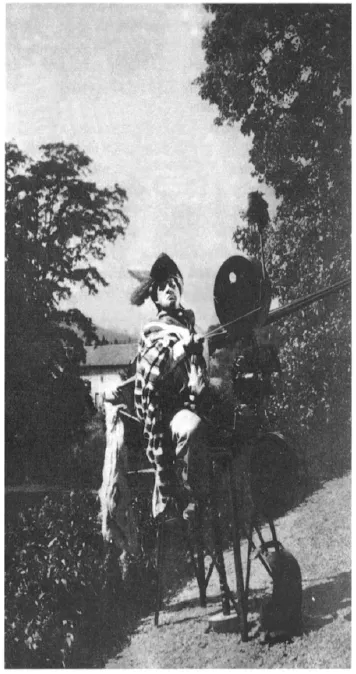
Figure 9 Eisenstein as Don Quixote defending independent film against commercial cinema at the International Congress of Independent Cinema, La Sarraz, September 1929.
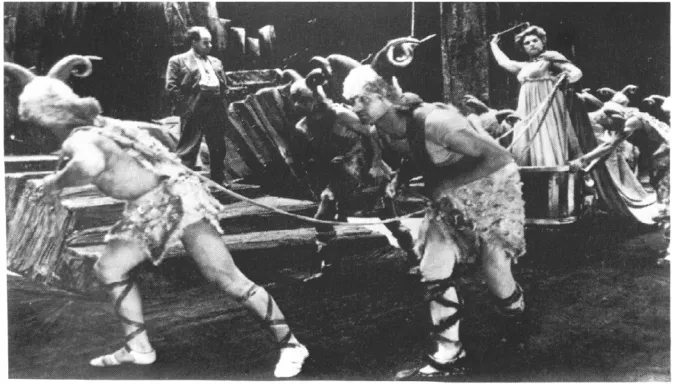
Figure 10 Eisenstein rehearsing wagner’s Die walküre at the Bolshoi, 1940
I have to leave out so many things here but I feel I must say something about what we might call his ‘ancestors’, rather than his immediate predecessors or advisers. We already have very stereotyped views about the importance of Zola, Leonardo da Vinci and so on. But why do we pay so little attention to Ben Jonson whom Eisenstein rega...
Table of contents
- Cover Page
- Title Page
- Copyright Page
- Illustrations
- Notes on contributors
- General editors’ preface
- Acknowledgements
- Note on transliteration and translation
- Introduction
- Part I Eisenstein studies today: text and context
- Part II Eisenstein’s roots
- Part III The practice of theory
- Notes
Trusted by 375,005 students
Access to over 1.5 million titles for a fair monthly price.
Study more efficiently using our study tools.
Frequently asked questions
Yes, you can cancel anytime from the Subscription tab in your account settings on the Perlego website. Your subscription will stay active until the end of your current billing period. Learn how to cancel your subscription
No, books cannot be downloaded as external files, such as PDFs, for use outside of Perlego. However, you can download books within the Perlego app for offline reading on mobile or tablet. Learn how to download books offline
Perlego offers two plans: Essential and Complete
- Essential is ideal for learners and professionals who enjoy exploring a wide range of subjects. Access the Essential Library with 800,000+ trusted titles and best-sellers across business, personal growth, and the humanities. Includes unlimited reading time and Standard Read Aloud voice.
- Complete: Perfect for advanced learners and researchers needing full, unrestricted access. Unlock 1.5M+ books across hundreds of subjects, including academic and specialized titles. The Complete Plan also includes advanced features like Premium Read Aloud and Research Assistant.
We are an online textbook subscription service, where you can get access to an entire online library for less than the price of a single book per month. With over 1.5 million books across 990+ topics, we’ve got you covered! Learn about our mission
Look out for the read-aloud symbol on your next book to see if you can listen to it. The read-aloud tool reads text aloud for you, highlighting the text as it is being read. You can pause it, speed it up and slow it down. Learn more about Read Aloud
Yes! You can use the Perlego app on both iOS and Android devices to read anytime, anywhere — even offline. Perfect for commutes or when you’re on the go.
Please note we cannot support devices running on iOS 13 and Android 7 or earlier. Learn more about using the app
Please note we cannot support devices running on iOS 13 and Android 7 or earlier. Learn more about using the app
Yes, you can access Eisenstein Rediscovered by Ian Christie,Professor Richard Taylor,Richard Taylor in PDF and/or ePUB format, as well as other popular books in Social Sciences & Media Studies. We have over 1.5 million books available in our catalogue for you to explore.