What happens to consciousness during the act of dying? The most compelling answers come from people who almost die and later recall events that occurred while lifesaving resuscitation, emergency care, or surgery was performed. These events are now called near-death experiences (NDEs). As medical and surgical skills improve, innovative procedures can bring back patients who have traveled farther on the path to death than at any other time in history. Physicians and healthcare professionals must learn how to appropriately treat patients who report an NDE. It is estimated that more than 10 million people in the United States have experienced an NDE. Hagan and the contributors to this volume engage in evidence-based research on near-death experiences and include physicians who themselves have undergone a near-death experience. This book establishes a new paradigm for NDEs.
- English
- ePUB (mobile friendly)
- Available on iOS & Android
eBook - ePub
The Science of Near-Death Experiences
About this book
Information
Print ISBN
9780826221032
CHAPTER ONE
Near-Death Experiences
An Essay in Medicine & Philosophy
Near-death experiences are an ancient and very common phenomenon that spans from ancient philosophy, religion and healing to the most modern clinical practice of medicine.
MODERN ADVANCES IN MEDICAL KNOWLEDGE make it possible to revive patients from increasingly severe, life-threatening injuries and illnesses, including cardiac arrest. Upon being revived, such patients often report experiencing life-changing alternate states of consciousness, which they tend to interpret in spiritual terms. Beginning in 1965, I interviewed several thousand individuals who had near-death experiences (NDEs) when they narrowly survived grave medical crises. I conducted the interviews first as a professor of philosophy and logic, then later as a medical doctor and psychiatrist. This paper is an overview of my research on near-death experiences, their historical significance, their characteristics, their sociological dimension, and their clinical implications.
HISTORY OF NEAR-DEATH EXPERIENCES
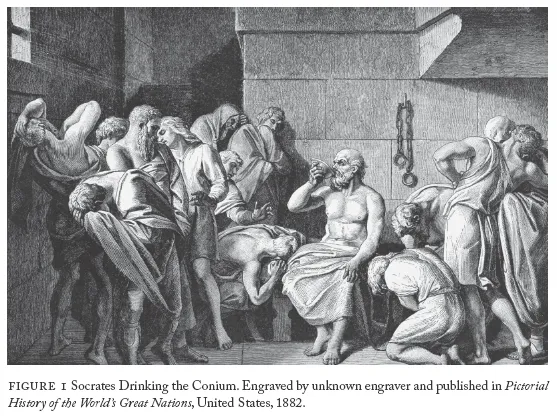
Near-death experiences are a perennially fascinating subject that bridges modern medical practice and ancient Greek philosophy. The Greek philosophers Heraclitus, Democritus, and Plato theorized about people known as “revenants” who had supposedly died and came back to life. Heraclitus mused, enigmatically, that the revenant is somehow appointed to watch over the living and the dead. Plato’s most famous work, The Republic, culminates in the story of Er, a warrior who was apparently killed in battle. At his funeral, however, Er spontaneously revived and told a tale of moving away from his body
and entering a complex afterlife world. Plato took stories like Er’s seriously as offering some assurance of a life after death.
Democritus, the founder of atomic theory, was also interested in stories of people who had returned from the dead. In his writings, which now survive only in fragments, Democritus tried to explain “return from the dead stories” in terms of his favorite explanatory principles—atoms and the void. He noted that there is no such thing as a moment of death. In other words, Democritus held that the experiences of the dying result from the gradual winding down process of the body before death. Clearly people have known about near-death experiences for thousands of years. Such experiences must have been quite rare in antiquity and the medieval periods, since surviving an extreme injury or illness was much more uncommon. Scattered reports exist from those times, but the situation changed dramatically in the late twentieth century.
The last several decades of the twentieth century saw momentous breakthroughs in technology and procedures for cardiopulmonary resuscitation. Widespread use of these new techniques soon dramatically increased the number of people who survived a close brush with death.
By the mid-1970s, so many individuals had undergone near-death experiences that the phenomenon was bound to come to the attention of the public. My book Life after Life (1975),1, 2 an analysis of about 150 cases of near-death experiences, was apparently the catalyst that woke the modern world up to this ancient phenomenon.
Since then, numerous physicians and psychologists have interviewed large numbers of patients who recounted near-death experiences. These physicians include, for example, cardiologist Michael Sabom, MD, psychiatrist Bruce Greyson, MD, cardiologist Pim Van Lommel, MD, resuscitation specialist Sam Parnia, MD, radiation oncologist Jeffrey Long, MD, psychologist Kenneth Ring, PhD, and others. All these authorities and others have published their findings and a large professional and popular literature on the subject has accumulated. A consensus has emerged among researchers that experiential reports of near-death experiences tend to conform to a discernible, common pattern.
CHARACTERISTICS OF NEAR-DEATH EXPERIENCES
Survivors of close calls with death usually recount their transcendent experiences in the form of a travel narrative. They tell us that their consciousness leaves their body and rises upward where they witness the resuscitation procedure going on below. They seem to pass through a dark enclosure toward a brilliant white light. However articulate they may be, they say that the experience is ineffable and indescribable; words are inadequate. They say that in the bright light they feel comfort, joy, peace, and love so intense as to be almost palpable. They say that they perceive the spirits of deceased loved ones, departed relatives, and friends who seem to be there to welcome them. These patients also say that they re-experience in vivid detail the events of their lives in a sort of holographic, full-color panorama. Although it takes only an instant, they report reviewing the actions of their lives empathically, from within the consciousness of others with whom they had interacted rather than from their original perspective.
Patients differ as to how they got back. For some, at one moment they were immersed in the light and the next moment they were back in their hospital beds with no sense of a transition. Other patients say that they were told, perhaps by one of their deceased loved ones, that they had to go back; that they
had things left to complete. Yet other patients say they were given a choice. They could either stay in the light and continue that experience or return to the life they had been living. Most commonly, these patients say that for themselves they would have preferred to stay in the light; however, they chose to go back for someone else, usually to raise their young children.
Upon returning, these patients remark that their near-death experiences profoundly changed their lives. They say that their experiences convinced them personally that there is an afterlife so they no longer fear death. These patients say that whatever they might have been pursuing in their lives before—power, wealth, fame or something else—their experiences convinced them that the most important goal in life is to learn to love. Although they still find that goal as difficult to realize as anyone else, their near-death experiences commit them to pursuing love.
Not everyone who recovers from a near-death event reports a near-death experience. Nor does everyone who has a near-death experience report the whole, prototypical series of events. Some recall only a brief out-of-body experience with a view of their own physical body below, followed by a quick return. Others get only as far as the dark passageway, while others proceed all the way into the light. We do not know the reasons for all these variations. Notably, much of what “common sense” suggests about near-death experiences turns out not to be true.
First, NDEs do not seem to be dreams. Dreams seem less real than ordinary waking reality; NDEs seem hyper-real, that is “more real than ordinary waking reality.” Patients describe their NDEs as almost the antithesis of dreams and deny dream-like qualities.
The occurrence of NDEs does not seem related to patients’ prior religious training or beliefs. Many people with no prior interest or background in religion report powerful NDEs after surviving grave medical crises. NDEs are not related to specific medical conditions. Patients with infections, trauma, cardiac arrest, complications of childbirth, and many other diverse conditions have reported NDEs. There is wide variation in patient ages from the very young to the very old and every age between. Attempts to explain NDEs in physical or neuro-psychological terms have postulated complex seizures or brain anoxia. One problem with these explanations is that typical NDE phenomena often
occur among deathbed bystanders. This is called a “shared death experience (SDE).” The bystanders are neither ill nor injured. NDEs and SDEs are not caused by brain hypoxia or atypical seizures.
SHARED DEATH EXPERIENCES
Bystanders or onlookers at the death of a patient may include physicians, nurses, other medical personnel, and relatives or friends of the dying. All of these types of bystanders report SDEs that are often indistinguishable from NDEs. For example bystanders sometimes say they saw a transparent replica of the dying person leave that person’s body at the point of death. Or they describe leaving their own bodies and rising up to accompany their dying loved one part way toward the light. Onlookers at someone else’s death also sometimes report that a brilliant light filled the room, they heard indescribably beautiful music and/or they perceived apparitions of the dead person’s deceased loved ones. Occasionally, onlookers empathically report that they co-lived the “life review” of the deceased person. [See Editor’s note, p. 17]
ORIGINS OF THE DESCRIPTION OF NEAR-DEATH EXPERIENCES
I first heard of a shared death experience from one of my professors of medicine in December 1972. Since then, I have heard thousands of such accounts from physicians, nurses, and kith and kin attendant at someone’s death. I want to re-emphasize that all the same elements of near-death experiences reported by people who almost die are also reported by onlookers at the death of someone else. As incredible as this statement may seem, it is easily confirmable by any thorough investigator who will considerately and sympathetically inquire among people who were present at the death of others. I do not know exactly what the incidence or prevalence of shared death experiences might be but they are common and under-reported.
NEAR-DEATH EXPERIENCES AND MEDICAL SOCIOLOGY
In the late 1970s, dissemination of knowledge about near-death experiences, both in mass media and in the medical literature, caused a worldwide sensation. Books about NDEs sparked theological debates and speculation about the prospect of life after death. Popular movies and television talk shows enthusiastically took up the banner of near-death experiences. Almost forty
years later, near-death experiences are still vigorously debated in every corner of the Earth. Numerous physicians have investigated the phenomenon and have been deeply impressed with patients’ accounts of their near-death experiences. The topic remains a staple of television documentaries and newspaper and magazine articles.
This continuing fascination with near-death experiences has profound implications for the sociology of medicine. Advances in resuscitation techniques return to life a large number of people experiencing profound states of visionary consciousness at the very edge of absolute death. This is a prime example of how the progress of medicine can affect society in far-reaching and unanticipated ways.
Inevitably near-death experience reports have fueled debate on the possibility of life after death. There are no known rational or logical principles that allow reliable inferences about the prospect of an afterlife. Research into near-death experiences that is not rigorously rational may blur the line between medicine and religion. The best practice for physicians is to stick strictly to clinical and research concerns.
CLINICAL IMPLICATIONS OF NEAR-DEATH EXPERIENCES
What should a physician do when a patient recovers from an almost fatal illness or injury and reports a near-death experience? From talking with thousands of such patients, I find most simply want someone to listen to them noncommittally. They want to talk about what happened to them and to ventilate the powerful emotions and memories associated with their near-death experience. After listening, it also helps to reassure the patient that he or she is not alone, that millions of other individuals have had such experiences. Listening and reassuring them helps set them on a lifelong course of integrating what for most is their most profound transcendent event.
Intervening with their families can often save such patients considerable unnecessary discomfort and interpersonal conflicts. The family should know that the patient is not mentally ill nor are NDEs rare. Patients with near-death experiences are generally convinced from the outset that the experience was real and that they are not “crazy.” They often worry that other people will make fun of them or doubt their sanity.
SUMMARY
Near-death experiences are an ancient and very common phenomenon that spans from ancient philosophy, religion, and healing3 to the most modern clinical practice of medicine. Probably we are not much closer to an ultimate explanation of NDEs than were early thinkers like Plato and Democritus.4 Puzzling cases of near-death experiences continue to come to light and the ancient debate about what they mean continues unabated.
[Editor’s note: I have a friend of 40-plus years, highly intelligent, educated, non-religious, and absolutely truthful and trustworthy who volunteered having seen a “white mist” rise up from a dying great-grandmother’s body and ascend to the corner of the room, linger, then disappear through the ceiling. My friend was age six at the time and had not previously shared this extremely common form of “shared death experience” with anyone.]
CHAPTER TWO
An Overview of Near-Death Experiences
An analysis of the incidence of NDEs among critically ill patients as documented in nine prospective studies in four countries yielded an average estimate of 17%.
NEAR-DEATH EXPERIENCES (NDES), PROFOUND EXPERIENCES reported by some people who survive close brushes with death, are important to clinicians because they often lead to pervasive changes in attitudes and behavior; because they may be confused with psychopathological states; and because they may enhance our understanding of consciousness. Proposed psychological and physiological explanations lack empirical support and fail to explain NDEs, which pose a challenge to current models of the mind-brain relationship.
INTRODUCTION
When some people come close to death, they go through a profound experience that may include a sense of leaving the body and entering some other realm or dimension, transcending the ordinary confines of time and space. Although these events had been identified as a discrete syndrome as early as 1892,1 it was not until 1975 that Raymond Moody, MD, PhD, introduced the term near-death experiences (NDEs) for these phenomena. Moody described characteristic features commonly reported by survivors, including ineffability, overwhelming feelings of peace, seeing a tunnel, a sensation of being out of the body, meeting nonphysical beings including a “Being of Light,” reviewing one’s life, a border or point of no return, and coming back to life with marked changes in attitudes and with knowledge not acquired through normal perception.2 A recent review of the accumulated findings from thirty years of research since Moody’s seminal work has essentially confirmed his original description.3
An analysis of the incidence of NDEs among critically-ill patients as documented in nine prospective studies in four countries yielded an average estimate of 17%.3 With advancements in medical resuscitation techniques, the frequency of NDEs has increased, and thus about nine million people in the United States alone have reported this kind of experience.4 In the last 30 years, the near-death phenomenon has been investigated extensively.5 Near-death experiences are important to physicians for three reasons. First, NDEs precipitate pervasive and durable changes in beliefs, attitudes, and values.6 Secondly, they may be confused with psychopathological states, yet have profoundly different sequelae requiring different therapeutic approaches.7 Third, clarification of their mechanisms may enhance our und...
Table of contents
- Cover Page
- Title Page
- Copyright Page
- Contents
- Foreword
- Acknowledgments
- About Missouri Medicine: The Journal of the Missouri State Medical Association
- Introduction - The Science of Near-Death Experience: The Most Comprehensive Study in the World’s Medical Peer-Reviewed Literature
- Chapter One - Near-Death Experiences: An Essay in Medicine and Philosophy
- Chapter Two - An Overview of Near-Death Experiences
- Chapter Three - Out of One’s Mind or Beyond the Brain?: The Challenge of Interpreting Near-Death Experiences
- Chapter Four - Dutch Prospective Research on Near-Death Experiences during Cardiac Arrest
- Chapter Five - My Unimaginable Journey: A Physician’s Near-Death Experience
- Chapter Six - My Near-Death Experience: A Call from God
- Chapter Seven - Near-Death Experiences: Evidence for Their Reality
- Chapter Eight - Apparently Non-Physical Veridical Perception in Near-Death Experiences
- Chapter Nine - Through the Eyes of a Child: Near-Death Experiences in the Young
- Chapter Ten - Distressing Near-Death Experiences: The Basics
- Chapter Eleven - Near-Death Experiences: The Mind-Body Debate and the Nature of Reality
- Chapter Twelve - Neuroscience Perspectives on Near-Death Experiences
- Chapter Thirteen - Near-Death Experiences and the Emerging Scientific View of Consciousness
- Contributors
- Notes
- Index
Trusted by 375,005 students
Access to over 1.5 million titles for a fair monthly price.
Study more efficiently using our study tools.
Frequently asked questions
Yes, you can cancel anytime from the Subscription tab in your account settings on the Perlego website. Your subscription will stay active until the end of your current billing period. Learn how to cancel your subscription
No, books cannot be downloaded as external files, such as PDFs, for use outside of Perlego. However, you can download books within the Perlego app for offline reading on mobile or tablet. Learn how to download books offline
Perlego offers two plans: Essential and Complete
- Essential is ideal for learners and professionals who enjoy exploring a wide range of subjects. Access the Essential Library with 800,000+ trusted titles and best-sellers across business, personal growth, and the humanities. Includes unlimited reading time and Standard Read Aloud voice.
- Complete: Perfect for advanced learners and researchers needing full, unrestricted access. Unlock 1.5M+ books across hundreds of subjects, including academic and specialized titles. The Complete Plan also includes advanced features like Premium Read Aloud and Research Assistant.
We are an online textbook subscription service, where you can get access to an entire online library for less than the price of a single book per month. With over 1.5 million books across 990+ topics, we’ve got you covered! Learn about our mission
Look out for the read-aloud symbol on your next book to see if you can listen to it. The read-aloud tool reads text aloud for you, highlighting the text as it is being read. You can pause it, speed it up and slow it down. Learn more about Read Aloud
Yes! You can use the Perlego app on both iOS and Android devices to read anytime, anywhere — even offline. Perfect for commutes or when you’re on the go.
Please note we cannot support devices running on iOS 13 and Android 7 or earlier. Learn more about using the app
Please note we cannot support devices running on iOS 13 and Android 7 or earlier. Learn more about using the app
Yes, you can access The Science of Near-Death Experiences by John C. Hagan,John C. Hagan, III in PDF and/or ePUB format. We have over 1.5 million books available in our catalogue for you to explore.