eBook - ePub
Postharvest Handling
A Systems Approach
- 592 pages
- English
- ePUB (mobile friendly)
- Available on iOS & Android
eBook - ePub
Postharvest Handling
A Systems Approach
About this book
Postharvest Handling, Third Edition takes a global perspective in offering a system of measuring, monitoring, and managing produce processing to improve food quality, minimize food waste, reduce risks and uncertainties, and maximize time and resources. This unique resource provides an overview of the postharvest system and its role in the food value chain, and offers essential tools to monitor and control the handling process. It shows how to predict and combat unexpected events (e.g., spoilage), and manage the food quality and safety within a facility. Proven research methods and applications from various viewpoints are available to help you maintain high-quality produce and achieve the highest yields possible. The book also explores current challenges—including oversupply, waste, food safety, lack of resources, sustainability—and best practices for production to thrive in spite of these challenges.
- Presents current research methods and applications in temperature control and heat treatments to help minimize moisture content, to prevent spoilage and mold, and more
- Addresses challenges of traceability and sustainability
- Presents testing and measurement techniques and applications
- Provides technological tools to create crop value and improve both food safety and food quality
Information
Chapter 1
Postharvest Systems – New Contexts, New Imperatives
Nigel H. Banks, Postharvest.Co Limited, Website: http://www.postharvest.co
The last edition of this volume was published just four years ago. Since that time, a series of well-researched articles have reached very similar, very disturbing conclusions that dramatically reframe the challenges for those designing, developing and innovating postharvest systems. In 2009, a reasonable and responsible stretch goal might have been for all supply systems to focus on achieving “managed scarcity” of greatly enhanced value versions of the products they conveyed. Systems focused in this way looked likely to secure improved products for consumers and enhanced returns for growers, delivering a better world for both. Now, the larger systems view informed by these recent studies makes it clear that the challenges we face are much more profound and intractable.
Keywords
Brand; Food loss; Food waste; Greenhouse gas; Process of innovation; Postharvest system; System performance; Virtuous cycle
Because Mandalay mango bliss is a secret you have yet to taste
Because cassava is the staple food of fungi at the factory gate
Because the cries of a thousand million hungry need to find an ear
Because my world warms on the fumes of fretting fruit
Because green potatoes are bitter as death
Because a grower yearns to dispatch Heaven to Tokyo
Because the gourmet in Tokyo imagines still so much more
Because one in three food darts never hits the board
Because her lettuce waits and wilts patiently in the cold and dark
We are postharvesters with purpose and time is almost out ….
I The world has changed
The last edition of this volume was published just four years ago. Since that time, a series of well-researched articles have reached very similar, very disturbing conclusions that dramatically reframe the challenges for those designing, developing and innovating postharvest systems (Buzby and Hyman, 2012; FAO, 2013; Gooch et al., 2010; Gustavsson et al., 2011; Institution of Mechanical Engineers, 2013; Lipinski et al., 2013; Parfitt et al., 2010; Value Chain Management Center, 2012; Vermeulen et al., 2012; World Bank, 2011). In 2009, a reasonable and responsible stretch goal might have been for all supply systems to focus on achieving “managed scarcity” of greatly enhanced value versions of the products they conveyed. Systems focused in this way looked likely to secure improved products for consumers and enhanced returns for growers, delivering a better world for both. Now, the larger systems view informed by these recent studies makes it clear that the challenges we face are much more profound and intractable.
Despite the ever-increasing sophistication and integration of some parts of the food supply system, overall levels of postharvest food wastage are of the order of 30% (Gustavsson et al., 2011). When assessed on a calorific basis, losses of the cereals figure most prominently, at 53% of the total wastage (Lipinski et al., 2013). In contrast, when assessed by the same team from the point of view of loss of fresh weight, the high water content of fruits and vegetables means that they make up a stunning 64% of total food wastage. When we array all of this information up with the fact that agriculture is responsible for about a quarter of all greenhouse gas emissions (Vermeulen et al., 2012), we can see that postharvest inefficiency is single-handedly contributing perhaps even a double digit percentage of the greenhouse gas emissions that are widely believed to threaten both global ecology and economy.
On top of this, our world is:
• home to nearly a billion hungry people (Brown, 2011);
• needing to produce about 60% more food by 2050 to adequately support the projected increase in human population by that time (Lipinski et al., 2013);
• swept up in global system changes that threaten the sustainability of, let alone dramatic enhancements to, food production (Vermeulen et al., 2012).
Brown (2009) has suggested that unless the world actively cuts greenhouse gas emissions by 80% by 2020 – surely all but impossible at this juncture – increasing instability of climate will threaten food production systems in many parts of the world. At present, significant controversy still surrounds such propositions (Nongovernmental International Panel on Climate Change, 2013). Indeed, opinion is sufficiently divergent for it to have been proposed that useful increases in crop yields that may accompany further CO2 enrichment of the global atmosphere could offset threats to food production capacity from global warming (Center for the Study of Carbon Dioxide and Global Change, 2013). At the same time, the growing volume of indicators of the instability in global climate (Intergovernment Panel on Climate Change, 2013) give real cause for concern that reliably feeding the burgeoning global human population could become a steepening challenge over the coming decades.
II Perspectives in a postharvest system
Unless participants in a postharvest system are communicating openly with each other, they are quite likely to start out with very different perspectives on what product features make for success:
• growers: high yields of highly valuable product;
• packhouse: consistently high external quality, well-storing product that is cheap to sort, grade, pack and store;
• distribution center manager: consistently high external quality product that has low levels of losses through the distribution phase and nil recalls;
• consumer: safe and nutritious product that eats as well as it looks;
• marketer: consistently superior quality product that is valued by consumers, is produced without glut by growers to achieve “managed scarcity” and achieves consistently high prices.
These perspectives can be consistent but at the same time, repeated sorting of product through the first three of these phases does not necessarily deliver product that automatically delivers on the promise sought by the consumer. Leadership at the level of the whole supply system is required for that to occur – a leadership that can often be found in a branded product because of the care invested by all system participants in maintaining the reputation of the brand.
III Concepts in postharvest systems
The term “postharvest” relates to the phase of a food supply system that connects the moment of harvest with the moment of consumption. A system is usually thought of as a set of things that work together as part of a mechanism that forms an integrated whole and is itself part of a network of other systems (Anon, 2013; Figure 1.1). A postharvest system is, therefore, a purposeful collection of participants, facilities, technologies and processes that deliver harvested products to their consumers. The systems view of postharvest handling was pioneered by the team at Georgia (Prussia et al., 1986; Prussia and Mosqueda, 2006). Now, nearly 30 years on, the discipline has matured and provides a sound platform for innovation in postharvest systems.
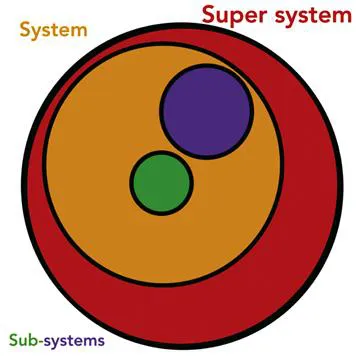
In the initial stages of establishing a new production and postharvest system, participants usually seek to define elements of “best practice” that will deliver a consistently high quality product. Best practice comprises a method or technique that consistently delivers superior results compared to those achieved by other means (http://en.wikipedia.org/wiki/Best_practice). A defined best practice is used as a benchmark of the way that things should be done.
A collection of such best practice processes forms the basis of a marketing and quality-assurance system (Figure 1.2) that enables standardization of the ways that a postharvest system is able to deliver product of desired quality to market (Carriquiry and Babcock, 2007). At the same time, best practice can evolve for the better through innovation – making changes to the standard way of doing something with the goal of making improvements. Combining operational excellence to achieve successful implementation of today’s best p...
Table of contents
- Cover image
- Title page
- Table of Contents
- Copyright
- Dedication
- Preface
- List of Contributors
- Chapter 1. Postharvest Systems – New Contexts, New Imperatives
- Chapter 2. Challenges in Handling Fresh Fruits and Vegetables
- Chapter 3. Consumer Eating Habits and Perceptions of Fresh Produce Quality
- Chapter 4. Testing and Measuring Consumer Acceptance
- Chapter 5. Nutritional Quality of Fruits and Vegetables
- Chapter 6. Value Chain Management and Postharvest Handling
- Chapter 7. Consumer Expenditures on Fresh Fruit and Vegetables
- Chapter 8. Postharvest Regulation and Quality Standards on Fresh Produce
- Chapter 9. Fresh-Cut Produce Quality: Implications for a Systems Approach
- Chapter 10. Postharvest Physiology and Quality Maintenance of Tropical Fruits
- Chapter 11. Microbial Quality and Safety of Fresh Produce
- Chapter 12. Sorting for Defects
- Chapter 13. Non-Destructive Evaluation: Detection of External and Internal Attributes Frequently Associated with Quality and Damage
- Chapter 14. Measuring Quality and Maturity
- Chapter 15. Modeling Quality Attributes and Quality Related Product Properties
- Chapter 16. The Supply Value Chain of Fresh Produce from Field to Home: Refrigeration and Other Supporting Technologies
- Chapter 17. Traceability in Postharvest Systems
- Chapter 18. Fruits and Vegetables in International Trade: Forensic Aspects of Cargo Claims
- Chapter 19. Innovative and Integrated Approaches to Investigating Postharvest Stress Physiology and the Biological Basis of Fruit Quality During Storage
- Chapter 20. Challenges in Postharvest Handling
- Index
Trusted by 375,005 students
Access to over 1.5 million titles for a fair monthly price.
Study more efficiently using our study tools.
Frequently asked questions
Yes, you can cancel anytime from the Subscription tab in your account settings on the Perlego website. Your subscription will stay active until the end of your current billing period. Learn how to cancel your subscription
No, books cannot be downloaded as external files, such as PDFs, for use outside of Perlego. However, you can download books within the Perlego app for offline reading on mobile or tablet. Learn how to download books offline
We are an online textbook subscription service, where you can get access to an entire online library for less than the price of a single book per month. With over 1.5 million books across 990+ topics, we’ve got you covered! Learn about our mission
Look out for the read-aloud symbol on your next book to see if you can listen to it. The read-aloud tool reads text aloud for you, highlighting the text as it is being read. You can pause it, speed it up and slow it down. Learn more about Read Aloud
Yes! You can use the Perlego app on both iOS and Android devices to read anytime, anywhere — even offline. Perfect for commutes or when you’re on the go.
Please note we cannot support devices running on iOS 13 and Android 7 or earlier. Learn more about using the app
Please note we cannot support devices running on iOS 13 and Android 7 or earlier. Learn more about using the app
Yes, you can access Postharvest Handling by Wojciech J. Florkowski,Nigel H. Banks,Robert L. Shewfelt,Stanley E. Prussia,Nigel Banks in PDF and/or ePUB format, as well as other popular books in Tecnologia e ingegneria & Scienze dell'alimentazione. We have over 1.5 million books available in our catalogue for you to explore.