- 480 pages
- English
- ePUB (mobile friendly)
- Available on iOS & Android
eBook - ePub
About this book
Meat is both a major food in its own right and a staple ingredient in many food products. With its distinguished editors and an international team of contributors, Meat processing reviews research on what defines and determines meat quality, and how it can be maintained or improved during processing.Part one considers the various aspects of meat quality. There are chapters on what determines the quality of raw meat, changing views of the nutritional quality of meat and the factors determining such quality attributes as colour and flavour. Part two discusses how these aspects of quality are measured, beginning with the identification of appropriate quality indicators. It also includes chapters on both sensory analysis and instrumental methods including on-line monitoring and microbiological analysis. Part three reviews the range of processing techniques that have been deployed at various stages in the supply chain. Chapters include the use of modelling techniques to improve quality and productivity in beef cattle production, new decontamination techniques after slaughter, automation of carcass processing, high pressure processing of meat, developments in modified atmosphere packaging and chilling and freezing. There are also chapters on particular products such as restructured meat and fermented meat products.With its detailed and comprehensive coverage of what defines and determines meat quality, Meat processing is a standard reference for all those involved in the meat industry and meat research.
- Reviews research on what defines and determines meat quality, and how it can be measured, maintained and improved during processing
- Examines the range of processing techniques that have been deployed at various stages in the supply chain
- Comprehensively outlines the new decontamination techniques after slaughter and automation of carcass processing
Information
Subtopic
Scienze dell'alimentazione1
Introduction
D. Ledward The University of Reading
J. Kerry J. Kerry University College Cork
Meat has long been a central component of the human diet, both as a food in its own right and as an essential ingredient in many other food products. Its importance has also attracted controversy. Meat consumption has, for example, been associated with chronic diseases such as cancer and heart disease. These and other concerns, such as those over safety, have led to declining consumption of some types of red meat in regions such as the EU. As a result, the questions of what defines meat quality in the minds of consumers, and the ways these quality attributes can be maintained or enhanced during processing, are of particular importance to the food industry. This volume addresses these questions.
Chapter 2 provides the foundation for the rest of the book by discussing what defines meat quality. It explores changing consumer perceptions, the cues they use to measure quality attributes, and suggests ways in which the meat industry can meet consumer expectations more effectively. Part 1 considers individual aspects of quality, beginning with a discussion of the factors affecting the quality of raw meat. The nutritional role of meat has been a subject of concern to some consumers. Chapter 4 addresses such concerns and discusses recent research on the nutritional importance of meat in the modern diet. The following chapters consider other aspects of quality such as flavour, colour and the changing fat content of meat.
Following on from the discussion in Part 2 of individual quality attributes, Part 3 explores ways in which quality can be measured, beginning with a discussion of how to establish reliable and measurable indicators for quality attributes. Sensory analysis remains essential in both defining and measuring quality, and is reviewed in chapter 9. Whilst the use of trained sensory panels provides the foundation for measuring meat quality, instrumental techniques are essential for effective control during processing. Chapter 10 discusses the range of on-line instrumentation available, whilst the following chapter considers the important topic of identifying microbiological hazards in ensuring meat safety.
The final part of the book looks at a range of new techniques that have been applied at the various stages in the supply chain to provide improved and more consistent quality. The use of computer models to understand and control processes more effectively is growing throughout the food industry. Chapter 12 looks at its application at the beginning of the supply chain to beef cattle production. The following two chapters then review new developments in the subsequent stages of production, discussing automation in slaughtering and carcass handling, and the key area of carcass decontamination after slaughter. If its safety and quality are to be preserved before it is either sold to the consumer or goes on for further processing, raw meat requires effective refrigeration. The collection therefore includes a review of the impact of chilling and freezing on meat quality and ways of optimising the design and operation of the meat cold chain. This chapter is complemented by a comprehensive review of current developments in meat packaging. Finally, the book concludes with chapters on the processing and quality control of such products as restructured meat and fermented meat products.
2
Defining meat quality
T. Becker University of Hohenheim, Stuttgart
2.1 Introduction: what is quality?
Price and quality are key factors for success in food markets and, as such, are important both for the competitiveness and economic efficiency of firms and of the whole supply chain in meeting consumer demands. The price premium, which high quality products receive compared to low price products, is one measure (in this case financial) of the quality of a product. This price premium is the result of the interplay of the supply of and demand for quality. In terms of the demand side of the market, it represents the marginal willingness of consumers to pay a premium for quality. In terms of the supply side, if markets are competitive, it is equal to the marginal cost of producing a higher quality product. If the supplier is in a monopolistic quality position, prices will be higher than marginal production cost.
In general, food markets are rather competitive and price is the predominant parameter of success, but delivering a premium quality may lessen price competition and give the supplier the opportunity to increase revenue. In some cases a certain level of quality, defined for example by a farm assurance scheme, may be made a prerequisite by those customers with market power. Products produced according to a premium quality standard as requested by large retailers may gain no price premium but just the opportunity to stay in the market. Food retailers in Great Britain have significant market power (Northen, 2000a, b) compared to the food retailing sector in Germany for example. As a result, some of the price premium for quality paid by the consumer accrues to the large retailers.
The members of each stage of the food supply chain (Fig. 2.1) in general and the meat supply chain in particular have their own economic interests and goals. Consumers would like to pay low prices whilst retailers prefer high prices for food products. Retailers would like to purchase at low prices in the wholesale food market, while the processing industry tries to maximise its returns. In turn, the processor would like to purchase raw materials cheaply from the agricultural sector, while farmers try to get the best price for their produce. The strategic interests of each stage of the supply chain are in conflict both with respect to price and, therefore, potentially with respect to quality as well.
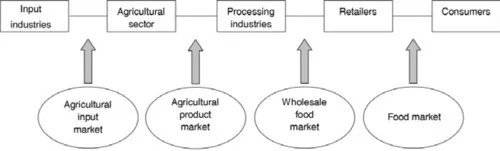
Fig. 2.1 The supply chain for food products.
Each stage of the supply chain has its own definition of quality. Consumers ask both for sensory quality and products that are safe to consume. They may also demand a range of other potential quality attributes such as nutritional quality which may itself be variously defined to include a range of effects on health (such as level of fat content). They may also include in their definition of quality how a product is manufactured, ranging from animal welfare standards and environmental impacts to product composition and ingredients. Quality is defined by consumers according to their own personal preferences and goals.
Retailers are interested in a high margin and accordingly in products that are cheap to purchase yet can command a premium price, are easy to handle, have a long shelf-life and quick turn-over, and which contribute positively to their image. Price is of utmost importance and quality is defined according to the extent to which a product contributes to the economic goals of retailers. Food manufacturers are interested in a high margin and a good product which contributes to their brand image. The larger manufacturers in particular invest heavily in value-added products which can be used to create strong brands to gain a competitive advantage in the market. A strong industry brand is not in general in the interest of retailers who prefer to establish their own brands to improve their own market position at the expense of food manufacturers.
The processing stage itself may include more than one stage. In the meat chain, slaughterhouses are only the first step in the processing of the agricultural product. Furthermore we have to distinguish here at least between two chains, the fresh meat and the meat product chain. Food processors are interested in agricultural raw materials in large homogeneous batches produced to quality criteria geared to the demands of manufacturing. Producers usually source their raw materials from a number of suppliers. It is often not perceived to be in the interest of one farmer to co-ordinate on quality with other farmers if the cost of co-ordination for the individual farmer is higher than the benefit received. This will often be the case even if the total benefits of co-ordination among farmers would be much higher than the total co-ordination cost if the latter was shared between them.
Definitions of quality thus differ between the different stages of the supply chain and, as a result, consumer needs are not always met efficiently. In cases where the reputation of manufacturers depends decisively on the quality and safety of the agricultural products used as inputs, as in the case of baby food, the industry prescribes farming production methods or even reduces the role of the farmer to a supplier of land and labour. In creating their own brands, retailers may also impose their own quality standards on the manufacturers they contract to supply their products and on farmers producing fresh produce for the retail sector. Contracting of this kind or other forms of vertical integration may prevent the inefficient supply of quality through competing stages in the supply chain, and are a means of ensuring more uniform quality through the supply chain as a whole.
In order to facilitate an efficient supply chain response to the needs of the consumer, interests in the supply chain need to be aligned. There needs to be an understanding of and commitment to meeting the consumer definition of quality at all stages of the supply chain from retailer through to the agricultural sector. In the case of meat this consensus needs to extend even further through the supply chain to include, for example, the animal feed industry, and other sectors providing inputs into agricultural production. An efficient response of the supply chain to the consumer demand for quality implies a communication of quality through all the stages of the supply chain. This implies a definition of quality shared by all the stages of the supply chain and the willingness of all stages of the supply chain to work together to meet consumer quality demand. This might sound Utopian, but Utopian worlds may give us signs for the direction to go in the real world. Vertical integration is only one, and sometimes very costly, means to co-ordinate on quality. Other forms of co-ordination, like...
Table of contents
- Cover image
- Title page
- Table of Contents
- Copyright page
- Contributors
- 1: Introduction
- 2: Defining meat quality
- Part I: Analysing meat quality
- Part II: Measuring quality
- Part III: New techniques for improving quality
- Index
Trusted by 375,005 students
Access to over 1.5 million titles for a fair monthly price.
Study more efficiently using our study tools.
Frequently asked questions
Yes, you can cancel anytime from the Subscription tab in your account settings on the Perlego website. Your subscription will stay active until the end of your current billing period. Learn how to cancel your subscription
No, books cannot be downloaded as external files, such as PDFs, for use outside of Perlego. However, you can download books within the Perlego app for offline reading on mobile or tablet. Learn how to download books offline
Perlego offers two plans: Essential and Complete
- Essential is ideal for learners and professionals who enjoy exploring a wide range of subjects. Access the Essential Library with 800,000+ trusted titles and best-sellers across business, personal growth, and the humanities. Includes unlimited reading time and Standard Read Aloud voice.
- Complete: Perfect for advanced learners and researchers needing full, unrestricted access. Unlock 1.5M+ books across hundreds of subjects, including academic and specialized titles. The Complete Plan also includes advanced features like Premium Read Aloud and Research Assistant.
We are an online textbook subscription service, where you can get access to an entire online library for less than the price of a single book per month. With over 1.5 million books across 990+ topics, we’ve got you covered! Learn about our mission
Look out for the read-aloud symbol on your next book to see if you can listen to it. The read-aloud tool reads text aloud for you, highlighting the text as it is being read. You can pause it, speed it up and slow it down. Learn more about Read Aloud
Yes! You can use the Perlego app on both iOS and Android devices to read anytime, anywhere — even offline. Perfect for commutes or when you’re on the go.
Please note we cannot support devices running on iOS 13 and Android 7 or earlier. Learn more about using the app
Please note we cannot support devices running on iOS 13 and Android 7 or earlier. Learn more about using the app
Yes, you can access Meat Processing by Joseph P. Kerry,John F. Kerry,David Ledward in PDF and/or ePUB format, as well as other popular books in Tecnologia e ingegneria & Scienze dell'alimentazione. We have over 1.5 million books available in our catalogue for you to explore.