eBook - ePub
Information Literacy in the Digital Age
An Evidence-Based Approach
- 236 pages
- English
- ePUB (mobile friendly)
- Available on iOS & Android
eBook - ePub
About this book
This book examines the various types of literacy that are important in the Digital Age of rapid technological change and proliferating information resources in a variety of formats. According to the American Library Association (www.ala.org), "information literacy is a set of abilities requiring individuals to recognize when information is needed and have the ability to locate, evaluate, and use effectively the needed information. Information literacy forms the basis for lifelong learning and is common to all disciplines, to all learning environments, and to all levels of education. Information literacy is an umbrella term that includes a variety of specific competencies: cultural literacy, library literacy, computer literacy, network literacy, and media literacy. Each topic addressed in the book includes contextual background information, basic concepts, a resource list, exercises and activities to reinforce the important learning concepts addressed in each chapter.
- Based on content, resources, assignments, and exercises developed for an academic information literacy course
- In addition to scholarly content on particular topics, each chapter will include practical applications and activities related to information literacy concepts
Information
Subtopic
Library & Information Science1
What is information literacy?
The purpose of this opening chapter is to gain a better understanding of the term ‘information literacy’ by examining its origins, some definitions, and some models or standards of information literacy. This first chapter thus serves as a foundation for an evidence-based approach to teaching information literacy.
To understand the concept of information literacy, it is useful to begin by knowing the origin and literal meaning of the terms. The word information is from the Latin informatio, meaning concept or idea. The word literate is from the Latin literatus, meaning learned or lettered.
Over time, the definition of information literacy has changed. The traditional definition of literacy was the ability to read and write at a basic level and sign a document. More recently, the United States Workforce Investment Act of 19981 defined literacy as ‘an individual’s ability to read, write, speak in English, compute, and solve problems at levels of proficiency necessary to function on the job, in the family of the individual, and in society.’ As the world is moving from the information age to the digital age, new definitions of information literacy are evolving that include how to access information in digital formats and how to evaluate information and use it appropriately.
According to the American Library Association (ALA), information literacy is ‘increasingly important in the contemporary environment of rapid technological change and proliferating information resources’:

Models of information literacy
To become information literate, one must understand the definition and context of information. One way to understand information and to put it in context is to visualize it as part of the DIKW hierarchy or pyramid: Data, Information, Knowledge, Wisdom (see Figure 1.13).
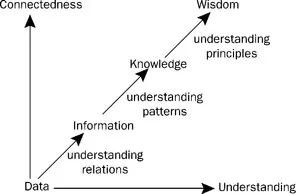
Figure 1.1 Conceptual model: DIKW hierarchy
According to the KIT Institute in the Netherlands:
The DIKW hierarchy puts the concept of information into context. That is, there must be an understanding of data or facts for those data to become information and some understanding of information patterns for information to become knowledge.
According to Cleveland,5 the origin of the DIKW hierarchy is a poem by T.S. Eliot in 1934 entitled ‘The Rock’:
Where is the Life we have lost in living?
Where is the wisdom we have lost in knowledge?
Where is the knowledge we have lost in information?6
Practical models
The Association of College and Research Libraries (ACRL) defines an information literate individual as one possessing particular skill sets and who is able to:
Information literacy may be considered a new liberal art
… that extends from knowing how to use computers and access information to critical r...
Table of contents
- Cover image
- Title page
- Table of Contents
- Copyright
- Dedication
- List of figures and tables
- List of abbreviations
- About the authors
- Chapter 1: What is information literacy?
- Chapter 2: Cultural literacy
- Chapter 3: Library literacy: history, types, and roles
- Chapter 4: Library literacy: information sources, classification systems
- Chapter 5: Ethical literacy: scholarly communication and the academic code of conduct
- Chapter 6: Network literacy: database searching
- Chapter 7: Computer literacy: computer hardware and software
- Chapter 8: Network literacy: the Internet and the World Wide Web
- Chapter 9: Media literacy and visual literacy
- Chapter 10: Government literacy
- Chapter 11: Financial literacy
- Chapter 12: Writing a research paper
- Chapter 13: Conclusion
- Appendices
- Index
Trusted by 375,005 students
Access to over 1.5 million titles for a fair monthly price.
Study more efficiently using our study tools.
Frequently asked questions
Yes, you can cancel anytime from the Subscription tab in your account settings on the Perlego website. Your subscription will stay active until the end of your current billing period. Learn how to cancel your subscription
No, books cannot be downloaded as external files, such as PDFs, for use outside of Perlego. However, you can download books within the Perlego app for offline reading on mobile or tablet. Learn how to download books offline
Perlego offers two plans: Essential and Complete
- Essential is ideal for learners and professionals who enjoy exploring a wide range of subjects. Access the Essential Library with 800,000+ trusted titles and best-sellers across business, personal growth, and the humanities. Includes unlimited reading time and Standard Read Aloud voice.
- Complete: Perfect for advanced learners and researchers needing full, unrestricted access. Unlock 1.5M+ books across hundreds of subjects, including academic and specialized titles. The Complete Plan also includes advanced features like Premium Read Aloud and Research Assistant.
We are an online textbook subscription service, where you can get access to an entire online library for less than the price of a single book per month. With over 1.5 million books across 990+ topics, we’ve got you covered! Learn about our mission
Look out for the read-aloud symbol on your next book to see if you can listen to it. The read-aloud tool reads text aloud for you, highlighting the text as it is being read. You can pause it, speed it up and slow it down. Learn more about Read Aloud
Yes! You can use the Perlego app on both iOS and Android devices to read anytime, anywhere — even offline. Perfect for commutes or when you’re on the go.
Please note we cannot support devices running on iOS 13 and Android 7 or earlier. Learn more about using the app
Please note we cannot support devices running on iOS 13 and Android 7 or earlier. Learn more about using the app
Yes, you can access Information Literacy in the Digital Age by Teresa Welsh,Melissa Wright in PDF and/or ePUB format, as well as other popular books in Languages & Linguistics & Library & Information Science. We have over 1.5 million books available in our catalogue for you to explore.