![]()
CHAPTER 1
Take Madagascar Periwinkle for Leukemia and Pennywort for Leprosy
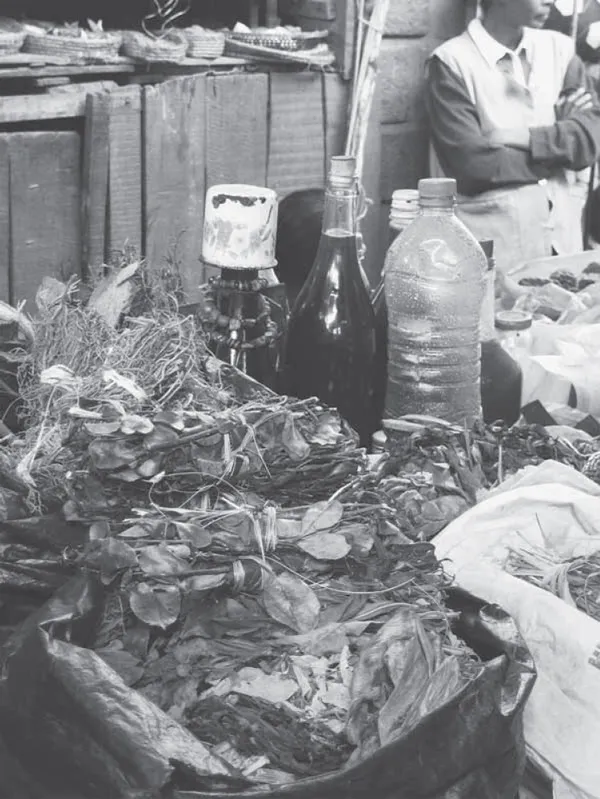
Figure 1.1 Periwinkle and pennywort for sale at Analakely Market, Madagascar. (Photo by author.)
Manan-tsira ka mahay mahandro ny vazaha. The foreigners have salt, therefore they know how to cook.
—Malagasy proverb, in Ralibera, Vazaha et Malgaches en Dialogue
In 1965, the U.S. Patent Office awarded the chemist Gordon Svoboda two valuable patents for work he had conducted on behalf of the drug company Eli Lilly. The patents granted Svoboda, and therefore Lilly, exclusive rights to unique processes to extract chemicals from the plant Vinca rosea (now called Catharanthus roseus). Lilly went on to market the chemicals as drugs to treat two types of cancer, leukemia and Hodgkin’s lymphoma. By the late 1980s, annual profits from the medications, marketed as Oncovin and Velban, were reportedly between US$90 and US$400 million.1
The plant, commonly known as “rosy periwinkle” (hereafter referred to simply as “periwinkle”), was originally from Madagascar. For two de cades, periwinkle has been at the symbolic center of debates over the distribution of rewards from plant-based pharmaceuticals. Activists have argued that Lilly “owed” the citizens of Madagascar (the Malagasy) for its profits, given that the plant is widely used in herbal medicine there.2 Not surprisingly, scientists behind the research at Lilly’s laboratories in Indianapolis disagreed. Svoboda’s collaborator Irving Johnson explained, “In this case I do not believe there is a compelling reason to suggest that Madagascar’s role in the discovery of the pharmacological action of a few of the alkaloids from this plant represents ‘easy picking’ or any logical requirement for compensation. It was certainly not easy and required millions of dollars of investment.”3 Advocates for benefit-sharing agreements between drug companies and local communities retorted that regardless of whether Lilly’s drugs represented a direct extension of Malagasy practice, Madagascar was in danger of losing forests that might hold other valuable cures, and compensation for periwinkle might prove an incentive for their preservation. As U.S. legal scholar James Boyle put it, Madagascar needed a way to compensate indigenous peoples who “can find no place in a legal regime constructed around a vision of individual, transformative, original genius.”4
In fact, around the same time that Lilly researchers found new methods to extract alkaloids from periwinkle, the Malagasy physician and frequently heralded “genius” Albert Rakoto-Ratsimamanga was involved in ongoing research to develop curative acids from another plant, Indian pennywort (Centella asiatica). Ratsimamanga and his French collaborator Pierre Boiteau received patents in Europe and North America for a process to extract hemisuccinates from pennywort acids in 1968. They licensed the process to the French drug company La Roche, which first marketed the wound treatment as Madécassol. By 2010 the company, now La Roche-Posay, included extracts of the plant in its wonder treatment for wrinkles, Redermic. Like the Lilly scientists, Malagasy citizens sought patents for plant-based drugs to amass private wealth. Ratsimamanga’s involvement with pennywort complicates the mythical story of periwinkle that centers on the exploitation of Malagasy indigenes because it shows that African scientists were involved in drug prospecting at the same time as researchers at Lilly.
The better-known periwinkle case has come to symbolize many things to different people, depending on their concerns over the environment, traditional medicine, or intellectual property rights. By the late 1980s, the world was witnessing a massive “green rush” as new laboratory techniques allowed for more rapid screening of plants to discover improved medicines, crops, and industrial chemicals.5 This quest for new chemicals from plants became known as “biodiversity prospecting” or “bioprospecting” when a group of biologists and policy makers—including Walter Reid, Sarah A. Laird, and Calestous Juma—promoted the use of the terms in 1991 in an argument for sustainable development.6 For environmentalists, the story of periwinkle suggested both the danger and promise of harvesting rare plants for corporate gain. Laird, an early proponent of biodiversity prospecting, worked for the Periwinkle Project, a division of the Rainforest Alliance established in New York City. Concerned that the “next periwinkle” might be destroyed by development, Laird hoped to build awareness around the drug industry’s reliance on plant-based chemicals. Using WHO estimates, she claimed that 80 percent of the world’s population used traditional plant-based medicines, and that the rainforests held over 70 percent of all the globe’s plant biodiversity.7 Over and over went the refrain: “Lifesaving medicinal properties are found in the plants of the Madagascar rainforest. Extractions from the leaves of a rosy periwinkle have been used to find a cure for childhood leukemia, and now, due to a drug developed from these extracts, we have about a 50 percent recovery rate from childhood leukemia.”8
Ironically, periwinkle in Madagascar grew along the roads and in fields—not in threatened forests. In fact, many of the medicinal plants people have come to use in herbal remedies grew near farms; the toxicity of the valuable phytochemicals that give them medicinal power allowed them to subsist as weeds, not rare species.9 In our conversations, the Malagasy conservationist Jean Joseph Andriamanalintsoa promptly reminded me of periwinkle’s status as a field plant, as did other scientists involved environmental efforts in Tolagnaro and Ranopiso, where Lilly once sourced periwinkle harvests.10 I timed my visit to Southern Madagascar to coincide with periwinkle’s blooming cycle; I was overwhelmed to see the pink blossoms swaying in the breeze along every grassy highway and field. It was ubiquitous.
Other activists often retold the story of periwinkle as an argument for benefit sharing between disenfranchised communities and corporations holding valuable patents. Lawyers sought new models for acknowledging prior art in nonliterate societies. Rather than overturn patents, they hoped to extend profits or other rewards to people living in poverty who maintained ideas about the value of plants through oral communication and family apprenticeships. Yet, benefit sharing assumed a class of individuals to whom compensation might be afforded, ideally descendants of a First Peoples group in a threatened ecosystem. Moreover, the idea of indigenes with original and unique—albeit shared—communal knowledge still relied on the concept of priority so integral to the logic of patents for inventors. Controversies over the transformation of periwinkle and other plants into pharmaceuticals circulated around ideas about inventors and indigenes because each could claim to hold first rights to information.
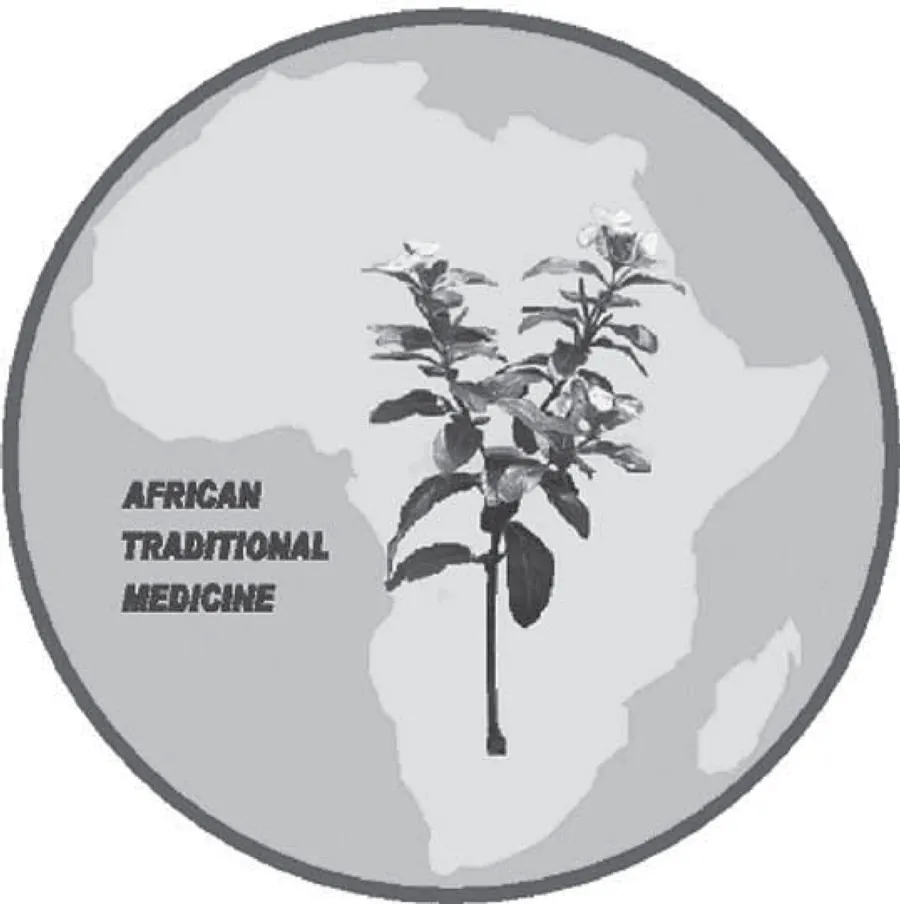
For public health officials working in Africa more generally, the promise of turning green into gold trumped any environmental or legal controversies surrounding periwinkle and Lilly. In 2003, WHO officials in Brazzaville, the capital of the Republic of Congo, unveiled a new logo to rebrand traditional medical practices as a new engine for economic growth (see Figure 1.2). A gold ring encircled both the green continent of Africa, overlaid with a periwinkle flower, and the blue seas around it. The graphic designers behind this depiction of botanical and marine wealth did not include bones, shells, or other accoutrements of diagnosis in African healing, turning their gaze instead to periwinkle. For them, Eli Lilly’s success with periwinkle suggested avenues for profitable drug discovery in African countries, not a rallying cry for retrospective benefit sharing or preservation of traditional communities.
And indeed, the little-known case of pennywort’s transformation into Madécassol is an example of how scientists in African countries have created patented pharmaceuticals from plants. In this chapter, I reconsider popular understandings of the periwinkle case as one of biopiracy in light of Malagasy involvement in pennywort.11 In particular, the issue of priority was central to dilemmas surrounding both plants.12 Periwinkle and pennywort have long featured in folk recipes to cure various ailments, and these recipes inspired chemists to take the plants into the laboratory to test bioactivity. Periwinkle was a pantropical weed, whereas pennywort grew in Africa and Asia (see Figures 1.3 and 1.4). The wide distribution of both plants meant that there were arguably many, many claimants to the plants, their chemicals, and related knowledge.
Figure 1.2 Periwinkle featured on the African Traditional Medicine Logo, unveiled October 9, 2003. (Source: World Health Organization.)
Figure 1.3 Collection points of 476 Catharanthus roseus samples in herbaria. Compiled from location points observed during the author’s visits to the Herbarium of the Royal Botanic Garden, Kew (RBGKH) in November 2008 and from data available through the Global Biodiversity Information Facility Data Portal (GBIF), www.gbif.org, accessed March–August 2011. Plant Specimens of U.S. Department of Agriculture Plants Database; Real Jardin Botanico Vascular Plant Herbarium, Madrid; University of Kansas Biodiversity Research Center; Herbarium of Taiwan Forestry Research Institute; Fairchild Tropical Botanic Garden Virtual Herbarium; University of Alabama Herbarium; Herbario XAL del Instituto de Ecología, A.C., México; Herbario de la Universidad de Salamanca; Instituto Nacional de Biodiversidad, Costa Rica; Instituto de Ciencias Naturales; Herbier de la Guyane; National Herbarium of New South Wales; Museum National d’Histoire Naturelle et Réseau des Herbiers de France; Herbier de l’Université Louis Pasteur; Instituto de Ciencias Naturales; National Museum of Natural History; European Genetic Resources Search Catalogue; Herbaria of the University of Zürich; Leibniz Institute of Plant Genetics and Crop Plant Research; Herbario de Universidade de Santiago de Compostela; Finnish Museum of Natural History; Botanic Garden and Botanical Museum Berlin-Dahlem.
PERIWINKLE AND PENNYWORT IN HEALING TRADITIONS
Let us now turn to the history of priority within the history of traditional knowledge. Assuming we were to assign benefits to drug patents from plants along communal lines, what might have been the case for first rights to periwinkle and pennywort medications in Madagascar? And how might we prove rights to traditional knowledge claims within legal and intellectual frameworks that prioritize written knowledge? In the nineteenth century the German phi los o pher Georg Hegel infamously claimed that Africa had no historical consciousness because rec ords of past events were not written down. Since then, several generations of Africanist historians have carefully documented oral traditions about past events, identified trends in historical linguistics, and examined archaeological remains to show that indeed Africans witnessed change over time. Similarly, are we to surmise that Africa had no science or innovation in medicinal plants research because little of it was recorded in textual form?13
Figure 1.4 Collection points of 493 Centella asiatica samples in herbaria. Accessed through the Global Biodiversity Information Facility: Herbarium of Taiwan Forestry Research Institute; Herbario del Instituto de Ecología, A.C., México; Missouri Botanical Garden; National Herbarium of the Netherlands; National Museum of Nature and Science, Japan; National Institute of Genetics, Research Organization of Information and Systems (ROIS), Japan; Australian National Herbarium; National Herbarium of New South Wales; Real Jardin Botanico Vascular Plant Herbarium (Madrid); Herbarium of the New York Botanical Garden; Herbarium of the Royal Botanic Garden, Edinburgh; Herbario de Universidade de Santiago de Compostela; Harvard University Herbaria; Staatliches Museum fur Naturkunde Stuttgart, Herbarium; Fairchild Tropical Botanic Garden Virtual Herbarium.
Madagascar’s strongest claims to periwinkle were botanical and gene tic, as the plant most likely originated on the island-nation. Lilly claimed that the recipes it garnered were from the Philippines and for diabetes; thus the novelty of their invention related to both the form of the drug and its claims to efficacy—specifically, Lilly’s use of extracts to treat cancer.14 The U.S. Patent Office’s grounds for novelty required that no one else had published the process to extract the alkaloids or had made the same claims about their uses. Within this legal framework, the argument for retrospective benefit sharing with Madagascar would be that Lilly’s recipes from the Philippines had actually originated in Madagascar. However, I soon realized that it was literally impossible to trace how herbal recipes might have spread, given the paucity of written documentation and the pantropical distribution of this common weed.
Instead, my research—taking me to sites as far-flung as markets in the capital city of Antananarivo, farms near the southern port towns of Tolagnaro and Ranopiso, herbaria at the U.K. Royal Botanic Gardens at Kew, and the economic botany collection at Harvard—convinced me of the global history of this plant so deeply associated with Madagascar. And even when my search for periwinkle led me to pennywort, a plant that many scientists and healers in Madagascar also claimed as their own, I found a similar story. Again, traces of evidence hinted at another global history of own ership and innovation, from Ancient Sanskrit herbals to cups of Centella tea, to forgotten letters between scientist in Madagascar, India, France, and the United States. The process of turning plants into pharmaceuticals is never straightforward but instead requires the efforts of multiple participants.
Periwinkle in Madagascar
Madagascar’s unique ecosystems led to the evolution of species of plants available only on the island. Of 13,000 plant species found there, four in five are endemic to Madagascar.15 Although many plants and animals are unique to the island, recurring waves of migrants led to an ethnically hybridized society drawing from multiple continents. Madagascar is usually considered part of Africa, although the people who live there today trace their ancestry not only to such countries as Kenya and Mozambique in East and Southern Africa but also to the Middle East. In addition, there is a strong influence from Indonesia, Malaysia, and the Philippines, with large waves of Austronesian migrants traveling by boat to settle i...