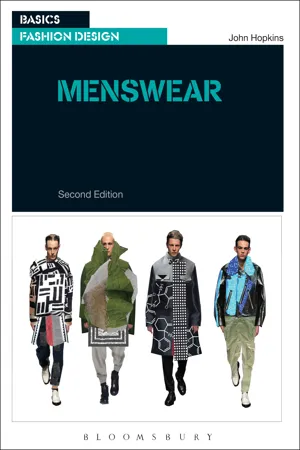
Whether it's a military inspired trench coat or a Savile Row tailored suit, menswear design increasingly demands originality, innovation and above all, choice. Menswear, 2nd edition explores the evolution of menswear styles, from the origins of tailoring right through to modern sportswear – showing how historical and social influences
continue to endure and influence the menswear collections of today. Interviews offer insight from a range of practitioners, including designer Lou Dalton, fashion entrepreneur Alan Maleh and tailor Ray Stowers. There's also practical advice on research for design innovation, street style, trends and forecasting and collection development. With a wealth of stunning new images and contemporary examples, new to this edition are end-of-chapter exercises to encourage design work, such as Design for Sportswear Fabrication and Tailoring for Menswear. Featured topics
Historical Research for Design Innovation
Counterculture Dressing
Design Process
Street Style
Trends and Forecasting
Tailoring for Menswear
Collection Development
Drawing for Men
CAD for Menswear
Menswear Portfolios Featured interviewees
Lou Dalton
Guy Hill and Kirsty McDougall,
Dashing Tweeds
Alan Maleh, Man of the World
Ray Stowers, Stowers Bespoke
Seung Won Hong, Fashion Illustrator
Matthew Zorpas, The Gentleman Blogger
eBook - ePub
Menswear
About this book
Information
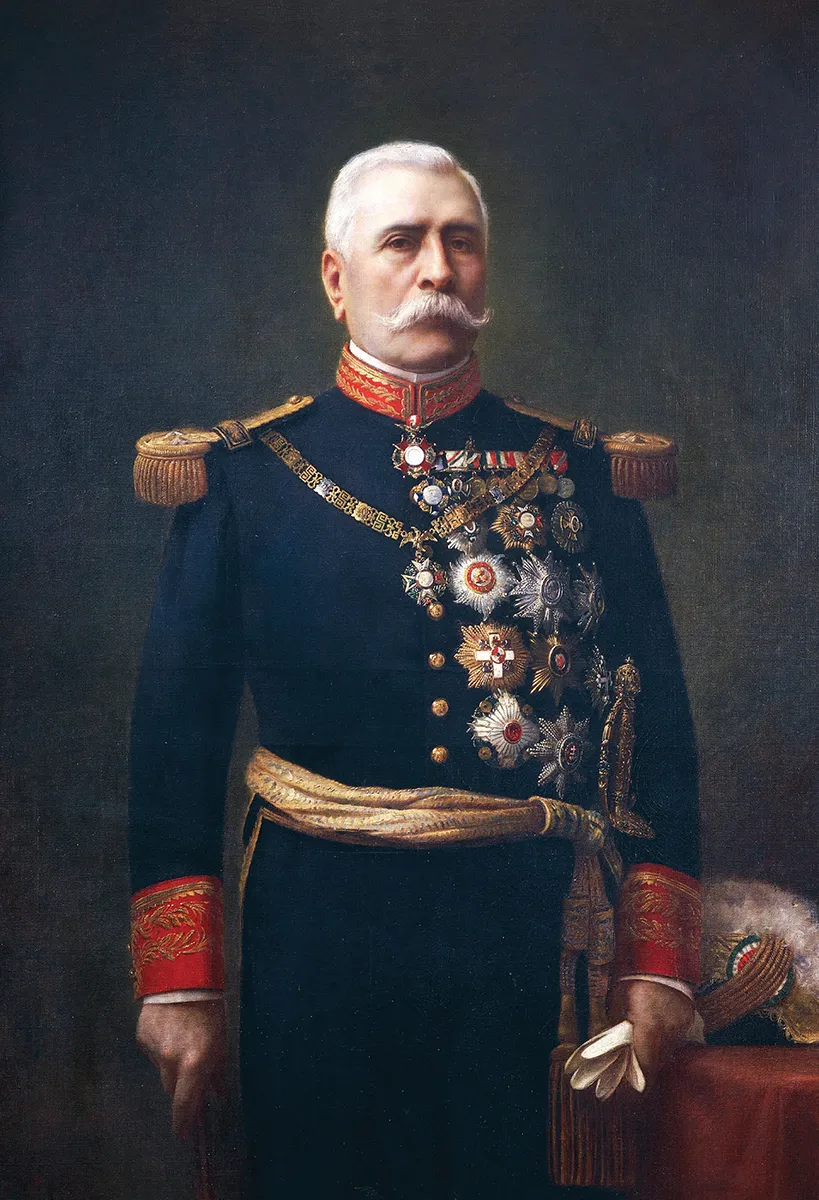
1.1
Nineteenth-century portrait of Porfirio Díaz, Mexican president, in his military uniform.
1
Menswear Through the Ages
This chapter offers an edited introduction to some of the social and historical contexts that have impacted and defined menswear through the ages. The chapter includes a brief chronology of menswear from the ancient world to the twentieth century and is intended to illustrate some of the more significant developments and advancements associated with menswear design. It is hoped that the reader will gain an appreciation of the rich and diverse social history associated with men’s clothing as a precursor to considering contemporary menswear design.
It is only the modern that ever becomes old-fashioned.
Oscar Wilde
Introduction to Social and Historical Contexts
Menswear through the ages reveals a rich history of clothing and adornment that is largely characterized by a man’s status and function. In this way men’s clothing became closely associated with the contrasting functions of display and utility. The early evolution of menswear was largely concerned with signifying a man’s position and role within a society. This gave rise to opposing standards of dress that were often regulated by sumptuary laws, and where the notion of what might be considered fashionable was determined by class and wealth rather than personal choice. The rise of a European mercantile class during the Renaissance would start to erode the rigid dictates of earlier years; however, the constraints of personal wealth and the imperative to define a man’s role in society continued to influence access to textile materials and dress styles.
One of the more interesting aspects that arose out of the utilitarian and militaristic histories of menswear is the development of classic styles and functional detailing. Both continue to characterize many aspects of menswear clothing today. Classic garments such as a man’s duffel coat or trench coat were developed from practical necessity rather than in response to an aesthetic whim. Such considerations directly contributed to the creation of what we might refer to as design classics with their enduring appeal, while some styles also crossed over into womenswear. Menswear’s other close association is to its style icons, past and present. Originally what was deemed “fashionable” was defined by a monarch or the aristocracy; later, however, under the sartorial leadership of Beau Brummell in the nineteenth century, men’s fashion became codified according to personal style and taste.
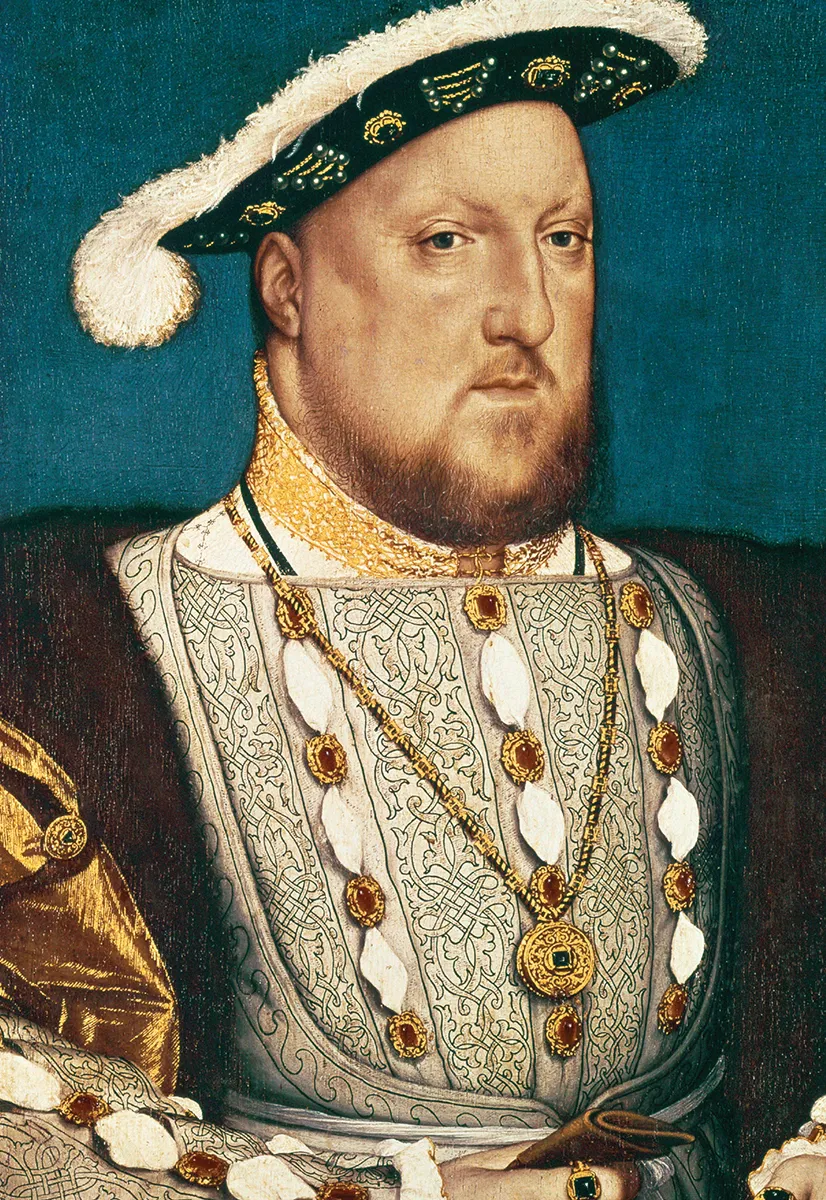
1.2
This portrait of King Henry VIII emphasizes the broad, layered silhouette and decorative slashes of the male dress of the northern Renaissance.
Sumptuary laws
One of the more interesting aspects of menswear through the ages is the pervasive influence and impact of sumptuary laws. Essentially, these laws prescribed and reinforced social hierarchies and perceived morals through restrictions on clothing, decoration, and luxury expenditure. The introduction of sumptuary laws in the Middle Ages, and their relatively widespread use until the seventeenth century, became a means of maintaining and reinforcing class distinctions and wealth.
Dress regulation was a feature of life during Roman times, perhaps most notably the restricted use of Tyrian (royal) purple. This effectively rendered purpledyed textiles as status symbols, with use restricted to and reserved for high-ranking Romans and the emperor himself. These laws persisted throughout the Byzantine Empire, when the state controlled the price and quantity of imported goods and regulated domestic manufacturing through the establishment of guilds. With the introduction of silk weaving in Europe around AD 550, silk production became a state-owned monopoly and its use limited to garments and lavish embroideries for the wealthiest citizens, as well as courtiers and high priests.
Sumptuary laws remained a consistent feature of Tudor England under King Henry VIII, who set the dress standard for his royal court. He had an imposing presence, and aspired to compete with the two main European powers of the day, France and the Holy Roman Empire. This famously culminated in the so-called “Field of the Cloth of Gold” meeting between Henry and Francis I of France in 1520, which amounted to little more than an ostentatious display of wealth. Later, in 1574, Queen Elizabeth I of England introduced a series of sumptuary laws, which included for men the banning of “any silk of the colour of purple, cloth of gold tissued, nor fur of sables, but only the King, Queen, King’s mother, children, brethren, and sisters, uncles and aunts; and except dukes, marquises, and earls, who may wear the same in doublets, jerkins, linings of cloaks, gowns, and hose; and those of the Garter, purple in mantles only.” The rules of dressing remained a priority for the royal courts of Europe and were upheld through the system of guilds.
Fashion is the mirror of history. It reflects political, social and economic changes.
Louis XIV of France
Courtly dressing
Although courtly dressing can be traced back to the civilizations of the ancient world, most notably the dynastic kingdoms of the Ancient Egyptian pharaohs, it was not until the Middle Ages that the word “fashion” could be used to describe this collective style. During these times, the fashionable style of dress in Europe was set by the royal courts, each with a monarch and a hierarchy of nobility in attendance. Increasingly, being “fashionable” meant dressing and behaving in ways that expressed one’s social class and dignity.
In the male-dominated societies of the Middle Ages, men’s fashionable dress was characterized by the use of lavish fabrics, vivid colors, and ostentatious detailing. European textile workers became more skilled in producing refined silks and brocades that had previously been imported from the East. This period also witnessed the development of more form-fitting men’s clothes that were cut to fit around the body and emphasize the male torso.
During the fifteenth century, men’s dress styles in northern Europe were greatly influenced by the most lavish and fashionable court of the period, Burgundy. Even the demise of Burgundian power in 1477 influenced male dress when Swiss soldiers and German mercenaries on the battlefield were amazed by the lavish textiles and set about cutting them up and inserting them through their own clothes by pulling them through slashed openings. This gave rise to a court fashion that was prevalent during the reign of King Henry VIII of England.
The structures and protocols of opulent court dressing remained a feature of male dress during subsequent centuries. The sixteenth century marked the rise of Spanish court styles and the introduction of “severe black” for men, which was offset by a striking white neck ruff. Later, as France became Europe’s pre-eminent power, the lavish court dress styles of King Louis XIV were widely exported across Europe to other courts.
The French Revolution of the late eighteenth century interrupted this established system of the court defining fashionable men’s dress: the clothing and textile guilds were abolished and France’s sumptuary laws were repealed. Napoleon Bonaparte later revived a classically inspired court system, but by this time European courts competed for influence and courtly male dress became more ceremonial, inspired by military associations.
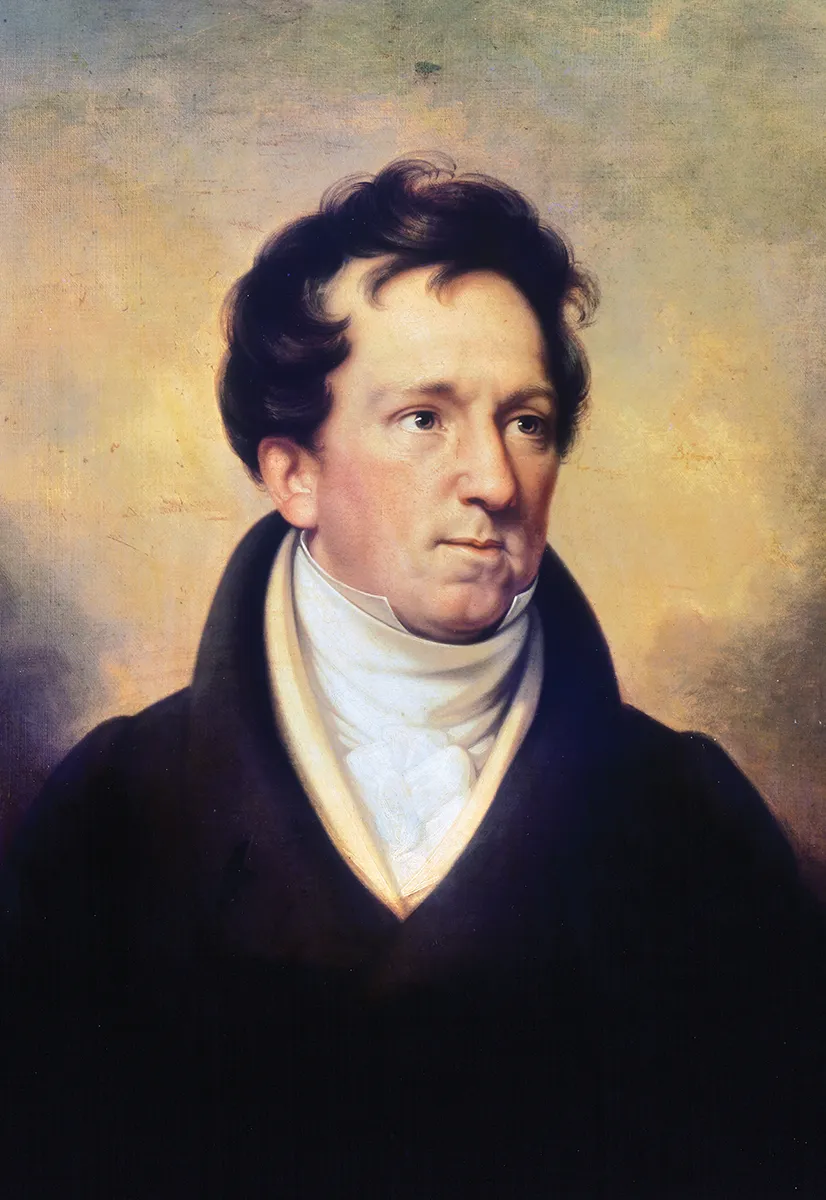
1.3
Nineteenth-century portrait of a gentleman, by George Clint. Notice the elaborate and distinctive necktie that was typical of the period.
Mercantile dress
Mercantile dress, an established mode of dress worn by the merch...
Table of contents
- Cover
- Title Page
- Contents
- Introduction
- 1 Menswear Through the Ages
- 2 Design Research and Inspiration
- 3 Tailoring Traditions
- 4 Sportswear, Knit, and Print
- 5 Design Development for Menswear
- 6 Menswear Presentations
- Conclusion
- Menswear Chronology
- Bibliography
- Further Resources
- Index
- Picture Credits
- Acknowledgments
- eCopyright
Trusted by 375,005 students
Access to over 1.5 million titles for a fair monthly price.
Study more efficiently using our study tools.
Frequently asked questions
Yes, you can cancel anytime from the Subscription tab in your account settings on the Perlego website. Your subscription will stay active until the end of your current billing period. Learn how to cancel your subscription
No, books cannot be downloaded as external files, such as PDFs, for use outside of Perlego. However, you can download books within the Perlego app for offline reading on mobile or tablet. Learn how to download books offline
Perlego offers two plans: Essential and Complete
- Essential is ideal for learners and professionals who enjoy exploring a wide range of subjects. Access the Essential Library with 800,000+ trusted titles and best-sellers across business, personal growth, and the humanities. Includes unlimited reading time and Standard Read Aloud voice.
- Complete: Perfect for advanced learners and researchers needing full, unrestricted access. Unlock 1.5M+ books across hundreds of subjects, including academic and specialized titles. The Complete Plan also includes advanced features like Premium Read Aloud and Research Assistant.
We are an online textbook subscription service, where you can get access to an entire online library for less than the price of a single book per month. With over 1.5 million books across 990+ topics, we’ve got you covered! Learn about our mission
Look out for the read-aloud symbol on your next book to see if you can listen to it. The read-aloud tool reads text aloud for you, highlighting the text as it is being read. You can pause it, speed it up and slow it down. Learn more about Read Aloud
Yes! You can use the Perlego app on both iOS and Android devices to read anytime, anywhere — even offline. Perfect for commutes or when you’re on the go.
Please note we cannot support devices running on iOS 13 and Android 7 or earlier. Learn more about using the app
Please note we cannot support devices running on iOS 13 and Android 7 or earlier. Learn more about using the app
Yes, you can access Menswear by John Hopkins in PDF and/or ePUB format, as well as other popular books in Betriebswirtschaft & Modedesign. We have over 1.5 million books available in our catalogue for you to explore.