Award-winning poet, journalist, teacher and lecturer, Jackie Wills shares her experience of more than 20 years running workshops, and offers her personal insight into what works and why. In different settings – business, working in the community and schools – she outlines the pitfalls and risks in a wide-ranging handbook that no writing workshop leader should be without.
- English
- ePUB (mobile friendly)
- Available on iOS & Android
eBook - ePub
The Workshop Handbook for Writers
About this book
Information
Topic
EducationSubtopic
Teaching LanguagesCHAPTER ONE
STRUCTURE AND TONE
I learned how to run workshops by trying to mirror what I’d experienced in the workshops I attended. I’ve often been nervous, sometimes daunted and occasionally felt I’d failed miserably. But at its best, a workshop leaves me feeling exhilarated because of the ideas, lines and metaphors that have been delivered around the table or in a circle of chairs.
SECTION 1
WHAT MAKES A WORKSHOP?
The room, for the time a workshop lasts, is a world. The writer puts the elements in place – a quirky room, a view, a place with history, and a group of people.
I want a workshop to make me feel I’m in the moment of a poem or story – everyone sitting at the same table, feeling excited because we’ll be creating something new.
For people taking part, the day is time out to stretch, concentrate on writing, so I make the tea, fill up water jugs, and get out plates and cutlery. They want to fill up pages, walk at lunchtime and come back with something to tell.
I remember my excitement being driven down the track to the Arvon Foundation in Yorkshire and the careful feedback of tutors James Berry and Vicki Feaver. I encountered writers I’d never heard of in workshops with Matthew Sweeney. From a day at the South Bank Centre in London, I remember Liz Lochhead’s generous and relaxed approach and this has become a standard I aim for.

Figure 1.1 Tiles made by children at a workshop with potter Julian Belmonte
Photo by Julian Belmonte
ORGANISING IT YOURSELF
Most writers are invited to deliver workshops and don’t have to deal with administration or publicity. I’ve occasionally organized a workshop myself, but juggling bookings, fees, venue and publicity takes time and is risky because people drop out at the last minute. To put on your own workshop you need public liability insurance, payment in advance with no refunds if someone cancels, a reliable venue and a good network of people to spread the word. You also need to calculate the time it takes you to organize and add that into the cost.
Themed or specialized workshops attract attention. Ask writing friends what they’d like. Decide on numbers. Find a special place to put it on – but when you’re calculating what to charge, add up venue hire, your fee, travel, planning time and publicity costs. Warn participants it can only go ahead with a minimum number. Set a cut off date so if you don’t break-even, you can cancel and refund.
WORKING FOR SOMEONE ELSE
I’ve done workshops on beaches and in woods, in a stately home, a youth hostel, a touring youth bus, secure unit, galleries, Japanese garden, arboretum, school grounds, in pubs, libraries, day centres and museums. Once I heard someone say, "Let’s put Jackie in the skate park." It didn’t happen. I’ve been asked to suggest themes, build a workshop around specific writers or ideas and develop a session on journal writing.
When someone rings or emails me, the first things I need to know are:
When is it?
Where?
How long do you want?
Who’s it for?
What’s the fee?
I allow at least a day to develop new materials for a workshop, particularly if I am doing new research for a theme, or on writers I haven’t covered before. I expect my fee to cover preparation as well as the time I’m delivering the workshop.
When I write a series of workshops I build in time for meetings – face to face or on the phone – to share a draft plan and amend it if necessary.
I want to know who’s taking part and what will work for them. If it’s in a school, I need to know the students’ ages, if anyone has special needs. If it’s for adults are they beginners or experienced writers?
I’m cautious if the organiser is putting on a workshop as an outreach activity – maybe a drop in. The risk is that participants have no interest in writing but the organiser thinks it might be good for the clients. Perhaps she has never put on a writing event before but has found a source of funding.
So before undertaking an outreach project, I need to know if participants have been consulted, if there’s a goal for the project e.g. book, recording, performance, who is responsible for the group’s welfare/safety, who will be supporting me and how, that there are minimum and maximum numbers of participants and that the venue’s suitable.
Well-planned outreach work combined with workshop planning can deliver life-affirming and long reaching results.
MOMENTUM
- A good workshop has a momentum and a rhythm that keeps the creative process energetic.
- It has four parts: introduction, ice-breaker / lead-in, focus, wrap-up.
- After names and introductions, go quickly into an ice-breaker or easy exercise to loosen up and lead into the theme of the workshop. It can be a writing exercise you know achieves results easily.
- When people are loosened up, focus and take them inward so they can write.
- At the end of the day, everyone needs time to share work, talk or ask questions.
- In a longer workshop, the structure doesn’t change but you can vary exercises, the mood and experiment.
- By the afternoon of a day-long workshop, people are writing well, are excited by their material and want to shape a piece of writing.
SECTION 2
KEEPING WORKSHOP PLANS
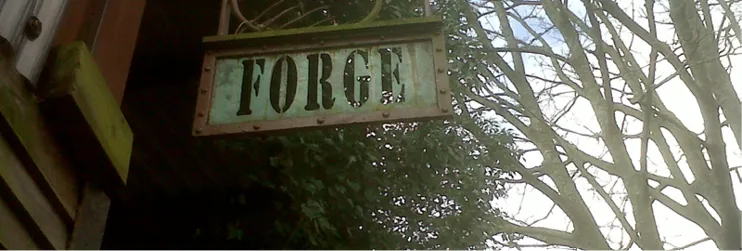
Figure 1.2 Your workshop plans are valuable resources
Photo by Jackie Wills
I have a photo of a swan on a slipway and whenever I see it, I remember a room, its view and the walk we took. I couldn’t remember so precisely though, what we did in the workshop and that’s why I keep workshop plans.
Sometimes themes crop up again and I rework a day or afternoon I’ve spent hours finding materials for. Then there are the times when I’m invited back and I have to remember what I’ve done a year earlier.
I try to stick to a workshop plan but when I veer off, because I’ve included too much, I make a note of what I’ve ditched.
One of the most useful notes to make, too, is on timing. This is sometimes hard to judge and I don’t like to kill an interesting discussion just in order to keep to my schedule.
Workshop plans are interesting to look back on. I have held onto certain exercises because I know they work, but after a while need to try something else. Then I forget them because they’ve been sidelined by new ones.
When I revive an exercise, I bring something else to it and season it differently. My workshop plans show me which exercises I am over-reliant on. They keep me inventive and enquiring.
I haven’t got a comprehensive record of workshops I’ve delivered and I regret it. Three A4 books I’ve glued poems and exercises into over the past decade have been my reference books and personal anthologies, constantly updated with new mat...
Table of contents
- Acknowledgements
- About Jackie Wills
- Introduction
- Chapter One: Structure and Tone
- Chapter Two: Workshop Models
- Chapter Three: Sample Plans
- Chapter Four: Developing Materials
- Chapter Five: Community
- Chapter Six: Collaborations
- Chapter Seven: Galleries and Museums
- Chapter Eight: In Business
- Chapter Nine: School and College
- Chapter Ten: Sample Workshop Exercises
Trusted by 375,005 students
Access to over 1.5 million titles for a fair monthly price.
Study more efficiently using our study tools.
Frequently asked questions
Yes, you can cancel anytime from the Subscription tab in your account settings on the Perlego website. Your subscription will stay active until the end of your current billing period. Learn how to cancel your subscription
No, books cannot be downloaded as external files, such as PDFs, for use outside of Perlego. However, you can download books within the Perlego app for offline reading on mobile or tablet. Learn how to download books offline
Perlego offers two plans: Essential and Complete
- Essential is ideal for learners and professionals who enjoy exploring a wide range of subjects. Access the Essential Library with 800,000+ trusted titles and best-sellers across business, personal growth, and the humanities. Includes unlimited reading time and Standard Read Aloud voice.
- Complete: Perfect for advanced learners and researchers needing full, unrestricted access. Unlock 1.5M+ books across hundreds of subjects, including academic and specialized titles. The Complete Plan also includes advanced features like Premium Read Aloud and Research Assistant.
We are an online textbook subscription service, where you can get access to an entire online library for less than the price of a single book per month. With over 1.5 million books across 990+ topics, we’ve got you covered! Learn about our mission
Look out for the read-aloud symbol on your next book to see if you can listen to it. The read-aloud tool reads text aloud for you, highlighting the text as it is being read. You can pause it, speed it up and slow it down. Learn more about Read Aloud
Yes! You can use the Perlego app on both iOS and Android devices to read anytime, anywhere — even offline. Perfect for commutes or when you’re on the go.
Please note we cannot support devices running on iOS 13 and Android 7 or earlier. Learn more about using the app
Please note we cannot support devices running on iOS 13 and Android 7 or earlier. Learn more about using the app
Yes, you can access The Workshop Handbook for Writers by Jackie Wills in PDF and/or ePUB format, as well as other popular books in Education & Teaching Languages. We have over 1.5 million books available in our catalogue for you to explore.