- English
- PDF
- Available on iOS & Android
About this book
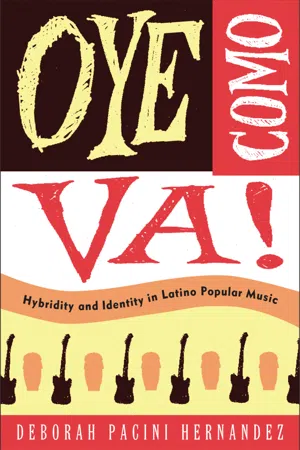
Listen Up! When the New York-born Tito Puente composed "Oye Como Va!" in the 1960s, his popular song was called "Latin" even though it was a fusion of Afro-Cuban and New York Latino musical influences. A decade later, Carlos Santana, a Mexican immigrant, blended Puente's tune with rock and roll, which brought it to the attention of national audiences. Like Puente and Santana, Latino/a musicians have always blended musics from their homelands with other sounds in our multicultural society, challenging ideas of what "Latin" music is or ought to be. Waves of immigrants further complicate the picture as they continue to bring their distinctive musical styles to the U.S.—from merengue and bachata to cumbia and reggaeton.
In Oye Como Va!, Deborah Pacini Hernandez traces the trajectories of various U.S. Latino musical forms in a globalizing world, examining how the blending of Latin music reflects Latino/a American lives connecting across nations. Exploring the simultaneously powerful, vexing, and stimulating relationship between hybridity, music, and identity, Oye Como Va! asserts that this potent combination is a signature of the U.S. Latino/a experience.
Frequently asked questions
- Essential is ideal for learners and professionals who enjoy exploring a wide range of subjects. Access the Essential Library with 800,000+ trusted titles and best-sellers across business, personal growth, and the humanities. Includes unlimited reading time and Standard Read Aloud voice.
- Complete: Perfect for advanced learners and researchers needing full, unrestricted access. Unlock 1.4M+ books across hundreds of subjects, including academic and specialized titles. The Complete Plan also includes advanced features like Premium Read Aloud and Research Assistant.
Please note we cannot support devices running on iOS 13 and Android 7 or earlier. Learn more about using the app.
Information
Table of contents
- Contents
- Preface
- 1 Introduction: Hybridity, Identity, and Latino Popular Music
- 2 Historical Perspectives on Latinos and the Latin Music Industry
- 3 To Rock or Not to Rock: Cultural Nationalism and Latino Engagement with Rock ’n’ Roll
- 4 Turning the Tables: Musical Mixings, Border Crossings, and New Sonic Circuitries
- 5 New Immigrants, New Layerings: Tradition and Transnationalism in U.S. Dominican Popular Music
- 6 From Cumbia Colombiana to Cumbia Cosmopolatina: Roots, Routes, Race, and Mestizaje
- 7 Marketing Latinidad in a Global Era
- Notes
- Selected Bibliography
- Index