Towards more sustainable packaging with biodegradable materials!
The combination of the continuously increasing food packaging waste with the non-biodegradable nature of the plastic materials that have a big slice of the packaging market makes it necessary to move towards sustainable packaging for the benefit of the environment and human health. Sustainable packaging is the type of packaging that can provide to food the necessary protection conditions, but at the same type is biodegradable and can be disposed as organic waste to the landfills in order to biodegrade through a natural procedure. In this way, sustainable packaging becomes part of the circular economy.
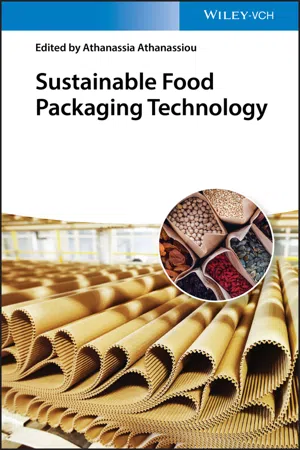
?Sustainable Food Packaging Technology? deals with packaging solutions that use engineered biopolymers or biocomposites that have suitable physicochemical properties for food contact and protection and originate both from renewable or non-renewable resources, but in both cases are compostable or edible. Modified paper and cardboard with increased protective properties towards food while keeping their compostability are presented as well. The book also covers natural components that can make the packaging functional, e.g., by providing active protection to the food indicating food spoilage.
* Addresses urgent problems: food packaging creates a lot of hard-to-recycle waste - this book puts forward more sustainable solutions using biodegradable materials
* State-of-the-art: ?Sustainable Food Packaging Technology? provides knowledge on new developments in functional packaging
* From lab to large-scale applications: expert authors report on the technology aspects of sustainable packaging
- English
- ePUB (mobile friendly)
- Available on iOS & Android
eBook - ePub
Sustainable Food Packaging Technology
About this book
Information
Part I
Review on Biopolymers for Food Protection
1
Emerging Trends in Biopolymers for Food Packaging
Sergio Torres‐Giner, Kelly J. Figueroa‐Lopez, Beatriz Melendez‐Rodriguez, Cristina Prieto, Maria Pardo‐Figuerez, and Jose M. Lagaron
Novel Materials and Nanotechnology Group, Food Safety and Preservation Department, Institute of Agrochemistry and Food Technology (IATA), Spanish Council for Scientific Research (CSIC), Calle Catedrático Agustín Escardino Benlloch 7, 46980, Paterna, Spain
1.1 Introduction to Polymers in Packaging
According to the Food and Agriculture Organization of the United Nations (FAO), approximately one‐third of all food produced globally is lost or wasted [1]. Food waste is produced throughout the whole food value chain, from the household to manufacturing, distribution, retail, and food service activities. Taking into consideration the limited natural resources available, it is more effective to reduce food waste than to increase food production. For this reason, several efforts have been put for the development of more effective food packaging strategies [2, 3]. Packaging items have become essential to protect food from different environmental conditions. Depending on the type of food, the packaging article can be customized to prevent or inhibit microbial growth, avoid food decomposition by removing the entrance of light, oxygen, and moisture, or even to prevent spoilage from small insects. Additionally, novel packaging items can be monitored to give information about the quality of the packaged food, ultimately diminishing food waste during distribution and transport [4].
Common materials utilized for food packaging include glass, paper, metal, and plastic. The latter are nowadays more frequently used since they have a large availability at a relatively low cost and can display good characteristics for packaging items, such as mechanical strength, barrier properties, and transparency [4, 5]. The most commonly used petrochemical materials for packaging applications can be divided into various families:
- Polyolefins and substitutes of olefins, such as low‐density polyethylene (LDPE) and linear low‐density polyethylene (LLDPE), polypropylene (PP), polystyrene (PS), oriented polystyrene (OPS), polyvinyl alcohol (PVOH), polyvinyl chloride (PVC), and polyvinylidene chloride (PVDC). Polyolefins are frequently used in reusable bags, paper cups, and stand‐up pouches, while substitutes of olefins such as PVC are popularly used in cling films and in some prepackaged meals.
- Copolymers of ethylene, such as ethylene‐vinyl acetate (EVA) and ethylene‐vinyl alcohol (EVOH), are typically used to make lid films for trays and barrier interlayers.
- Polyesters, such as polyethylene terephthalate (PET) and other aliphatic and aromatic polyesters, are mainly used to make water bottles.
- Polyamides (PAs) are commonly employed in films or trays for food products that are very sensitive to oxygen.
Most of these materials are made by condensation or addition polymerization of monomers of hydrocarbon or hydrocarbon‐like raw materials, which means that due to their fossil‐based nature and high chemical stability, they are not biodegradable and will accumulate in landfills over the years, causing a negative impact on the environment. Although several recycling strategies are currently being carried out, packaging materials are often contaminated with leftover food, making recycling economically inconvenient and thus unviable. In 2010, primary plastic production was 270 million tons, yet plastic waste was 275 million tons since plastics produced in previous years entered the waste stream, where the sector of packaging was the highest producer of plastics, that is, 146 million in 2015. This has led to an increase in the number of campaigns requesting the removal of single‐use plastics, with the European parliament aiming to ban single‐use plastic cutlery, cotton buds, straws, and stirrers by 2021. Such environmental awareness and implementation of stringent environmental regulations are leading to research for alternatives to food packaging materials and, thus, efforts are being directed, at both academic and industrial levels, at the use of bioplastics in a variety of consumer products.
1.2 Classification of Biopolymers
The above‐described environmental issues, together with the scarcity of oil sources, are the main drivers behind the interest for the development of new materials for food packaging applications. Although bioplastics only account for 1% of the approximately 350 million tons of plastics produced annually, being mostly applied as packaging materials [6, 7], including high‐performance thermoplastic materials and foams, they represent an important part of the Bioeconomy and will undoubtedly shape the future of the plastic industry [8]. As a result, the use of biopolymers in packaging has increased considerably over the past few years due to their sustainable feedstock, bi...
Table of contents
- Cover
- Table of Contents
- Title Page
- Copyright
- Preface
- Part I: Review on Biopolymers for Food Protection
- Part II: Food Packaging Based on Individual Biopolymers and their Composites
- Part III: Biocomposites of Cellulose and Biopolymers in Food Packaging
- Part IV: Natural Principles in Active and Intelligent Food Packaging for Enhanced Protection and Indication of Food Spoilange or Pollutant Presence
- Part V: Technological Developments in the Engineering of Biocomposite Materials for Food Packaging Applications
- Index
- End User License Agreement
Trusted by 375,005 students
Access to over 1.5 million titles for a fair monthly price.
Study more efficiently using our study tools.
Frequently asked questions
Yes, you can cancel anytime from the Subscription tab in your account settings on the Perlego website. Your subscription will stay active until the end of your current billing period. Learn how to cancel your subscription
No, books cannot be downloaded as external files, such as PDFs, for use outside of Perlego. However, you can download books within the Perlego app for offline reading on mobile or tablet. Learn how to download books offline
Perlego offers two plans: Essential and Complete
- Essential is ideal for learners and professionals who enjoy exploring a wide range of subjects. Access the Essential Library with 800,000+ trusted titles and best-sellers across business, personal growth, and the humanities. Includes unlimited reading time and Standard Read Aloud voice.
- Complete: Perfect for advanced learners and researchers needing full, unrestricted access. Unlock 1.5M+ books across hundreds of subjects, including academic and specialized titles. The Complete Plan also includes advanced features like Premium Read Aloud and Research Assistant.
We are an online textbook subscription service, where you can get access to an entire online library for less than the price of a single book per month. With over 1.5 million books across 990+ topics, we’ve got you covered! Learn about our mission
Look out for the read-aloud symbol on your next book to see if you can listen to it. The read-aloud tool reads text aloud for you, highlighting the text as it is being read. You can pause it, speed it up and slow it down. Learn more about Read Aloud
Yes! You can use the Perlego app on both iOS and Android devices to read anytime, anywhere — even offline. Perfect for commutes or when you’re on the go.
Please note we cannot support devices running on iOS 13 and Android 7 or earlier. Learn more about using the app
Please note we cannot support devices running on iOS 13 and Android 7 or earlier. Learn more about using the app
Yes, you can access Sustainable Food Packaging Technology by Athanassia Athanassiou in PDF and/or ePUB format, as well as other popular books in Technology & Engineering & Food Science. We have over 1.5 million books available in our catalogue for you to explore.