![]()
Part 1
Music and Place
Introduction
Rachel Harris and Rowan Pease
The chapters in our opening section explore music’s role in forming a sense of place and sense of identity, of belonging to a particular geographical location. They encompass notions of the soundscape, and explore how people use music to connect with their natural environment, to mark out physical or social space, to conjure up imagined ideas of place, carry local memories, and even store history. Together, these chapters reveal that music-making and listening are central to the ways in which people make sense of the place in which they find themselves, and the ways in which they think about the places that are crucial to their sense of identity.
We consider a range of sounds that go beyond the traditional European definitions of “music” through Abigail Wood’s chapter on the Jerusalem soundscape. The term “soundscape” encompasses the whole sonic environment from natural to human and mechanical sounds, from “noise” to “music,” from consciously to unconsciously produced sounds. Approaches to soundscapes emphasize the ways in which we listen to places. Sounds reveal physical spaces to us: sound is shaped by the environment in which it resounds, and contributes to our intuitive awareness of the physical environment. Sounds also tell us about time. Natural time is punctuated by daily changes in sounds: bird song at dusk and crickets after dark. Urban sounds change according to the rhythms of the seasons or the day, through annual street festivals, or the daily flows of commuters. These patterns of sound are linked to the economic or social functions of different neighborhoods and buildings within the city. They allow us to map the ways that sound “sticks” to places, and more broadly to conceptualize ecosystems of sound.
Music Marking Space
Thinking about the soundscape helps us to consider place and community in new ways. How are places characterized in sound? How are local geographies imagined by their inhabitants, and how is this reflected in sound? Wood’s chapter on the Old City of Jerusalem explores how attention to its sounds can help us to understand its complex web of space and identity. Attentive listening is crucial in order to negotiate the narrow streets and intercommunal politics of Jerusalem’s Old City. In urban environments such as this, where many different communities live cheek by jowl, the study of sound provides insights into coexistence and conflict. The Muslim call to prayer, for example, issued from the minaret five times a day, often aided by a loudspeaker, summons the faithful to prayer but may be heard as a noise nuisance by non-Muslims.
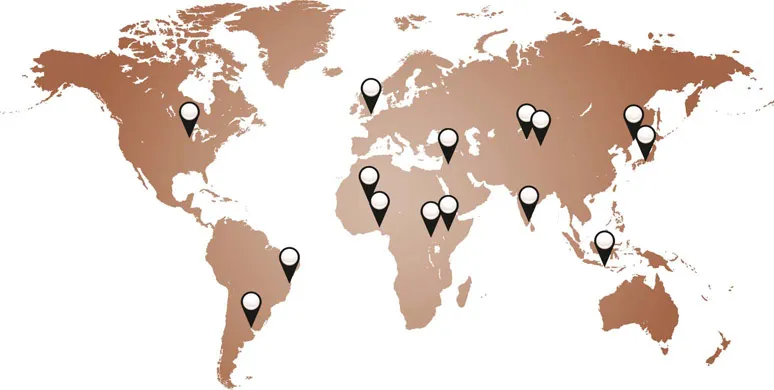
Music (sometimes defined as “humanly organized sound”) has its place in these soundscapes: the clarinets at a bar mitzvah celebration and the singing pilgrims described in Wood’s chapter. Other chapters in this section feature musics that are part of the modern urban soundscape, such as the Korean t’ungso flutes and drums played in city parks in northeast China as described by Pease, or the Malian jeli bards (and even our chapter author Lucy Duran) who might loudly “call the horses” by singing “Soliyo” on a Paris street or in an immigration hall, instantly invoking the social mores of the Mande world. To Western readers, the modern concert hall may be a more familiar context for music: the hall creates a space entirely devoted to music, and cut off from all the competing sounds of the outside world. This is where the Kazakh instrumental piece “Aqqu” (White Swan) in Saida Daukeyeva’s chapter is now most commonly heard, although, paradoxically, qyl-qobyz music evokes the natural environment, bringing it into this enclosed urban space.
Our sense of place is embedded in networks of social relations and understandings; it involves hierarchies, difference, and boundaries, as mapped out so clearly in Old Jerusalem. In West African Mande society, “Soliyo” has an essentially ritual function. It may be sung at any time that a jeli encounters someone he considers a patron; it implies a sense of submission, but also expresses the power of the jeli. In China, the sound of the t’ungso instantly marks out the player as Korean, while to the local population it carries notions of the peasantry. In Brazil, the performance of Capoeira Angola takes place inside the physical space of the roda: a circle formed by members of the group who sing and play instruments while two people in the center of the circle attempt to trick and bring one another down. As Zoë Marriage explains, the roda creates a kind of temporary, moveable, ritualized space; a space set aside from the struggles of everyday life for marginalized communities in Brazil who were the originators of this genre. The sung responses by the chorus underline the sense of community created within the space of the roda. The music generates an emotional atmosphere that acts on the bodies of the players; it motivates their physical exercise (a form of “entrain ment” not unlike that practiced by the Sufi women described in Chapter 7, in the spirituality section).
Music Evoking Place
Within this very present physical space, however, the Capoeira music traces an emotional journey to other places distant in geography and time: from Africa, homeland of the slaves, to their present environment in Brazil, finally leading to a joyful catharsis. Songs, sounds, and musical phrases evoke the personal and collective memories and feelings associated with particular places with an intensity and directness unequalled by any other social activity. Even history more distant than that of the slaves’ journeys can be carried through the musical event. The Mande song “Soliyo” appears in performances of historical epics, such as in the story of Sunjata Keita, founder of the Mali Empire. Lucy Duran links this song to the archaeological site of Sorotomo, a thirteenth-to fifteenth-century capital of the Malian empire, and home of the ancestors of the jeli bards. Horses were the symbol of its military power. Duran argues that “Soliyo” preserves a musical memory of the might of this now forgotten kingdom. It conveys a sense of Mali’s powerful past and serves in the present as an expression of collective identity. In Daukeyeva’s chapter, too, instrumental pieces (küi) evoke collective memories: of a Kazakh nomadic past and their rootedness in the magnificent Central Asian mountains and pasturelands. This body of stories in sound serves as an important aspect of contemporary Kazakh identity.
It is precisely these qualities that forge the links between music, place, and identity that make music deeply political. During the revolutionary period of twentieth-century Chinese history, for instance, the t’ungso flute’s raspy sound quality had no place in the official imaginings of what a modern, socialist nation should sound like. Its sound was too intimately linked to the earth, to China’s peasantry, and it was completely sidelined in the state project to modernize and improve Chinese folk music. By the twenty-first century, however, China’s new urban classes had developed a strong nostalgia for rural environments, which they imagined as places of spirituality, naturalness, and innocence against the consumerist lifestyle that reforms had brought to China. The now “authentic” sounds of the t’ungso provided them with these links to the land, and the instrument was drawn into the state system of Intangible Cultural Heritage and reconfigured as a symbol of nation, and a national cultural asset.
Music and the Environment
If music-making and listening practices form a part of the ways in which people order the world, they also contribute to the ways we think about and evoke the natural environment. The emerging sub-discipline of “eco-musicology” considers the relationships between music, culture, and nature as they relate to ecology and the environment. Eco-musicologists argue that we need to understand human musical expression as part of a sonic ecosystem. Music is not just a way of mediating between people and their environment; it is an enactment of the environ ment in which humans are a part. The Capoeira Angola group FICA thinks of itself as a part of the environment rather than as a distanced owner. Links with the land are central to its ethos, so alongside its work as a center for Capoeira, it maintains an organic farm and a strong commitment to sustainable agriculture. As travelling herders and pastoralists, the Kazakhs of Central Asia also lived in intimate contact with the natural environment and the changing seasons, and their musical performance is rooted in aesthetics and beliefs arising from this lifestyle. Their instrumental music (küi) both imitates and animates the environment: in the traditional animist belief system, mountains, lakes, caves, and wild animals all have spirits that can be addressed, placated, and persuaded through music. Küi pieces also relate, through musical sound, stories about people’s relationships with nature.
In our contemporary globalized world, our social networks and our lived experiences are rarely confined to the physical locations that we inhabit; we exist simultaneously in a local, a regional, and a global context. Traditional notions of place as a bounded entity fixed in space and time have been largely replaced by a view in which the local and the global, the past and the present are inextricably bound together. Places are penetrated and shaped by distant cultural phenomena. Thus an encounter between a Malian jeli and a patron on a Paris street is shaped by half-submerged memories of the ancient West African city of Sorotomo. Likewise, our sense of identity increasingly traces trajectories across space rather than constructing boundaries. The resulting sense of dislocation impels people to find ways of relocating themselves, perhaps through roots-seeking or nostalgic remember ing of...