eBook - ePub
Reality in Branding
The Rules of European Brand Management in 50 Answers
- 264 pages
- English
- ePUB (mobile friendly)
- Available on iOS & Android
eBook - ePub
Reality in Branding
The Rules of European Brand Management in 50 Answers
About this book
Believing is not the same as knowing:
The fundamental facts about the laws of european brand management in 50 answers
From breakfast cereals to smartphones, nothing is left unbranded: brands are with us every step of the way. We define ourselves through the brands we surround ourselves with. Even if we reject brands, that's a brand statement. Brands are everywhere in the 21st century – that's exactly why we all have an opinion on them. When it comes to private life, there is little objection to this concept. However, when it comes to brand management and brand positioning with – in a company, personal sensitivities and feelings are out of place.
Too many opinions, too little wisdom: In 50 timeless answers, brand sociologists Dr. Arnd Zschiesche and Prof. Dr. Oliver Errichiello put a stop to the brand debates that are shaped by the zeitgeist. They speak in plain language where vague chatter typically prevails. And they show why every brand is a social phenomenon that has an impact: It's about the management of social "hard facts." Not just in Europe. Classic European Brand Management leads the way for every company seriously focusing on economic success for the long term – internally, as well. It's time for timeless, value-oriented Branding from the old continent.

15
The foundation of every successful brand is its performance. Is that still the case? Isn’t it more about emotions and the hip image a brand has?
Answer: Even in the 21st century, people primarily pay for the performance of a brand. Their image alone does not help them.
Brand sociology constantly postulates that performance, performance, and first of all performance is the foundation of every successful brand. But today, don’t many people just pay for an image? Does the clientele nowadays really give a damn about the crafts-manship or analytical work that a tailor, joiner, IT specialist, or watchmaker has done for XY product, or the engineering thinking that has gone into a wireless “Dyson V6 Trigger+”13 with patented cyclone technology?
Anyone who has paid a lot of money to indulge in a beautifully designed and prestigious Bang & Olufsen music system and then finds out that the sound quality is modest or the customer service is inadequate will not benefit from the high reputation of the traditional and noble Danish brand. Even the very best brand-inspired emotions are always the result of entrepreneurial achievements that have led to the development of a certain expectation among customers and, in part, among the public.
Of course, many people buy a product or service in order to take part in a brand’s image – but it’s fatal to conclude that the performance of the brand thus becomes unimportant. Even the Porsche or Ferrari dealer will not simply stand himself in front of his potential customer and explain, “It’s a cool car, buy it.” Naturally, there are many advantages to managing brands like the ones just mentioned, which already combine a strong positive prejudice and evoke strong emotions: they reduce the effort needed for explanations and, thus, simplify sales. The professional commitment to a well-known brand also often has personal advantages: many employees are proud to work for XY brand. These brands also never have any problem with their “Employer Branding”14; applicants mostly have to line up to get a job there. All this, however, does not alter the foundation of the general appeal. On the contrary, it involves the compulsion to continually deliver a top performance, and it illustrates the pressure on leading pharmaceutical or tech companies that have to constantly “follow up on their own performances” and bring new, innovative products to the market.
Therefore, please never forget the following:

No matter how many impressions have rained down on us before, we develop this final image ourselves. For us as amateurs, our prejudices and experiences in dealing with the product or research must be continuously intensified – meaning, they should be confirmed at every point of interaction. The high art of brand management is precisely this: to concentrate a brand performance in such a way that every detail in every location deepens the specific prejudice about the performance.
The positive prejudice of the clientele, which developed around the brand performance over the years, can certainly come to the rescue of the company over a certain period of time – for example, if mistakes have been made. Scandals in recent history show the Teflon character of the positive prejudice about the German car industry around the world, achieved by outstanding technical performances for over a hundred years – this is precisely why the positive prejudice is an economic linchpin. Irrespective of this, the scratches in the paint can no longer be erased from the collective memory. Terms such as “emissions scandal” or “Dieselgate” have long-term consequences. German car brands are no longer incontestable in terms of quality, price, and performance, and the scandals manifest and illustrate this state of affairs on a massive scale.
Without performance, there is no positive prejudice. No matter how grandiose the image, every brand lives by its performance in its day-to-day business. Slacking off is not an option.
16
If each brand’s performance is highly individual, how can it be analyzed according to a single principle?
Answer: Each brand functions according to a cause-and-effect principle. It’s important to work out the individual causes of success – they are at the performance level.
Service performance, product performance, B-to-B or B-to-C performance – there are probably millions of brands worldwide with an infinite number of performances. For every successful brand, it’s their performances that are paid for every day and used every day by millions of people. Irrespective of this, many large, well-known brands in particular believe that they have to tell people “mega-emotional” stories in order to trigger positive feelings – and, thus, sympathy – for the brand. The only reason why people develop sympathy, or even an inclination toward a brand, is the fact that this brand helps them in some way to make their everyday life better or more pleasant. Ergo: The assistance provided by the brand is usually very concrete for the people. Whether the Betty Crocker baking mix ensures that I can safely make a cake, or my bad breath is immediately stopped by a “curiously strong mint” (Altoids), or my professional appearance is perfected thanks to an Eton tie – the possible examples of concrete assistance are as endless as the global variety of brands.
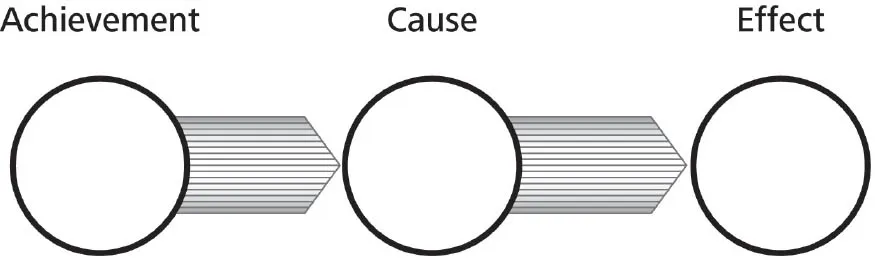
Performance – Cause – Effect. The triad that for...
Table of contents
- Cover
- Titel
- Impressum
- Widmung
- Inhalt
- Foreword
- What Is the Problem of Branding Today?
- Basic Principles.
- Brands and Sociology.
- Brands and Performance.
- Brands, Their Origins, and Histories.
- Brands, Brand Management, and Strategy.
- Brands, Brand Names, and Symbolism.
- Brands, Marketing, and Communication.
- Brands and Customers.
- Brand Management, Innovation, and the Future.
- Conclusion: On the Future of Brands
- Sources and Notes
- Literature
- Who Are the Authors?
Trusted by 375,005 students
Access to over 1.5 million titles for a fair monthly price.
Study more efficiently using our study tools.
Frequently asked questions
Yes, you can cancel anytime from the Subscription tab in your account settings on the Perlego website. Your subscription will stay active until the end of your current billing period. Learn how to cancel your subscription
No, books cannot be downloaded as external files, such as PDFs, for use outside of Perlego. However, you can download books within the Perlego app for offline reading on mobile or tablet. Learn how to download books offline
Perlego offers two plans: Essential and Complete
- Essential is ideal for learners and professionals who enjoy exploring a wide range of subjects. Access the Essential Library with 800,000+ trusted titles and best-sellers across business, personal growth, and the humanities. Includes unlimited reading time and Standard Read Aloud voice.
- Complete: Perfect for advanced learners and researchers needing full, unrestricted access. Unlock 1.5M+ books across hundreds of subjects, including academic and specialized titles. The Complete Plan also includes advanced features like Premium Read Aloud and Research Assistant.
We are an online textbook subscription service, where you can get access to an entire online library for less than the price of a single book per month. With over 1.5 million books across 990+ topics, we’ve got you covered! Learn about our mission
Look out for the read-aloud symbol on your next book to see if you can listen to it. The read-aloud tool reads text aloud for you, highlighting the text as it is being read. You can pause it, speed it up and slow it down. Learn more about Read Aloud
Yes! You can use the Perlego app on both iOS and Android devices to read anytime, anywhere — even offline. Perfect for commutes or when you’re on the go.
Please note we cannot support devices running on iOS 13 and Android 7 or earlier. Learn more about using the app
Please note we cannot support devices running on iOS 13 and Android 7 or earlier. Learn more about using the app
Yes, you can access Reality in Branding by Dr. Arnd Zschiesche,Oliver Errichiello,Arnd Zschiesche in PDF and/or ePUB format, as well as other popular books in Business & Marketing. We have over 1.5 million books available in our catalogue for you to explore.