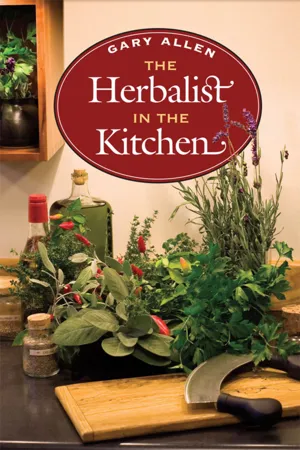
The foodie's ultimate herbal encyclopedia Created as the ideal reference for anyone with a serious interest in cooking with herbs, spices, or related plant materials, The Herbalist in the Kitchen is truly encyclopedic in scope. It provides complete information about the uses, botany, toxicity, and flavor chemistry of herbs, as well as a listing for nearly every name that an ingredient is known by around the world. Even including herbs and spices not yet seen in the United States (but likely to be featured in recipes for adventurous cooks soon), The Herbalist in the Kitchen is organized into one hundred and four sections, each consisting of a single botanical family. The book provides all available information about the chemical compounds responsible for a plant's characteristic taste and scent, which allows cooks to consider new subtleties and potential alternatives. For instance, the primary flavoring ingredient of cloves is eugenol; when a cook knows that bay leaves also contain eugenol, a range of exciting substitutions becomes clear. The Herbalist in the Kitchen also provides guidance about measuring herbs, enabling readers to understand the dated measuring standards from antique cookbooks. A volume in The Food Series, edited by Andrew W. Smith
- English
- ePUB (mobile friendly)
- Available on iOS & Android
eBook - ePub
The Herbalist in the Kitchen
About this book
Table of contents
- Cover Page
- Title Page
- Copyright
- Contents
- List of Illustrations
- Acknowledgments
- Introduction
- 1. Agavaceae
- 2. Aizoaceae
- 3. Alliaceae (Amaryllidaceae)
- 4. Amaranthaceae
- 5. Anacardiaceae
- 6. Annonaceae
- 7. Apiaceae (formerly Umbelliferae)
- 8. Apocynaceae
- 9. Aquifoliaceae
- 10. Araceae
- 11. Araliaceae
- 12. Aristlochiaceae
- 13. Asclepiadaceae
- 14. Asteraceae (formerly Compositae)
- 15. Berberidaceae
- 16. Bignoniaceae
- 17. Bixaceae
- 18. Bombacaceae
- 19. Boraginaceae
- 20. Brassicaceae (formerly Cruciferae)
- 21. Burseraceae (formerly Simaroubaceae)
- 22. Calycanthaceae
- 23. Campanulaceae
- 24. Cannabaceae
- 25. Cappardaceae (formerly Capparaceae)
- 26. Caprifoliaceae
- 27. Caryophyllaceae
- 28. Celastraceae
- 29. Chenopodiaceae
- 30. Cistaceae
- 31. Convolulaceae
- 32. Crassulaceae
- 33. Cupressaceae
- 34. Cyperaceae
- 35. Ericaceae
- 36. Euphorbiaceae
- 37. Gentianaceae (formerly Menyanthanaceae)
- 38. Geraniaceae
- 39. Guttiferae (Clusicaceae)
- 40. Hydrophyllaceae
- 41. Illiciaceae
- 42. Irideaceae
- 43. Lamiaceae (formerly Labiatae)
- 44. Lauraceae (sometimes listed as Myrtaceae)
- 45. Leguminosae (sometimes listed as Fabaceae)
- 46. Liliaceae
- 47. Magnoliaceae
- 48. Malvaceae
- 49. Meliaceae
- 50. Monimiaceae
- 51. Moringaceae
- 52. Myricaceae
- 53. Myristicaceae
- 54. Myrsinaceae
- 55. Myrtaceae
- 56. Naiadaceae
- 57. Nyctaginaceae
- 58. Nympheaceae
- 59. Oleaceae
- 60. Orchidaceae
- 61. Oxalidaceae
- 62. Paeonaceae
- 63. Palmae
- 64. Pandanceae
- 65. Papaveraceae
- 66. Passifloraceae
- 67. Pedaliaceae
- 68. Pinaceae
- 69. Piperaceae (sometimes listed as Peperomiaceae)
- 70. Plantaginaceae
- 71. Poaceae
- 72. Polygalaceae
- 73. Polygonaceae
- 74. Polypodiaceae
- 75. Pontederiaceae
- 76. Portulacaceae
- 77. Primulaceae
- 78. Punicaceae
- 79. Ranunculaceae
- 80. Resedaceae
- 81. Rhamnaceae
- 82. Rosaceae
- 83. Rubiaceae
- 84. Rutaceae
- 85. Santalaceae
- 86. Sapindaceae
- 87. Sapotaceae
- 88. Saururaceae
- 89. Schisandraceae
- 90. Scrophulariaceae
- 91. Solanaceae
- 92. Sterculianceae
- 93. Taxaceae
- 94. Theaceae
- 95. Tiliaceae
- 96. Tropaeolaceae
- 97. Turneraceae
- 98. Urticaceae
- 99. Valerianaceae
- 100. Verbenaceae
- 101. Violaceae
- 102. Vitaceae
- 103. Zingiberaceae
- 104. Zygophyllaceae
- 105. Fungi and Lichens
- Glossary
- Sources
- Bibliography
- Index
Trusted by 375,005 students
Access to over 1.5 million titles for a fair monthly price.
Study more efficiently using our study tools.
Information
Publisher
University of Illinois PressYear
2010Topic
ArtPrint ISBN
9780252031625
Subtopic
Culinary ArtseBook ISBN
9780252090394
Frequently asked questions
Yes, you can cancel anytime from the Subscription tab in your account settings on the Perlego website. Your subscription will stay active until the end of your current billing period. Learn how to cancel your subscription
No, books cannot be downloaded as external files, such as PDFs, for use outside of Perlego. However, you can download books within the Perlego app for offline reading on mobile or tablet. Learn how to download books offline
Perlego offers two plans: Essential and Complete
- Essential is ideal for learners and professionals who enjoy exploring a wide range of subjects. Access the Essential Library with 800,000+ trusted titles and best-sellers across business, personal growth, and the humanities. Includes unlimited reading time and Standard Read Aloud voice.
- Complete: Perfect for advanced learners and researchers needing full, unrestricted access. Unlock 1.5M+ books across hundreds of subjects, including academic and specialized titles. The Complete Plan also includes advanced features like Premium Read Aloud and Research Assistant.
We are an online textbook subscription service, where you can get access to an entire online library for less than the price of a single book per month. With over 1.5 million books across 990+ topics, we’ve got you covered! Learn about our mission
Look out for the read-aloud symbol on your next book to see if you can listen to it. The read-aloud tool reads text aloud for you, highlighting the text as it is being read. You can pause it, speed it up and slow it down. Learn more about Read Aloud
Yes! You can use the Perlego app on both iOS and Android devices to read anytime, anywhere — even offline. Perfect for commutes or when you’re on the go.
Please note we cannot support devices running on iOS 13 and Android 7 or earlier. Learn more about using the app
Please note we cannot support devices running on iOS 13 and Android 7 or earlier. Learn more about using the app
Yes, you can access The Herbalist in the Kitchen by Gary Allen in PDF and/or ePUB format, as well as other popular books in Art & Culinary Arts. We have over 1.5 million books available in our catalogue for you to explore.