A classroom staple, Immigrant Voices: New Lives in America, 1773-2000 has been updated with writings that reflect trends in immigration to the United States through the turn of the twenty-first century. New chapters include a selection of letters from Irish immigrants fleeing the famine of the 1840s, writings from an immigrant who escaped the civil war in Liberia during the 1980s, and letters that crossed the U.S.-Mexico border during the late 1980s and early '90s. With each addition editor Thomas Dublin has kept to his original goals, which was to show the commonalities of the U.S. immigrant experience across lines of gender, nation of origin, race, and even time.
THE DIARY OF JOHN HARROWER offers a remarkable early account by an immigrant to the British North American colonies. Like the majority of British immigrants to the colonies, Harrower had to sign away his freedom to finance his ocean crossing.
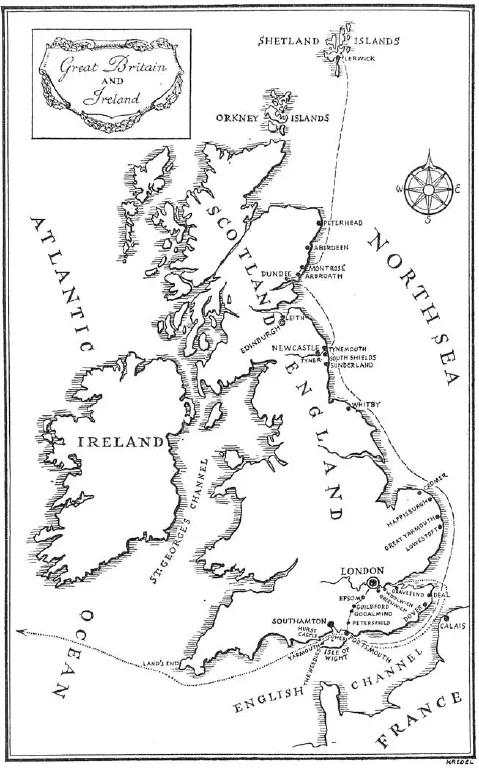
Poverty and desperation led him to leave his native Shetland Islands in December 1773. The first third of the diary traces his southward wanderings. He traveled first to Scotland, seeking work or, failing that, passage to Holland. Since no ships were departing for Holland, he took coastal vessels to Newcastle and then Portsmouth. He walked the final eighty miles to London, where he desperately sought employment. Finally, down to his last shilling, Harrower signed up as a servant on a vessel bound for America. Only in this roundabout way did this down-on-his-luck Shetland Islander find himself en route to Virginia.
Like many immigrants who left accounts, Harrower was far from a typical indentured servant. His literacy set him apart from his comrades, and even before the ship, the Planter, had left the Thames, its master had sought Harrower’s aid in dealing with disgruntled servants.1 During the trip, he helped the master in numerous ways, caring for the sick and keeping up the ship’s journals. Just before the vessel landed, Harrower copied the names and occupations of all the servants.
Once settled in Virginia, Harrower enjoyed a variety of privileges that distinguished him from fellow servants. First of all, he worked only occasionally in the fields. Hired by William Daingerfield as a tutor for the planter’s children, he was treated more as a member of the family than as a servant. Moreover, he was encouraged to teach other children in the area and was permitted to negotiate payment from their families. These earnings and the gifts he received from the parents of his pupils set him apart from the typical indentured servant in tidewater Virginia.
Despite these differences, we can see elements of the archetypical immigrant experience in Harrower’s diary. Aboard the Planter and in Virginia, he sought out fellow Scotsmen and information about events back home. He complained in one letter of the difficulty he had in speaking “high English.” As a Shetlander, he was something of an outsider in Virginia society, despite the good treatment accorded him because of his education and skills.
Over the course of the diary, we see the process of assimilation at work in Harrower’s life. His attitude toward the colonial struggle for independence, for instance, shifted over time. By the end of his diary, it is clear that he intended to bring his family over and to see his wife become an “American” like himself. His diary offers a view of the Americanization process that is repeated in later immigrant accounts.
Munday, 6th Decr 1773. This morning I left my house2 and family at 4 OClock in order to travel in search of business and imediatly went on board a sloop ready to saile for Leith, Oconachie
3 and at 5 OClock he sailed Accordingly with the wind at N. At this time I am Master of no more Cash but 8½d and stockins4 &c. to the amount of £3 str5 or thereabout, a small value indeed to traviel with.6
Munday, 27th. Wind at S. E. with heavy rain. Both the Smacks7 in the River yet. This evening it being
John’s night the Free Masons made a very grand procession through the high street.[…]
Tuesday, 28th. Wind at E. fine weather. this day I once thought of engaging with the
of the Elizabeth Brigantine bound for North Carolina but the thoughts of being so far from my family prevented me. at noon the wind came all round to the N. V.8 and then Mr. began to make ready as fast as possible for sailing.
FIGURE 1. John Harrower’s journey from the Shetland Islands, 1773. (Courtesy of the Colonial Williamsburg Foundation)
Wednesday, 29th. At 2 am left my Loging having been here 16 days and my method of living was as follows Vizt9 for Breackfast ½d. worth of bread ½d. worth of Cheese and a bottle of ale at 1d. For dinner ½d. worth of bread, ½d. worth of Broath, 1d. worth of Meat and a bottle of ale at 1d. and the same for supper as for breackfast, and 1d. a night for my bedd. On leaving my logings at the time above mentioned I went
10 the sloop Williams, Wm. Bell
, for Newcastle,11 and he imediatly hauled out of the harbour and made saile with the Wind at N. N. V. At 9 pm was obliged to ly too for the tide on Tynemouth bar. at midnight bore away for t...
Table of contents
Cover
Title Page
Copyright Page
Contents
Acknowledgments
Editorial Method
Introduction
1 The John Harrower Diary, 1773–1776
2 Irish Immigrant Letters, 1847–1848
3 The William and Sophie Frank Seyffardt Letters, 1851–1863
4 Rosa Cassettari: From Northern Italy to Chicago, 1884–1926
5 Rose Gollup: From Russia to the Lower East Side in the 1890s
6 The Childhood of Mary Paik, 1905–1917
7 Kazuko Itoi: A Nisei Daughter’s Story, 1925–1942
8 The Nguyen Family: From Vietnam to Chicago, 1975–1986
9 Helene Cooper: A Liberian Immigrant’s Story, 1980
10 The California-Mexico Letters of Angela Gomez, 1988–1990
Selected Bibliography of First-Person Immigrant Accounts
Index
Trusted by 375,005 students
Access to over 1.5 million titles for a fair monthly price.
Study more efficiently using our study tools.
Frequently asked questions
Yes, you can cancel anytime from the Subscription tab in your account settings on the Perlego website. Your subscription will stay active until the end of your current billing period. Learn how to cancel your subscription
No, books cannot be downloaded as external files, such as PDFs, for use outside of Perlego. However, you can download books within the Perlego app for offline reading on mobile or tablet. Learn how to download books offline
Perlego offers two plans: Essential and Complete
Essential is ideal for learners and professionals who enjoy exploring a wide range of subjects. Access the Essential Library with 800,000+ trusted titles and best-sellers across business, personal growth, and the humanities. Includes unlimited reading time and Standard Read Aloud voice.
Complete: Perfect for advanced learners and researchers needing full, unrestricted access. Unlock 1.5M+ books across hundreds of subjects, including academic and specialized titles. The Complete Plan also includes advanced features like Premium Read Aloud and Research Assistant.
Both plans are available with monthly, semester, or annual billing cycles.
We are an online textbook subscription service, where you can get access to an entire online library for less than the price of a single book per month. With over 1.5 million books across 990+ topics, we’ve got you covered! Learn about our mission
Look out for the read-aloud symbol on your next book to see if you can listen to it. The read-aloud tool reads text aloud for you, highlighting the text as it is being read. You can pause it, speed it up and slow it down. Learn more about Read Aloud
Yes! You can use the Perlego app on both iOS and Android devices to read anytime, anywhere — even offline. Perfect for commutes or when you’re on the go. Please note we cannot support devices running on iOS 13 and Android 7 or earlier. Learn more about using the app
Yes, you can access Immigrant Voices by Thomas Dublin in PDF and/or ePUB format, as well as other popular books in Social Sciences & Social Science Biographies. We have over 1.5 million books available in our catalogue for you to explore.