Pulitzer Prize Finalist
Winner of the John Brinckerhoff Jackson Book Prize
Winner of the Sharon Harris Book Award
Finalist, Jefferson Davis Award of the American Civil War Museum
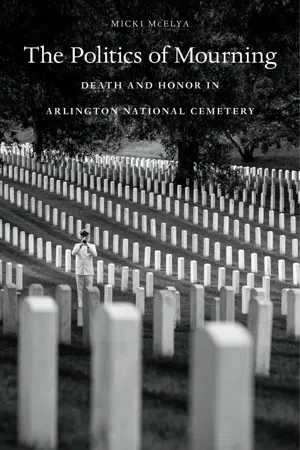
Arlington National Cemetery is one of America's most sacred shrines, a destination for millions who tour its grounds to honor the men and women of the armed forces who serve and sacrifice. It commemorates their heroism, yet it has always been a place of struggle over the meaning of honor and love of country. Once a showcase plantation, Arlington was transformed by the Civil War, first into a settlement for the once enslaved, and then into a memorial for Union dead. Later wars broadened its significance, as did the creation of its iconic monument to universal military sacrifice: the Tomb of the Unknown Soldier.
As Arlington took its place at the center of the American story, inclusion within its gates became a prerequisite for claims to national belonging. This deeply moving book reminds us that many brave patriots who fought for America abroad struggled to be recognized at home, and that remembering the past and reckoning with it do not always go hand in hand.
"Perhaps it is cliché to observe that in the cities of the dead we find meaning for the living. But, as McElya has so gracefully shown, such a cliché is certainly fitting of Arlington."
—American Historical Review
"A wonderful history of Arlington National Cemetery, detailing the political and emotional background to this high-profile burial ground."
—Choice
- 395 pages
- English
- ePUB (mobile friendly)
- Available on iOS & Android
eBook - ePub
About this book
Information
Publisher
Harvard University PressYear
2016Print ISBN
9780674237421
9780674737242
eBook ISBN
9780674974067
Chapter 1
KEEPER OF THE KEYS
I fear that this will be the scene of conflict & my beautiful home endeared by a thousand associations may become a field of carnage.
—Mary Custis Lee (1861)
A FAMILY OF FOUR POSES in front of Arlington House in what appears as a simple record of a visit to the cemetery and the sights. Perhaps it was one stop among many on a tour of Washington, DC, one moment of a long-ago family vacation. Closer inspection of the photographs prompts questions, however. The family is a bit formal and more properly dressed than usual tourists, even in the context of a historical past less populated by the casual clothes so common among tourists in the nation’s capital today. The family is African American, a fact that necessarily shifts the register of their poses before the famous Virginia plantation house. A label provides identities: “Henry Gray Gillem & Family Visit the Birthplace of Grandfather Harry W. Gray at Custis-Lee Estate.”1
The photograph says a great deal about Arlington’s long and intertwined black and white family histories. Referring to the house by its official name at the time, the moniker “Custis-Lee Estate” identifies both its first owner, George Washington Parke Custis, adopted grandson of George and Martha Washington, and its most famous resident, Custis’s son-in-law, Robert E. Lee. The Gray family, enslaved and then free, had a long history at the place and in the wider community of Arlington, Virginia. Harry Gray, Henry’s grandfather, was born into slavery there around 1852 to Selina and Thornton Gray. The family, including Harry and five of his brothers and sisters, lived in a single room at the west end of one of two slave quarters behind Arlington House, identified today as the “South Dependency” by the National Park Service. As a free man, Harry went on to build for his own family the first red-brick, Italianate-style house in the city of Arlington, modeled after the homes he saw near his work at the U.S. Patent Office in Washington, DC. Like the slave quarters of Gray’s birth, his brick house is now also on the National Register of Historic Places.2
Although Harry Gray’s story anchors many accounts of the family’s passage from slavery to freedom, it is his mother, Selina Gray, who holds the more significant place in histories of the Arlington Estate. Herself born into slavery there around 1826, Selina became one of its primary housekeepers and a personal maid to Custis’s daughter and Lee’s wife, Mary. While mentioned with some frequency in the many letters written by members of the Custis and Lee families, Selina Gray assumed a central role in the history of the plantation and the mythology surrounding General Lee when she was left with the keys to the house as Mary fled south just before federal troops occupied Arlington in the early days of the Civil War.
The fame of both Selina’s owners and the place where she was enslaved has rendered her history both more and less knowable to us today. The archives of the Custis and Lee families have been carefully saved and tended over the years, making it possible to find evidence of the people they owned, particularly those who worked in and around the big house and had closest contacts with individual family members. At the same time, those impressions come through the eyes, ears, and pens of slave owners, committed to their own needs and beliefs in their superior humanity compared to those they held in bondage. More often, the enslaved appear throughout the documents of plantation management, slave owning, and generational wealth—inventories, insurance applications, invoices, wills—documents that list people as things and that can only hint at the humanity of those enumerated within them.
By the time Selina Gray’s descendants posed before the big house, Arlington had assumed its current status as the preeminent national cemetery in the United States. But this photo, like the columned mansion its subjects pose before, reminds us that it was first a plantation built by enslaved people. The landscape and all its uses was—and continues to be—defined by this fact. Officially, the “Custis-Lee Estate” was a monument to the Grays’ former owners and a national memorial to Robert E. Lee. Yet Selina and her descendants represent an alternative narrative of ownership, legacy, and national heritage.3

The land along the Potomac that became the Arlington Estate had once been home to several Algonquian-speaking Indian communities. Like much of the area, it became known to the English in 1608 through John Smith’s surveys of the Chesapeake Bay region for the Virginia Company. Starting with a 6,000-acre land grant to Captain Robert Howsing from the Royal Governor in 1669, which the seafarer promptly sold less than a month later for 6,000 pounds of tobacco, the wooded higher ground and alluvial bottomland was broken into smaller portions. It went in time from being part of a colony to the commonwealth of Virginia and from English to American ownership, while it was passed along the generations by inheritance or sale and worked by tenants and enslaved laborers.4
In 1778, John Parke Custis bought 1,100 acres of this land to build a family estate close to his stepfather George Washington’s Mount Vernon and his wife’s family. He moved her and their young children into a house already on the property. Another son, George Washington Parke Custis, was born three years later. Shortly after, John was called to Williamsburg to serve as an aide to Washington. There he contracted “camp fever” and died before the conclusion of the Revolutionary War. Washington promised to provide for his stepson’s two youngest children, including George, not yet a year old, eventually moving them to Mount Vernon. George Washington was the only father G. W. P. Custis ever knew.5
With the deaths of the first president in 1799 and his wife, Martha, in 1802, Custis came into his inheritance, including three plantations once belonging to his biological father and a significant number of enslaved people. George Washington’s will freed all of the people he owned outright, 123 of the 316 souls in bondage at Mount Vernon, effective upon the death of his wife. Expressing fear for her safety, given that her demise was all that stood between the group and their freedom, Martha Washington freed them a year later. The remaining people, numbering almost 200, the “dower slaves,” had come into the marriage with Martha from her first husband or were descended from them. When Martha died, her will divided them, like other properties of the estate, among her four grandchildren, including G. W. P. Custis.6
Custis chose to live on the land that he eventually called Arlington and moved into a rustic, four-room former tenant’s house near the river. He inherited several household goods and decorative items from his grandmother and purchased more at the sale of her estate, all of which he added to the number of George Washington’s belongings that he had already acquired. Accounts hold that it was the fate of these Washington relics, including flags and tents from the Revolutionary War menaced by rodents and mold, that prompted Custis to set to work on a new, more secure house on the heights above the Potomac. It would rise above and look across to the new national capital, which had been moved from Philadelphia in 1800.7
It was G. W. P. Custis who first imagined Arlington as a commemorative landscape in relation to the emergent federal capital across the river. Custis’s new house on the heights of what he initially called “Mount Washington” was a small, brick structure. Not grand, it was still nicer than his first house down the hill, which was soon to become the residence of the plantation’s overseer. Custis wanted his home and the plantation it anchored to stand as a shrine to George Washington, to broadcast his family’s lasting significance to the nation and its leaders in the capital, and perhaps most importantly, to cement in the minds of others his own ties to the first president’s legacy. Some historians have seen in Custis’s collecting and display a preservationist sensibility that predated formal national efforts in the United States by several decades. His mission at Mount Washington seemed to aspire to more than a modest brick building on the heights.8
To design the new house-cum-exhibition-space that would be the plantation’s central feature—a house Robert E. Lee later claimed could be seen from afar with even “half an eye”—Custis hired the architect George Hadfield, a former superintendent of construction at the unfinished U.S. Capitol.9 Constructed in stages by enslaved people between 1802 and 1818, the house that Hadfield planned for Custis is one of the earliest examples of Greek Revival residential architecture in the United States. Its temple-and-wing design is composed of a two-story central structure flanked on either side by smaller, single-story spaces, all visually dominated by a large front portico supported by eight enormous Doric columns. Far more temple-like than the iconic white-columned Southern Colonial Revival architecture of the late nineteenth century and Old South imagination with which it is most associated today, at the time of its construction, the house echoed the form, classical lines, and aspirations of the nation’s new capital city. By 1804, Custis had dropped the name “Mount Washington” for his plantation in favor of “Arlington,” in apparent homage to an original Custis family property in Virginia of the same name. In July of that year, he was joined there by his new bride, Mary Lee Fitzhugh Custis. Together, they had four children at Arlington, only one of whom, Mary Anna Randolph Custis, lived to adulthood.10
The house was an imposing statement of power, wealth, and refinement, built as it was on the highest, most visible point of the estate. The effect was enhanced by the use of stucco and paint to transform its brick construction into the approximation of marble and stone, including veins painted on the columns. Concerned mostly with perceptions of the house from the front—looking across from the federal city or as one approached the house from the river—Custis never had the posterior stuccoed in his lifetime.11 One might find deeper meaning and dark truths in the spaces between appearance and actualities at Arlington. If dazzling from a distance, the house was less enchanting upon closer inspection. Writing in 1832 of a visit to the American capital, an English traveler noted of the Custis mansion, “It is visible for many miles, and in the distance has the appearance of a superior English country residence beyond any place I had seen in the states, but as I came close to it, I was woefully disappointed.”12 He was not the last to suggest that the home’s grandeur and impact lay in viewing it from afar.
The plantation at Arlington was designed as a show place, as an assertion of life well and genteelly lived, and of ancestry and nation honored. A portion of the estate was put to agriculture and animal husbandry, including Custis’s attempts to breed a sheep native to the United States. This kind of work occurred closer to the river and alongside the other five slave quarters and overseer’s house. In 1811, Custis had a covered reception area constructed just off the river near the main entrance to his plantation, where he could exhibit his livestock and entertain day-trippers from DC. This eventually became an eight-acre recreation area, called Arlington Spring, for visitors who arrived by ferry to picnic, purchase light refreshments, and listen to Custis spin stories of George Washington and his own youth. By the 1850s, 50 to 200 people were visiting every day but Sunday during the spring and summer, drawn “by that generous hospitality which is everywhere prevalent in the South,” explained Benson Lossing, a popular historian of the day and guest at Arlington House.13 This famed hospitality was inseparable from the enslaved people who worked and lived in close proximity at the lower slave quarters. The farm and market gardens nearby yielded enough for the plantation’s needs with some left for sale in Washington. Arlington was never intended to be lucrative or even to break even; rather, it relied on the profitability of Custis’s other holdings in land, beasts, and people—holdings such as the Romancock (later Romancoke) and White House plantations located within ten miles of each other on the Pamunkey River. Custis was largely an absentee owner of those properties, leaving their day-to-day operations to overseers and farm managers.
Most of Custis’s vast enslaved property labored at these nearby plantations in conditions far different from those at Arlington or were hired out, isolated from family and friends on year-long contracts. Over time, his slave ownership was marked by neighborhood gossip and more official complaints of neglect, slave unruliness, and lax supervision, indicating poor conditions on those plantations and resistance from the enslaved. While limited management could mean greater freedom for enslaved people, violence and degradation at the Pamunkey plantations reached such levels as to be shocking to other owners and resulted in more than one investigation over the years, with charges ranging from starving enslaved people and providing inadequate housing to drowning or whipping individuals to death. The year Custis died, he wrote to his new manager at White House that he was “greatly pained, disappointed and mortified to hear” how terrible the state of the enslaved was there and their “deprivations,” noting, “it ought not be so, my negroes have been heavier worked than many slaves in Virginia, so much so, that neighbors of my estates have addressed to me anonymous letters complaining of the subject.”14
In spite of this evidence, Custis has come down to us as a “good slave owner,” proffering a mutually affectionate, paternalistic quality of slavery at Arlington, particularly in histories and guides produced for tourists. Old southern grace and hospitality are made visible in the presence of the enslaved and their faithful servitude and affections for Arlington and their white masters. In Historic Arlington (1892), Karl Decker and Angus McSween contend, “In his treatment of his negroes, Mr. Custis was as considerate as he was regarding any other class of human beings, and the glaring evils of slavery were never apparent upon his property.”15 The compassionate quality of slavery at Arlington is argued in Custis’s supposed tendency to spoil his human property and in his easy manner, the latter usually described in contrast to his son-in-law Robert E. Lee’s famed self-possession and discipline. A century after the publication of Historic Arlington, the Lee biographer Emory M. Thomas argued that among the very few good qualities he could find in the dilettantish and feckless Custis is that “to the extent that any slaveholder could, [he] indulged his slaves and gave them freedom in his will.”16 This is echoed in a popular history and guide book, recently published in its third edition, that claims Custis treated his slaves “with great affection, and demanded little of them,” continuing that he “indulged” and “coddled” the men, women, and children he held in bondage.17 Testament to the toxic durability of nineteenth-century proslavery ideology, the notion of “indulgence” casts all enslaved people as childlike while suggesting that the hardest work of slavery was in owners’ responsibility for the enslaved.
Wh...
Table of contents
- Cover
- Title Page
- Copyright
- Dedication
- Contents
- Introduction: A Nation’s Heart
- 1. Keeper of the Keys
- 2. Freedman’s Village
- 3. A National Cemetery
- 4. Bringing Home the Dead
- 5. Out of Many, One Unknown
- 6. For Us, the Living
- 7. Knowns and Unknowns
- Conclusion: Hereafter
- Notes
- Acknowledgments
- Illustration Credits
- Index
Trusted by 375,005 students
Access to over 1.5 million titles for a fair monthly price.
Study more efficiently using our study tools.
Frequently asked questions
Yes, you can cancel anytime from the Subscription tab in your account settings on the Perlego website. Your subscription will stay active until the end of your current billing period. Learn how to cancel your subscription
No, books cannot be downloaded as external files, such as PDFs, for use outside of Perlego. However, you can download books within the Perlego app for offline reading on mobile or tablet. Learn how to download books offline
Perlego offers two plans: Essential and Complete
- Essential is ideal for learners and professionals who enjoy exploring a wide range of subjects. Access the Essential Library with 800,000+ trusted titles and best-sellers across business, personal growth, and the humanities. Includes unlimited reading time and Standard Read Aloud voice.
- Complete: Perfect for advanced learners and researchers needing full, unrestricted access. Unlock 1.5M+ books across hundreds of subjects, including academic and specialized titles. The Complete Plan also includes advanced features like Premium Read Aloud and Research Assistant.
We are an online textbook subscription service, where you can get access to an entire online library for less than the price of a single book per month. With over 1.5 million books across 990+ topics, we’ve got you covered! Learn about our mission
Look out for the read-aloud symbol on your next book to see if you can listen to it. The read-aloud tool reads text aloud for you, highlighting the text as it is being read. You can pause it, speed it up and slow it down. Learn more about Read Aloud
Yes! You can use the Perlego app on both iOS and Android devices to read anytime, anywhere — even offline. Perfect for commutes or when you’re on the go.
Please note we cannot support devices running on iOS 13 and Android 7 or earlier. Learn more about using the app
Please note we cannot support devices running on iOS 13 and Android 7 or earlier. Learn more about using the app
Yes, you can access The Politics of Mourning by Micki McElya in PDF and/or ePUB format, as well as other popular books in History & Military & Maritime History. We have over 1.5 million books available in our catalogue for you to explore.