Effective negotiation skills just got easier
There was a time, not that long ago, when negotiation was seen, in the main, as the province of industrial relations folk and car-sales advisers. But, no longer! Repeated financial crises have squeezed profit margins and, in some markets, discouraged buyers from making marginal purchases or continuing habitual expenditure. Managers have found themselves in the frontline of the expectation to achieve better value for money, and the starting point for this is to shop around and explore the offers made by new suppliers, and/or to negotiate better deals with existing suppliers.Even if your job doesn't involve negotiation, then you might still be an active negotiator when replacing your car, moving house or even selling last season's wardrobe! The truth is that being a good negotiator has become a life skill, enabling those who are good at it not just to save money, but also to upgrade their computer, television or lawnmower with little or no increase in outgoings - and enhancing their reputation in the process.Becoming an effective negotiator is certainly within the scope of the majority of people. At its simplest, it involves thinking out what you want, planning how you'd like to get it and developing your powers of persuasion to convince other people that you are simply being reasonable.This book will help you to plan to become a better negotiator through being better prepared for meetings, planning clear and realistic objectives for a negotiation, maintaining concentration and making logical proposals that create agreement in the other party.- Sunday: Creating the right environment
- Monday: Researching your objectives
- Tuesday: People and places
- Wednesday: Breaking the ice
- Thursday: The agenda
- Friday: Concluding
- Saturday: Learning from your experiences
- 128 pages
- English
- ePUB (mobile friendly)
- Available on iOS & Android
eBook - ePub
About this book
Information
Topic
Personal DevelopmentSubtopic
Business Skills
How do you take decisions? Are you a person who relies on instinct, feelings and emotion, or are you a person who chases down real facts and evidence to support your decisions?
Experienced managers may tell you that they just ‘know’ the best way to go with a strategy or plan because business goes in cycles and ‘what goes around, comes around’! Is this a safe approach? Or should experienced personnel check their facts like anyone else?
Relying on instinct (or even ‘luck’) may work out well as much as 80 per cent of the time – but is that good enough? Probably not, especially if an incorrect decision could blow a hole in the organization’s budget and lead to even more drastic action. And how long do you have to wait before you have enough experience to back ‘instinct’?
Managers often find themselves having to take (or influence) decisions that involve deploying resources internally, or committing the organization to external action. In either instance, it is probable that a commitment to the action will be needed from other people – and this may well mean a meeting involving a negotiation (even when there is no buying or selling intention). So, today, we are going to look closer at your negotiation objectives.
Have you ever considered when the worst time for doing the week’s food shopping might be? Is it:
• when the store is busiest?
• when stock is running out?
• when you are in a hurry?
If concern about impulse purchasing is uppermost in your mind, the answer has to be:
• when you are hungry!
Of course, you might always prepare a list before starting the shopping expedition – some people do, but many others do not. If you stand and observe your fellow shoppers at the checkout, you can quickly identify those who probably did not bring a shopping list!
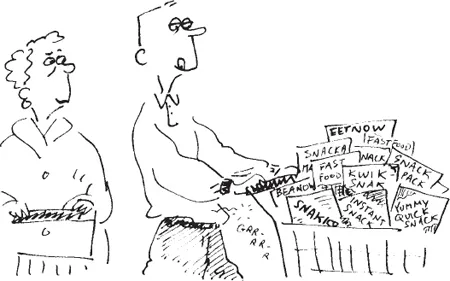
There is nothing wrong with buying products we like, but was this a conscious decision or did the final bill come as a shock? The objective shopper starts out with a checklist and then consciously avoids buying any items that are not on the list.
Similarly, the skilled negotiator always prepares a checklist of objectives – a ‘shopping list’ – and uses it to compare actual results from meetings with those expected. Any move away from the original plan is then a conscious decision and a target for trading off concessions from the opponent.
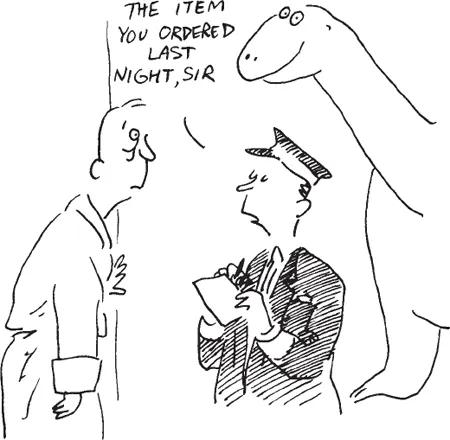
Skilled negotiators rarely negotiate without any kind o...
Table of contents
- Cover
- Title
- About the Author
- Introduction
- Prologue
- Sunday: Creating the right environment
- Monday: Researching your objectives
- Tuesday: People and places
- Wednesday: Breaking the ice
- Thursday: The agenda
- Friday: Concluding
- Saturday: Learning from your experiences
- 7 × 7
- Answers
- Personal Action Plan
- Copyright
Trusted by 375,005 students
Access to over 1.5 million titles for a fair monthly price.
Study more efficiently using our study tools.
Frequently asked questions
Yes, you can cancel anytime from the Subscription tab in your account settings on the Perlego website. Your subscription will stay active until the end of your current billing period. Learn how to cancel your subscription
No, books cannot be downloaded as external files, such as PDFs, for use outside of Perlego. However, you can download books within the Perlego app for offline reading on mobile or tablet. Learn how to download books offline
Perlego offers two plans: Essential and Complete
- Essential is ideal for learners and professionals who enjoy exploring a wide range of subjects. Access the Essential Library with 800,000+ trusted titles and best-sellers across business, personal growth, and the humanities. Includes unlimited reading time and Standard Read Aloud voice.
- Complete: Perfect for advanced learners and researchers needing full, unrestricted access. Unlock 1.5M+ books across hundreds of subjects, including academic and specialized titles. The Complete Plan also includes advanced features like Premium Read Aloud and Research Assistant.
We are an online textbook subscription service, where you can get access to an entire online library for less than the price of a single book per month. With over 1.5 million books across 990+ topics, we’ve got you covered! Learn about our mission
Look out for the read-aloud symbol on your next book to see if you can listen to it. The read-aloud tool reads text aloud for you, highlighting the text as it is being read. You can pause it, speed it up and slow it down. Learn more about Read Aloud
Yes! You can use the Perlego app on both iOS and Android devices to read anytime, anywhere — even offline. Perfect for commutes or when you’re on the go.
Please note we cannot support devices running on iOS 13 and Android 7 or earlier. Learn more about using the app
Please note we cannot support devices running on iOS 13 and Android 7 or earlier. Learn more about using the app
Yes, you can access Negotiation Skills In A Week by Peter Fleming in PDF and/or ePUB format, as well as other popular books in Personal Development & Business Skills. We have over 1.5 million books available in our catalogue for you to explore.