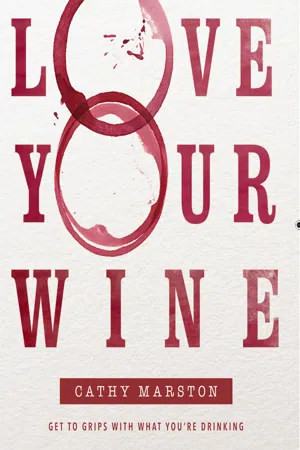
• Ever felt patronised by a waiter because of your wine choice? • Been on the sharp end of comments about your taste in wine: "Pink wine, really?" • Had your pronunciation of wine terms corrected? • Confused about whether it's OK to drink red wine with pasta? • Had that uncomfortable feeling you've been conned into paying too much for a bottle of wine in a restaurant? If you answer yes to any of these questions, then you need to read this book. Cathy Marston takes you on a wine appreciation journey from easy drinking sweets, through the popular sauvignon blancs (sew-vin-yon blonks), bubblies, dessert wines and on to the fuller reds, with the sole aim of giving you confidence in your wine choices. The confidence to enjoy drinking wine; to see it as a pleasure, not a potential source of embarrassment; and above all, to help you become confidently curious about trying something new. Because the real secret of wine success is that the more you drink, the more you know. Admittedly, the less you probably remember, but hey – you can't have everything.
WELL, IT’S GOOD FOR WEDGING OPEN DOORS, SWATTING FLIES, PROPPING UP WOBBLY RESTAURANT TABLES – AND YOU MAY EVEN WANT TO READ BITS OF IT AS WELL. I SAY ‘BITS’, BECAUSE I REALLY DON’T MIND IF YOU DON’T READ IT ALL.
Some of you may already be eager, curious, adventurous drinkers who are greedy to find out more about your favourite tipple, and will hopefully find lots of answers and starting points among these august pages. On the other hand, some of you may have very little interest beyond drinking the wine that you already enjoy – and that’s also fine. When it comes to wine, there are far too many snobs, experts, fundis and taste-autocrats, all of whom will lecture you on what you should be drinking, rather than helping you get the most out of the wines you enjoy. Sure, if you’re looking for something new, then this book can also help you with your search, but if you like drinking simple, uncomplicated, everyday wines and see no need to change, then neither do I.
So this book is structured as a kind of ladder to wine drinking. No one is saying you have to start at the bottom rung; but no one is saying you have to reach the top one either. There are eleven chapters that are named after certain styles of wine, so whichever style you currently enjoy, this should be your starting point. You may want to go back and read the previous chapters to see if there’s anything you didn’t already know or that you might find interesting. Or you may be eager to find out about some styles you are unfamiliar with – in which case, read ahead, it’s up to you. So, start where you feel comfortable and stop when you’re happy with what you’re drinking – you can always come back later to find out more.
WINE TECHS
These chapters are quite brief because they may be a little bit technical – not much, but maybe a little. If you’re the kind of person who doesn’t want to know what they’re drinking beyond the fact that it says ‘wine’ on the label, feel free to ignore these sections. On the other hand, they do contain useful and interesting information that will stand you in excellent stead at a school fundraising quiz night or when you want to show off your knowledge to a snotty sommelier or other expert.
These chapters are intended as snippets to explain winemaking know-how in steps, rather than giving you all the information at the beginning, freaking you out and sending you shrieking away from the wine aisles in horror and desperation. Each ‘wine tech’ will add a little more information each time, taking you to the next step on the wine ‘ladder’. Read them or don’t read them. As you like.
WINE PROS IN THE KNOW
I have the attention span of a gnat – oh look, a puppy – so I’ve included interviews with some professionals to vary the tone and give you some insight provided by people in South Africa’s wine industry. We have so many fascinating, charismatic, passionate and interesting wine folk in South Africa, it seems a shame not to give them a bit of space where they can tell you what they think about wine. Plus, it was a good excuse to sit and chat with them, and drink. Score.
WINE RECOMMENDATIONS
In each chapter, I’ve suggested a few wines that you may want to try in sections called ‘Try these’. Most of them should be readily available, but if you can’t find them ask your retailer to suggest something similar. The suggestions are intended to be the next-step wines, so they probably won’t be the old favourites you’re already drinking but, hopefully, they will help broaden your taste horizons without scaring you back into the arms of your tried-and-tested tipples – it’s all about baby steps here.
Wines are best enjoyed with friends, so don’t make a big fuss about trying these wines in a formal kind of tasting set-up. Just take a second or two for that first sip, think about the flavours, think about things like sugar levels, acid levels, tannins (don’t panic – there will be explanations of all these and more later). Then swallow, have one more 30-second think about whether you actually like this wine (always the most important consideration) and if you do, then fill your glass and enjoy.
FOOD AND WINE MATCHES
I know a lot of people who believe that everything is better with bacon but, personally, I believe everything is better with wine. Not that I get hung up on perfect food–wine pairings or anything – in fact, quite the opposite. I think that the wine you enjoy will always taste better with food than the wine that you’re TOLD is a good match, so you must drink it. Because everyone is different, no one’s palate works quite the same way and despite the best efforts of all food-and-wine-matching Nazis, if you don’t drink red wine, then you just don’t drink red wine.
So I’ve made a few suggestions and given you a couple of things to think about if you want to try match some food with some wines. But, in general, be confident with your choices and don’t think too hard about it because most wine kind of goes with most food. And that’s the secret truth nobody else will tell you, except me.
Finally, there is a glossary of wine-related terms at the back of the book that you can use to impress people, or to remind yourself of the meanings of some of the (very few) technical words you’ll find as you read.
So that’s it. Treat this book like a swimming pool – dip your toes in to test the water, leap in from any point that takes your fancy, splash about, enjoy yourself, then when you’re exhausted, lie down in the sunshine and sip a glass of something delicious.
If you’ve got a question and can’t find the answer, then feel free to ask me directly. You can find me on social media or via the website www.thewinecentre.co.za. The only stupid question is the one you don’t ask, so get in touch and tell me what’s on your mind. I’ll be sipping – I mean sitting – waiting for your call.
PS – it’s worth mentioning that what I’m telling you about winemaking in this book is the ‘normal’ way things happen in the wine world. Sure, you may come across a winemaker who does the opposite to what I’ve described, because there are exceptions to everything and nothing more so than in the world of wine. This book tells you what generally happens, so please don’t waste your time and mine by telling me I’m wrong and that so-and-so applies a winemaking process differently. I know this already, and your time would be much better spent chilling out and drinking more wine.
The wine is bottled and a label stuck on it, and then you and I, dear reader, spend our hard-earned cash buying it, drinking it and hopefully enjoying it. And that is it. Winemaking 101 in a nutshell. You can stop reading now – you know everything.
Wine tech
No. 1
THE ABSOLUTE BASICS OF WINEMAKING (THE MINIMUM YOU NEED TO KNOW)
I KNOW I SAID THAT YOU DON’T NEED TO READ THE ‘WINE TECH’ SECTIONS OF THIS BOOK, BUT IF YOU CAN POSSIBLY SCREW UP THE COURAGE TO TRY JUST ONE OF THEM, THIS IS THE ONE TO READ. ’CAUSE IT WILL BE USEFUL, I PROMISE.
Okay – first things first. Wine is made from grapes. I know that there’s rice wine and elderberry wine etc., but let’s not go there right now okay? Wine is made from grapes – full stop. These are not the same as the table grapes you get at the supermarket, but a whole load of individual grape varieties specially ‘bred’ over the years for making wine, and they all have different flavours and characteristics. It’s kind of like apples – think of a tart Granny Smith, a crunchy Golden Delicious, a sweet Pink Lady – different flavours and textures, but they’re all still apples. And that’s how grapes are too.
So, wine is made from grapes, and grapes are a fruit. We don’t eat fruit when it’s not ripe: we wait until the sun has ...
Table of contents
Cover
Title page
Copyright page
Dedication
Contents
Introduction
1 How to use this book
2 Wine tech 1: The absolute basics of winemaking (the minimum you need to know)
3 Sweet and semi-sweet white wines
4 Sweet and semi-sweet rosés (pink wines)
5 Wine tech 2: Keeping it dry
6 Unwooded dry white and pink wines
7 Wine tech 3: What’s the deal with wood?
8 Wooded white wines
9 White grapes 101
10 Wine tech 4: Red wines (the extra step of getting colour)
11 Light and fruity red wines
12 Wine tech 5: Wine faults
13 Full-bodied red wines
14 Black grapes 101
15 Wine tech 6: Fizzing it up
16 Sparkling wines
17 Wine tech 7: Sweets for my sweet, sugar for my honey
18 Sweet dessert wines
19 Wine tech 8: Putting the ‘oomph’ in fortified wines
20 Fortified wines
21 Now what?
Glossary of wine terms
Trusted by 375,005 students
Access to over 1.5 million titles for a fair monthly price.
Study more efficiently using our study tools.
Frequently asked questions
Yes, you can cancel anytime from the Subscription tab in your account settings on the Perlego website. Your subscription will stay active until the end of your current billing period. Learn how to cancel your subscription
No, books cannot be downloaded as external files, such as PDFs, for use outside of Perlego. However, you can download books within the Perlego app for offline reading on mobile or tablet. Learn how to download books offline
Perlego offers two plans: Essential and Complete
Essential is ideal for learners and professionals who enjoy exploring a wide range of subjects. Access the Essential Library with 800,000+ trusted titles and best-sellers across business, personal growth, and the humanities. Includes unlimited reading time and Standard Read Aloud voice.
Complete: Perfect for advanced learners and researchers needing full, unrestricted access. Unlock 1.5M+ books across hundreds of subjects, including academic and specialized titles. The Complete Plan also includes advanced features like Premium Read Aloud and Research Assistant.
Both plans are available with monthly, semester, or annual billing cycles.
We are an online textbook subscription service, where you can get access to an entire online library for less than the price of a single book per month. With over 1.5 million books across 990+ topics, we’ve got you covered! Learn about our mission
Look out for the read-aloud symbol on your next book to see if you can listen to it. The read-aloud tool reads text aloud for you, highlighting the text as it is being read. You can pause it, speed it up and slow it down. Learn more about Read Aloud
Yes! You can use the Perlego app on both iOS and Android devices to read anytime, anywhere — even offline. Perfect for commutes or when you’re on the go. Please note we cannot support devices running on iOS 13 and Android 7 or earlier. Learn more about using the app
Yes, you can access Love Your Wine by Cathy Marston in PDF and/or ePUB format, as well as other popular books in Art & Culinary Arts. We have over 1.5 million books available in our catalogue for you to explore.