- English
- ePUB (mobile friendly)
- Available on iOS & Android
eBook - ePub
About this book
This book proposes a new framework to effectively manage both offensive and defensive marketing strategies. It reinterprets the competitive challenge as a circular journey, that is, an endless sequence of three competitive "seasons." The authors call them the games of movement, imitation, and position.
Information
1
The Revolution of the Competitive Games
1.1 Change and circularity of events
The “revolution” in the title of this chapter is meant in the astronomical sense, that is, the movement of a body (a competitive arena, in our case) which makes an elliptical orbit, ending its journey where it began. Revolution is also intended in the etymological sense, with the prefix “re” denoting an orientation toward a new state, along with a sense of abrupt change, severing all ties with the past.
The circularity of our destiny is a theme taken up by many throughout the ages, long before and far better than we do here: from the palingenesis of the Stoics to Giambattista Vico’s historical recurrence, from Quesnay to Leontief’s economic flow, from James Joyce to Don Fabrizio in The Leopard. If today’s leaders want to be tomorrow’s leaders, they have to make everything change. If today’s followers want to become tomorrow’s leaders, they have to make everything change too.
Proactive change is the categorical imperative of the circular view of competitive confrontation that we propose in this book. To be effective, this change can not be based on contraposition of forces, but on the novelty of its form. This is a key message our book aims to formalize: a strategy of continuously overturning orthodoxies, in light of the following:
•Today’s iconoclasm will in turn become tomorrow’s orthodoxy in an endless competitive cycle.
•Every revolution brings with it new risks as well as new opportunities: we have to know when the time is right to start a revolution, or to join someone else’s, or to keep the peace.
•We have to know how to alternate orthodox and unorthodox maneuvers and include both in a portfolio of strategic games balancing risks and opportunities.
•Ultimately, the firm has to know how to govern the different seasons of its competitive cycle by using different strategic approaches and competencies.
1.2 Paradigms for the proactive firm
The success stories we tell in the pages that follow are accounts of organizations that have pursued proactive behavior with discipline and determination, focusing on reinventing initiatives, creating new markets, and redefining their destinies. The evidence we offer attests to the fact that firms incapable of anticipating and driving change have seen their market shares shrink dramatically. Such failures, we must remember, are as commonplace in exceptionally expanding sectors as in declining ones; a case in point is the emblematic example of the old IBM in personal computers.
The inability to face change is a classic characteristic of those organizations that are hostages of their histories, their myths, and their past triumphs. Today a firm’s survival is guaranteed by its ability to drive the market and its entropy with an always dynamic, holistic approach. This is typical of a flexible, integrated, agile, and innovative firm – in other words, a special firm with unique traits that lives up to the definition of proactive (Valdani, 2000).
Proactive is a word we chose with an eye to etymology. The suffix pro, originally deriving from Sanskrit, in Greek means not only to go beyond, to advance, but also to make forecasts. The word active comes instead from the Latin actus as the past participle of the verb agere, meaning to act, to push ahead, to lead forward, to go beyond. So in describing a firm, the adjective proactive refers to the ability to do the following:
•to deal with events and consequences of events that have yet to occur, as did Toyota when it successfully launched the Prius as far back as 1997, when eco-friendly issues were still far in the future;
•to plan for the future while governing the present, as is done by the most farsighted petroleum companies that are working to reinvest today’s profits from black gold to create and quickly develop new competencies in new markets;
•to define its destiny so as to redefine the destiny of the sector where it does business, as did Starbucks, which we discuss below;
•to discover new solutions by thinking beyond the short-term, beyond tradition, and beyond tradeoffs, as did Gore-Tex with fabrics that are both waterproof and “breathable” at the same time;
•to create value by nurturing entrepreneurial spirit, teamwork, and the discipline of creativity, as does 3M, by continuously launching an amazing number of new products;
•to learn the art of co-evolution, as does Apple, which owes its success to an impressive network of partners and application developers;
•to reinvent itself and its markets, as Google is striving to do by turning the online search sector into an infinite editorial and advertising market.
In the pages that follow, we show how we can identify a proactive firm by means of:
•A metatheory, that is a broader, more comprehensive conceptual framework;
•Three constructs, that is three fundamental concepts;
•Three paradigms, that is three theoretical models specific to the study of firms.
As regards the first point, the idea of the proactive firm is conceptually rooted in chaos and complexity theory, because such a firm self-organizes and behaves in ways typical of a complex proactive system (Kauffman, 1995; Brown and Eisenhardt, 1998; Sanders, 1999). A similar system adapts to change, overcoming internal turbulence and entropy. From this perspective, complexity theory describes how order and structure appear and grow through a process of adaptation. This process is set in motion when the system learns new information or new knowledge that alters its original state of balance, propelling it into a new state of chaos. In this context, chaos is not something that occurs in an organized world; instead it is the mechanism by which change begins and self-organizes, and in doing so it releases new energy.
The origins of a proactive firm are necessarily grounded in this metatheory. In today’s competitive arena, complexity becomes the unpredictable attractor that serves to interconnect the various parts of the system (individuals, teams, departments, and any other organizational unit), driving the system as a whole toward the continual generation of new growth opportunities.
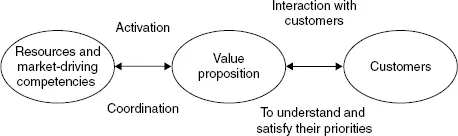
Figure 1.1 The constructs of a proactive firm
As regards the second point, a proactive firm centers on these three constructs (Figure 1.1):
1)the customer;
2)the value proposition;
3)the stock and network of tangible and intangible resources needed in order to offer the customer the best possible value proposition.
The central focus of the first construct defining a proactive firm is the clientele, a reflection of the fact that the firm exists solely and exclusively to serve the customer. Surprisingly, pages upon pages in management and economics literature are dedicated to delineating the whys and wherefores of the firm’s existence while often neglecting to mention its true purpose: to serve its customers. It is the customer who represents the primary source of value generation for the firm, and who is indeed the only true capital asset. This is the reason why our description of a proactive firm begins from the customer’s perspective, and emphasizes an ability to listen, to understand, and to predict the customer’s priorities expressed in terms of the needs, desires, and benefits she or he seeks.
The second construct involves creating attractive value propositions to transfer to customers. These offerings reflect the firm’s competitive ability to integrate the needs of its customers with the resources and competencies it must call into play to generate value solutions for the market.
The third construct highlights the firm’s network of resources and market driving competencies, either stock to be tapped internally or accessed externally in the network of suppliers and complementary firms. Through knowledge leveraging and knowledge building, this stock of resources allows the firm to activate and coordinate processes that serve to generate, offer, and deliver its value propositions to customers.
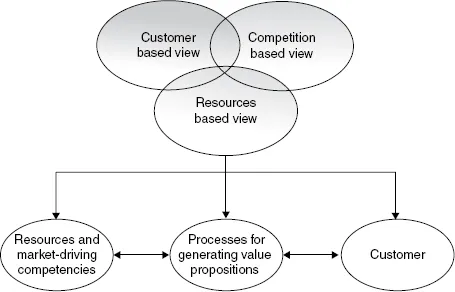
Figure 1.2 Paradigms of the proactive firm
Underpinning these three constructs, in turn, are three conceptual paradigms which we can consider as the theoretical foundations of the proactive firm (Figure 1.2).
The first is the Customer Based View.1 This perspective stresses that the future value of a firm depends on its ability to do the following:
1.to acquire new customers;
2.to grow the profitability of the client portfolio;
3.to inspire customer loyalty by managing customer relationships.
The Customer Based View prompts the firm to focus on: 1) how customer choices and preferences can shape the possibilities of capitalizing value; 2) how the value proposition should be designed and offered to enhance customer relationships; and lastly 3) how this value should be shared by buyer and seller.
The second paradigm reflects the Resource Based View,2 which holds that the value generated by the firm is contingent on the specificity, quality and variety of its stock of resources and competencies. The firm’s market behavior, in turn, is conditioned by its ability to leverage and build these resources and competencies to give its maneuvers a competitive edge in current markets, or to create and enter new ones.
The Competition Based View is the third paradigm that we propose in this book. This perspective suggests that a firm’s ability to generate value depends on the competitive game it is playing, which takes the form of three different cycles: the Movement Game, the Imitation Game, or the Position Game. For each one, the firm needs an appropriate stock of resources and competencies to enable it to proactively determine the most effective competitive maneuvers to guarantee market success. In the following sections we explore the theoretical rationale and practical implications of this paradigm.
To summarize, thanks to our model, we can identify the underlying constructs of the proactive firm. What is more, by integrating the three different paradigms, we can also interpret and explain firm behavior in the market from a theoretical perspective.
1.3 The Competition Based View: competitive games as the “seasons” of a sector
On 3 December 1994, Sony launched its first PlayStation (PS), a veritable revolution in terms of technology, performance, communication, and positioning – and all this in a sector that for years had been experiencing a dramatic decline. With the advent of the personal computer, in fact, many analysts had pronounced the sector of video game consoles dead, especially those who clearly recalled the sector life cycle graph that was drilled into their heads in business school. Against all odds, Sony took a gamble that paid off by shattering every record: 100 million PlayStations sold by the end of 2005.
Naturally, a triumph of this magnitude could not help but attract the attention of aggressive new enterprises. By Christmas 2001, Sony found itself facing a d...
Table of contents
- Cover
- Title page
- 1 The Revolution of the Competitive Games
- 2 The Movement Game: Breaking Down Orthodoxies
- 3 The Maneuvers of the Movement Game
- 4 The Barriers to Change
- 5 Defense Strategies in the Movement Game
- 6 The Imitation Game
- 7 Creating Barriers to Imitation
- 8 The Position Game
- 9 Offensive and Defensive Maneuvers in the Position Game
- 10 The Final Frontier of Value
- Notes
- Bibliography
- Index
Trusted by 375,005 students
Access to over 1.5 million titles for a fair monthly price.
Study more efficiently using our study tools.
Frequently asked questions
Yes, you can cancel anytime from the Subscription tab in your account settings on the Perlego website. Your subscription will stay active until the end of your current billing period. Learn how to cancel your subscription
No, books cannot be downloaded as external files, such as PDFs, for use outside of Perlego. However, you can download books within the Perlego app for offline reading on mobile or tablet. Learn how to download books offline
Perlego offers two plans: Essential and Complete
- Essential is ideal for learners and professionals who enjoy exploring a wide range of subjects. Access the Essential Library with 800,000+ trusted titles and best-sellers across business, personal growth, and the humanities. Includes unlimited reading time and Standard Read Aloud voice.
- Complete: Perfect for advanced learners and researchers needing full, unrestricted access. Unlock 1.5M+ books across hundreds of subjects, including academic and specialized titles. The Complete Plan also includes advanced features like Premium Read Aloud and Research Assistant.
We are an online textbook subscription service, where you can get access to an entire online library for less than the price of a single book per month. With over 1.5 million books across 990+ topics, we’ve got you covered! Learn about our mission
Look out for the read-aloud symbol on your next book to see if you can listen to it. The read-aloud tool reads text aloud for you, highlighting the text as it is being read. You can pause it, speed it up and slow it down. Learn more about Read Aloud
Yes! You can use the Perlego app on both iOS and Android devices to read anytime, anywhere — even offline. Perfect for commutes or when you’re on the go.
Please note we cannot support devices running on iOS 13 and Android 7 or earlier. Learn more about using the app
Please note we cannot support devices running on iOS 13 and Android 7 or earlier. Learn more about using the app
Yes, you can access Competitive Strategies by E. Valdani,A. Arbore in PDF and/or ePUB format, as well as other popular books in Business & Business Strategy. We have over 1.5 million books available in our catalogue for you to explore.