eBook - ePub
New Argentine and Brazilian Cinema
Reality Effects
- English
- ePUB (mobile friendly)
- Available on iOS & Android
eBook - ePub
About this book
Reality Effects brings together the reflections of leading film scholars and critics from Latin America, the UK and the United States on the re-emergence of the real as a prime concern in contemporary Argentine and Brazilian film, and as a main reason for the acclaim both cinematographies have won among international audiences in recent years.
Information
Subtopic
Art GeneralC H A P T E R 1
Camera lucida
José Carlos Avellar*
1
Every inch, she is the stern mother who rebukes her son for misbehaving (“They call you to go stealing and you just go?”) instead of dedicating himself to his work (“You could be washing cars or selling sweets on the train”). She tells her daughters off (“You are too young to be a mother. But you just have kids anyway! Well, take care of them, then!”) and does not accept the argument that they robbed out of necessity (“There is no excuse. You don’t have a job? Get one!”). She gets angry because she is afraid of losing her son (“Do you want them to kill you? When the shooting starts, you’re the one who’ll get the bullet”). She reminds her son of the sacrifices that have been made for him (“Your father had a hard time bringing you up and not for you to be a thief”). She loses her patience with the son who committed a stupidity (“A guy you don’t even know comes up to you and asks you to get hold of a gun and you do?”).
The son lowers his head (“Yes, mother”). The daughter lowers her voice (“We only snatched it and ran away”). The sons and daughters talk with choked voices, suspension dots and lots of silences; their sentences start and falter (“Anyway . . . I bumped into him at that place. . . . So he called me over to do this thing. . . . So I was like. . . . But then he said: ‘Beat it’ . . . so, I left”).
Juízo [Behave] (Maria Augusta Ramos, 2008): in the court room of Rio de Janeiro’s Second Juvenile Court, called upon to deliver justice in a context where the parents have not been granted the least chance to educate their children, a female judge appears like the composite image of the various mothers who accompany their offspring at these trials. Part of her is the mother who weeps because her daughter does not want to come home (“so many things depend on me alone; I have to be mother as well as father, offer love and affection as well as correct them”). Another part, the mother who explains with her head slightly inclined that she is unable to leave the favela where she lives and so take her son away from bad influences. Another part, the mother who defends the extreme act of her son who killed his father with a knife (“He hit him with his belt every day. He managed to break the clasp. My son even fainted. Twice he fainted”). And another part, one of those mothers who come to the Pedro Severino Institute for juvenile delinquents to embrace their sons in a sad silence that is barely interrupted by the muffled sound of the hall where the families are reunited on visiting days. The female judge is in part all of this, but at the same time she is much more than this: she is a desperate attempt to maintain a minimum of lucidity.
Beyond the not-all-too-distant image of the juvenile delinquents’ mothers, the juíza—that is to say, the real judge but also, above all, the judge as a character in the film—is herself not unlike a camera. In those scenes where the sons have no future whatsoever, in those situations where the mother does not have the means to avoid her son being victimized by the violence and chaos around him, she assumes a role between that of a mother and a step-mother: she is the voice of authority that sternly rebukes the girl who became a mother while still being a girl herself and she is the voice of authority that almost falls silent when faced with the minor who killed his father with a knife, thus turning into an aggressor as well as a victim. Being camera, lens, and zoom, the judge tries to stay focused, get the light right, and pays attention to how the scene is framed.
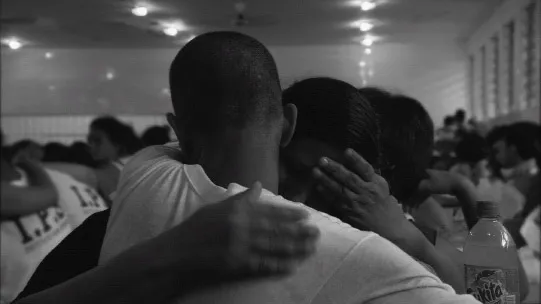
Figure 1.1 Juízo [Behave] (Brazil, 2007), directed by Maria Augusta Ramos, 2008.
The image has two cameras, one appearing on stage in the figure of the judge and one filming the scene; both teach us to listen to what is being said in the court room and also to what is not being said. They teach us how to see society as an entity composed of parts that do not speak to one another. The court room produces a temporary fusion: in fact, the judge and the young offender, both of whom appear in the same frame, inhabit different spaces. One image appears within the other. One image is captured by the other. As if the two were one. But in reality they belong to universes as distant from each other as the favela is removed from the city: a world away yet fused; the favela is inside the city at the same time as it is outside the city. What we are confronted with is the fact that the favelas of the city speak one language and the city of favelas quite another.
The judge asks the young offender if it was worth abandoning school and family: “Was it worth going to prison?” He does not understand the question. He would like to say “No,” but, feeling pressured (“I got nervous”) since the judge talks a lot and very fast, he no longer knows what he ought to say and instead of “No” he answers “Yes”; he says what he did not want to say, namely that it was worth going to prison.
With the images of the cells at the Padre Severino Institute, of the streets and houses of the favela and, especially, of the court rooms of the Juvenile Court, Juízo shows a composite image of an entire social mechanism that produces the young offender. During the hearings, more than just the actual hearing is shown. The judicial process also reveals (by making us see what it sees) the social inequality that leads to stealing or selling drugs in order to buy a pair of trainers that cost more than the minimum wage. Silent and attentive, from behind the accused, facing the judge and the public prosecutor and next to the defense lawyer the camera does not lose sight of that which becomes apparent during the hearing: the impossibility of dialogue. The language appears to be the same, but the words refer to different realities and experiences.
The public prosecutor, the defendant, the defense lawyer, the judge, the examining magistrate, the relatives of the accused: no one is sure if they heard what they have just heard. What to do? What action should be taken? What to do with the delinquent who escaped from a juvenile detention centre after his freedom had been declared? What to do with the girl-mother who stole a camera from a tourist in Leblon in order to feed her daughter? What to do with the girl who prefers going to jail to returning home? What to do? Look them straight in the eye is what the film suggests. Start with seeing eye to eye; face the question.
As it enters the court room, cinema teaches us to listen to what is said between the lines and to see this slice of documented reality as a real scene and, at the same time, as a film scene. As a scene that uses what is present to refer to what is absent. As a scene that is aware that in film every shot implies a reverse shot, that every frame also talks about what is outside of the frame. The act of filming in the court room tells us—as film usually does, perhaps even more so—that it is important to see things in motion.
All of a sudden, the camera takes the viewpoint of the judge and the viewer is directly confronted with the young offender who is being interrogated—the one who stole a bicycle, the one who snatched a camera from a tourist, the one who took part in an armed robbery, the one who refuses to return home, the one who climbed a wall to go to school, the one who killed his father because he hit him and his mother. They all talk straight to the camera.
The face of the young offender who answers the judge’s questions is, so to speak, only half of the image that is presented to the viewer. To see the face of the young offender who is being interrogated is to see, at the same time, the face of the judge, at that moment off camera. In seeing this image, or any cinematographic image for that matter, the viewer is simultaneously aware of what is on screen and of the point of view from which the shot is taken. It is as if the half-a-person that is the viewer in the course of the film jumps out of him or herself in order to look back at the scene from another point of view. In the cinema, while the film lasts and just as in a dream, we are an amalgamation: half of us watches the scene from a little distance, while the other half adopts the screen character’s the point of view.
Since the identification of young offenders is against the law, Juízo offers an image that is the result of a procedure that appears to be straightforward: the offenders are replaced by young nonoffenders who repeat in front of the camera what the defendants said during interrogation by the judge. What seems straightforward is, in fact, anything but straightforward, since the aim here is not to show the court the way it is shown in most fictional films, with a gaze that moves from shot to reverse shot and back to the shot. Before the camera, the youngsters are interpreters—but not quite actors. They live in conditions very similar to those of the real offenders who are filmed with their backs to the camera. They recite texts and recreate the interrogation, not because they have been trained to do so, nor because they have a natural ability for acting, but because they have direct life experience. This is worth reiterating: the acting is not the result of a method, of a convincing effort by the actor. To prepare themselves, these youngsters watched footage from the hearings. They memorized the words they had to say in the dock of the accused; they repeated the responses for the camera filming the scene from the judge’s seat. The camera, at that moment perhaps more intensely than at any other moment, records. It does not record the interpretation, but the person who interprets. It records the interpreter. Juízo does not actually show the character played by the nonoffending youth, but the youth who plays himself. These quasi actors are not part of the scene; they are part of another scene that is superimposed on the one in which they play; they play the persons they really are. Although they are visible and on camera, it is as if they were off camera, as if they were merely a shadow of what is highlighted by the dramatic point of view. Without losing sight of the light, however, we perceive the shadow. That which in fiction would be the mise-en-scène collapse—that the actor for one reason or another is more apparent than the character he is supposed to play—here, by contrast, makes the scene more expressive.
The viewer is invited to establish another relation with the image: the judges, public prosecutors, defense lawyers, examining magistrates, relatives, and personnel of the Second Juvenile Court and the Pedro Severino Institute are perceived as elements taken from reality and used, so to speak, to stage a quasi-fictitious scene. As is usual in film, the meaning of the image exceeds the mere recognition of its formal constituents. The footage, the part of the actual scene that was shot, is the raw material for the construction of a representation, a cinematographic composition. Reality turned into image becomes fiction; and vice versa, fiction becomes reality. The youngsters who repeat the responses the defendants give during the actual trial are elements of fiction deployed in order to go beyond the representation so as to return to the reality that lies at the root of the scene. This fiction, without ceasing to be what it really is—a staged scene—is more than just that: it mutates into a live recording; it documents the reality of the quasi actors who are called upon to reconstruct an experience that took place in reality and that, directly or indirectly, was also experienced by them. The young offenders, the ones who actually stood in the defendant’s dock, are their alter egos. In playing the other, the young nonactors play themselves. The physical resemblance between the boys and girls whose backs we see in the court room and the boys and girls who turn to face the camera is not due to some cinematographic special effect. They have the same repressed gestures, the same timid voices: they are, to all intents and purposes, the same persons.
The simultaneous presence of the two I’s can perhaps be better understood if we establish a parallel between Juízo and Jogo de cena [Playing] (Eduardo Coutinho, 2008). Both films were shot and released at about the same time, and both use similar procedures: the montage of fictional scenes (perhaps it would be better to say staged scenes) together with real scenes (perhaps it would be better to say nonstaged scenes). We usually distinguish between real and fictitious scenes, but it is doubtful whether we can speak of fiction or, indeed, of reality in relation to Maria Augusta Ramos’s and Eduardo Coutinho’s films. In their works, fiction is not content with being the freely imagined scene that it actually is, nor is the real scene content to be the direct reflection of reality that it actually is. What we have in both films is a reconstruction, a reflection that inserts into the image a fragment of reality and its alter ego, or, if we prefer, a fragment of fiction and its alter ego. This is a radicalization of behavior that is the essence of cinematography.
2
Let us imagine reconstruction not as a way of reflecting an event that actually took place, but as a way of reflecting on the event and thus of representing reflection, taking the word as an element in a representational game—playing at playing—but also referring to the double meaning of the word “reflection.”
The simultaneous presence in the image of a real person and his or her other self results from a desire not to be limited to recording the visible world by means of the cinematic apparatus—not to re-present or present anew, but to represent reality. To make the unseen visible. To project onto the screen a cinematic image and its alter ego, reality.1
Maybe one could say that consciously or unconsciously, the documentarist discusses a part of him or herself in the image of the other. He or she produces a kind of self-portrait through what is being filmed (as Eduardo Coutinho observes: “I only film the other in order to resolve some unhappiness within myself”).
To a greater or lesser extent, while they are filming, documentarists are not themselves any longer. They film as if they were another person. In the words of Cão Guimarães:
If my topic is reality, I cannot free myself from it, nor can it free itself from me. In the exercise of reciprocity—that generous form of surrender—various gradations of subjectivity are interacting. The question is not that of objectifying my own gaze turned towards reality, but to mingle my subjectivity with the subjectivity of the other. Sometimes emptying oneself, in the Zen Buddhist sense of the word, and sometimes augmenting one’s self until it overflows . . . while I am filming I am a different person, I am a cavalo de santo or “saint’s horse” as they say in Candomblé about those who embody spirits: I give form to something that is beyond my comprehension. (Guimarães, 2006: 126)
To make a documentary, agrees Geraldo Sarno, is to empty yourself out in order to film better: “A documentary is a poetic creation that documents a relation: I do not know anything about myself; I do not know anything about the other. The documentary happens when something in my relation to the other is illuminated and, to some extent, the other invades me” (Sarno, 2001: 36). The medium of film offers the film director, at the very moment he or she is filming, the same experience that is offered to the viewer who sees the entire film on screen: just as in the cinema where the I of the viewer merges with the I of the character on the screen, a documentary makes possible the absolute fusion between the self who is filming and the person who is being filmed. As João Moreira Salles observes: “The director surrenders part of his or her artistic control to reality; the film’s potential impact is handed over to people over whom he or she has no control” (Moreira Salles, 2000: 29).
To be more precise, perhaps it is impossible to say that the documentary happens when the one who films aligns him or herself with the one who is being filmed and, by anticipation, with the person who will see the film. In a documentary, the documentary maker occupies either his or her own place, or the place of the interviewee, or that of the viewer; the viewer, in turn, takes the place of the interviewee, or of the documentary maker, in the same way that the interviewee—more exactly, the person who is being filmed or, in a wider se...
Table of contents
- Cover
- Title Page
- Copyright
- Contents
- List of Illustrations
- Introduction
- 1 Camera lucida
- 2 Footprints: Risks and Challenges of Contemporary Argentine Cinema
- 3 Documentary Cinema and the Return of What Was
- 4 The Return of the Natural: Landscape, Nature and the Place of Fiction
- 5 Beyond Reflexivity: Acting and Experience in Contemporary Argentine and Brazilian Cinema
- 6 The Scene and the Inscription of the Real
- 7 Global Periphery: Aesthetic and Cultural Margins in Brazilian Audiovisual Forms
- 8 Exploding Buses: José Padilha and the Hijacking of Media
- 9 The Carandiru Massacre: Across the Mediatic Spectrum
- 10 December’s Other Scene: New Argentine Cinema and the Politics of 2001
- 11 In Praise of Difficulty: Notes on Realism and Narration in Contemporary Argentine Cinema
- 12 The Self as Other: Reality, Archive, and the Witness in Three Contemporary Latin American Films
- 13 The Documentary: Between Reality and Fiction, between First and Third Person
- Notes on Contributors
- Index
Trusted by 375,005 students
Access to over 1.5 million titles for a fair monthly price.
Study more efficiently using our study tools.
Frequently asked questions
Yes, you can cancel anytime from the Subscription tab in your account settings on the Perlego website. Your subscription will stay active until the end of your current billing period. Learn how to cancel your subscription
No, books cannot be downloaded as external files, such as PDFs, for use outside of Perlego. However, you can download books within the Perlego app for offline reading on mobile or tablet. Learn how to download books offline
Perlego offers two plans: Essential and Complete
- Essential is ideal for learners and professionals who enjoy exploring a wide range of subjects. Access the Essential Library with 800,000+ trusted titles and best-sellers across business, personal growth, and the humanities. Includes unlimited reading time and Standard Read Aloud voice.
- Complete: Perfect for advanced learners and researchers needing full, unrestricted access. Unlock 1.5M+ books across hundreds of subjects, including academic and specialized titles. The Complete Plan also includes advanced features like Premium Read Aloud and Research Assistant.
We are an online textbook subscription service, where you can get access to an entire online library for less than the price of a single book per month. With over 1.5 million books across 990+ topics, we’ve got you covered! Learn about our mission
Look out for the read-aloud symbol on your next book to see if you can listen to it. The read-aloud tool reads text aloud for you, highlighting the text as it is being read. You can pause it, speed it up and slow it down. Learn more about Read Aloud
Yes! You can use the Perlego app on both iOS and Android devices to read anytime, anywhere — even offline. Perfect for commutes or when you’re on the go.
Please note we cannot support devices running on iOS 13 and Android 7 or earlier. Learn more about using the app
Please note we cannot support devices running on iOS 13 and Android 7 or earlier. Learn more about using the app
Yes, you can access New Argentine and Brazilian Cinema by J. Andermann, Á. Bravo, J. Andermann,Á. Bravo in PDF and/or ePUB format, as well as other popular books in Media & Performing Arts & Art General. We have over 1.5 million books available in our catalogue for you to explore.