Why human nature is an aesthetic phenomenon—and why we need art and philosophy to understand ourselves
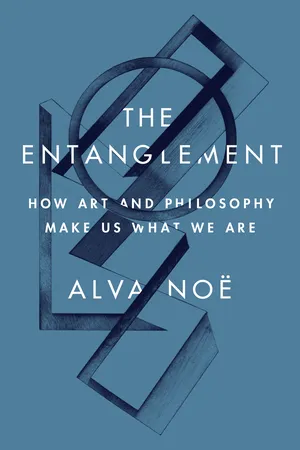
In The Entanglement, philosopher Alva Noë explores the inseparability of life, art, and philosophy, arguing that we have greatly underestimated what this entangled reality means for understanding human nature.
Life supplies art with its raw materials, but art, Noë argues, remakes life by giving us resources to live differently. Our lives are permeated with the aesthetic. Indeed, human nature is an aesthetic phenomenon, and art—our most direct and authentic way of engaging the aesthetic—is the truest way of understanding ourselves. All this suggests that human nature is not a natural phenomenon. Neither biology, cognitive science, nor AI can tell a complete story of us, and we can no more pin ourselves down than we can fix or settle on the meaning of an artwork. Even more, art and philosophy are the means to set ourselves free, at least to some degree, from convention, habit, technology, culture, and even biology. In making these provocative claims, Noë explores examples of entanglement—in artworks and seeing, writing and speech, and choreography and dancing—and examines a range of scientific efforts to explain the human.
Challenging the notions that art is a mere cultural curiosity and that philosophy has been outmoded by science, The Entanglement offers a new way of thinking about human nature, the limits of natural science in understanding the human, and the essential role of art and philosophy in trying to know ourselves.
- 256 pages
- English
- ePUB (mobile friendly)
- Available on iOS & Android
eBook - ePub
About this book
Information
Publisher
Princeton University PressYear
2023Print ISBN
9780691249575
9780691188812
eBook ISBN
9780691239293
Topic
PhilosophySubtopic
Art Theory & CriticismTable of contents
- Cover
- Title Page
- Copyright
- Dedication
- Epigraph
- Contents
- Preface
- Part I
- Part II
- Part III
- Acknowledgments
- Notes
- Bibliography
- Index
Trusted by 375,005 students
Access to over 1.5 million titles for a fair monthly price.
Study more efficiently using our study tools.
Frequently asked questions
Yes, you can cancel anytime from the Subscription tab in your account settings on the Perlego website. Your subscription will stay active until the end of your current billing period. Learn how to cancel your subscription
No, books cannot be downloaded as external files, such as PDFs, for use outside of Perlego. However, you can download books within the Perlego app for offline reading on mobile or tablet. Learn how to download books offline
Perlego offers two plans: Essential and Complete
- Essential is ideal for learners and professionals who enjoy exploring a wide range of subjects. Access the Essential Library with 800,000+ trusted titles and best-sellers across business, personal growth, and the humanities. Includes unlimited reading time and Standard Read Aloud voice.
- Complete: Perfect for advanced learners and researchers needing full, unrestricted access. Unlock 1.5M+ books across hundreds of subjects, including academic and specialized titles. The Complete Plan also includes advanced features like Premium Read Aloud and Research Assistant.
We are an online textbook subscription service, where you can get access to an entire online library for less than the price of a single book per month. With over 1.5 million books across 990+ topics, we’ve got you covered! Learn about our mission
Look out for the read-aloud symbol on your next book to see if you can listen to it. The read-aloud tool reads text aloud for you, highlighting the text as it is being read. You can pause it, speed it up and slow it down. Learn more about Read Aloud
Yes! You can use the Perlego app on both iOS and Android devices to read anytime, anywhere — even offline. Perfect for commutes or when you’re on the go.
Please note we cannot support devices running on iOS 13 and Android 7 or earlier. Learn more about using the app
Please note we cannot support devices running on iOS 13 and Android 7 or earlier. Learn more about using the app
Yes, you can access The Entanglement by Alva Noë in PDF and/or ePUB format, as well as other popular books in Philosophy & Art Theory & Criticism. We have over 1.5 million books available in our catalogue for you to explore.