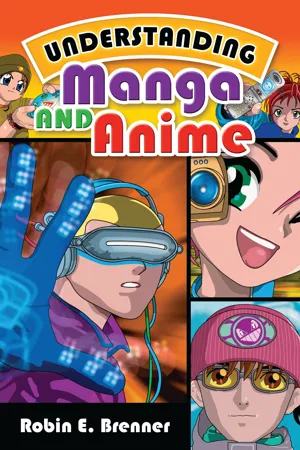
Teens love it. Parents hate it. Librarians are confused by it; and patrons are demanding it. Libraries have begun purchasing both manga and anime, particularly for their teen collections. But the sheer number of titles available can be overwhelming, not to mention the diversity and quirky cultural conventions. In order to build a collection, it is important to understand the media and its cultural nuances. Many librarians have been left adrift, struggling to understand this unique medium while trying to meet patron demands as well as protests. This book gives the novice background information necessary to feel confident in selecting, working with, and advocating for manga and anime collections; and it offers more experienced librarians some fresh insights and ideas for programming and collections. Teens love it. Parents hate it. Librarians are confused by it; and patrons are demanding it. Libraries have begun purchasing both manga and anime, particularly for their teen collections. But the sheer number of titles available can be overwhelming, not to mention the diversity and quirky cultural conventions. In order to build a collection, it is important to understand the media and its cultural nuances. Many librarians have been left adrift, struggling to understand this unique medium while trying to meet patron demands as well as protests. This book gives the novice background information necessary to feel confident in selecting, working with, and advocating for manga and anime collections; and it offers more experienced librarians some fresh insights and ideas for programming and collections. In 2003 the manga (Japanese comics) market was the fastest growing area of pop culture, with 75-100% growth to an estimated market size of $100 million retail. The growth has continued with a 40-50% sales increase in bookstores in recent years. Teens especially love this highly visual, emotionally charged and action-packed media imported from Japan, and its sister media, anime (Japanese animation); and libraries have begun purchasing both. Chock full of checklists and sidebars highlighting key points, this book includes: a brief history of anime and manga in Japan and in the West; a guide to visual styles and cues; a discussion of common themes and genres unique to manga and anime; their intended audiences; cultural differences in format and content; multicultural trends that manga and anime readers embrace and represent; and programming and event ideas. It also includes genre breakdowns and annotated lists of recommended titles, with a focus on the best titles in print and readily available, particularly those appropriate to preteen and teen readers. Classic and benchmark titles are also mentioned as appropriate. A glossary and a list of frequently asked questions complete the volume.
- 356 pages
- English
- PDF
- Available on iOS & Android
eBook - PDF
Understanding Manga and Anime
About this book
Information
Table of contents
- Cover
- Title Page
- Copyright Page
- Table of Contents
- Acknowledgments
- Introduction
- Chapter One: Short History of Manga and Anime
- Chapter Two: Manga and Anime Vocabulary
- Chapter Three: Culture Clash: East Meets West
- Chapter Four: Adventures with Ninjas and School girls: Humor and Realism
- Chapter Five: Samurai and Shogun: Action, War, and Historical Fiction
- Chapter Six: Giant Robots and Nature Spirits: Science Fiction, Fantasy, and Legends
- Chapter Seven: Understanding Fans and Fan Culture
- Chapter Eight: Draw in a Crowd: Promotion and Programs
- Chapter Nine: Collection Development
- Appendix A: Vocabulary
- Appendix B: Frequently Asked Questions
- Bibliography: Recommended Further Reading
- Creator and Titles Index
- Subect Index
Trusted by 375,005 students
Access to over 1.5 million titles for a fair monthly price.
Study more efficiently using our study tools.
Frequently asked questions
Yes, you can cancel anytime from the Subscription tab in your account settings on the Perlego website. Your subscription will stay active until the end of your current billing period. Learn how to cancel your subscription
No, books cannot be downloaded as external files, such as PDFs, for use outside of Perlego. However, you can download books within the Perlego app for offline reading on mobile or tablet. Learn how to download books offline
Perlego offers two plans: Essential and Complete
- Essential is ideal for learners and professionals who enjoy exploring a wide range of subjects. Access the Essential Library with 800,000+ trusted titles and best-sellers across business, personal growth, and the humanities. Includes unlimited reading time and Standard Read Aloud voice.
- Complete: Perfect for advanced learners and researchers needing full, unrestricted access. Unlock 1.5M+ books across hundreds of subjects, including academic and specialized titles. The Complete Plan also includes advanced features like Premium Read Aloud and Research Assistant.
We are an online textbook subscription service, where you can get access to an entire online library for less than the price of a single book per month. With over 1.5 million books across 990+ topics, we’ve got you covered! Learn about our mission
Look out for the read-aloud symbol on your next book to see if you can listen to it. The read-aloud tool reads text aloud for you, highlighting the text as it is being read. You can pause it, speed it up and slow it down. Learn more about Read Aloud
Yes! You can use the Perlego app on both iOS and Android devices to read anytime, anywhere — even offline. Perfect for commutes or when you’re on the go.
Please note we cannot support devices running on iOS 13 and Android 7 or earlier. Learn more about using the app
Please note we cannot support devices running on iOS 13 and Android 7 or earlier. Learn more about using the app
Yes, you can access Understanding Manga and Anime by Robin E. Brenner in PDF and/or ePUB format, as well as other popular books in Languages & Linguistics & Library & Information Science. We have over 1.5 million books available in our catalogue for you to explore.