At the turn of the century, Sigmund Freud's investigation of the mind represented a particular journey into mental illness, but it was not the only exploration of this 'territory' in the Austro-Hungarian Empire. Sanatoriums were the new tourism destinations, psychiatrists were collecting art works produced by patients and writers were developing innovative literary techniques to convey a character's interior life. This collection of essays uses the framework of journeys in order to highlight the diverse artistic, cultural and medical responses to a peculiarly Viennese anxiety about the madness of modern times. The travellers of these journeys vary from patients to doctors, artists to writers, architects to composers and royalty to tourists; in engaging with their histories, the contributors reveal the different ways in which madness was experienced and represented in 'Vienna 1900'.
eBook - ePub
Journeys Into Madness
Mapping Mental Illness in the Austro-Hungarian Empire
- 222 pages
- English
- ePUB (mobile friendly)
- Available on iOS & Android
eBook - ePub
Journeys Into Madness
Mapping Mental Illness in the Austro-Hungarian Empire
About this book
Trusted by 375,005 students
Access to over 1.5 million titles for a fair monthly price.
Study more efficiently using our study tools.
Information
Chapter 1

THE MAD OBJECTS
OF FIN-DE-SIÈCLE VIENNA
Journeys, Contexts and Dislocations
in the Exhibition ‘Madness and Modernity’
in the Exhibition ‘Madness and Modernity’

Between 2004 and 2008, the Arts and Humanities Research Council (AHRC) of Great Britain funded a collaborative research project on the links between mental illness, psychiatry and the visual arts in Vienna and the Habsburg Empire between 1890 and 1914, one of the results of which was the 2009–10 exhibition ‘Madness and Modernity’. There is an impulse towards completeness in sustained collaborative interdisciplinary research such as that undertaken for the AHRC project. By devoting the close, ongoing attention of several dedicated individuals to a particular topic (madness as a cultural artefact) in a defined location and time period (Vienna circa 1900), and by breaking down disciplinary barriers in order to shed light on that topic from as many angles as possible, we seek to fill in blanks, to overcome the fragmentation and losses caused by the operations of disciplinary specialisation and grand art historical narratives. A large-scale loan exhibition can be a way of pushing this research forward by focusing attention on the material objects that constitute the concrete basis of such a project. It can also be a dramatic way of confronting viewers with the physical results of such an interdisciplinary approach through surprising juxtapositions, especially between art and non-art in the context of a format (the loan exhibition) that is still associated with ‘high art’.
Such an exhibition, when seen as a finished product, and accompanied by a scholarly publication, involves the very public claiming and definition of a field of knowledge and interpretation. But at the same time, and possibly more than any other form of scholarly ‘output’, it is a construct beholden to and formed by numerous unpredictable contingencies. The journey towards the exhibition opening involves many dead ends and detours and requires the curators to grapple with the histories and discourses of institutions in and outside of the art world, of exhibition design, of media reception and more. My focus here, using ‘Madness and Modernity’ as a case study, is on how the act at the heart of the curating process, the assembling of objects into what Francis Haskell called an ‘ephemeral museum’, confronts us with the disorienting history of mobility of the objects themselves.1 We started out seeking to re-establish the forgotten links between art, madness and psychiatry in Vienna circa 1900, to stage a kind of homecoming in the evoked and imagined spaces of asylums, sanatoria and Viennese galleries. The exhibition did embody that ambition, but at the same time it bore multiple traces of the dislocations, changes of status and disappearances of objects and groups of objects (not all of them actually in the exhibition) in the intervening hundred years. It also drew attention to a kind of original displacement that characterised many of the ‘mad’ objects of fin-de-siècle Vienna.
Reconnecting
The exhibition, the first version of which was curated by Gemma Blackshaw and myself, was called ‘Madness and Modernity: Mental Illness and the Visual Arts in Vienna 1900’. It took place at the Wellcome Collection in London from 1 April to 28 June 2009. From 20 January to 2 May 2010, a slightly altered version of the exhibition, curated by Blackshaw along with Sabine Wieber, was mounted at Vienna’s Wien Museum.2 The premise of ‘Madness and Modernity’ was that the progressive visual arts in Vienna circa 1900 were linked in concrete ways to the practices and spaces of psychiatry and to mental illness as filtered through both psychiatry and popular culture. The range of ways in which modernists in the visual arts engaged with madness, from cure and control to celebration and imitation, was linked to Viennese society’s fascination with and deep ambivalence towards mental illness and its treatment.
Our art historical point was not simply that the art objects of the period need to be reinserted in the context of their time and place. At least since Carl Schorske’s Fin-de-Siècle Vienna: Politics and Culture was published in 1980, Vienna 1900 has been seen as quintessentially interdisciplinary, a place and time whose art can only be understood in its cultural context, or, more specifically, in the context of other high-culture phenomena. The impact of Schorske’s book has also meant that the modernism of the period has been seen as a markedly inward-looking one – the ‘politics and culture’ of Schorske’s title are connected in his argument only insofar as the latter, culture, is shaped by its withdrawal from the former, politics. A group of four large exhibitions in Venice, Vienna, Paris and New York between 1984 and 1986 constructed an image of Vienna 1900 as a hothouse of artistic and intellectual innovation.3 The Vienna version of the exhibition, produced by the predecessor to the Wien Museum, contained both ephemeral, low-status objects such as posters and cartoons and canonical works of art, architecture and design, albeit in separate ‘history’ and ‘art’ sections.4 In the three other versions of the exhibition, the ‘historical’ material was scaled back to various degrees and the emphasis put squarely on the visual arts.
‘Madness and Modernity,’ in contrast, displayed Egon Schiele self-portraits alongside photographs from a medical journal, and Wiener Werkstätte furniture alongside therapeutic exercise equipment. These juxtapositions signalled our intention to reconnect aspects of the progressive visual arts in Vienna with aspects of a particular area of activity and experience, which is normally seen as beyond the bounds of ‘Vienna as the birthplace of modernism’ – that is, psychiatry and mental illness. Of course Sigmund Freud and his development of psychoanalysis in Vienna from the 1890s onwards has always been central to the construction of Vienna 1900, and he was featured in the Vienna exhibitions of 1984–86, though more as a cultural prophet than as a practising doctor. Our choice of a particular context within which to situate progressive visual arts – that is, psychiatry and mental illness as opposed to any other area we might have chosen to focus on – was thus in part historiographically driven. We wanted to ask people to rethink the assumption that artists’ engagement with things to do with the psyche was exclusively or even significantly an engagement with Freud’s theories and that it took place on an abstract, disembodied plane. We anticipated that visitors might expect an exhibition of acute artistic insights into the operations of disordered minds. Instead the exhibition argued that artists – and architects and designers – encountered mental illness and psychiatry as something diverse, very much embodied, and situated in specific spaces. The visitor’s pathway through the exhibition – designed by architect Calum Storrie – was marked by a series of doorways, which emphasised the importance of particular sites. Freud’s consulting room door framed the entrance to the exhibition, but was soon left behind as the visitor journeyed through portals from a variety of psychiatric and art institutions.5
In terms of exhibition genres and techniques, ‘Madness and Modernity’ was part of a trend that was established, if not mainstream, or at least not mainstream in art institutions. History museums, including medical and science history museums such as the Wellcome Collection, have presented the material and ideological complexity of past times and places through the meaningful juxtaposition of objects of varying value and permanence since the 1970s. Andrea Hauser has analysed display techniques in German history museums beginning in the 1980s, in which seemingly paradoxical combinations of high value and ‘banal’, everyday objects sought to arouse curiosity and undermine a ‘hierarchy of objects’ she traces to the nineteenth century.6 Ken Arnold describes how in a 1993 exhibition he departed from the previous approach to exhibitions used by the Wellcome, which had focused on ‘elaborately produced, finely finished works’, and which had ignored social and cultural contexts. For Arnold, re-establishing context meant including ‘more haphazard and ephemeral materials’.7 The motivations for contextual displays could vary widely: while in German history museums the use of surprising juxtapositions was a conscious departure from the tradition of the seamless, all-encompassing ‘context’ of the period room, in British museums of history of science, the use of a plethora of diverse objects in exhibitions was embraced as an antidote to trends towards minimalist design and aestheticisation, on the one hand, and, on the other, the removal of objects from exhibitions altogether, in favour of high-tech ‘virtual’ displays.8
Art institutions have not been immune to these developments. In 1995, Carol Duncan still saw the ‘aesthetic’ hang, isolating objects and suppressing meanings other than formal ones, as the dominant museological approach in institutions displaying Western art.9 But already from the late 1970s and early 1980s, in a series of experimental exhibitions at the Pompidou Centre, canonical works of modern art were displayed alongside documents and non-art objects.10 The first decade of the twenty-first century has seen what could be called ‘contextual’ hangs, including recognised art along with low-status ephemeral objects, used relatively frequently, in both temporary exhibitions and in the installation of permanent collections, most dramatically at London’s Tate Modern and Tate Britain. Critics of the aesthetic hang emphasise its extreme selectivity and the ways in which it naturalises unequal power relations, especially by reinforcing blind spots and the marginalisation of the non-canonical. The contingent, selective aspects of the contextual hang can be masked by this critical discourse. We speak of putting objects ‘back into context’, of ‘reinserting’ them in their original field of discourse, of ‘re-establishing context’, as if the displacement of the object into a museum context can be reversed or healed through museological means. Is it possible to curate, or reflect on curating, an exhibition that emphasises context in a way that acknowledges both the journey and the impossibility of homecoming? What follows is an attempt at such a reflection.
Multiple Displacements
‘Madness and Modernity’ was presented in six sections, each of which constructed a particular aspect of the argument about the connections between madness, psychiatry and the visual arts in Vienna. Reflecting on the processes by which each section came together, on the histories of the objects included, on the loans that we desired but could not secure and on the curatorial techniques employed, I explore the role of displacement and contingency in the exhibition-as-process.
The first section, ‘The Tower of Fools’, showed fine art objects and psychiatric spaces from the late eighteenth century – objects and spaces that resonated with the concerns of artists and psychiatrists in the circa 1900 period (Figure 1.1). In the centre was a model of the so-called Narrenturm, the ‘Tower of Fools’, an institution for the dangerous insane built in 1784 as part of the Vienna general hospital. Four Charakterköpfe (character heads) by Viennese sculptor Franz Xaver Messerschmidt, from the 1770s, gazed upon the model in the centre of the room from a curved pedestal occupying about a third of the circumference of the part-circular space, and beyond the model at the video and sound installation, commissioned from artist David Bickerstaff, in which films projected on two screens obliquely abutting each other showed cameras moving from outside the Narrenturm building, through its courtyards and along its circular corridors.
This combination of objects and installations was indicative of a pattern throughout the exhibition: the drifting, uprooted character and uncertain, in some cases obscure trajectories both of the objects themselves and of the individuals and intentions of which they were traces. The Messerschmidt heads were included because of the way in which they were received – at the time of their creation by the artist, in exile from the Viennese art world, and then again when a group of them was rediscovered and exhibited in a contemporary exhibition in 1907 – as the bizarre and authentic products of a mad artist with mysterious intentions.11 During the psychiatric building boom of the early twentieth century, the Narrenturm stood as a kind of originary monument of the concerted and ordered (if not humane, or entirely rational) confinement of those whose raving mania had uprooted them and made them a threat to public order. But the building itself had, by the end of the nineteenth century, been decommissioned, cut adrift from its original use and crumbling. The model, probably created for (or at least included in) a public education display in 1898 on the care of the insane, ‘past and present’, used precise detail and a cut-away section showing the interiors of twelve cells, to achieve historical and architectural clarity, but explanations for the basic features of the unique building, such as its circular form, remained absent.12 The moving cameras of the video installation showed crumbling plaster on the facades, and provided glimpses of skeletons in glass cases in the corridors of the building – traces of the function of the building since 1971 as a museum for pathological anatomy, underfunded by the Austrian state (and, more allusively, ghosts of the ‘dangerous insane’ who lived and died in the Narrenturm in its eighty-two-year history as a madhouse).
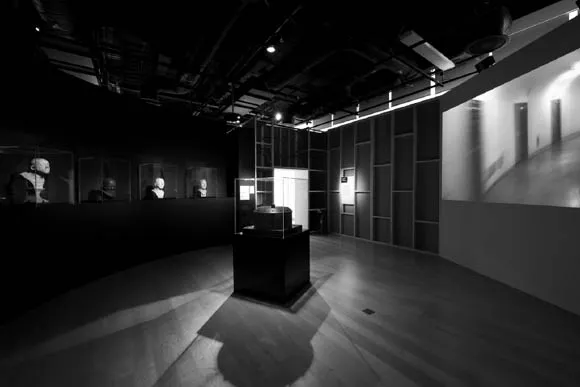
Figure 1.1 ‘Madness...
Table of contents
- Cover
- Half title
- Title
- Copyright
- Contents
- List of Figures
- Introduction
- 1. The Mad Objects of Fin-de-Siècle Vienna: Journeys, Contexts and Dislocations in the Exhibition ‘Madness and Modernity’
- 2. Solving Riddles: Freud, Vienna and the Historiography of Madness
- 3. Symphonies and Psychosis in Mahler’s Vienna
- 4. Creating an Appropriate Social Milieu: Journeys to Health at a Sanatorium for Nervous Disorders
- 5. Travel to the Spas: The Growth of Health Tourism in Central Europe, 1850–1914
- 6. Vienna’s Most Fashionable Neurasthenic: Empress Sisi and the Cult of Size Zero
- 7. Peter Altenberg: Authoring Madness in Vienna circa 1900
- 8. ‘Hell Is Not Interesting, It Is Terrifying’: A Reading of the Madhouse Chapter in Robert Musil’s The Man without Qualities
- 9. Reason Dazzled: Klimt, Krakauer and the Eyes of the Medusa
- 10. Mapping the Sanatorium: Heinrich Obersteiner and the Art of Psychiatric Patients in Oberdöbling around 1900
- 11. The Württemberg Asylum of Schussenried: A Psychiatric Space and Its Encounter with Literature and Culture from the ‘Outside’
- Select Bibliography
- Notes on Contributors
- Index
Frequently asked questions
Yes, you can cancel anytime from the Subscription tab in your account settings on the Perlego website. Your subscription will stay active until the end of your current billing period. Learn how to cancel your subscription
No, books cannot be downloaded as external files, such as PDFs, for use outside of Perlego. However, you can download books within the Perlego app for offline reading on mobile or tablet. Learn how to download books offline
Perlego offers two plans: Essential and Complete
- Essential is ideal for learners and professionals who enjoy exploring a wide range of subjects. Access the Essential Library with 800,000+ trusted titles and best-sellers across business, personal growth, and the humanities. Includes unlimited reading time and Standard Read Aloud voice.
- Complete: Perfect for advanced learners and researchers needing full, unrestricted access. Unlock 1.5M+ books across hundreds of subjects, including academic and specialized titles. The Complete Plan also includes advanced features like Premium Read Aloud and Research Assistant.
We are an online textbook subscription service, where you can get access to an entire online library for less than the price of a single book per month. With over 1.5 million books across 990+ topics, we’ve got you covered! Learn about our mission
Look out for the read-aloud symbol on your next book to see if you can listen to it. The read-aloud tool reads text aloud for you, highlighting the text as it is being read. You can pause it, speed it up and slow it down. Learn more about Read Aloud
Yes! You can use the Perlego app on both iOS and Android devices to read anytime, anywhere — even offline. Perfect for commutes or when you’re on the go.
Please note we cannot support devices running on iOS 13 and Android 7 or earlier. Learn more about using the app
Please note we cannot support devices running on iOS 13 and Android 7 or earlier. Learn more about using the app
Yes, you can access Journeys Into Madness by Gemma Blackshaw, Sabine Wieber, Gemma Blackshaw,Sabine Wieber in PDF and/or ePUB format, as well as other popular books in History & European History. We have over 1.5 million books available in our catalogue for you to explore.