The Viennese café was a key site of urban modernity around 1900. In the rapidly growing city it functioned simultaneously as home and workplace, affording opportunities for both leisure and intellectual exchange. This volume explores the nature and function of the coffeehouse in the social, cultural, and political world of fin-de-siècle Vienna. Just as the café served as a creative meeting place within the city, so this volume initiates conversations between different disciplines focusing on Vienna at the beginning of the twentieth century. Contributions are drawn from the fields of social and cultural history, literary studies, Jewish studies and art, and architectural and design history. A fresh perspective is also provided by a selection of comparative articles exploring coffeehouse culture elsewhere in Eastern Europe.
eBook - ePub
The Viennese Café and Fin-de-Siècle Culture
- 256 pages
- English
- ePUB (mobile friendly)
- Available on iOS & Android
eBook - ePub
The Viennese Café and Fin-de-Siècle Culture
About this book
Trusted by 375,005 students
Access to over 1.5 million titles for a fair monthly price.
Study more efficiently using our study tools.
Information
Chapter 1
THE CAFÉS OF VIENNA
Space and Sociability
In every large or small town throughout the Habsburg lands there is a Viennese coffeehouse. In it can be found marble tables, bentwood chairs and seating booths with leather covers and plush upholstery. In bent-cane newspaper-holders the Neue Freie Presse hangs among the local papers on the wall … Behind the counter sits the voluptuous and coiffured cashier. Near her looms the expressionless face of the head waiter, who as soon as the call ‘Herr Ober, the bill!’ is issued, will vanish from the guest’s field of vision. The barman lurks casually, but jumps to attention readily enough, though at no time giving the impression of hurried bustle. All in good time, the junior waiter brings the quietly clinking metal tray with its full glass of water to your table. One orders the coffee by means of a secret language that no one from outside the country understands: ‘eine Melange mehr licht’, ‘eine Teeschale Braun’, ‘eine Schale Geld passiert’.1
This evocative picture of the classic Viennese café can be found replicated in multiple histories, memoirs, biographies and works of fiction that focus on Vienna of the late nineteenth century. This quotation captures the affection and nostalgia which has long coloured any consideration, academic or otherwise, of the Viennese café. The image evoked, of the marble table tops, bent-wood chairs, multiple newspapers and idiosyncratic staff, is one that has become something of a legend. The distillation of the one thousand or so coffeehouses there were in Vienna around 1900 into a single image obscures the multiplicity and complexity of this particular space-type within the city.2 This chapter will introduce the cafés of Vienna as a social space in the city and the role they played in the city’s social and cultural life. A historical account of the role of the cafés is difficult to establish because, for the most part, it requires delving into the ephemeral realm of the everyday life and habits of the people of Vienna. This life was essentially transitory and casual in nature and as such proves resistant to recording and documentation. Various opportunities for excavating the ephemeral do however exist. A number of the cafés themselves survive, in a more or less altered state, as a material record of these spaces. Visual records – photographs, drawings, paintings and postcards – can also offer a window onto the nature of these spaces and the society within. In addition, literary sources, such as fiction, travel writing, biography and autobiography, provide another perspective on how the cafés of Vienna were used and regarded by contemporaries.
The importance of the cafés as part of the ‘story’ of Vienna 1900 is not simply a nostalgic construction following the Second World War. The café was the foremost public social institution within the city. Unlike the theatre or the opera house, the café could be visited every day and at virtually any time of day. The proliferation of cafés through the city indicates that they were a regular feature in the lives of many Viennese. The café appeared as a location in novels and other literary works of the period.3 Guide books in both English and German all make particular reference to the cafés of the city, exclaiming on their numerousness and the quality of the service.4 As a ubiquitous feature of city life, the café was multifarious in its provision of services to people of different classes and genders. The ephemeral nature of the sociability it played host to continues to make it difficult to categorise, in its close relation to the complex identity of the city at the dawn of the twentieth century.
The Café and its Relation to High and Low Culture
The relationship of cafés to the development of cultural life is well established. Jürgen Habermas presented the coffeehouses of eighteenth-century London as the crucibles for the formation of a bourgeois public sphere in England.5 These cafés provided a space for an active public of private individuals with shared concerns to come together and create shared discourse. The printed word made a vital contribution to the establishment, through the practices of criticism and critical debate, of the realm of public discourse:
The predominance of the ‘town’ was strengthened by new institutions that, for all their variety, in Great Britain and France took over the same social functions: the coffeehouses in their golden age between 1680 and 1730 and the salons in the period between the regency and the revolution. In both countries they were centres of criticism – literary at first, then also political – in which began to emerge, between aristocratic society and bourgeois intellectuals, a certain parity of the educated.6
Habermas’ thesis maintained that this public sphere declined in the late nineteenth and early twentieth centuries into a passive culture of mass consumption rather than public discourse. This decline was engendered by the growth in the number of people who constituted the public until its unity, as a single public, was impossible to sustain.7 Within Habermas’ thesis the development of the practice of voicing public opinion spread from the arena of literature naturally into matters of political and public interest, engendering the development of a sphere in which all matters of public interest could be discussed and new ideas formulated.
Habermas’ theory cannot be applied seamlessly to the role of the café in Vienna. For one thing, prior to 1848, prohibitions on the expression of political opinions, together with the lack of a democratic framework of any kind in which such opinions could carry weight, made the development of a public sphere of the kind evoked by Habermas largely impossible. By the late nineteenth century, when the cafés of Vienna had become sites of intense public discourse, both literary and political, the onset of mass culture, presented by Habermas as the antithesis of the public sphere, was also well under way. The Viennese café is thus a site in which the development of a public sphere is both delayed and complicated by its chronological compression. By looking at the points at which the Viennese café does and does not conform to the outline of public space and public sphere developed by Habermas, we can build a clearer picture of the way in which the café contributed to the life of the city.
The Café as a Site of Leisure
Habermas’ assessment of the rise of popular mass culture at the end of the nineteenth century was couched in terms of the fracturing and decline of the public sphere, as culture and ideas were packaged for consumption rather than evolving through rational debate. This view, however, sets up an artificial dichotomy between high and low culture, the serious and the frivolous, which obscures the essence of the cafés as institutions straddling both professional and recreational spheres. The café’s function as leisure venue was an established part of its identity as a public space. The link between recreation and café culture in the city of Vienna goes back to the eighteenth century. The Prater Park had been opened to the people of Vienna by Josef II in 1766 and the first café, the Erste Café, opened in the Prater in 1787. The Zweite Café followed in 1799 (Figure 1.1). Lithographic topographies of the city in the eighteenth and early nineteenth centuries frequently show such outdoor cafés, either those on the Prater or overlooking the city bastions. Such scenes indicate the ubiquity of these cafés as social spaces around the city. The stroll in the park, the promenade on the bastion and later the Ringstrasse, and the visit to the café were intimately woven into the pattern of Viennese leisure habits from the late eighteenth century onwards. Though the majority of cafés did not provide elaborate entertainments until the late nineteenth century, their offerings of refreshments, relaxed ambiance and table-top games were enough of a draw to make them prime sites for recreation in the city. For the bourgeoisie in particular, the cafés of the city centre and wealthy suburbs provided a well-loved and regularly used space outside of the home for informal, primarily but not exclusively masculine socialising and private relaxation. The precise nature of this sociability will be discussed further on in this essay.
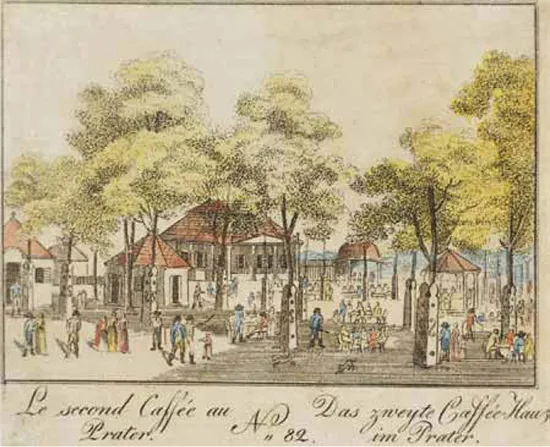
Figure 1.1 The Zweite Café on the Prater, c.1820. Courtesy of the Wien Museum.
The café’s function as a place where people went to relax and as a site of urban leisure is not an aspect that can be filtered out of any discussion of its role. By the late nineteenth century the growth of mass media, the entertainment industry and the advent of party politics, all of which Habermas viewed as sounding the death knell to true public discourse, was well under way even in Vienna. Within the supposed decline of the public sphere the only roles left for cafés to play would have been either as venues of popular entertainment or as retreats for an elite intellectual culture, divorced from public relevance. The growth of the large-scale entertainment cafés in Vienna from the 1870s confirms the idea of the rise of mass culture. From relatively simple establishments serving coffee and various other beverages, tobacco, simple snacks and table-top games, cafés expanded in the nineteenth century to take advantage of the growing wealth of the urban middle classes and the entertainment industry was born. Grand entertainment establishments in new hotels, in city parks and new bourgeois suburbs took the basic idea of a café and extended it to include more elaborate forms of entertainment.
The new hotels built in expectation of the crowds attending the 1873 World’s Fair in Vienna all included extensive café spaces on the ground floor of their premises. Prasch’s Café and Billiard Hall, on the Wienzeile, which first opened in 1851, offered extensive recreational facilities, including multiple games rooms, a concert hall, a reading room, a refreshment room and conservatories.8 Café Volksgarten, in the city centre, offered a fine restaurant and outdoor concerts in the smartest park in the city. The Prater Park, with its long history as a centre for recreation, developed to include various amusements, such as the ‘Venice in Vienna’ attraction, opened in 1895, and the Ferris wheel completed in 1897. The Café Dritte, originally established in the Prater Park in 1802, was refurbished in time for the World’s Fair, expanding on the idea of the concert-café to become a café and variety theatre with a capacity for 5000.9 Although the World’s Fair proved to be something of a flop, the café was bought up by Anton Ronacher and became a huge success, showing musical comedies, operettas and other stage acts (Figure 1.2). Much of the expansion of the entertainment industry in the late nineteenth century was undertaken under the auspices of the café, as an established leisure-venue type. The large entertainment cafés did not, therefore, represent an overturning of a more worthy, intellectual and politicised café space, but rather an elaboration on one ongoing aspect of the identity of the Viennese café.
The Biedermeier Café
Alongside the identity of the Viennese café as a leisure destination, its role as a centre of cultural life was also a well-established facet of its popular identity. In the late nineteenth century in particular, the café society of the early nineteenth century was celebrated nostalgically as an emblem of the past cultural and intellectual achievements of the city. This so-called ‘Biedermeier period’ was regarded by many as the pinnacle of good taste and authentic Viennese brilliance, from which modern culture had sadly declined.10 Adolf Loos’s design for the Café Museum of 1899 was a conscious attempt to revive the atmosphere and ambience of a Biedermeier café. The image of the Biedermeier café incorporated within it a suggestion of vibrant intellectual and creative discourse followed by the city at large, and is analogous with Habermas’ bourgeois public sphere.
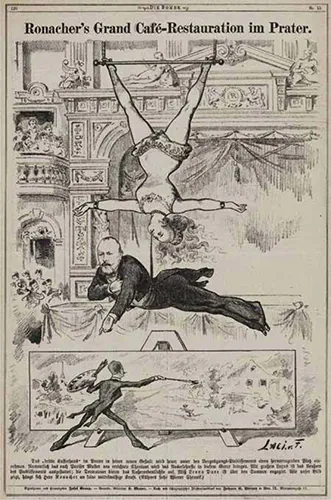
Figure 1.2 Laszlo Frecskay, Ronacher’s Grand Café in the Prater, 1879. Courtesy of the Wien Museum.
The Biedermeier café was a public sphere in the sense that it provided a centre for the communication and propagation of new ideas. However, as its purview was limited to the arena of culture and aesthetics, its development was stunted in relation to the development from a cultural discourse of literary cr...
Table of contents
- Cover Page
- Title Page
- Copyright Page
- Contents
- List of Illustrations
- Preface
- Introduction
- 1. The Cafés of Vienna: Space and Sociability
- 2. Time and Space in the Café Griensteidl and the Café Central
- 3. ‘The Jew Belongs in the Coffeehouse’: Jews, Central Europe and Modernity
- 4. Coffeehouse Orientalism
- 5. Between ‘The House of Study’ and the Coffeehouse: The Central European Café as a Site for Hebrew and Yiddish Modernism
- 6. Michalik’s Café in Kraków: Café and Caricature as Media of Modernity
- 7. The Coffeehouse in Zagreb at the Turn of the Nineteenth and Twentieth Centuries: Similarities and Differences with the Viennese Coffeehouse
- 8. Adolf Loos’s Kärntner Bar: Reception, Reinvention, Reproduction
- 9. Graphic and Interior Design in the Viennese Coffeehouse around 1900: Experience and Identity
- 10. The Cliché of the Viennese Café as an Extended Living Room: Formal Parallels and Differences
- 11. Coffeehouses and Tea Parties: Conversational Spaces as a Stimulus to Creativity in Sigmund Freud’s Vienna and Virginia Woolf’s London
- Notes on Contributors
- Selected Bibliography
- Index
Frequently asked questions
Yes, you can cancel anytime from the Subscription tab in your account settings on the Perlego website. Your subscription will stay active until the end of your current billing period. Learn how to cancel your subscription
No, books cannot be downloaded as external files, such as PDFs, for use outside of Perlego. However, you can download books within the Perlego app for offline reading on mobile or tablet. Learn how to download books offline
Perlego offers two plans: Essential and Complete
- Essential is ideal for learners and professionals who enjoy exploring a wide range of subjects. Access the Essential Library with 800,000+ trusted titles and best-sellers across business, personal growth, and the humanities. Includes unlimited reading time and Standard Read Aloud voice.
- Complete: Perfect for advanced learners and researchers needing full, unrestricted access. Unlock 1.5M+ books across hundreds of subjects, including academic and specialized titles. The Complete Plan also includes advanced features like Premium Read Aloud and Research Assistant.
We are an online textbook subscription service, where you can get access to an entire online library for less than the price of a single book per month. With over 1.5 million books across 990+ topics, we’ve got you covered! Learn about our mission
Look out for the read-aloud symbol on your next book to see if you can listen to it. The read-aloud tool reads text aloud for you, highlighting the text as it is being read. You can pause it, speed it up and slow it down. Learn more about Read Aloud
Yes! You can use the Perlego app on both iOS and Android devices to read anytime, anywhere — even offline. Perfect for commutes or when you’re on the go.
Please note we cannot support devices running on iOS 13 and Android 7 or earlier. Learn more about using the app
Please note we cannot support devices running on iOS 13 and Android 7 or earlier. Learn more about using the app
Yes, you can access The Viennese Café and Fin-de-Siècle Culture by Charlotte Ashby, Tag Gronberg, Simon Shaw-Miller, Charlotte Ashby,Tag Gronberg,Simon Shaw-Miller in PDF and/or ePUB format, as well as other popular books in History & Architecture General. We have over 1.5 million books available in our catalogue for you to explore.