Winner of the CHOICE Outstanding Academic Title of the Year Award 2017.
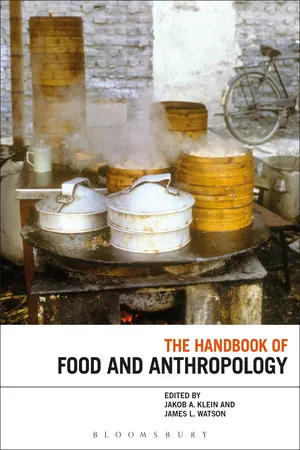
Interest in the anthropology of food has grown significantly in recent years. This is the first handbook to provide a detailed overview of all major areas of the field.
20 original essays by leading figures in the discipline examine traditional areas of research as well as cutting-edge areas of inquiry. Divided into three parts – Food, Self and Others; Food Security, Nutrition and Food Safety; Food as Craft, Industry and Ethics – the book covers topics such as identity, commensality, locality, migration, ethical consumption, artisanal foods, and children's food. Each chapter features rich ethnography alongside wider analysis of the subject.
Internationally renowned scholars offer insights into their core areas of specialty. Examples include Michael Herzfeld on culinary stereotypes, David Sutton on how to conduct an anthropology of cooking, Johan Pottier on food insecurity, and Melissa Caldwell on practicing food anthropology. The book also features exceptional geographic and cultural diversity, with chapters on South Asia, South Africa, the United States of America, post-socialist societies, Maoist China, and Muslim and Jewish foodways.
Invaluable as a reference as well as for teaching, The Handbook of Food and Anthropology serves to define this increasingly important field. An essential resource for researchers and students in anthropology and food studies.
eBook - PDF
The Handbook of Food and Anthropology
- 503 pages
- English
- PDF
- Available on iOS & Android
eBook - PDF
The Handbook of Food and Anthropology
About this book
Information
Table of contents
- Title Page
- Copyright Page
- Contents
- List of Figures
- List of Tables
- List of Contributors
- Introduction: Anthropology, Food and Modern Life
- Part 1 Food, Self and Other
- Chapter 1 Culinary Stereotypes: The Gustatory Politics of Gastro-Essentialism
- Chapter 2 Muslim Foodways
- Chapter 3 Food, Commensality and Caste in South Asia
- Chapter 4 Jewish Foods at the Turn of the Twenty-First Century
- Chapter 5 Approaches to Food and Migration: Rootedness, Being and Belonging
- Chapter 6 Local Food, Local Specialties and Local Identity
- Part 2 Food Security, Nutrition and Food Safety
- Chapter 7 Observer, Critic, Activist: Anthropological Encounters with Food Insecurity
- Chapter 8 Feeding Farmers and Feeding the Nation in Modern Malaysia: The Political Economy of Food and Taste
- Chapter 9 Children’s Food
- Chapter 10 Cow’s Milk as Children’s Food: Insights from India and the United States
- Chapter 11 Food, Borders and Disease
- Chapter 12 Rethinking Food and its Eaters: Opening the Black Boxes of Safety and Nutrition
- Chapter 13 Food Provisioning and Foodways in Postsocialist Societies: Food as Medium for Social Trust and Global Belonging
- Chapter 14 Feeding the Revolution: Public Mess Halls and Coercive Commensality in Maoist China
- Part 3 Food as Craft, Industry and Ethics
- Chapter 15 Church Cookbooks: Changing Foodways on the American Prairie
- Chapter 16 The Anthropology of Cooking
- Chapter 17 Supermarket Expansion, Informal Retail and Food Acquisition Strategies: An Example from Rural South Africa
- Chapter 18 Ethical Consumption: The Moralities and Politics of Food
- Chapter 19 Artisanal Foods and the Cultural Economy: Perspectives on Craft, Heritage, Authenticity and Reconnection1
- Chapter 20 Practising Food Anthropology: Moving Food Studies from the Classroom to the Boardroom
- Afterword
- Index
Trusted by 375,005 students
Access to over 1.5 million titles for a fair monthly price.
Study more efficiently using our study tools.
Frequently asked questions
Yes, you can cancel anytime from the Subscription tab in your account settings on the Perlego website. Your subscription will stay active until the end of your current billing period. Learn how to cancel your subscription
No, books cannot be downloaded as external files, such as PDFs, for use outside of Perlego. However, you can download books within the Perlego app for offline reading on mobile or tablet. Learn how to download books offline
Perlego offers two plans: Essential and Complete
- Essential is ideal for learners and professionals who enjoy exploring a wide range of subjects. Access the Essential Library with 800,000+ trusted titles and best-sellers across business, personal growth, and the humanities. Includes unlimited reading time and Standard Read Aloud voice.
- Complete: Perfect for advanced learners and researchers needing full, unrestricted access. Unlock 1.5M+ books across hundreds of subjects, including academic and specialized titles. The Complete Plan also includes advanced features like Premium Read Aloud and Research Assistant.
We are an online textbook subscription service, where you can get access to an entire online library for less than the price of a single book per month. With over 1.5 million books across 990+ topics, we’ve got you covered! Learn about our mission
Look out for the read-aloud symbol on your next book to see if you can listen to it. The read-aloud tool reads text aloud for you, highlighting the text as it is being read. You can pause it, speed it up and slow it down. Learn more about Read Aloud
Yes! You can use the Perlego app on both iOS and Android devices to read anytime, anywhere — even offline. Perfect for commutes or when you’re on the go.
Please note we cannot support devices running on iOS 13 and Android 7 or earlier. Learn more about using the app
Please note we cannot support devices running on iOS 13 and Android 7 or earlier. Learn more about using the app
Yes, you can access The Handbook of Food and Anthropology by Jakob A. Klein, James L. Watson, Jakob A. Klein,James L. Watson in PDF and/or ePUB format, as well as other popular books in Sozialwissenschaften & Öffentliche Landwirtschaftspolitik. We have over 1.5 million books available in our catalogue for you to explore.