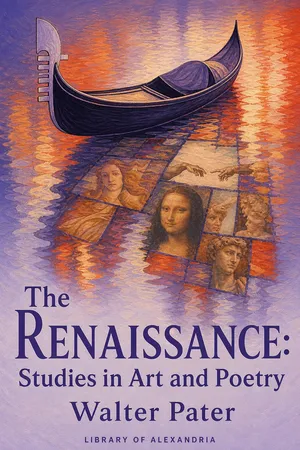
What happens when beauty becomes a way of understanding life? Walter Pater turns the encounter with a painting, a sculpture, or a poem into a question about how we should live.
First published in 1873, The Renaissance: Studies in Art and Poetry brings together essays on artistic imagination and the individual experience of beauty. Pater explores figures including Botticelli, Leonardo da Vinci, and Michelangelo, attending not only to their achievements but also to the moods, ideas, and sensations their work awakens. His celebrated account of Leonardo's Mona Lisa shows how criticism can become an imaginative creation in its own right.
A formative work of aestheticism, the book helped shape the literary world of Oscar Wilde. Its enduring appeal lies in Pater's union of close attention and richly expressive prose: he asks readers to notice what is distinctive in an artist's vision and in their own response to it. The famous Conclusion carries that inquiry beyond the gallery, urging a life alert to the intensity and brevity of experience.
What readers find inside:
- Individual visions - Essays on Botticelli, Leonardo, and Michelangelo explore different expressions of artistic imagination.
- The Mona Lisa - Pater's celebrated passage turns a painted face into a meditation on history, mystery, and human experience.
- Aestheticism - Beauty and the response it inspires become central questions rather than decorative concerns.
- Criticism as literature - Lyrical prose makes the act of looking and interpreting part of the book's lasting pleasure.
- The intensity of living - The Conclusion asks how attention to fleeting impressions might change the value we place on experience.
For readers of cultural criticism, students of aesthetics, and lovers of reflective literary prose, this is an invitation to think more carefully about both creative works and the life around them.
Begin with Pater's portraits of artistic genius and discover a more attentive way of seeing.