This book is available to read until 23rd December, 2025
- 377 pages
- English
- ePUB (mobile friendly)
- Available on iOS & Android
eBook - ePub
Available until 23 Dec |Learn more
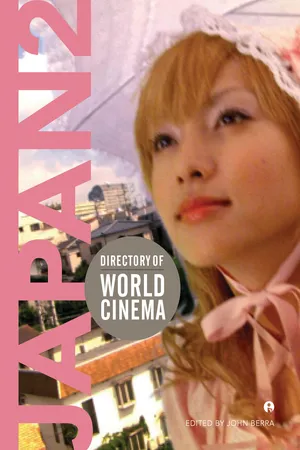
Directory of World Cinema: Japan 2
About this book
Building on and bringing up to date the material presented in the first installment of Directory of World Cinema: Japan, this volume continues the exploration of the enduring classics, cult favorites, and contemporary blockbusters of Japanese cinema with new contributions from leading critics and film scholars. Among the additions to this volume are in-depth treatments of two previously unexplored genres—youth cinema and films depicting lower-class settings—considered alongside discussions of popular narrative forms, including J-Horror, samurai cinema, anime, and the Japanese New Wave.
Accompanying the critical essays in this volume are more than 150 new film reviews, complemented by full-color film stills, and significantly expanded references for further study. From the Golden Age to the film festival favorites of today, Directory of World Cinema: Japan 2 completes this comprehensive treatment of a consistently fascinating national cinema.
Frequently asked questions
Yes, you can cancel anytime from the Subscription tab in your account settings on the Perlego website. Your subscription will stay active until the end of your current billing period. Learn how to cancel your subscription.
No, books cannot be downloaded as external files, such as PDFs, for use outside of Perlego. However, you can download books within the Perlego app for offline reading on mobile or tablet. Learn more here.
Perlego offers two plans: Essential and Complete
- Essential is ideal for learners and professionals who enjoy exploring a wide range of subjects. Access the Essential Library with 800,000+ trusted titles and best-sellers across business, personal growth, and the humanities. Includes unlimited reading time and Standard Read Aloud voice.
- Complete: Perfect for advanced learners and researchers needing full, unrestricted access. Unlock 1.4M+ books across hundreds of subjects, including academic and specialized titles. The Complete Plan also includes advanced features like Premium Read Aloud and Research Assistant.
We are an online textbook subscription service, where you can get access to an entire online library for less than the price of a single book per month. With over 1 million books across 1000+ topics, we’ve got you covered! Learn more here.
Look out for the read-aloud symbol on your next book to see if you can listen to it. The read-aloud tool reads text aloud for you, highlighting the text as it is being read. You can pause it, speed it up and slow it down. Learn more here.
Yes! You can use the Perlego app on both iOS or Android devices to read anytime, anywhere — even offline. Perfect for commutes or when you’re on the go.
Please note we cannot support devices running on iOS 13 and Android 7 or earlier. Learn more about using the app.
Please note we cannot support devices running on iOS 13 and Android 7 or earlier. Learn more about using the app.
Yes, you can access Directory of World Cinema: Japan 2 by John Berra in PDF and/or ePUB format, as well as other popular books in Medios de comunicación y artes escénicas & Películas y vídeos. We have over one million books available in our catalogue for you to explore.
Information
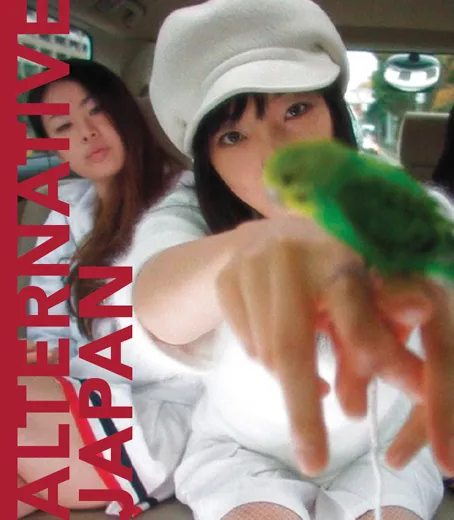
Love Exposure, Omega Project/Phantom Film.
If the popular image of Japanese cinema mainly consists of anime and samurai movies, a thriving alternate cinematic reality also exists, populated by directors who make work that does not easily fit into mainstream categories. Alternative Japanese cinema offers a tremendous variety of styles, from gory ‘extreme’ cult movies to thoughtful chamber dramas, with most films clustering around one end of the spectrum or the other. These film-makers have been perhaps even more successful than their mainstream counterparts in finding audiences at international film festivals, in arthouse theatres, and on DVD in Europe and the United States. Donald Richie ventures an explanation for this phenomenon, contrasting the globally-aware recent generation of contemporary independent film-makers with their more tradition-bound forbears: ‘Whether something is traditionally Japanese or not is no longer a concern – no one can tell and no one cares. Tradition is not to be guarded. It is to be augmented as the riches of the rest of the world are assimilated.’1 This assimilation works both ways, as fans of, for instance, Takashi Miike’s violent cult movies, consume them along with similar films from other parts of the world, or festival-goers recognize an international art film aesthetic in Hirozaku Kore-eda’s quiet dramas that links him in sensibility to film-makers like France’s Claire Denis or Taiwan’s Hou Hsiao-hsien.
This is not to say that these films are devoid of specifically Japanese elements. The vast difference in style between Miike and Kore-eda, to take two prominent examples, can be seen as one manifestation of the two major stylistic streams Richie identifies as running through the history of Japanese cinema, a distinction that can be boiled down to the difference between fantasy and realism. Miike is the most prolific and visible example of the fantastic end of the spectrum. The director of over 70 movies since 1991, Miike specializes in gory horror films like the notoriously gruesome Audition (Ôdishon, 1999), which brought him widespread international recognition, but he has recently broadened his range into other genres as well. Sukiyaki Western Django (2007) is, as the title implies, a Japanese cowboy movie influenced by the Italian ‘spaghetti’ westerns of the 1970s, while Thirteen Assassins (Jûsan-nin no shikaku, 2010) is a fairly straightforward samurai movie that incorporates the director’s signature blood-drenched action aesthetic. But it was Audition, with its excruciating torture scenes and twisted revenge narrative, that cemented Miike’s reputation in the West as a purveyor of viscerally-shocking horror movies. Other directors have followed in the wake of his success, creating a growing market for Japanese horror on DVD and at film festivals. With such films as Suicide Club (Jisatsu sâkuru, 2001), Love Exposure (Ai no mukidashi, 2008) and Cold Fish (Tsumetai nettaigyo, 2010), Sion Sono peels back the polite veneer of Japanese society to stir up a world of extreme violence and fetishistic sex populated by suicidal teens, murderous sociopaths and depraved perverts, while special-effects expert Yoshihiro Nishimura delights in splattering notions of good taste in Tokyo Gore Police (Tôkyô zankoku keisatsu, 2008) and Vampire Girl Versus Frankenstein Girl (Kyûketsu Shôjo tai Shôjo Furanken, 2009).
The ‘extreme’ label that has attached itself to these films as a marketing hook for overseas audiences is somewhat problematic. On the one hand it marks them as part of a global network of gory cult films. On the other, it reinforces stereotypes about the inherent ‘weirdness’ of contemporary Japanese pop culture. But perhaps this is the price of the assimilation Donald Richie refers to. At any rate, the ‘extreme’ Japan phenomenon can be read in many ways. On the surface, these films may be boundary-pushing entertainments intended only to thrill and shock, but they often address and expose truths about Japanese society that are not expressed in more polite genres. Sono’s films are often about real social problems, and Nishimura’s Tokyo Gore Police envisions a dystopian future in which the most dangerous implications of today’s world of reality television, authoritarian police tactics, and genetic experimentation are carried to a not-so-illogical extreme. In addition, rather than being entirely products of our sex-and-violence-saturated age, these film-makers all have their roots in a tradition of grotesquery in Japanese art and literature dating back at least to the Tale of Shuten Doji, a famous folktale about a hero battling a ferocious demon that has been illustrated with graphic violent imagery since the Edo era. Traditional Japanese culture is as a full of demons, ghosts and bloodletting as it is of tea ceremonies and cherry blossoms.
Film-makers at the other end of the alternative spectrum take a more contemplative approach to some of the same topics. Whereas Sono’s Suicide Club makes a spectacle of youthful depression by dressing it in the garb of a tongue-in-cheek splatter movie, films like Shunji Iwai’s All About Lily Chou-Chou (Riri Shushu no subete, 2001), Ryuichi Hiroki’s Your Friends (Kimi no tomodachi, 2008) and Nobuhiro Yamashita’s Linda Linda Linda (2005) give more intimate, nuanced expression to the sometimes harrowing emotional ups and downs of growing up in Japan’s strict school system. They address what it means to be an outsider in a society that encourages conformity by telling stories from the point of view of, respectively, a lonely, music-obsessed teen, a girl with a physical disability, and a Korean exchange student. The heroines of Hiroki’s Vibrator (Vaiburēta, 2003) and It’s Only Talk (Yawarakai seikatsu, 2005) may have sex lives almost as perverse as the characters in ‘extreme’ cult films, but their sexuality is treated as one facet of complex personalities. Unable to fit into normal society because of their emotional problems, they seek sex as a substitute for true intimacy. This alienation is, not surprisingly, a common theme in the films of Hiroki and other film-makers trying to capture the tenor of life in the immensity of modern Tokyo, where a laid-off salaryman, as in Kiyoshi Kurosawa’s Tokyo Sonata (2008), might spend his days loitering in a public park rather than admit to his own family that he has lost his job, or an overwhelmed young mother can leave her children to fend for themselves, unnoticed by their neighbours, as in Hideki Kore-eda’s Nobody Knows (Dare mo shiranai, 2004).
If Miike and Sono use the horror genre as a blunt instrument to crack open Japanese culture and expose its seamier aspects for entertainment value, Hiroki, Kurosawa and Kore-eda explore what it means to live inside that culture yet not feel a part of it. There is even a sub-genre of films dealing with Tokyo-ites returning to their family homes in the country. Some of these journeys are humorous, as in Yamashita’s No One’s Ark (Baka no hakobune, 2003), in which a couple fail at starting a business in Tokyo and are forced to move in with the husband’s family in the sticks. Others, like Miwa Nishikawa’s tale of a mysterious death in the country, Sway (Yureru, 2006), are more haunting. The tension, not only between the country and the city but between generations within the family, has also proven to be fertile ground for many contemporary film-makers. Hideki Kore-eda explores this subject with great tenderness in Still Walking (Aruitemo aruitemo, 2008), which elegantly presents generational conflict playing out within a family enduring the effects of a tragedy in the past.
If the two poles of alternative Japanese cinema represent very different ways of expressing contemporary life, it should also be noted that the divisions are not always so stark, and fi...
Table of contents
- Cover
- Title Page
- Copyright Page
- Contents
- Acknowledgements
- Introduction by the Editor
- Film of the Year
- Festival Focus
- Industry Spotlight
- Cultural Crossover
- Scoring Cinema
- Stardom and Cinema
- Directors
- Alternative Japan
- Anime / Animation
- Chambara / Samurai Cinema
- Contemporary Blockbusters
- J-Horror / Japanese Horror
- Jidai-geki / Period Drama
- Nuberu bagu/ The Japanese New Wave
- Seishun eiga / Japanese Youth Cinema
- Shomin-geki / Lower Class Life
- Yakuza / Gangster
- Recommended Reading
- Japanese Cinema Online
- Test Your Knowledge
- Notes on Contributors
- Filmography