How educated and culturally savvy young people are transforming traditionally low-status manual labor jobs into elite taste-making occupations
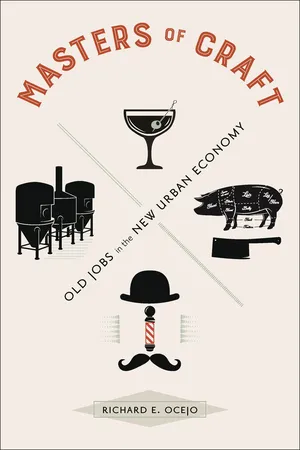
In today's new economy—in which "good" jobs are typically knowledge or technology based—many well-educated and culturally savvy young men are instead choosing to pursue traditionally low-status manual labor occupations as careers. Masters of Craft looks at the renaissance of four such trades: bartending, distilling, barbering, and butchering.
In this in-depth and engaging book, Richard Ocejo takes you into the lives and workplaces of these people to examine how they are transforming these once-undesirable jobs into "cool" and highly specialized upscale occupational niches—and in the process complicating our notions about upward and downward mobility through work. He shows how they find meaning in these jobs by enacting a set of "cultural repertoires," which include technical skills based on a renewed sense of craft and craftsmanship and an ability to understand and communicate that knowledge to others, resulting in a new form of elite taste-making. Ocejo describes the paths people take to these jobs, how they learn their chosen trades, how they imbue their work practices with craftsmanship, and how they teach a sense of taste to their consumers.
Focusing on cocktail bartenders, craft distillers, upscale men's barbers, and whole-animal butcher shop workers in Manhattan, Brooklyn, and upstate New York, Masters of Craft provides new insights into the stratification of taste, gentrification, and the evolving labor market in today's postindustrial city.
- 368 pages
- English
- ePUB (mobile friendly)
- Available on iOS & Android
eBook - ePub
About this book
Information
Publisher
Princeton University PressYear
2017Print ISBN
9780691183190
9780691165493
eBook ISBN
9781400884865

PART I
Each chapter in part I examines one of these four occupations (bartender, distiller, barber, butcher). My goal is to outline the foundations of the cultural repertoires of each job. I provide a brief history and discuss the philosophical underpinnings of each industry, job, and workplace, and explain their revival in today’s cities, the symbolic boundaries that divide them from other versions of these jobs in their industries, and the moral boundaries within their occupational communities. Each chapter contains a mix of historical facts, stories of key behaviors in these workplaces, interviews with workers and owners, and discussions of the social contexts these workers find themselves in.
Most importantly, each chapter focuses on a specific theme. While we can see each of these four themes in each occupation in some form, I base the discussions in these chapters on the theme the occupation best represents. Chapter 1, on cocktail bartenders, deals most directly with new elite service work. Chapter 2, on craft distillers, deals with the logics of authenticity. Chapter 3, on upscale men’s barbers, deals with the role of masculinity in the new economy. And chapter 4, on whole-animal butchers, deals with the production of omnivorousness.
I present all excerpts from recorded interviews and conversations from the field in paragraph form. I also aim to provide readers with a glossary of terms for understanding these work cultures (many definitions and explanations are in footnotes and endnotes). While I focus each chapter on a single occupation and its unique characteristics and conditions, occasionally I refer to similarities or differences between it and the others. I show the commonalities between these four jobs in the chapters in part II. Readers will also note several undeveloped and underdiscussed topics in part I (for example, how these workers came to pursue these jobs as careers, the role of service, and definitions of craft). I also analyze these and other topics in part II.
1 |  | THE COCKTAIL RENAISSANCE |
Recalling certain gentlemen of other days, who made of drinking one of the pleasures of life—not one of its evils; and who, whatever they drank, proved able to carry it, keep their heads, and remain gentlemen, even in their cups. Their example is commended to their posterity.
—A framed sign in the bathroom at Milk and Honey, excerpted from The Old Waldorf-Astoria Bar Book, by A. S. Crockett, from 1935
In 1919 the Volstead Act brought a swift end to nightlife, and the refined craft of the American bartender was outlawed. It was thought that to drink alcohol was to live a life shadowed by death. It was thought that these were death and company. It’s taken us nearly a century to restore flavor to the drink and class to specialty cocktails. In our time, a night to celebrate life’s simple pleasures with fine wine, exquisitely crafted cocktails, beautifully prepared food, and impeccable sipping spirits is a rare gift. To those who shun the night, we tip our hat. To those who shine after dusk, we offer a warm embrace. Welcome to the new golden age. Welcome to Death & Co.
—A framed sign in the bathroom at Death & Co.
The July air in New Orleans is like thick soup. Every year at this time the extended world of craft cocktails descends on the French Quarter for the annual Tales of the Cocktail festival. They are bartenders and bar owners, people in the liquor industry like brand owners and ambassadors, drinks writers and bloggers, lifestyle media members, restaurateurs, hoteliers, people who sell highly specialized products like vintage barware, ice machines, and bottled ingredients for tiki drinks, and the PR reps for each of these groups. Many members of the lay public, such as cocktail enthusiasts and casual consumers, attend (and pay the full price), but the real festival—the networking, the hotel room parties, the secret stashes of homemade hooch—is for community members only. Tales is the global craft cocktail community’s largest event. At it they rejoice the cocktail renaissance, see old friends and make new ones, share drink ideas, consider business plans, and regale themselves with awards and praise. The people in New York who do not attend joke that the city’s cocktail bars may as well shut down during Tales, due to lack of staff. Some do.
A nocturnal bunch, cocktail people huddle inside the historic (and air-conditioned) Hotel Monteleone with its rooftop pool and rotating Carousel Bar (where the classic Vieux Carré cocktail was invented) during the day.1 They attend and host panel talks and demonstrations, tastings and seminars, book signings, broadcasts and podcasts, until the sun goes down. Then they hit the city, and stay out all night. They repeat this same day five times in a row.
I spend a Friday afternoon in the Monteleone, at seminars. In one, named “Twenty-first Century Gin,” four brand ambassadors for different gin companies discuss the history and current state of the spirit. Audience members in the packed room sit in rows behind tables with plastic cups filled with clear liquids. Charlotte, a former bartender from London who works for Hendrick’s Gin, introduces the panel and the topic. She tells the audience about the seven different types of gin on the tables in front of them, each representing a particular style. The panelists will refer to them in their talks, and audience members can taste each one as they go along. Charlotte then provides a brief history of gin, from its roots in Holland as genever in the 1500s to its migration to London, where the Old Tom and London dry styles took shape. While gin remained a popular spirit in the twentieth century, she explains, not many producers innovated within the category, until recently.
“Five years ago we couldn’t have done this seminar and had this many gins on the table,” says Charlotte. “I certainly couldn’t have named four or five gin brands ten years ago. So things are definitely changing. And with that in mind, with all these new gins that we have, we’re very pleased to have them, what do we call them? Do we need to call them anything? Is it appropriate to call these new gins new? Or do we need to find some way to distinguish them from the London dry and the Old Tom that we heard about before? Ryan, would you possibly have any thoughts on this matter?”
A bartender and consultant from Portland, Oregon, Ryan Magarian co-founded Aviation American Gin in 2006. The audience, knowing Ryan has strong opinions on classifying gin, laughs at Charlotte’s lead-in.
When me and my partners developed [Aviation] three and a half years ago, I thought, “Let’s just be obnoxious. Let’s take it right to the edge of the gin universe.” And we were really excited. We thought we could make a gin that didn’t fall within any of the acknowledged designations that were around today. And gin, when we looked at the definition, it seemed to me that there was a lot of room for artistic freedom. And when we looked at the gin category, it seemed relatively monochromatic. People weren’t, in our opinion, getting far enough away from the traditional London dry. And when I talk about London dry gin, I talk about any neutral spirit-based gin where the juniper is without a doubt the first thing that you get. It’s like somebody puts a steak dish in front of you and it’s a forty-eight ounce porterhouse, a little bit of broccoli, and a touch of au gratin, but it’s the steak that defines that spirit.
Ryan then explains how he and his partners wanted Aviation to represent the region (specifically Oregon) well, such as by using organic products and having a savory and rich flavors and a “damp” taste. Since his partners were whiskey makers, they wanted a gin people could sip neat, which is uncommon for London dry styles.* They also had cocktails in mind. Since Aviation has a different flavor profile from London dry gins, it doesn’t always work with classic recipes, and Ryan has had to train bartenders how to use it in drinks. He concludes by proposing a new name for his style of gin.
This is something new, I think “new Western” style is fun and sexy. I don’t know if it’s going to stick, but by gosh, I’m going to use it until someone comes up with something better—perhaps “twenty-first century” gin—we’ll find out. I would also use [this] key word in new Westerns: balance. You’re finding a lot more balance. Like I talked about the forty-eight ounce porterhouse steak dish? Well, think about an equal steak dish, but the new Western is an eight-ounce filet, a large mound of orange-scented couscous, some sautéed kale with rendered bacon fat and chopped bacon, and maybe a little bit of scallions or something funky on the side. It’s still a steak dish, but it’s not this steak dish. Having this kind of style protects gin, by separating these new gins from old gins. We don’t do this, next thing you know vodka and gin are going to meld, and the whole gin category is going to be a total debacle.
A former bartender originally from England, today Angus Winchester is a consultant and the global brand ambassador for Tanqueray. Quiet and looking smug for most of the panel, he chimes in on Ryan’s argument.
“Well, I find it interesting. Everybody talks about ‘Let’s have less rules and regulations from the government’ and things like that, and here’s Ryan saying we should have some more. I mean, we have a knowledgeable group of people here, how many styles—legally—of American whiskey are there?”
He pauses as the room mumbles.
“Twenty-six. There are twenty-six legal styles of American whiskey. So these all exist, but we all talk about there just being five styles. You see that with a lot of things. And we’re seeing now gins that don’t really taste like gin, which is why you have to start adapting the recipes to be able to use them in classic gin drinks. And I feel some of these are multiflavored vodkas. If the juniper is not immediately discernable, which I think, if you try Tanqueray Ten, put your nose on that, there is juniper there, front and center. There is refreshing citrus, things like that as well, but it is obviously juniper.
“I’m conflicted with it. Sometimes I think, yes, we should perhaps recategorize. But I think on the whole they’ve worked quite well for us, and the bartender should be the one explaining both. Miller’s and Hendrick’s are not your typical style of gin. And as we start to make gin that doesn’t taste like gin to get people into gin, we’re not doing the right thing, are we? It’s obviously so radically different to what our customers expect from gin. We don’t need everything to be called gin. If everybody drank the same thing life would be rather boring. You don’t like gin? Well, sorry. I’m not going to make a wrong gin so you could now say to your friends you do like gin.”
“To call Aviation a London dry gin or even put it in the same category is wrong,” replies Ryan. “Think about genever, I mean, genever isn’t anything like London dry. Gin is a story of evolution. So to me, stopping at just dry gin and not being able to articulate more succinct styles to people doesn’t make sense to me.”
Ryan and Angus both speak on behalf of their brands: the newcomer and the old standard.2 An audience member, Simon Difford, then speaks up. Simon owns a bar in London and writes a series of drinks guides both online and in print. Others in the room who know his guides get excited to hear him speak in person. He directs his comment at Ryan.
“We went from genever to gin, but they didn’t call gin genever, they came up with another name for it, because it’s different. It was a progression. What you’ve created is not a gin. It’s a flavored other spirit.”
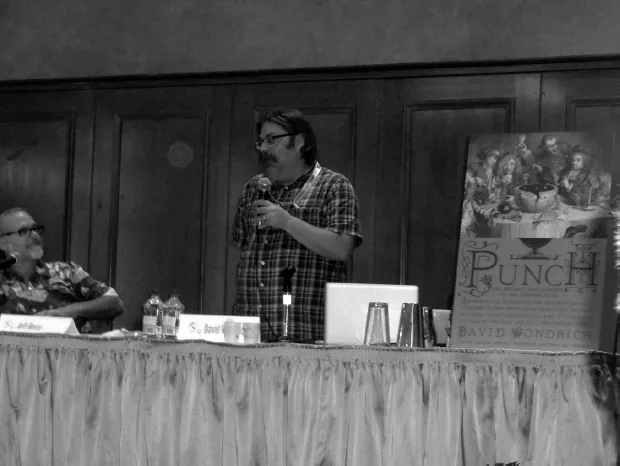
FIGURE 2. David Wondrich, cocktail and drinks writer,
speaking at a Tales seminar. Photo by the author.
speaking at a Tales seminar. Photo by the author.
“But you call it a gin in your book,” says Ryan. “And you gave us four-and-a-half stars!”
Enjoying the start of a duel, the audience approves Ryan’s zinger with applause.
“And I commented under that that it’s not a gin. What’s happened is that we haven’t got a gin police. There’s no one testing gin saying that there’s not so many milligrams per liter of juniper to be classified gin. So that’s the trouble. You can call whatever you like gin. Yours is still a dry style. It hasn’t got juniper, but it is a dry style of spirit. It’s a delicate spirit. I’d like it if you called it ‘new Western spirit.’ The reason it’s called gin in my book is because you put ‘gin’ on the label. That’s what you’ve branded it.”
“Would you like ‘new Western botanical spirits’?”
“Fine, that’s a great term.”
“But this is gin,” says Ryan, pointing at his own bottle.
“Gin is predominantly juniper. It’s not predominantly juniper, it’s not gin.”
“My point about using the steak dish example, they’re both steak dishes, whether it’s a forty-eight ounce porterhouse or the eight-ounce filet.”
“That’s like calling a burger a steak. It’s a different product.”
Tales seminars and the public sides of the festival and cocktail community in general are remarkably harmonious. Critical comments and back-and-forth debates barely exist out in the open. The traditional London dry style (like the heavy pine flavor of Tanqueray, Beefeater, and Gordon’s) dominated the spirit category for decades and shaped the general public’s idea of what gin tastes like. But along with demonstrating the significance of history and an expanding palate of flavors for cocktail bartenders, the lengthy discussion in this seminar reveals the tensions that sometimes arise between the community members over definitions and categories. Since new gin products reach the market and do not conform to convention, the gin category has become turf for wars of taste, and marketing. People in the craft cocktail community constantly discuss such questions as what is and what is not “proper” gin, or the merits of any new product, or the influence of big brands on the public’s taste. These debates and contestations are part of a common discourse for the cocktail community.
After the gin panel I attend a seminar called “Sugar,” on the science of sweetness in cocktails, and another called “The Fine Art of Tending Bar,” led by Stanislav Vadrna, a Polish bartender who trained for a time with Kazuo Ueda, a renowned veteran bartender in Tokyo. With the sun setting I walk over to the W Hotel, a few blocks outside the Quarter, for the Bar Chef Competition, an annual Tales event. Modeled on the television show Iron Chef, bartender contestants from around the country have to make two cocktails, one for before dinner and one for during. They must use the sponsor’s product and a secret ingredient, revealed only seconds before the competition starts, in both. Gra...
Table of contents
- Cover Page
- Title Page
- Copyright Page
- Dedication Page
- Contents
- Acknowledgments
- Preface. The Daily Grind
- Introduction. A Stroll through the Market
- Part I
- Part II
- Epilogue. Outcomes, Implications, and Concluding Thoughts
- Methodological Appendix
- Notes
- References
- Index
Trusted by 375,005 students
Access to over 1.5 million titles for a fair monthly price.
Study more efficiently using our study tools.
Frequently asked questions
Yes, you can cancel anytime from the Subscription tab in your account settings on the Perlego website. Your subscription will stay active until the end of your current billing period. Learn how to cancel your subscription
No, books cannot be downloaded as external files, such as PDFs, for use outside of Perlego. However, you can download books within the Perlego app for offline reading on mobile or tablet. Learn how to download books offline
Perlego offers two plans: Essential and Complete
- Essential is ideal for learners and professionals who enjoy exploring a wide range of subjects. Access the Essential Library with 800,000+ trusted titles and best-sellers across business, personal growth, and the humanities. Includes unlimited reading time and Standard Read Aloud voice.
- Complete: Perfect for advanced learners and researchers needing full, unrestricted access. Unlock 1.5M+ books across hundreds of subjects, including academic and specialized titles. The Complete Plan also includes advanced features like Premium Read Aloud and Research Assistant.
We are an online textbook subscription service, where you can get access to an entire online library for less than the price of a single book per month. With over 1.5 million books across 990+ topics, we’ve got you covered! Learn about our mission
Look out for the read-aloud symbol on your next book to see if you can listen to it. The read-aloud tool reads text aloud for you, highlighting the text as it is being read. You can pause it, speed it up and slow it down. Learn more about Read Aloud
Yes! You can use the Perlego app on both iOS and Android devices to read anytime, anywhere — even offline. Perfect for commutes or when you’re on the go.
Please note we cannot support devices running on iOS 13 and Android 7 or earlier. Learn more about using the app
Please note we cannot support devices running on iOS 13 and Android 7 or earlier. Learn more about using the app
Yes, you can access Masters of Craft by Richard E. Ocejo in PDF and/or ePUB format, as well as other popular books in Social Sciences & Social Classes & Economic Disparity. We have over 1.5 million books available in our catalogue for you to explore.