- English
- ePUB (mobile friendly)
- Available on iOS & Android
eBook - ePub
About this book
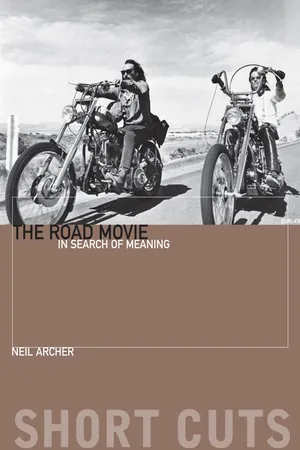
Though often seen as one of America's native cinematic genres, the road movie has lent itself to diverse international contexts and inspired a host of filmmakers. As analyzed in this study, from its most familiar origins in Hollywood the road movie has become a global film practice, whether as a vehicle for exploring the relationship between various national contexts and American cinema, as a means of narrating different national and continental histories, or as a form of individual filmmaking expression. Beginning with key films from Depression-era Hollywood and the New Hollywood of the late 1960s and then considering its wider effect on world cinemas, this volume maps the development and adaptability of an enduring genre, studying iconic films along the way.
Information
Subtopic
Film & Video1 | LOOKING FOR AMERICA – PART ONE: THE US ROAD MOVIE |
On a visit to the Cinémathèque Française in Paris at the beginning of 2009, I went to see a display of film photos and posters celebrating what the exhibition called ‘Le road movie’. This was put up to coincide with the Cinémathèque’s retrospective of films made by or featuring Dennis Hopper, the director and co-star of Easy Rider. I was interested to see that the exhibition’s accompanying pamphlet listed the road movie’s main examples – in what it noted as the genre’s ‘foundational films’ of the 1960s and 1970s – as almost entirely American works. Coincidentally, the French newspaper Libération had recently run a weekly series of features on le road movie, offering its readers a full collection of the ten featured films on tie-in DVDs. Again, with the sole exception of Radio On (1979), which was filmed in England, this collection consisted wholly of films made and set in the USA.
This need not surprise anyone: it is not an exaggeration to say that, for many, the road movie is synonymous with American cinema. We might go even further, suggesting that the road movie is not so much a product of American culture, but to some extent defines ‘America’ itself. Working out why it does this, perhaps more than any other film genre, with the possible exception of the western, requires us to reflect on the particular meeting of cinematic image, geography and ideology at work in the road movie, at particular moments in American history. This will be the main purpose of this chapter.
Some of the most important studies of the genre have helped perpetuate this idea of the road movie as American. Steven Cohan and Ina Rae Hark’s anthology The Road Movie Book, despite its very broad title, begins by asserting that ‘the mating of the road and the movies is as enduring as any of Hollywood’s famous couples, and seemingly just as inevitable. The road has always been a persistent theme of American culture’ (1997: 1). The editors of this collection of essays on the road movie, then, which includes two chapters on non-American films, feel no need to qualify or contextualise their almost exclusively American focus. Only on page ten of their introduction do they allude to a more global context for the genre in the form of German director Wim Wenders, who as they say ‘pondered the genre’s essential Americanness through European eyes’ (1997: 10). Laderman’s Driving Visions, meanwhile, is exclusively focused on US cinema until the sixth and final chapter on the ‘European Road Movie’ and demonstrates a similar assumption about the genre when it states: ‘before considering the road movie, let us consider the road: an essential element of American society and history, but also a universal symbol of the course of life’ (2002: 2). As I will explore, even if this sentence separates the two terms, the linkage here of ‘American’ with ‘universal’ ideas of life is a powerful ideological element in the road movie, explaining both its appeal and also its political shortcomings.
And yet, we also need to understand what it is about this genre that gives it these specific cultural connotations, and consider – both in this chapter and the rest of the book – what the impact of these associations is on a range of different international filmmakers and filmmaking contexts. What I find interesting about the Parisian examples mentioned above is that they position the genre so clearly within a foreign framework, emphasising its difference from French domestic cinema and its traditions. Looking into what makes the American road movie distinctive, finding out where it comes from, enables us to move beyond vague or often misleading assertions about its ‘Americanness’. If we fail to understand the road movie’s genesis, we risk overlooking the specific qualities that have made the road movie so inextricable from a certain vision of America and American life, for filmmakers and viewers both in the USA and across the globe. In turn, if we fail to understand this, we may fail to understand the motivation for the genre’s wider appropriation on a global scale.
America, the road and automobility
For numerous viewers and critics, the defining moment at which the road movie comes into being is that title sequence in Easy Rider, as Dennis Hopper and Peter Fonda, to the sound of Steppenwolf’s ‘Born to Be Wild’, head out on the highway. As much as its combined associations of motorised mobility, driving rock score and lyrical expression of freedom have been seen as the birth not only of a new genre, but even a specific type of cultural consciousness, we ought to take the time to understand where the film’s protagonists are coming from, where they are going to, but just as importantly, how they are managing to get there.
As mentioned previously, the history of the broader ‘road story’ in American life is shaped by different cultural groups getting access to transportation, and to the media with which to tell their stories (Mills 2006: 27). As we will see with Easy Rider and other road movies emblematic of the so-called ‘New Hollywood’ of the late 1960s and early 1970s, this representation of generational automobility owes a lot to the economic and artistic opportunities afforded to its filmmakers and actors. But this was only the flourishing of a genre whose American roots lie in the decades prior to and just after World War II, when the contexts of access and mobility changed considerably, from the scarcity of the Depression era to the plenty of post-war development.
Much of the reason for this transition, as Laderman explains, relates to major shifts in US manufacturing and its transport infrastructure. As the one superpower to emerge from the war with its industries and economy booming, the 1950s saw ‘the advent of the automobile as a popular commodity on a mass scale’, and with this commodification of individual transport came its customisation (2002: 38). It was this newfound meeting of ‘stylization and accessibility’ (ibid.) in the mass-produced car that paved the way for the road movie’s celebration of motorised individuality and freedom, as well as its fetishisation of the motor vehicle – the motorbikes of Easy Rider, the customised hot-rods of Two-Lane Blacktop – as pop-cultural artifacts.
But these highway adventurers also needed somewhere to ride. The famous Route 66 that plays such a significant role in US musical culture, and also (as we will see below) in its nascent road movie genre, opened the same year that Henry Ford lowered the price of his Model-T car, making motorised mobility the object of mass consumption (see Eyerman and Löfgren 1995: 56). After World War II, and apparently inspired by the Autobahn system built in Germany under Hitler, US President Eisenhower set about revitalising the interstate highway system, with $25 billion being poured into the construction of 40,000 miles of highway in the 1950s (see Laderman 2002: 39). Ironically, given the frequent counter-cultural connotations of the Hollywood road movie, the new highway system was designed to stimulate the economy further by increasing demand for car production and construction, with the improved infrastructure facilitating the movement of people to the growing suburbs, but also to supermarkets and (eventually) indoor malls (see Dussere 2014: 27). The period that saw the Technicolor emergence of hot-rod culture1 was also, then, that of a burgeoning commuter and consumer culture, fuelled by the US economy’s twin motors of cars and gasoline.
As John Urry has pointed out, twentieth-century America’s obsession with the car romanticises what was in reality a pragmatically commercial turn away from more traditional public transport (such as the tram) in the 1920s, when Ford perfected his system of mass production. As Urry describes it, from this point on, and especially when General Motors bought up US tramways in the 1930s just to close them down, the ‘“path-dependence” of the petroleum-based car was “locked in”…by corporation policies’ (2007: 114). As we will see, this tension between the contingent and arbitrary existence of the automobile on the one hand, and its often romantic depiction as vehicle of rebellion on the other, is an ideological issue running through the road genre more widely. As much as films like Easy Rider try to evoke a visionary emancipation from this corporate ‘system’, the dependency on the road and the motorised vehicle (the motorbike in this instance) means they are still part of this system – whether they realise it or not.
Once the car-and-petroleum system is ‘locked in’, only to come up in the 1930s against the Great Depression, it is not surprising that pre-war precursors of the American road movie such as The Grapes of Wrath (1940) treat gasoline, like all other commodities – shelter, food, water – as a precious source. Though essentially a prestige studio film (from 20th Century Fox) made at the height of Hollywood’s ‘classical’ period of production (see Bordwell et al. 1985), The Grapes of Wrath, based on John Steinbeck’s novel and directed by John Ford, is distinctive for its long sections of location shooting on the American road: in this case, the Route 66 that takes its Oklahoma Dust-Bowl migrants, the Joads, from the American Midwest to the (mostly illusory) promise of work in California. It is arguably this emphasis on ‘non-narrative road travel’, in the form of montage sequences, reflected images of the road on windshields and mirrors, and the use of subjective driver point-of-view shots (see Laderman 2002: 30) that suggest the film’s affinity with the later road movie, stressing as they do the actual, real-world connection of camera, movement and place.
The experience of travel that is so vital to the road movie is nevertheless a complex one in The Grapes of Wrath, as the Joads’ trans-continental road trip is not only made under duress (a response to the banks’ repossession of failing tenant farms, and the consequent loss of livelihood), but at the very real risk of not making it, either through the exhaustion of funds or the breakdown of their well-used truck. The editorial emphasis on road signs displaying the cost of food, drink and campsites at once celebrates these as points along the route, but also reminds us of the dwindling, limited resources of the family obliged to measure expenditure from day to day (at one point in a truck-stop diner, as two drivers eat pie, the Joad children gaze at candy they cannot hope to eat, while their grandfather negotiates ten cents’ worth of bread). This is not so much an aesthetic of consumption, as one of hunger, of need. The trip itself – which, as Bennet Schaber notes (1997: 23), takes on the mythical form of the Exodus, with the persecuted Joads seeking out the Promised Land – becomes in narrative terms something to get through rather than enjoy. It is little surprise that the only moment of really joyful synergy between camera point of view and protagonist is when the Joads, already depleted and tired, gaze from a hillside stop onto the Californian orange groves in a valley below.
Laderman may not be overstating the case when he suggests that The Grapes of Wrath ‘balances the dystopian associations of Depression mobility with a utopian sensibility’ (2002: 28) emerging from the encounter with the road. This is because the road, though forced upon its economic migrants, offers in Steinbeck’s terms the possibility of forging communities that are morally and politically transcendent of ‘corporate and government corruption’ (2002: 29); not just in the form of the workers’ unions Tom Joad (Henry Fonda) learns about, and to which, in one of the film’s enigmatic final images, he seems to be going off to help lead. That the film constructs in its images a new idea of America (around the same time as Franklin Roosevelt’s ‘New Deal’ was trying to bring the USA out of the Depression) actually gives it some affinity with Ford’s earlier Stagecoach (1939): a post-Civil War western in which a cross-cultural group of travellers, including a cavalry officer’s wife, a banker, a prostitute and an escaped convict, travel across a visually awe-inspiring but treacherous desert landscape inhabited by Geronimo’s Apache tribe. The links between the western, Stagecoach in particular, and the road movie, whose respective fall and rise occurred around the same time, have been frequently discussed (see for example Watson 1999). Similarly to The Grapes of Wrath, the film’s journey through a landscape it eventually masters, through the narrative vanquishing of the ‘Indians’, and through the social conflict it effaces, retrospectively defines the American West and the new community of travellers in its celebratory image. Reaching the geographical goal of Lordsberg requires not just luck, but also that the fractured community understand and work with each other. Once more, though in a more nostalgic and romantic vein than in the Steinbeck adaptation, a hostile dystopia is converted cinematically into a utopia of possibility and community.
This blending of narration with the construction of nation, which would become a key feature of later road movies, was already rehearsed in It Happened One Night (1934). Most of Frank Capra’s Academy Award-winning film takes place along the route of a cross-state bus and the narrow highways tracing the American East Coast, as heiress Ellie Andrews (Claudette Colbert) flees from her father’s Florida yacht in order to meet up with her new fiancé – a playboy aviator called King Wesley – in New York. Assuming that the safest way for a rich girl to get there incognito is to take the slowest and cheapest form of travel, Ellie boards the Atlantic Greyhound in Miami. It is there that her path crosses with another King (the so-called ‘King of Hollywood’ this time), in the form of Clark Gable’s hard-nosed journalist Peter Warne, who soon identifies both his travelling companion and the chance for a great scoop. As Ellie’s father sends his men out on the road to find her, she and Peter spend a succession of days and nights moving and dodging their way closer to their destination, only to discover, it turns out, that neither of them really want the trip to end.
Associated as Capra is with a particular kind of cinematic populism (going on to direct films such as Mr. Smith Goes to Washington [1940] and It’s a Wonderful Life [1946]), It Happened One Night has unsurprisingly been discussed in terms of its depiction of ‘the people’; those folk encountered along the way, often sharing the public means of transport, motor camps and rest stops: a cultural encounter for which the cross-class protagonists’ blossoming love affair acts as a symbol (see Schaber 1997: 23). This is a more optimistic image of the same Depression period later depicted in The Grapes of Wrath. While never totally romanticising (at one point on the days-long bus trip a woman without money for food faints; both Ellen and Peter have their cases stolen by opportunist road thieves), It Happened One Night allows its audience at least to imagine the romance of the road and its utopian possibilities.
Laderman notes though that in It Happened One Night, as well as in The Grapes of Wrath, the protagonists’ mobility contains a critical, rebellious response to the crisis of the Depression (2002: 24). Indeed, as much as the film ‘includes a visual account of nearly every possible means of transportation’ (Schaber 1997: 22), as well as every existing form of communication, it is very specific in its identification with the road. King Wesley flies to his own wedding, but he is clearly a chump, destined to be left standing at the altar. We see Ellie’s father flying across whole states in a private airliner, and then in the subsequent shot, showing Ellie chatting happily in a motel shack, we hear what might be the same airplane passing in the background. While frequently associated with the emerging genre of ‘screwball’ comedy as much as it is viewed as a road movie, It Happened One Night is mostly resistant to the frantic movement, the back-and-forth of telephones and telegraphs, that surround the couple. Instead, the film is happiest to dwell on the uninterrupted passages of time, the experience of traveling the road, with its attendant opportunities for chance events, conversation and romance. As such – and as we will see at several points – Capra’s film establishes an important structural framework for later road movies.
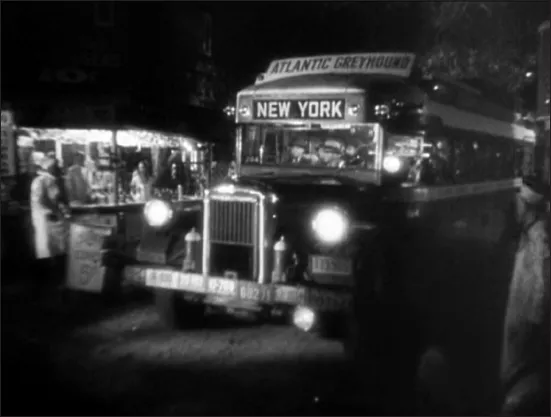
FIGURE 1.1 The Greyhound bus as symbol of community in It Happened One Night (1934)
If, as Schaber points out, in the transition to the later road movie such images of ‘the people’ are replaced by ‘a series of catastrophic, even apocalyptic images’ (1997: 30), we might be entitled to ask where ‘the people’ went. Asking what is ‘missing’ in the road movie as it comes to be in the late 1960s and early 1970s is, however, to miss the point that this ‘absence’ defines this phase of the genre itself. Disconnection, fragmentation, isolation: these become the key motifs of the genre in its most classically recognised form, encapsulated in the frequently solitary and often solipsistic figure of the driver on the wide and open American road: a transition from the utopia of traveling communities to the more solipsistic ‘autopia’ of lone drivers and rebellious, criminal duos (see Archer 2013: 34–6).
We need though to avoid the danger of suddenly arriving at a fully-formed cliché for the road movie, the origin of which might some...
Table of contents
- Cover
- Series Page
- Title Page
- Copyright
- Contents
- Acknowledgements
- Introduction: A road map for the road movie
- 1. Looking for America – Part One: The US road movie
- 2. Looking for America – Part Two: The Latin American road movie
- 3. The Automobile and the Auteur: Global cinema and the road movie
- 4. From Parody to Post-postmodernity: New directions in the road movie
- Conclusion: Born to be wild, again
- Bibliography
- Index
Trusted by 375,005 students
Access to over 1.5 million titles for a fair monthly price.
Study more efficiently using our study tools.
Frequently asked questions
Yes, you can cancel anytime from the Subscription tab in your account settings on the Perlego website. Your subscription will stay active until the end of your current billing period. Learn how to cancel your subscription
No, books cannot be downloaded as external files, such as PDFs, for use outside of Perlego. However, you can download books within the Perlego app for offline reading on mobile or tablet. Learn how to download books offline
Perlego offers two plans: Essential and Complete
- Essential is ideal for learners and professionals who enjoy exploring a wide range of subjects. Access the Essential Library with 800,000+ trusted titles and best-sellers across business, personal growth, and the humanities. Includes unlimited reading time and Standard Read Aloud voice.
- Complete: Perfect for advanced learners and researchers needing full, unrestricted access. Unlock 1.5M+ books across hundreds of subjects, including academic and specialized titles. The Complete Plan also includes advanced features like Premium Read Aloud and Research Assistant.
We are an online textbook subscription service, where you can get access to an entire online library for less than the price of a single book per month. With over 1.5 million books across 990+ topics, we’ve got you covered! Learn about our mission
Look out for the read-aloud symbol on your next book to see if you can listen to it. The read-aloud tool reads text aloud for you, highlighting the text as it is being read. You can pause it, speed it up and slow it down. Learn more about Read Aloud
Yes! You can use the Perlego app on both iOS and Android devices to read anytime, anywhere — even offline. Perfect for commutes or when you’re on the go.
Please note we cannot support devices running on iOS 13 and Android 7 or earlier. Learn more about using the app
Please note we cannot support devices running on iOS 13 and Android 7 or earlier. Learn more about using the app
Yes, you can access The Road Movie by Neil Archer in PDF and/or ePUB format, as well as other popular books in Media & Performing Arts & Film & Video. We have over 1.5 million books available in our catalogue for you to explore.