American History 2
eBook - ePub

American History 2

,
  1. 6 pages
  2. English
  3. ePUB (mobile friendly)
  4. Available on iOS & Android
eBook - ePub

American History 2

,

About this book

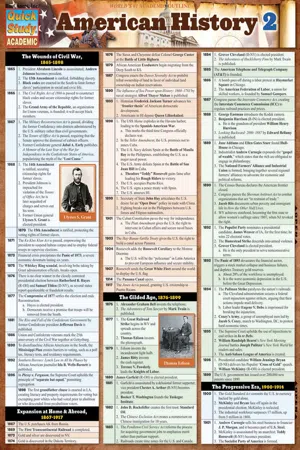
Prepare for your history exams or learn more about key events in American history with BarCharts' updated American History 2 QuickStudy® guide. Detailing the aftermath of the Civil War up to the War on Terror and the reelection of President Obama, this guide features timelines grouped by historical theme to give you a concise outline of major events in American history through multiple perspectives.

Frequently asked questions

Yes, you can cancel anytime from the Subscription tab in your account settings on the Perlego website. Your subscription will stay active until the end of your current billing period. Learn how to cancel your subscription.
At the moment all of our mobile-responsive ePub books are available to download via the app. Most of our PDFs are also available to download and we're working on making the final remaining ones downloadable now. Learn more here.
Perlego offers two plans: Essential and Complete
  • Essential is ideal for learners and professionals who enjoy exploring a wide range of subjects. Access the Essential Library with 800,000+ trusted titles and best-sellers across business, personal growth, and the humanities. Includes unlimited reading time and Standard Read Aloud voice.
  • Complete: Perfect for advanced learners and researchers needing full, unrestricted access. Unlock 1.4M+ books across hundreds of subjects, including academic and specialized titles. The Complete Plan also includes advanced features like Premium Read Aloud and Research Assistant.
Both plans are available with monthly, semester, or annual billing cycles.
We are an online textbook subscription service, where you can get access to an entire online library for less than the price of a single book per month. With over 1 million books across 1000+ topics, we’ve got you covered! Learn more here.
Look out for the read-aloud symbol on your next book to see if you can listen to it. The read-aloud tool reads text aloud for you, highlighting the text as it is being read. You can pause it, speed it up and slow it down. Learn more here.
Yes! You can use the Perlego app on both iOS or Android devices to read anytime, anywhere — even offline. Perfect for commutes or when you’re on the go.
Please note we cannot support devices running on iOS 13 and Android 7 or earlier. Learn more about using the app.
Yes, you can access American History 2 by in PDF and/or ePUB format, as well as other popular books in History & North American History. We have over one million books available in our catalogue for you to explore.

Information

The Rise & Fall of Postwar Liberalism, 1960–1979
1960
  1. An American U-2 spy plane is shot down over the USSR.
  2. The first oral contraceptive (a.k.a. “the pill”) is introduced.
  3. Four black students stage a “sit-in” at a segregated lunch counter of Woolworth’s department store in Greensboro, NC.
  4. The Student Nonviolent Coordinating Committee is created to organize nonviolent protests against segregation laws.
  5. The presidential election pits senator John F. Kennedy (D-MA) against Vice President Nixon.
    1. Both candidates are young: Kennedy is 43; Nixon is 47.
    2. Kennedy charges that a “missile gap” with the USSR developed on Eisenhower’s watch.
    3. The first televised presidential debate takes place.
    4. Kennedy wins a narrow victory; he is the first Catholic president.
1961
  1. Before leaving office, Eisenhower warns against the rise of a “military-industrial complex.”
  2. Kennedy approves a scheme, known as the Bay of Pigs Invasion, for CIA-backed Cuban nationals to invade Cuba and overthrow and kill Castro.
    1. The Cuban military detects the invaders, and the operation ends in disaster.
  3. The Freedom Rides begin as African Americans challenge segregation laws when riding buses on interstate routes.
  4. With Soviet support, East Germany constructs the Berlin Wall to separate East Berlin from West Berlin.
  5. Kennedy creates the Peace Corps and the U.S. Agency for International Development (USAID).
1962
  1. The Cuban missile crisis sparks fears of a nuclear war between the U.S. and USSR.
    1. The Soviets are found to be installing missiles in Cuba.
    2. The U.S. demands removal of the missiles.
    3. Kennedy declares Cuba under “quarantine” to prevent delivery of missiles.
    4. The U.S. and USSR settle peacefully: the USSR removes Cuban missiles, and the U.S. removes missiles from Turkey.
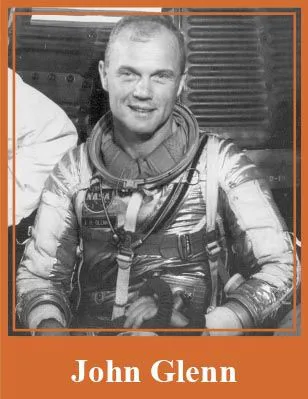
  2. John Glenn becomes the first American to orbit Earth.
  3. Students for a Democratic Society drafts the “Port Huron Statement.”
  4. The Other America: Poverty in the United States by socialist, political scientist, and activist Michael Harrington is published.
  5. Capitalism and Freedom by libertarian economist Milton Friedman is published.
1963
  1. In the March on Washington, Martin Luther King Jr. (MLK) delivers his “I Have a Dream” speech.
  2. MLK leads a nonviolent march in Birmingham, AL, provoking violent reaction from local police chief Eugene “Bull” Connor.
  3. AL governor George Wallace blocks the door of the Foster Auditorium at the University of Alabama to protest integration.
  4. NAACP officer Medgar Evers is murdered in MS.
  5. The U.S. and USSR sign the Limited Test Ban Treaty.
  6. South Vietnamese President Diem is killed during a coup.
  7. The Clean Air Act of 1963 is passed.
  8. In Gideon v. Wainwright, the Supreme Court rules that poor defendants have the right to legal counsel. John Glenn
  9. President Kennedy is assassinated in Dallas by Lee Harvey Oswald.
    1. Vice president Lyndon B. Johnson (LBJ; D-TX) is sworn in as president.
    2. Oswald is shot and killed by nightclub owner Jack Ruby while in custody outside a Dallas police station.
1964
  1. In the State of the Union address, LBJ announces a “War on Poverty” in America.
    1. The Office of Economic Opportunity is created, which will launch programs such as Head Start, VISTA, and Job Corps.
  2. Responding to a North Vietnamese attack on a U.S. ship, Congress issues the Tonkin Gulf Resolution, granting the president broad powers to conduct war in Vietnam.
  3. The Civil Rights Act of 1964 is passed, forbidding discrimination in employment, public facilities, and places of public accommodation such as restaurants.
  4. On the campaign trail, LBJ announces the “Great Society” initiatives for poverty relief, civil rights, education reform, health care, and culture.
  5. LBJ defeats Barry Goldwater (R-AZ) in a landslide victory.
  6. The Free Speech Movement begins on college campuses.
  7. In Escobedo v. IL, the Supreme Court affirms the right to legal counsel during police interrogations.
  8. In the USSR, Khrushchev loses power and is replaced by Leonid Brezhnev.
1965
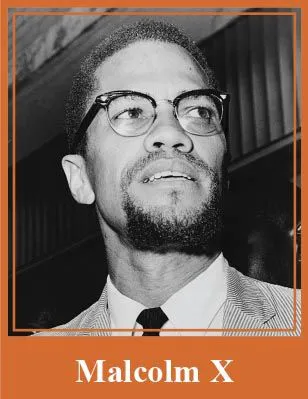
  1. Nation of Islam leader Malcolm X is murdered.
  2. The Voting Rights Act of 1965 is passed.
  3. The Immigration and Naturalization Act of 1965 is passed, eliminating the 1920s “national origins” system.
  4. The Medicare program is created; the federal government will pay for senior citizens’ health care.
  5. The Medicaid program is created; the federal government will provide funds for health care for the poor.
  6. LBJ creates affirmative action programs.
  7. MLK organizes a peaceful civil rights demonstration, the Selma March, in AL, which provokes a violent reaction.
  8. In Griswold v. CT, the Supreme Court rules that the Constitution contains a right to privacy and strikes down the CT law that barred married couples’ access to contraception.
  9. Urban rioting occurs in the Watts section of Los Angeles.
  10. Pope Paul VI becomes the first pope to visit the U.S.
1966
  1. In Miranda v. AZ, the Supreme Court rules that suspects must be informed of their rights to an attorney and to remain silent, commonly known as Miranda rights.
  2. Urban rioting occurs across the country, especially in Chicago and Cleveland.
  3. The Black Panther Party is founded in Oakland, CA.
  4. The National Organization for Women is founded.
1967
  1. Race riots kill 43 in Detroit, MI, and 26 in Newark, NJ.
  2. College students lead peace marches in New York City and Washington, DC.
  3. In Loving v. VA, the Supreme Court strikes down miscegenation laws.
  4. Boxer Muhammad Ali refuses induction into the army.
1968
  1. Viet Cong and North Vietnamese forces launch the Tet Offensive, a series of coordinated attacks throughout Vietnam during the traditionally peaceful period of the Buddhist New Year.
    1. The U.S. wins the battle, but the strength of the enemy undermines politicians’ message that the end of the war is imminent.
  2. U.S. troops murder Vietnamese civilians in the My Lai Massacre.
  3. LBJ announces he will not run for president.
  4. MLK is assassinated in Memphis, TN.
  5. The Paris Peace Talks begin, though they are often delayed.
  6. Presidential hopeful Robert F. Kenned...

Table of contents

  1. The Wounds of Civil War, 1865–1898
  2. Expansion at Home & Abroad, 1867–1917
  3. The Gilded Age, 1876–1899
  4. The Progressive Era, 1900–1914
  5. World War I & Normalcy, 1914–1928
  6. Victorian to Modern America, 1884–1928
  7. Depression & the New Deal, 1929–1941
  8. Global Origins of World War II, 1922–1941
  9. World War II, 1941–1945
  10. The Cold War Begins, 1946–1959
  11. The Baby Boom Generation, 1944–1969
  12. The Rise & Fall of Postwar Liberalism, 1960–1979
  13. Conservatism Ascendant, 1980–1989
  14. The Cold War Ends, New Challenges Begin, 1989–2000
  15. Bush & the War on Terror, 2001–2008
  16. The Obama Years, 2009–2012
  17. The Media & Technology Revolution, 1946–2010