- 224 pages
- English
- ePUB (mobile friendly)
- Available on iOS & Android
eBook - ePub
About this book
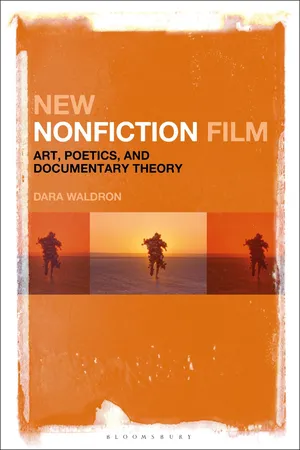
New Nonfiction Film: Art, Poetics and Documentary Theory is the first book to offer a lengthy examination of the relationship between fiction and documentary from the perspective of art and poetics. The premise of the book is to propose a new category of nonfiction film that is distinguished from – as opposed to being conflated with – the documentary film in its multiple historical guises; a premise explored in case-studies of films by distinguished artists and filmmakers (Abbas Kiarostami, Ben Rivers, Chantal Akerman, Ben Russell Pat Collins and Gideon Koppel). The book builds a case for this new category of film, calling it the 'new nonfiction film,' and argues, in the process, that this kind of film works to dismantle the old distinctions between fiction and documentary film and therefore the axioms of Film and Cinema Studies as a discipline of study.
Information
1
Nonfiction as a speculative mode of inquiry:
Subjectivity and the films of Ben Rivers and Ben Russell
It could be that contemporary philosophers have lost the great outdoors, the absolute outside QUENTIN MEILLASSOUX, After Finitude
Ben Russell and Ben Rivers are self-described itinerant filmmakers. They are also, in this sense, extremely productive artists whose films straddle the line between experimental doc and reflexive ethnography, and who often work with communities of interest in a largely unorthodox capacity. In 2013, both Russell and Rivers collaborated on the feature-length film A Spell to Ward Off the Darkness, leading Russell—as discussed in the introduction—to categorize the films he and Rivers make as nonfiction (as opposed to documentary). Russell inadvertently brackets the nonfiction film apart from categories believed to be synonymous with “documentary.”
The two Bens, as they are sometimes referred to in experimental film circles—such is the overlapping level of concern in their practices—have explored the relationship between documentary and aesthetic form for over a decade, albeit on different sides of the Atlantic and initially unbeknownst to one another. Both are artists (I use the word artists because this is what they believe themselves to be) whose work, and the methods involved in this work, help establish a cursory understanding of the new nonfiction film as we begin the journey of this book, as an aesthetic category for engaging with progressive moving image and cinematic practices. Both are artists who have used documentary theory as a platform, helpful in exploring the relationship between film and reality, art and reality, and character and subjectivity.
By the time Russell and Rivers came to codirect A Spell, both had amassed a portfolio of experimental film as likely to be screened in city galleries as film festivals or art-house cinemas. Both have moved along a terrain that has opened with the increased circulation of the moving image in the digital era, even if—paradoxically—both have been quick to champion film as a medium of choice. As well as an interest in film as a medium, A Spell displays both filmmakers’ concern with ethnography, borne of a mutual interest in the groundbreaking oeuvre of Jean Rouch. Both artists had just tasted critical success when they began working on this film—Rivers with his first feature-length Two Years at Sea, a film that continued an ongoing concern with exotic, unconventional characters who have removed themselves from society, often with an obsessive interest, creative or academic, in mind; Russell with Let Each One Go Where He May (Russell, 2009), a neo-Rouchian exploration into Surinam’s colonial past. For his first foray into feature-length filmmaking, Rivers revived a working relationship with the somewhat hermetic Jake Williams, the subject of his earlier film This Is My Land (Rivers, 2007). Both films about Jake are shot in black-and-white 16mm stock, capturing Williams’s unorthodox life in the Highlands.1
Russell’s rise to prominence as an experimental filmmaker was established before Let Each One, his reputation as one of the United States’ leading filmmakers cemented with the Trypps series. Since then, he has continued reconfiguring the boundaries of the ethnographic film, in ventures such as A Spell and Atlantis (2014), both shot in Europe, and in his most recent project that has led him to return to Surinam to further examine the mythology of the region. Rivers and Russell are highly productive in their own right and their individual and collaborative work helps—I argue here—establish the new nonfiction film, as opposed to documentary, as a category in itself. Nonfiction film can be considered a reflexive ethnographic approach to the real, procured in methods employed by artists to engage and treat subjectivity in their films. In what follows, I want to sketch out the main methods and criteria in question here.
Not documentary ...
Nonfiction is often presented as a category interchangeable with documentary. The emergence of documentary as a category of choice in the 1930s coincided with a broadening of the distinction between fiction, shorts or feature-length filmmaking, and nonfiction/non-fiction, films considered to, put bluntly, represent reality truthfully and objectively (that is, without aesthetic intervention). Grierson famously described documentary—a quote that has circulated historically as much as any—as the “creative treatment of actuality,” bringing aesthetic concerns to bear on the process.
Documentary, in this precise sense, is a byword for the filming of real life, or at least stories and reports that are not fiction. With this in mind, it is helpful to read Grierson’s comment as methodological: the treatment of recorded real life, editing together of footage, commentary, and so on, is what he means by creative. But while we can consider as the artistry involved in documentary films, we can also consider the creative as referring to the areas of invention involved in editing the recorded impressions of reality—the image sequences or audio commentaries—that come together during the postproduction process. As we set out on the journey of this book, it is not my aim to establish Rivers’s and Russell’s films, or at least the methodology I want to explore in the making of the films discussed, under a Griersonian rubric of documentary. This opening chapter takes a somewhat different approach, setting out a methodology that is identified in key works that lead up to and include both filmmakers’ collaboration on A Spell, that qualify, or can be understood, under the rubric of the new nonfiction film. I want to suggest that this “methodology” is an aesthetic of the subject that is best approached by turning Grierson’s comment slightly to the left. Nonfiction, taking Grierson’s comment to task in this way, can be considered the speculative treatment of subjectivity. To speculate on subjectivity is not simply to embellish in artifice, to turn into fiction. As I hope to illustrate in this chapter, to speculate requires concerted engagement with the ontology of film, inclusive of which is an exploration of another’s “character” outside the strict delineation of fact and fiction.
Rivers’s first film with Jake Williams reveals an attention to place and subject that has subsequently become his hallmark. This Is My Land is a fifteen-minute film that Rivers himself situates within the lexicon of documentary: the observational. What changes then when he returns to work with Jake five years later, on a feature-length that incited much debate about the “nature” of documentary and fiction? I suggest Rivers’s relationship with Jake, or rather his treatment of Jake changes irrevocably in this time. This Is My Land was made very soon after Rivers had met Jake and the resultant film, not dissimilar to the later Two Years at Sea in cinematographic form (both are filmed in 16mm black-and-white film stock, which leaves a flickering material trace integral to the artistic experience of the film), is aesthetically different. There is no “context” given to the series of vignettes dedicated to Jake’s habitual life-form, and the form is distinguished by the silence of the lone “subject,” a silence maintained by Jake throughout the film. In addition, Two Years at Sea carries none of the signature features that mark This Is My Land out as—as Rivers himself attests—observational documentary (Fitzgibbon, 2014). There is no recognition of the camera’s presence on Jake’s part that would qualify as acknowledging Rivers’s presence in his environment, and there is no contextual information given, no dialogue or voiceover that (giving the viewer an anchor to navigate or contextualize) would suggest a definitive or anthropological qua ethnographic methodology has been drawn from in its making. Rivers has been keen to point out in an interview the difference in approach:
This Is My Land was a more fragmented, observational document. I was watching Jake in his daily activities and filming what I thought was necessary and then piecing it together like a collage. But with the second film, Two Years at Sea, I wanted to be much more controlled because the film was meant to be feature length, so I had to think about the structure. Jake and I collaborated to make an exaggerated portrait of somebody very much like him, but not him. He is really noisy and chatty—he likes to talk, he likes visitors, and obviously there is none of that in the film, so it’s a fiction. (Fitzgibbon, 2014)
Even with the change in approach, the exaggerated in the “exaggerated portrait” Rivers refers to requires some detailed analysis (we should note that the portrait film is—even if problematically so—located within a subgenre of documentary). The portrait film is predicated on time, Paul Arthur says, “intertwined with the dynamics of subjectivity” (Arthur, in Margulies, 2002, 114). Patrick Tarrant adds to Arthur’s point in calling the portrait film “a study of people in the process of negotiating the past and present simultaneously” (Tarrant, 2013). Time and duration are important, if not integral features of both films about “Jake.” Both generate a palatable tension. This tension does not, however, account for the “exaggerated” element completely; it doesn’t tell us why Two Years is more exaggerated in form than This Is My Land. The change in approach is, however, also an effect of a more refined collaboration. Because Rivers and Jake would become friends following the production of This Is My Land, the relationship invariably changes, making Rivers more comfortable in collaborating with Jake.2 Jake is the focus of both films but the treatment of subjectivity in Two Years, I would argue, results from a refined rendering of the modèle concept as theorized and then put into practice by Robert Bresson in his writings and films. Bresson brings to fruition the concept of modèle as part of a wider attempt to think of cinema as an art form in and of itself, an art form with its own set of internal concerns not shared by the theater. Bresson uses the concept to address what it is about cinema that distinguishes it from art forms that advocate “character” as a principal form of address. Character, in the sense Bresson takes issue with, is too concerned with conscious expression, too concerned with the expression of thoughts.
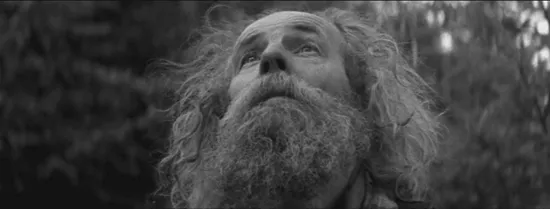
FIGURE 1.1Two Years at Sea: Jake stares up at the caravan he constructs on the treetops
Jake doesn’t talk to anyone during Two Years at Sea, and is known only through his actions and the objects he engages with. I have explored Jake’s rendering as a modèle in a recently published article (in a nonfiction context) on Two Years at Sea, a significant concern of which is the rendering of the subject outside of the fictional form, but the modèle is also referenced as an influence by Russell in interviews about his films.3 The modèle’s importance to Rivers and Russell is expressed at this point, and is important in that the concept is integral to the discussions throughout this book. Robert A. A. Lowe, the musician and friend of Russell, is cast as a modèle in A Spell, a figure not unlike the Pansa brothers in Let Each One (and indeed Jake in Two Years) who is also silent throughout the film. None of these “characters” speak, and their presence brings with it a mysteriousness, from the opening scene to the last. On the decision to draw on the modèle concept when filming Lowe in A Spell, Russell notes,
We often talked about Bresson’s idea of the model, the blank canvas—you wouldn’t even call them a performer, they’re there, they’re present, embodied in that place. So, one of the first things you have to do is have someone get rid of any of their affect, any kind of semblance of acting. It’s almost like anti-directing. (Violet, 2014)
The casting of Lowe as a modèle as noted here (Bresson always worked in fiction) is premised on eradicating the consciousness of performing roles Bresson writes about.
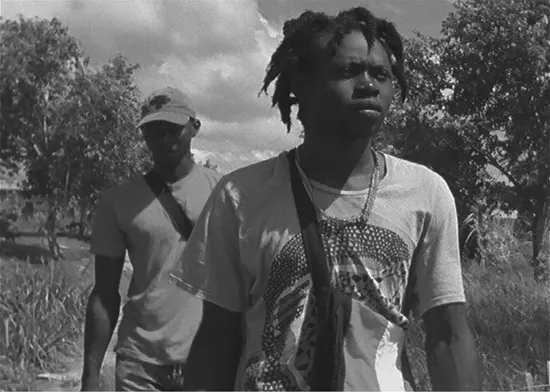
FIGURE 1.2Let Each One Go Where He May: The Pansa brothers move through the terrain in relative silence
Bresson returns over and over again to the ontological condition of his actors, and talks about his desire to penetrate the veil of conscious awaren...
Table of contents
- Cover
- Half Title
- Dedication
- Title Page
- Contents
- Acknowledgments
- Introduction
- 1 Nonfiction as a speculative mode of inquiry: Subjectivity and the films of Ben Rivers and Ben Russell
- 2 (Self as) modèle environments: Nonfiction film
- 3 The utopian promise: John Akomfrah’s poetics of the archive
- 4 “In my mind, my dreams are real”: Abbas Kiarostami and the roots of new nonfiction film
- 5 After Kiarostami: Cinemas of (speculative) nonfiction
- 6 Nonfiction, the cognitive turn, and Chantal Akerman’s D’Est (1993)
- 7 The poetic mode, depiction, and nonfiction: Sense-value and Gideon Koppel’s sleep furiously
- Conclusion
- Filmography
- References
- Index
- Copyright Page
Trusted by 375,005 students
Access to over 1.5 million titles for a fair monthly price.
Study more efficiently using our study tools.
Frequently asked questions
Yes, you can cancel anytime from the Subscription tab in your account settings on the Perlego website. Your subscription will stay active until the end of your current billing period. Learn how to cancel your subscription
No, books cannot be downloaded as external files, such as PDFs, for use outside of Perlego. However, you can download books within the Perlego app for offline reading on mobile or tablet. Learn how to download books offline
Perlego offers two plans: Essential and Complete
- Essential is ideal for learners and professionals who enjoy exploring a wide range of subjects. Access the Essential Library with 800,000+ trusted titles and best-sellers across business, personal growth, and the humanities. Includes unlimited reading time and Standard Read Aloud voice.
- Complete: Perfect for advanced learners and researchers needing full, unrestricted access. Unlock 1.5M+ books across hundreds of subjects, including academic and specialized titles. The Complete Plan also includes advanced features like Premium Read Aloud and Research Assistant.
We are an online textbook subscription service, where you can get access to an entire online library for less than the price of a single book per month. With over 1.5 million books across 990+ topics, we’ve got you covered! Learn about our mission
Look out for the read-aloud symbol on your next book to see if you can listen to it. The read-aloud tool reads text aloud for you, highlighting the text as it is being read. You can pause it, speed it up and slow it down. Learn more about Read Aloud
Yes! You can use the Perlego app on both iOS and Android devices to read anytime, anywhere — even offline. Perfect for commutes or when you’re on the go.
Please note we cannot support devices running on iOS 13 and Android 7 or earlier. Learn more about using the app
Please note we cannot support devices running on iOS 13 and Android 7 or earlier. Learn more about using the app
Yes, you can access New Nonfiction Film by Dara Waldron in PDF and/or ePUB format, as well as other popular books in Media & Performing Arts & Art Theory & Criticism. We have over 1.5 million books available in our catalogue for you to explore.